Amphibious

Amphibious

The embryo flexes
Twirling in its clotted pearl
Of egg, clouds of spawn
Spattered across the bog

The pollywog nursery lined
With moss and leaves
Mud and silt, secluded pools
For the immature throng

Of grazers, minnow sleek
In mottled skin with bristle
Gills neatly tucked away
The whole world is water

Mouths full and ears full
As bones push into buds
Sprouting these legs
In an awkward unbecoming

The road to exile, maturity
Is always a breaking
Of surface, an intersection
Of amnion, water, and air

No ribs, no muscles
For the breath, only gulp
And inefficient heart
Subject to chill, blood

Flecked and flickering
Supplemented by supple
Skin, a tenuous tension
Of absorption and loss

The sustained refrain, air
Vibrating in humid heat
All their hungry songs afloat
Thrilling through their empty throats

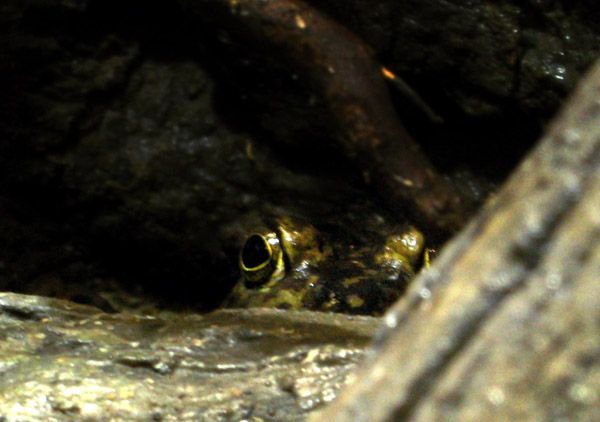
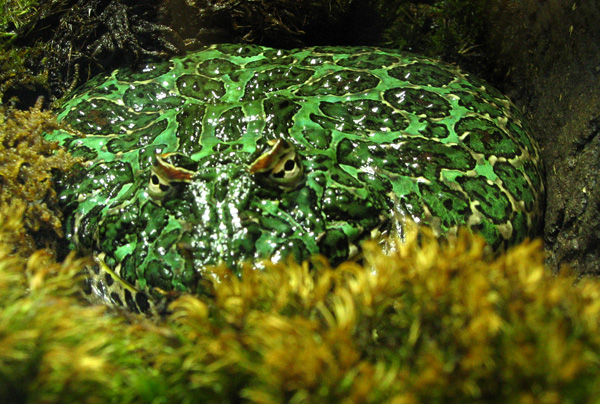
These photos were taken January 1, 2004 at the Virginia Aquarium & Marine Science Center, which was hosting a traveling exhibit called “Frogs: A Chorus of Colors”.

Blue Jay Nests

As a child, I both loved and dreaded blue jays. Beautiful and fierce, they are a permanent fixture in my summer memories. (See this poem.)

Last year, a pair of blue jays nested in our wax myrtle. They built on the far side of our fence, right over the sidewalk. It was a precarious choice, and I wasn’t too surprised when the nest failed.

Today, a new nest is taking shape. This time they chose the neighbor’s pear tree, a safer and more defensible position. They are using twigs from our wax myrtle, which makes for some fun photos, but I’m content to have them in someone else’s yard. They are, after all, quarrelsome birds.

Okay, that part about being content is a lie. I’m jealous. Maybe the babies will spend some time in our yard, as they learn to fly…

Inspiration and Happy Accidents

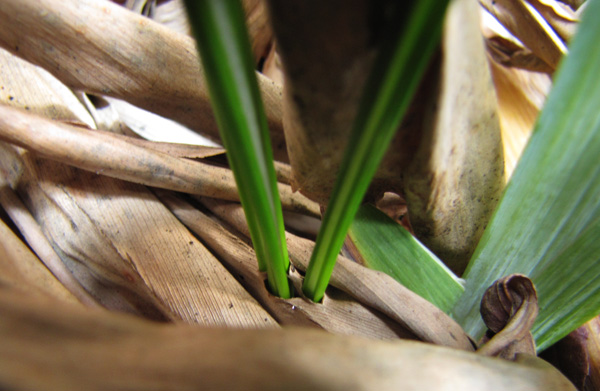
This crocus is a bit late because it had to penetrate the husks of last year’s ginger lilies. Most of my poems happen like this, sprouting in the dark. Pale, nebulous tendrils of urgency. A few die in this phase, too weak to persevere. Others toughen in time, burrowing through sheaves of revision. They emerge with varying degrees of definition and emphasis. The best ones bloom.

One of my recent poems followed a much different course.

A few days ago, I watched part of a program about ancient gods. The segment dealt with Medusa. Later in the day, unable to get Medusa off my mind, I googled her. I chose the first link, which was Wikipedia. Then I clicked another link, and another, and another, straying through topics that eventually had nothing to do with Medusa. I tired of links before I tired of reading, and my mouse wandered into a cache of poetry bookmarks. I soon landed on the vox poetica prompts page.*

The current prompt reverberated for me. Until that moment, my rambling Medusa research had yielded only a vague field of oscillating ideas. The photo collapsed it into a poem particle, which coalesced, with very little input on my part, into “Ceto, in Decline, Calls Out to Medusa”. It’s the rarest type of poem, in my world. One that writes itself and requires only fidgety revisions to clarify meaning and capitalize on sound. (It will remain posted on the prompts page until the prompt changes.)

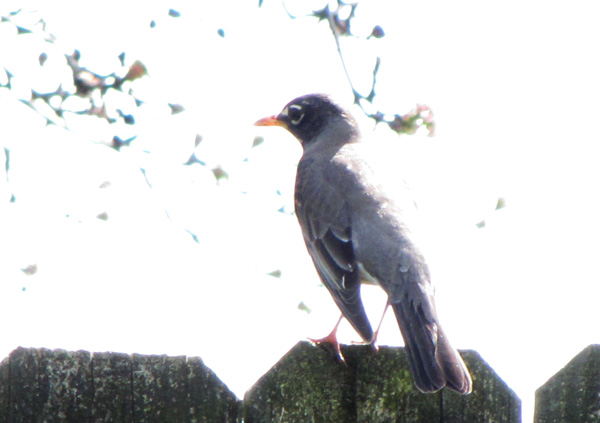
I’m always delighted by creations, like the Medusa poem, that occur as random accidents. Like this robin photo, which was a mistake, a miscalculation of light that produced an image I could never have planned. I’m happy to live in such a world, where serendipity matters.
* If you aren’t familiar with vox poetica, I recommend setting aside some time to explore. Publisher Annmarie Lockhart is a tireless advocate for poetry and poets. Her website is a treasure. There’s a new poem every day, an archived poemblog, links to her blog talk radio show, and a number of different ways to contribute. If you write poetry, why not submit something?
Gaia

Fiery breath roils through mantle bronchi
Flares forth from volcanic vents
Seamed between scales of shale

Into troposphere lungs, which are sky
Flora and fauna the intricate web
Of capillary

A delicate matrix, venule and arteriole
Mating to pass molecular necessities
From one organ to the next

From the dense liver that is land
The massive seven-lobed filter
Swollen with blood and bile

To the estuarine inlets of kidney
Loops of salt gradient and chemical pump
And pulsing tides, heartbeat wrung by the moon

To the alimentary marshes
Where everything rots and is passed
Down the vital chain, back into earth

Subducted deep underground
As one plate heaves its bulk atop another
In a colossal copulation that seeds nothing

But is felt by the unrenewable ones
The wingless ones who crave
Solace and brilliance and ecstasy

A brief moment in Gaia’s hungry mind
To glimpse her ancient memories
Before time passes down the vital chain

Watershed

Watershed

Really just a stream
What we called simply
“Creek” (in accent: “crick”)
Shallow rills for summer wading
Cold flanks of limestone spring

We ragged group of nymphs
Sisters of my youth
Bolted gaily, daily
Down the hills, pooled
Ourselves beside the bank

We harried crawdads from their dens
Gave silver minnows fairy names
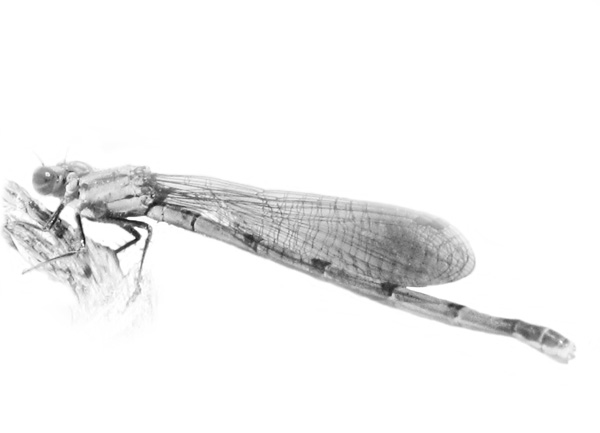
We saw ourselves in damselflies
Molting toward our adult wings
While sustained by infant gills

What snakes we found in Eden
We kept all summer in our rooms
Their flicking tongues, feather light
Spoke nothing of temptation
We loosed them in the fall

As time loosed us one season
To gain the winnowed air
We gleamed in bright emergence
Damp jewels ferried on a breeze
Into brilliant scattered flight

Published in The Journal of Liberal Arts and Education Winter 2010