Science

Science

Our questions sprout
Like brambles
Dense with unseen truths
Quivering and tense as rabbits

Flushed into the open
When spoken aloud
Darting across the tongue
A disturbance in the listener’s ear
That flees barely glimpsed
Back into conjecture

Understanding a footprint
Of what might have been alive
What tore its warmth free of thorns
And escaped into possibility

Leaving only the suggestion
Of what was hiding
Safe as a copse
As a thicket
Amid the sprawling undergrowth of science
Pricking with the need to be known

Transitions

Transitions

Could it be considered
A kind of death
This melting of ice

This shape in a mold
Quickened by heat
Into liquid escape

Subject to weight
The fast run downhill
The settle and seep

And inevitable peril
Of dying again
As vaporous mist

Moist, like a breath
And betrayed
By the coming cold

Amphibious

Amphibious

The embryo flexes
Twirling in its clotted pearl
Of egg, clouds of spawn
Spattered across the bog

The pollywog nursery lined
With moss and leaves
Mud and silt, secluded pools
For the immature throng

Of grazers, minnow sleek
In mottled skin with bristle
Gills neatly tucked away
The whole world is water

Mouths full and ears full
As bones push into buds
Sprouting these legs
In an awkward unbecoming

The road to exile, maturity
Is always a breaking
Of surface, an intersection
Of amnion, water, and air

No ribs, no muscles
For the breath, only gulp
And inefficient heart
Subject to chill, blood

Flecked and flickering
Supplemented by supple
Skin, a tenuous tension
Of absorption and loss

The sustained refrain, air
Vibrating in humid heat
All their hungry songs afloat
Thrilling through their empty throats

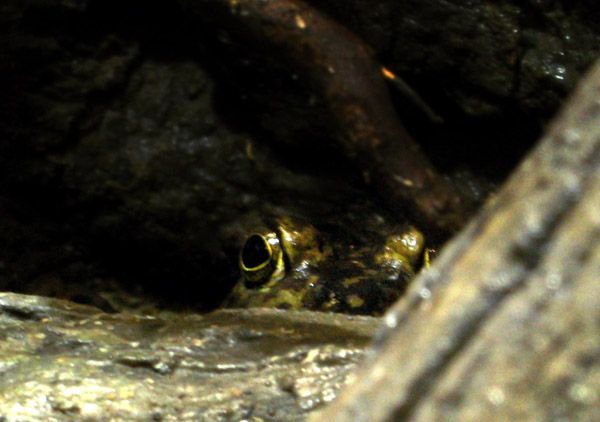
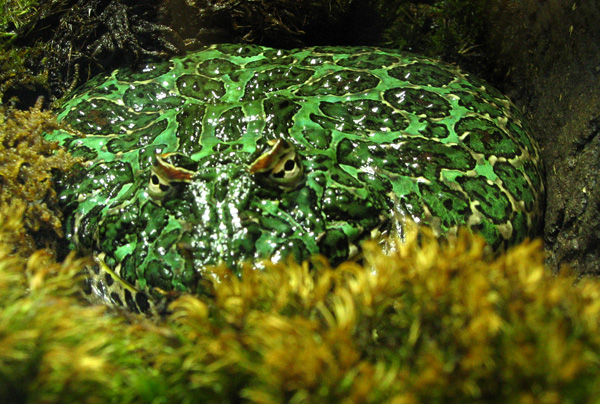
These photos were taken January 1, 2004 at the Virginia Aquarium & Marine Science Center, which was hosting a traveling exhibit called “Frogs: A Chorus of Colors”.

From the Butterfly Archives

Today is too warm for March. And too humid. It feels like June. The sky is low and gray. The yard’s air is clotted, a claustrophobic weight that has me hiding in my office, where a tower of neglected paperwork teeters on the brink of deadlines.

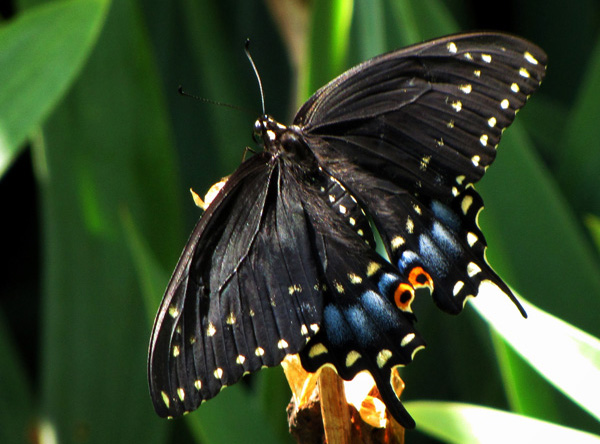
To lighten the mood, I took a brief stroll through the butterfly archives. This was my first “successful” butterfly photo, taken in July of 2010.

Inspiration and Happy Accidents

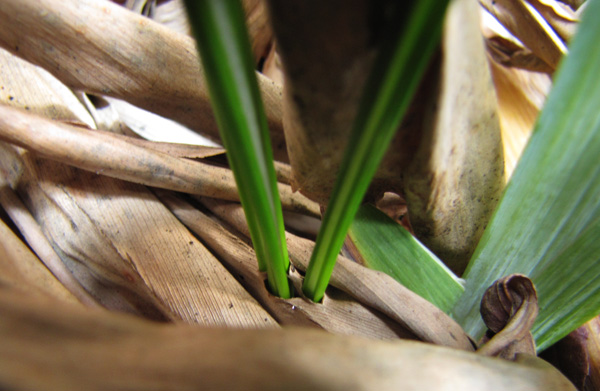
This crocus is a bit late because it had to penetrate the husks of last year’s ginger lilies. Most of my poems happen like this, sprouting in the dark. Pale, nebulous tendrils of urgency. A few die in this phase, too weak to persevere. Others toughen in time, burrowing through sheaves of revision. They emerge with varying degrees of definition and emphasis. The best ones bloom.

One of my recent poems followed a much different course.

A few days ago, I watched part of a program about ancient gods. The segment dealt with Medusa. Later in the day, unable to get Medusa off my mind, I googled her. I chose the first link, which was Wikipedia. Then I clicked another link, and another, and another, straying through topics that eventually had nothing to do with Medusa. I tired of links before I tired of reading, and my mouse wandered into a cache of poetry bookmarks. I soon landed on the vox poetica prompts page.*

The current prompt reverberated for me. Until that moment, my rambling Medusa research had yielded only a vague field of oscillating ideas. The photo collapsed it into a poem particle, which coalesced, with very little input on my part, into “Ceto, in Decline, Calls Out to Medusa”. It’s the rarest type of poem, in my world. One that writes itself and requires only fidgety revisions to clarify meaning and capitalize on sound. (It will remain posted on the prompts page until the prompt changes.)

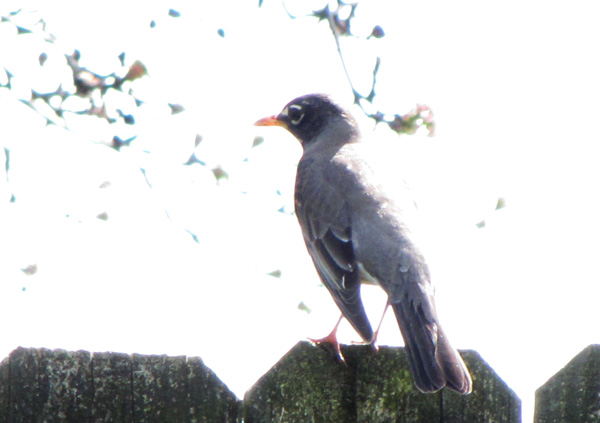
I’m always delighted by creations, like the Medusa poem, that occur as random accidents. Like this robin photo, which was a mistake, a miscalculation of light that produced an image I could never have planned. I’m happy to live in such a world, where serendipity matters.
* If you aren’t familiar with vox poetica, I recommend setting aside some time to explore. Publisher Annmarie Lockhart is a tireless advocate for poetry and poets. Her website is a treasure. There’s a new poem every day, an archived poemblog, links to her blog talk radio show, and a number of different ways to contribute. If you write poetry, why not submit something?