Cloudy and Cold

The yard seems eerily still this afternoon. Nothing stirs, other than the occasional flock of Yellow-rumped Warblers foraging in the wax myrtle.

They chirp softly to each other as they feed, and their muffled voices make me feel as if I should speak in a whisper.

It’s a perfect afternoon to crawl under a warm blanket, call the cats to join me, and lose myself in a new book.

Review: Elegy

Elegy: Poems by Raphaela Willington
(unbound CONTENT, 2012)

In the foreword to Elegy, John Briggs begins by saying, “Raphaela Willington died on January 6, 2004, of ovarian cancer. Death became her muse in her last years.” He goes on to describe a woman of admirable strength and a poet of considerable talent.

The first poem begins: “Sometimes you wake / into silence” (“Sometimes You Wake”, pg 20). From there the book proceeds to muffle death’s dirge with birdsong and rustling leaves. The poems’ gardens are vividly alive. Zucchini and paperwhites thrive there, tomatoes and zinnias. Deer, squirrels, and groundhogs roam the pages, and “The sun is today a citadel / falling falling / yet standing” (“This Day”, pg 28).

In Elegy, death isn’t a morbid centerpiece, nor is it draped in mourning. Instead, it is herded into place as simply another visitor in the gardens. When the author finds the skull of a buck, antlers still attached, she says:

“One ear remains intact, as if listening, I imagine,
for the sound of the voice of my father calling us,
     mother and me,
in from the dusk of the garden
     at the end of a long day.” (“Endgame”, pg 45)

Later, she hears her name in winter’s approach:

“deer feasting on our hearts,
tomatoes crystallized into summer’s rubies
set in circlets of dying vines” (“Growing Seasons”, pg 76)

The foreword says, “A culture plumped with its belief in self-importance and fixated on amassing accomplishment might judge that Raphaela didn’t ‘do’ much with her life.” (pg 12) I say she did much that was remarkable, and I’m particularly grateful to her for writing Elegy. It seems to me as if she peered through the veil that separates life from death and fearlessly recorded what she saw. Then she wrote her observations into beautifully lyrical, meticulously revised poetry.

  • Find out more about the book here.
  • Six poems from Elegy were the inspiration for a song cycle that recently premiered at Western Connecticut State University. Read about “Wrensong” here.
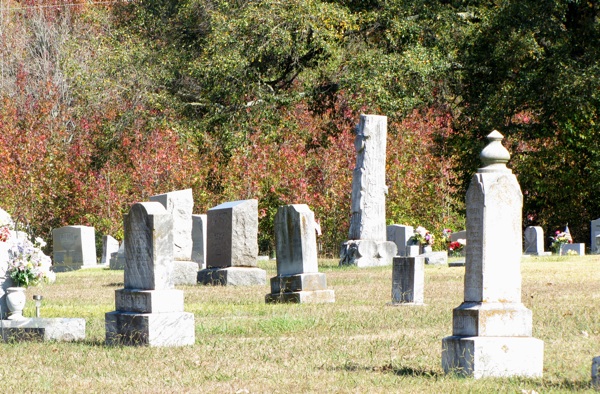
Last week, my trip included a morning in Elora, Tennessee, where my mother’s father is buried alongside his parents and a handful of other relatives. I never met my maternal grandfather, who died before I was born, and I have few memories of his parents.

My visit was intended to honor Mother’s memory, more than theirs, so I was surprised by how their headstones affected me. I became intensely curious, wandering past name after name. Who were these people? How much of them lives on, in me? My connection to these graves was strengthened by my recent experience reading Elegy, which I had finished the day before our drive to Elora.

Review: A House Near Luccoli

A House Near Luccoli: A Novel of Musical Intimacy & Intrigue in 17th Century Genoa by DM Denton (All Things That Matter Press, 2012)

Every facet of this book is wrapped in beautiful language. The plot and setting, characters and pace, all live within layers of poetry:

“…Nonna blamed a tendency to malinconia on her granddaughter’s English side with too much rain in her blood. As if climate could be inherited…” (pg 20)

“She wanted to show ability beyond the ladylike diversion of scribbling thoughts or painting in a journal, obsessing over the responsibility for something greater than nothing better to do.” (pg 35)

“She hoped they would be early or late to avoid scrutiny, but they were on time for her to be judged as an unescorted woman passing through a hall made for giants…” (pg 71)

I know very little about classical music or opera, and even less about 17th century Genoa, so the book unfolded for me as a lovely riddle. Musical terminology and Italian words added ambience, even as I stumbled over their strangeness. Scenes hid behind place names, ambled through unfamiliar streets and landmarks. But the story never failed me. I never felt forced out of the plot or detached from the characters.

The book’s “Intimacy & Intrigue” are subtle, a veiled background of motive. The settings are lush, the characters complex, and the pace measured. It’s an intricate portrait of loneliness, of the fragile passions that inspire music.

  • Find the author’s website here.
  • Find the author’s blog here.

I can’t resist adding a photo. These doves, lit by the setting sun, reminded me of musical notes.

Fledgling Photos

The robin family has moved on, as families tend to do, and the yard feels empty and quiet. Almost eerie, after such a whirlwind of exploration and clamor.

Maybe I’ll fill my empty hours with the manuscript that has been molting in my office, shedding pages all over the floor, sprouting new subplots and dialogue as it matures…

Overcast

The sky is dull gray, the air damp and chilly. It’s almost as if our lost winter has found its way home, at last, and means to stay a while. Except, there are all these flowers…

The robin doesn’t appear to be worried, though she is sticking close to the nest. Perhaps I’ll follow her lead.