Review: While You Blue-step

While You Blue-step by Mary Belardi Erickson
(Aldrich Publishing, 2012)

The poems in While You Blue-step examine the verge between nature and man. Some images are ordinary while others are strange. Swallows nest in metal culverts, butterflies and weeds invade a trash heap, minnows swim under railroad crossings, and a lone pelican lands beside a barn. Trains rattle across many of the pages and water flows throughout.

Like water, the book seeps and eddies from one poem to the next. The connections aren’t always obvious, but there is a general sense of movement. Of momentum without acceleration. By the end of the book, I felt as if time had passed and wisdom had been gained, even though I had not been aware of either process.

For me, the author’s voice is subtle, almost plain. But there are intriguing complexities in these poems, which depend more on meaning than music:

“Life swallowing you       like the whale did Jonah.”    (“Whaling Song”, pg 9)

“you fling pebbles
as if equating impact with answer
in a lifetime of making all blues
a wishing pool.”    (“A stone plunks”, pg 14)

“Winter takes off its gloves and cold
snaps its fingers like a magician
giving his audience an icy look.”    (“Cold Snaps”, pg 44)

While You Blue-step is not a book to be read once and returned to the shelf. My copy will undoubtedly end up creased and scarred, written-in and highlighted. Unmistakable signs of respect.
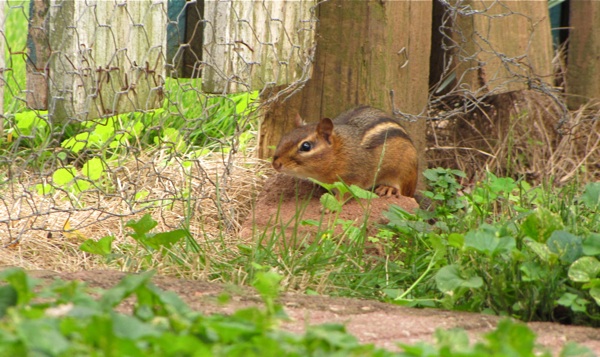
After Mother’s car accident, I stayed in her house a few months, in Huntsville, Alabama. While You Blue-step reminded me of those months. Chipmunks lived under an old shed in her back yard, and train whistles woke me with their unfamiliar cries in the night. Then there were months of emptiness and grief, after Mother died, and I’m only just now reaching the point where the world is familiar again. I am like the leaf on pages 18 and 19:

“touching ground means finding
waters, yourself flowing from time
to time.”    (“As a leaf”)

Review: Elegy

Elegy: Poems by Raphaela Willington
(unbound CONTENT, 2012)

In the foreword to Elegy, John Briggs begins by saying, “Raphaela Willington died on January 6, 2004, of ovarian cancer. Death became her muse in her last years.” He goes on to describe a woman of admirable strength and a poet of considerable talent.

The first poem begins: “Sometimes you wake / into silence” (“Sometimes You Wake”, pg 20). From there the book proceeds to muffle death’s dirge with birdsong and rustling leaves. The poems’ gardens are vividly alive. Zucchini and paperwhites thrive there, tomatoes and zinnias. Deer, squirrels, and groundhogs roam the pages, and “The sun is today a citadel / falling falling / yet standing” (“This Day”, pg 28).

In Elegy, death isn’t a morbid centerpiece, nor is it draped in mourning. Instead, it is herded into place as simply another visitor in the gardens. When the author finds the skull of a buck, antlers still attached, she says:

“One ear remains intact, as if listening, I imagine,
for the sound of the voice of my father calling us,
     mother and me,
in from the dusk of the garden
     at the end of a long day.” (“Endgame”, pg 45)

Later, she hears her name in winter’s approach:

“deer feasting on our hearts,
tomatoes crystallized into summer’s rubies
set in circlets of dying vines” (“Growing Seasons”, pg 76)

The foreword says, “A culture plumped with its belief in self-importance and fixated on amassing accomplishment might judge that Raphaela didn’t ‘do’ much with her life.” (pg 12) I say she did much that was remarkable, and I’m particularly grateful to her for writing Elegy. It seems to me as if she peered through the veil that separates life from death and fearlessly recorded what she saw. Then she wrote her observations into beautifully lyrical, meticulously revised poetry.

  • Find out more about the book here.
  • Six poems from Elegy were the inspiration for a song cycle that recently premiered at Western Connecticut State University. Read about “Wrensong” here.

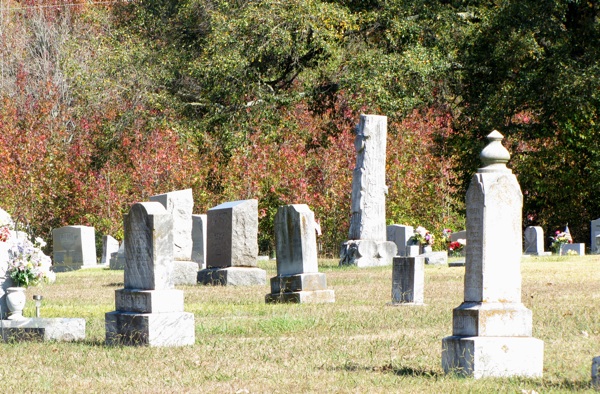
Last week, my trip included a morning in Elora, Tennessee, where my mother’s father is buried alongside his parents and a handful of other relatives. I never met my maternal grandfather, who died before I was born, and I have few memories of his parents.

My visit was intended to honor Mother’s memory, more than theirs, so I was surprised by how their headstones affected me. I became intensely curious, wandering past name after name. Who were these people? How much of them lives on, in me? My connection to these graves was strengthened by my recent experience reading Elegy, which I had finished the day before our drive to Elora.

Review: A Strange Frenzy

A Strange Frenzy:  17 poems by Dom Gabrielli
(unbound CONTENT, 2012)

This smart, nuanced little chapbook pairs each of its seventeen poems with a quote from Rumi. Printed in an interesting horizontal format, complete with delicate artwork, the airy expanses of white space invite marginalia.

The author’s short introduction asks “From what star in the skies of the Outside do these poems gather their light?” These poems glimmer and burn with a unique light of their own, making no attempt to outshine Rumi’s timeless quotes. In fact, the poems are stripped of punctuation and mostly devoid of capitalization, as if deliberately deferential to the accompanying quotes.

Despite their unassuming arrangement on the page, these poems are refined. And, while love is the unifying theme, this is not a collection of love poems.

“once i courted a diamond / to cut my wrists / in the thunderstorm of battle / and love poured down like rain” (Poem II, page 11)

“i say me / i should eliminate it / i should stretch it out / and flatten every notion of person” (Poem IX, page 25)

“every drink they offer is poison // all the food they have is dangerous // if you do not eat // you shall starve” (Poem XII, page 31)

I’m delighted to add A Strange Frenzy to my poetry shelf, and I’m already looking forward to the moment, perhaps years from now, when I pull it down from the shelf and discover its poems anew.

  • Author Dom Gabrielli and unbound CONTENT publisher Annmarie Lockhart discussed A Strange Frenzy in this blog talk radio episode.
  • Poem II appears on the poemblog at vox poetica.

Cicadas

Cicadas

Youth taps through a labyrinth
Of root, exploring in blind stages
Each nymph counts, each instar
Molts toward the relentless percussion
Of age, where the last skin hardens
And splits at the nape, final
Form shrugging free to unfurl song
In heat, muscles tuned to the sun’s declining
Tenor, late summer’s desperate chorus
Clings to tired limbs that droop
With the weight of leaves past saving
A monotonous harvest of lust
Set to succumb after securing the eggs
Muffling them in summer’s golden pith

2012 Hampton Roads Writers Conference, Part Two

One of the last things I did, before leaving for the conference, was bring in the mail. The top envelope in the box was one of my submission SASEs, which could only be a rejection. Since better than seventy percent of my submissions result in rejection, it was a safe assumption. The envelope contained my very first photography rejection.

As I drove to the conference, I mulled my usual regrets. Did I miss something in the submission guidelines? Did I choose wrong, as I selected what to send? (The photos in this post are some of the ones I considered, but decided against.) And, the biggest question of all, what was I thinking? Why did I ever imagine that my work was good enough for publication?

I’ve been submitting poetry since 2003. Nine years in, I’ve accumulated a drawer full of rejections and a folder’s worth of acceptances. My rejection-regret processing time is down to a little over an hour, so I reached the “it’s okay and I’ll try again” stage before check-in time at the conference. Even so, it wasn’t the best way to start my weekend.

The first night offered a choice between three sessions. I opted for “Mastering the ten-minute agent pitch” by Molly Jaffa of Folio Literary Management. Anyone who has ever considered submitting their work to an agent should hear this talk. Before, I had vague ideas of how I wanted to present my book. After, I had a firm outline and growing confidence that I was on the right track.

Friday and Saturday’s schedules included talks about poetry, fiction, and non-fiction. My favorite sessions focused on marketing and editing:

  • “A Day in the Life of a Literary Agent” by Molly Jaffa
  • “Getting Published … and Maybe Even Paid (for your poetry)” by editor and publisher Annmarie Lockhart
  • “Buffing and Polishing” by author John DeDakis

I learned from every speaker, but the daily first-ten-lines critique sessions were the most interesting part of the conference. The critique panel consisted of agents Molly Jaffa, Rachael Dugas, and Brooks Sherman, along with authors Rick Mofina and Patricia Hermes. Earlier in the summer, conference registrants had been invited to submit the first ten lines of their works-in-progress. These submissions were projected in the auditorium (with the authors’ information removed), read aloud, and discussed by the panel. Points of interest included formatting, character development, point of view, word choice, and placing your work within the proper genre. In each submission I recognized problems from my own work, and I left each session with new ideas about how to strengthen my writing.

By Saturday evening, my mind was full to overflowing. I was happy to come home and eager to start applying all that I had learned. Which brings me back to “what was I thinking?” I was thinking this: I prefer a drawer full of rejections to a computer hard drive packed with poems and stories and photos that I never bothered to edit and submit.

Now, it’s time to get back to work.