Frost in the Forecast

For me, winter starts when I cut the ginger lilies.

So today, even though it was warm enough to open the windows, winter arrived in the yard. Our forecast calls for temperatures near freezing Saturday night, and I didn’t want to risk losing any of the bulbs to frost.

As I worked my way through the tangle of stalks, I recovered three chimes that had broken off of a wind chime and two birdhouses that had fallen during one of the recent storms. Somehow, repairing the wind chime made me feel a little less guilty about the lingering scent of unfinished blooms.

The cats followed my progress, moving from window to window as I moved from bed to bed.

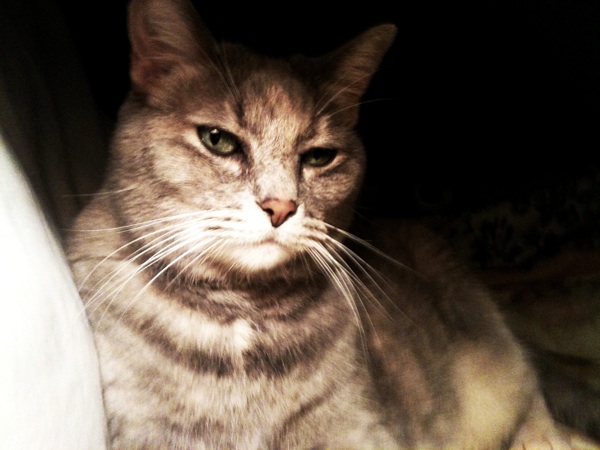
(Please excuse Vanna’s sour expression. She was trying to ignore the fact that there is room for two cats on that perch. Fortunately, a flock of robins arrived shortly after this picture was taken, providing a distraction from the uncomfortable standoff.)

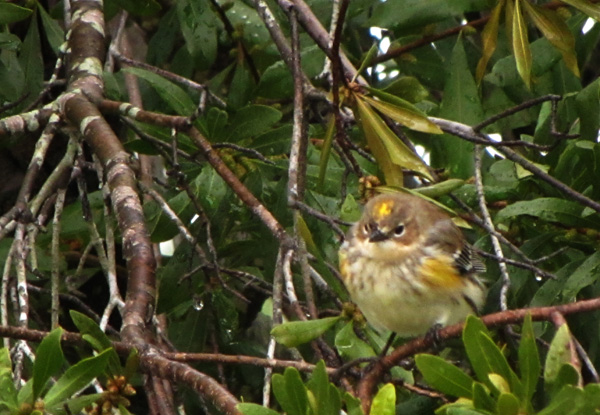
The robins were soon joined by several warblers and a pair of hungry squirrels.

Today’s strangest sighting was this very disheveled red admiral butterfly. It seemed to be heading south, perhaps following the opposite path of spring’s massive red admiral migration.

Wherever it was going, I hope it gets there safely. And I hope it was able to pause, for a moment, and enjoy tonight’s beautiful sunset.

Another Warbler Photo

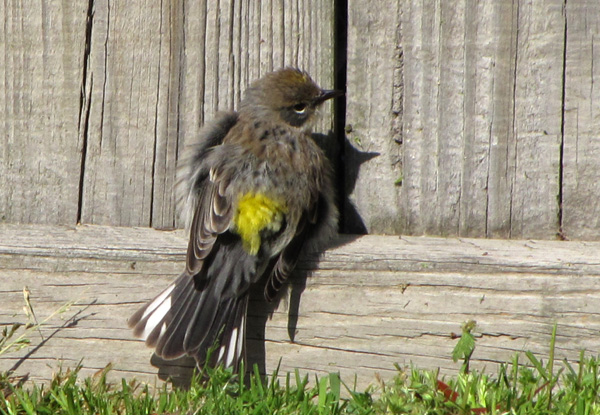
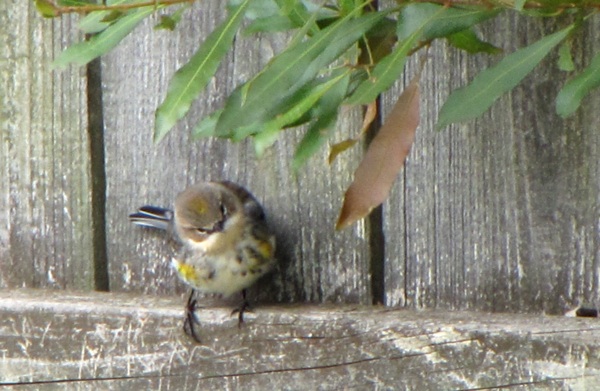
A sudden gust of wind forced one of the warblers to make an emergency landing on the fence this morning. He stayed there a while, fluffing his feathers and preening. His behavior reminded me of our cats, who cover any awkward step or fall with a bout of elaborate grooming, as if to say, “I meant to do that. Now, a little privacy? As you can see, I’m bathing…”

More and More Warblers

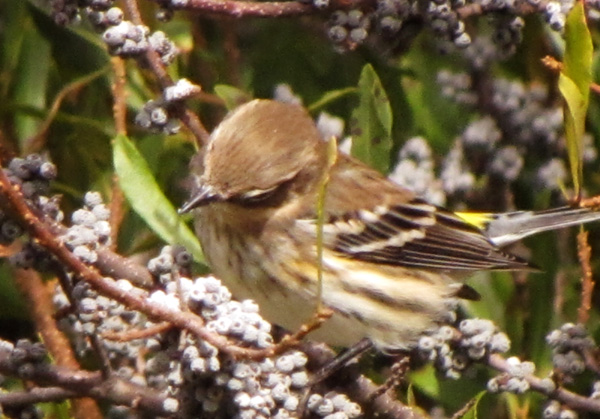
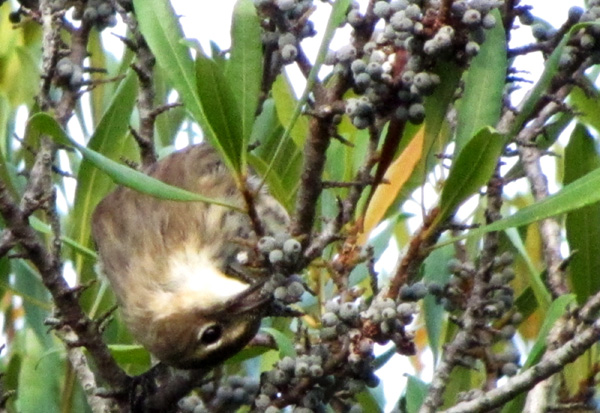
Most of the yard is following the normal routine of preparing for winter, but the Yellow-rumped Warblers seem to feel that winter has already arrived.

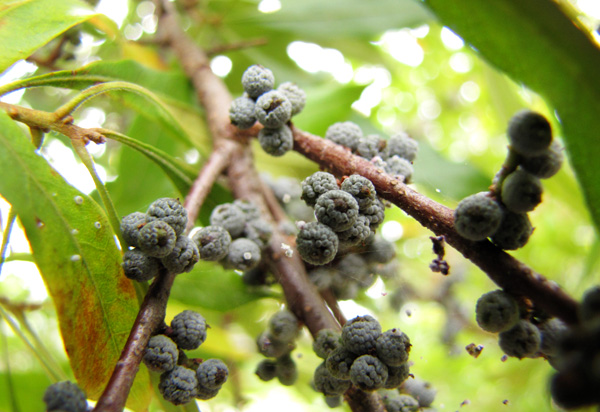
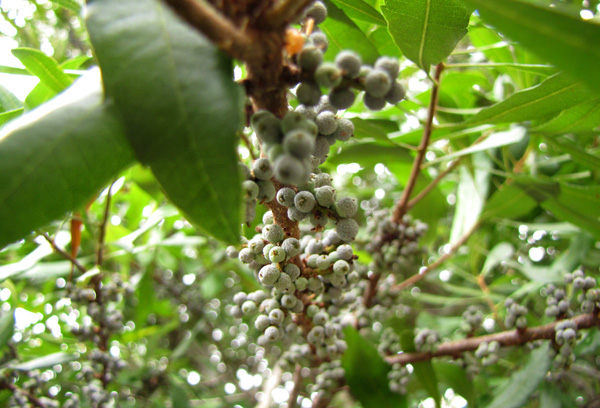
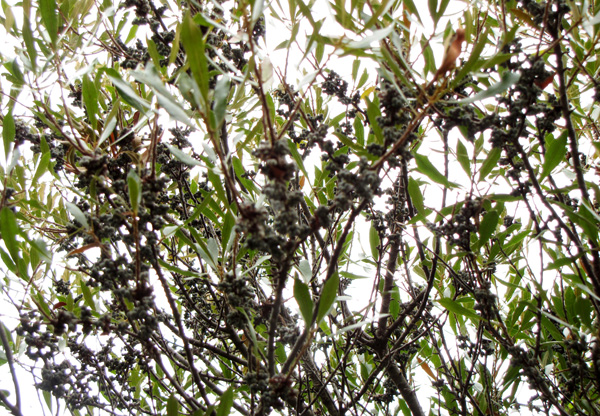
In previous years, the wax myrtles’ abundant berries have lasted well into spring. Other birds refuse to eat the berries, and the Yellow-rumped Warblers are rarely numerous enough or hungry enough to need the entire crop. But this year, the branches may be bare as early as Christmas.

I’m a bit worried about what will happen to my favorite warblers, once their food supply runs out.

Cloudy and Cold

The yard seems eerily still this afternoon. Nothing stirs, other than the occasional flock of Yellow-rumped Warblers foraging in the wax myrtle.

They chirp softly to each other as they feed, and their muffled voices make me feel as if I should speak in a whisper.

It’s a perfect afternoon to crawl under a warm blanket, call the cats to join me, and lose myself in a new book.

The Wax Myrtle and Yellow-rumped Warblers

Much of the yard’s fall and winter activity takes place in the wax myrtles. (I believe ours are southern wax myrtle. Other names include Southern bayberry or candleberry.) I’ve never bothered to count, so I don’t know how many individual plants make up the barrier between our fence and the sidewalk. Enough to create a unique habitat in the yard.

More tree than shrub, the wax myrtles are distinctly male and female. Only the females produce berries. (Technically, their fruit is considered a drupe.)

The berries aren’t in high demand. Few of the yard’s visitors bother with them, which leaves more than enough for the yellow-rumped warblers that come each fall and stay until spring.

According to The Cornell Lab of Ornithology’s All About Birds website, yellow-rumped warblers are the only warbler species able to digest the berries.

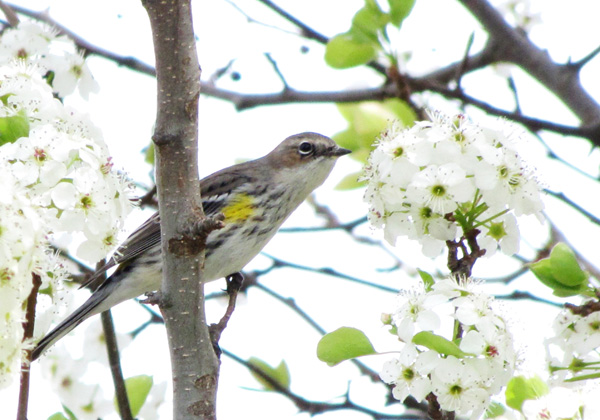
The warblers stay through pear-blooming time, when they spend a few weeks feasting on nectar and soaking up sunshine. Then they disappear.

Today I saw fall’s first flock of warblers flitting through the wax myrtle. For me, their arrival is as certain a sign as the Harvest Moon.