Butterfly Mimics and a Publication Note

butterfly-oct-22
Red-spotted Purple (10/22/16)

On first glance, I thought the butterfly shown above was a late-flying Eastern Black Swallowtail.

swallowtail-june-23
Eastern Black Swallowtail (6/23/16)

After a closer look, I decided the unknown visitor might be a Pipevine Swallowtail. (I don’t have any photos of Pipevine Swallowtails because I’ve never seen one in person. Here’s a link with photos.) But how could it be any kind of swallowtail, without the characteristic “tails” on its hind wings?

Red-spotted Purple (10/22/16)

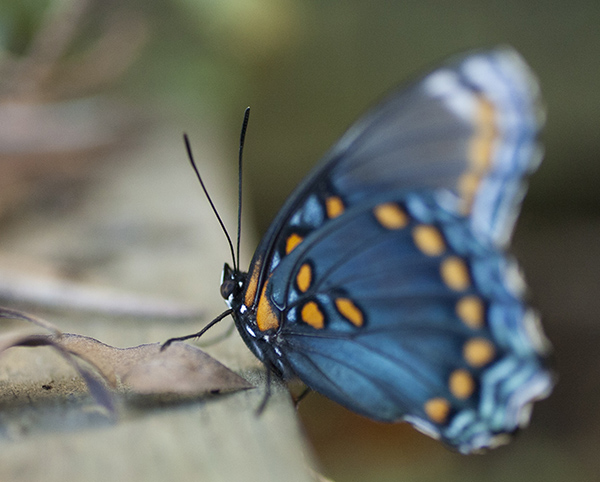
As always, I turned to the internet for answers. Searching for “butterflies that look like Eastern Black Swallowtails” led me to the Swallowtail Butterfly Comparison page on a site called Butterflies at Home. There I discovered that my unknown butterfly is a Red-spotted Purple, which explains why it doesn’t have tails on its hind wings. It isn’t a swallowtail at all. Instead it belongs to the family of brush-footed butterflies. (As an aside, I’m now fascinated with name “brush-footed”.)

Red-spotted Purple
Red-spotted Purple (10/22/16)

But why do all of these butterflies look so similar? What is so special about a combination of blue highlights and reddish spots? Obviously the pattern carries some sort of selective advantage, something deeper than aesthetic appeal for camera-wielding writers.

Unknown Swallowtail July 25
Spicebush Swallowtail (7/25/12)

It seems that the story starts with Pipevine Swallowtails, which lay their eggs on the poisonous pipevine plant (also known as Dutchman’s Pipe.) As the caterpillars feed and grow, they ingest and store a toxin called aristolochic acid, which lingers in their bodies as the caterpillars mature into adults. So the butterflies, as well as all stages of the caterpillars, are poisonous. Even their eggs are poisonous.

All in all, it’s an elegant and effective defense against predators. So effective, in fact, that it conveys a measure of protection for any butterfly with black wings, blue highlights, and reddish spots. Selective advantage, indeed.
butterfly-oct-22
Red-spotted Purple (10/22/16)

Now, if only I could find a Pipevine Swallowtail to photograph…


For more information, check out a few of these articles:


Publication Note: On October 7, my poem “The Fire” posted at Autumn Sky Poetry Daily. Many thanks to editor Christine Klocek-Lim!

The Rest of the Wren Story

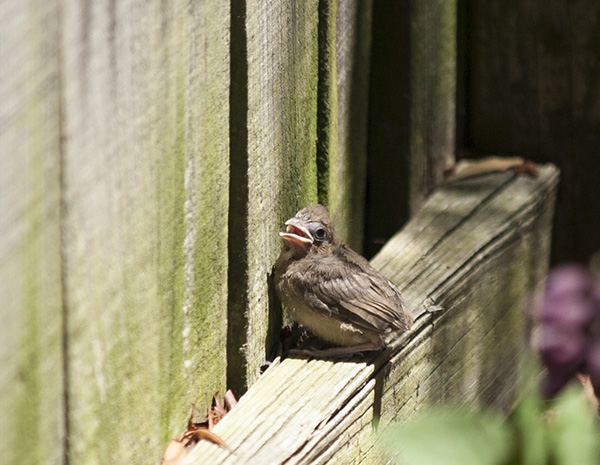
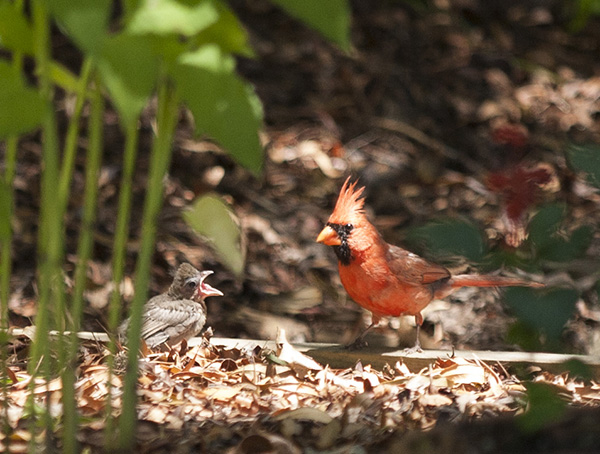
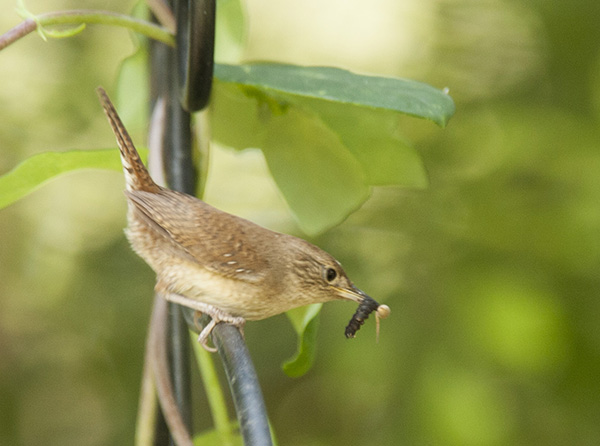
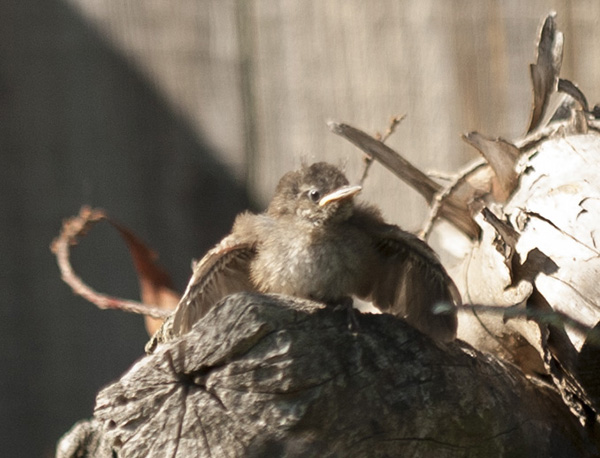
In June of 2015, I noticed that one of the yard’s House Wrens had begun feeding a family of Northern Cardinal nestlings. (Read my initial blog post here.)

Nestling May 30

The adult cardinals, especially the male, were also feeding the nestlings.

Nestling May 31

In that early blog post I wrote, “I wonder if this kind of behavior is common. Have the yard’s birds been feeding each other all along?”

Cardinal May 11

In searching for answers to my question, I ran across the Tough Little Birds blog, run by biologist Katie LaBarbera. I contacted her through the blog, and she replied that the behavior was unusual enough to be of interest to other biologists. Before too long we had a short article ready to submit for publication. After peer review and a few revisions, the article was accepted by The Wilson Journal of Ornithology and can be found in the current (September 2016) issue: House Wren (Troglodytes aedon) provisions nestlings of Northern Cardinal (Cardinalis cardinalis).

And now, as Paul Harvey might have said, it’s time to post the rest of the story…

wren-june-4

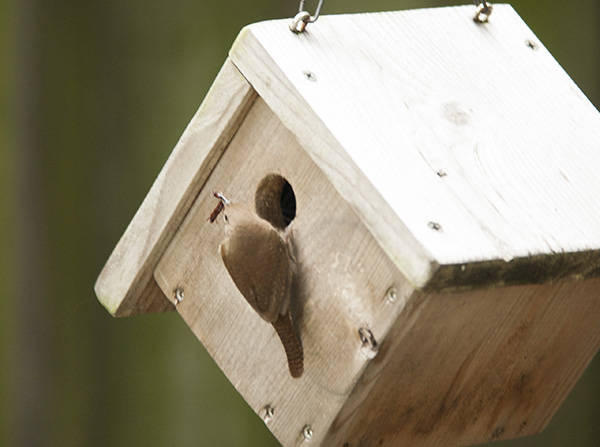
Back in June of 2015, while I was searching for answers online, the wrens’ brood hatched. For a few days the male wren stayed busy feeding both nests, dividing his time somewhat unequally in favor of the young cardinals. But something changed as the cardinals neared fledging. The last time I saw the cardinal nestlings accept food from the wren was on June 5th, and the last time I saw him approach their nest was on June 6th. (They greeted his visits on the 6th with silence.) On June 7th, the young cardinals left their nest.

cardinal-june-7

The yard stayed in a turmoil on the 7th, loud with the cries of hungry cardinal fledglings and nervous cardinal parents. (The male cardinal was particularly aggressive with larger birds that day, much to the dismay of a hungry brown thrasher.)

cardinal-june-7

cardinal-june-7

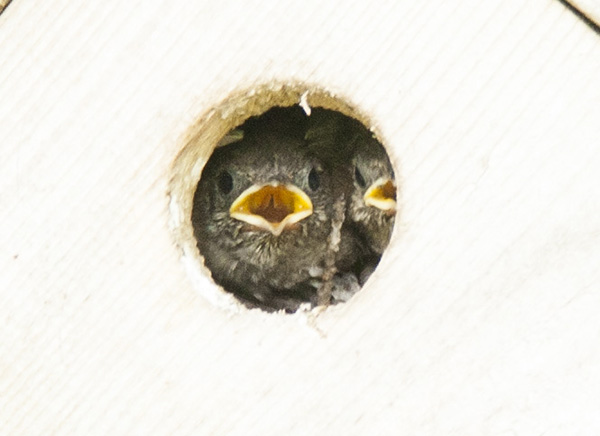
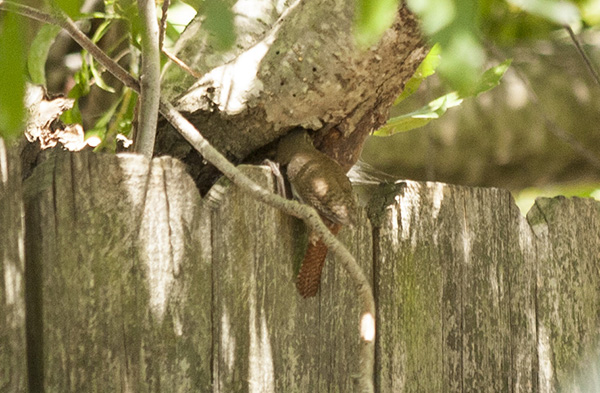
The wren, formerly so devoted to the cardinal nestlings, never approached the cardinals after they fledged. Instead he spent the 7th, and the following days, feeding his own nestlings. The young wrens stayed in their nest box until June 16th and 17th, eating spiders and praying mantises and a variety of other insects brought by their parents.

wren-june-10

wren-june-10

wren-june-10

wren-june-11

wren-june-12

The nestlings grew bigger and bolder each day.

wren-june-13

wren-june-13

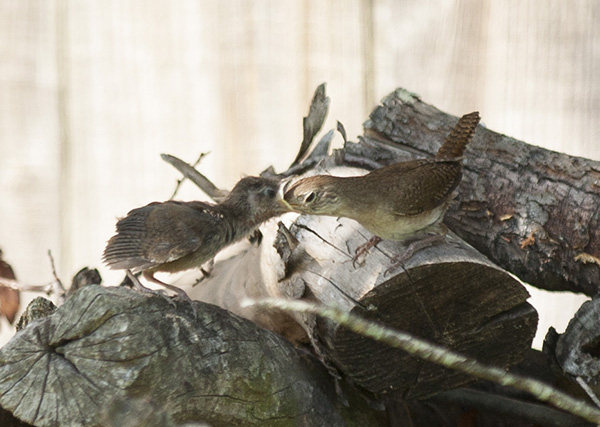
And their parents worked harder and harder to keep them fed.

wren-june-16

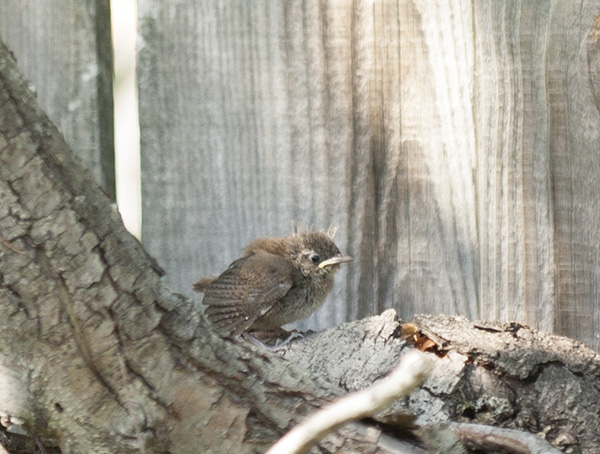
By June 16th they showed signs of leaving.

wren-june-16

wren-june-16

And on June 17th …

wren-june-17

They were out of the nest box, but they were still hungry!

wren-june-17

wren-june-17

wren-june-17

When they left the yard that evening, I felt bereft. As I always do when the yard’s children move on.

wren-june-17

I wished, as I always do, to follow the fledglings. Or at least to know their futures. Did any of them survive? Have they, perhaps, visited the yard again in the weeks and months since?

wren-june-17

Let me know if you see them.