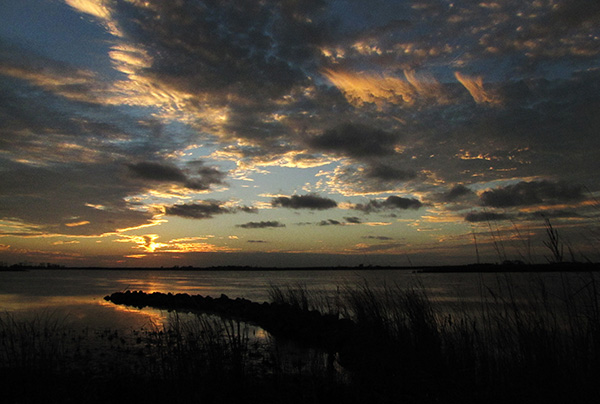
Clouds and Sun at Back Bay National Wildlife Refuge

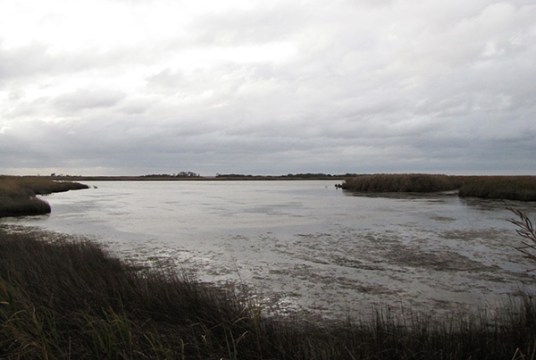
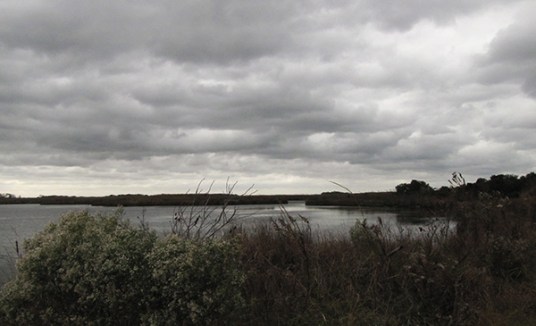
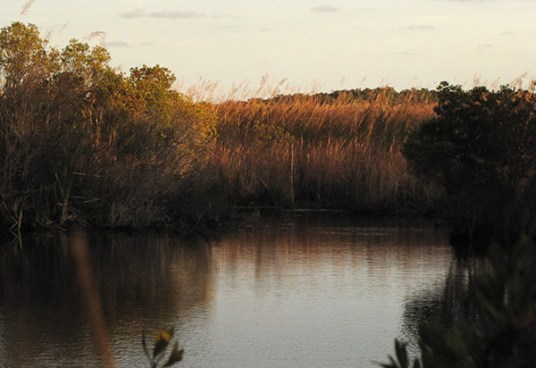
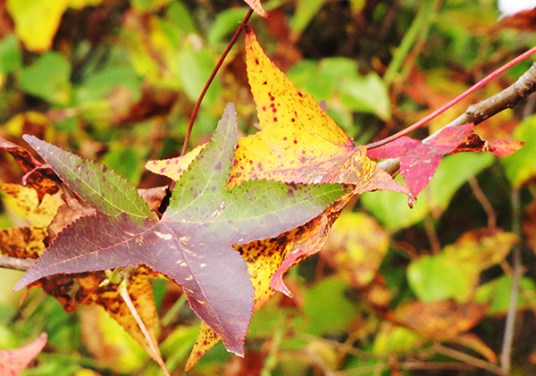
As mentioned in a previous post, I recently spent two afternoons in a row at Back Bay National Wildlife Refuge. Both days the refuge was fully in the grip of fall, but the first day felt a few steps closer to winter than the second. (Doesn’t winter always feel closer on cloudy days?)

November 4
November 4
Back Bay Nov 5
November 5
Back Bay Nov 4
November 4
Back Bay Nov 5
November 5
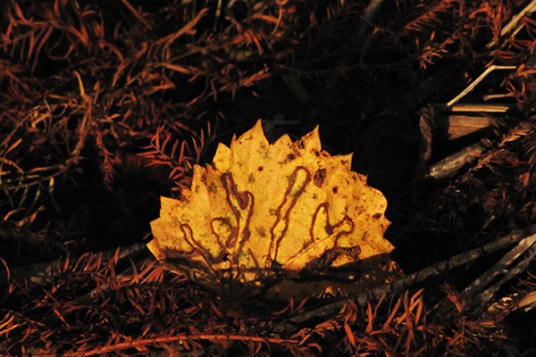
Leaves Nov 4
November 4
Leaf Nov 5
November 5
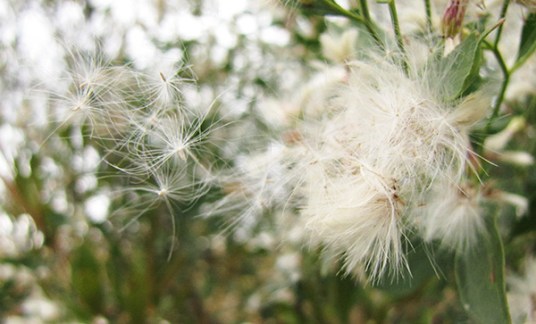
Seeds Nov 4
November 4
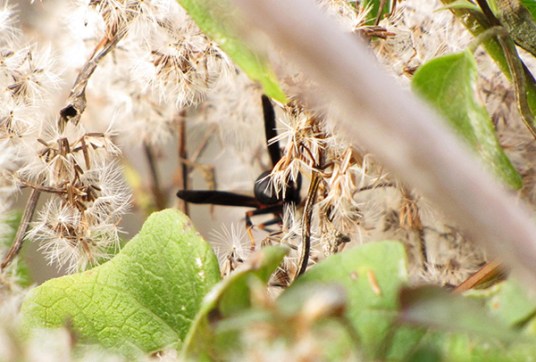
Wasp Nov 5
November 5
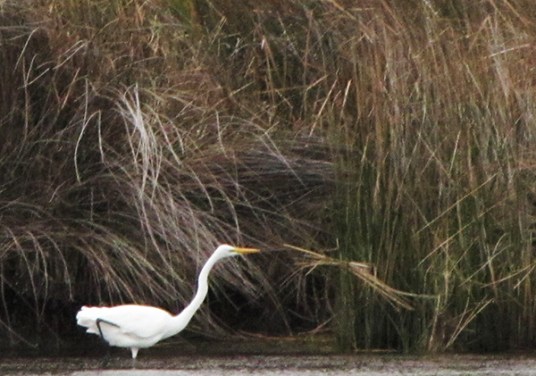
Egret Nov 4
November 4
November 5
November 5
November 4
November 4
November 5
November 5
November 4
November 4
November 5
November 5
Back Bay Nov 4
November 4

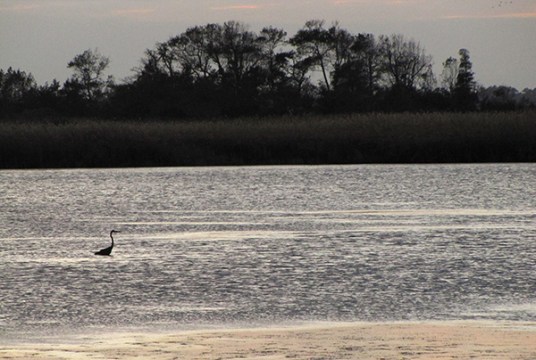
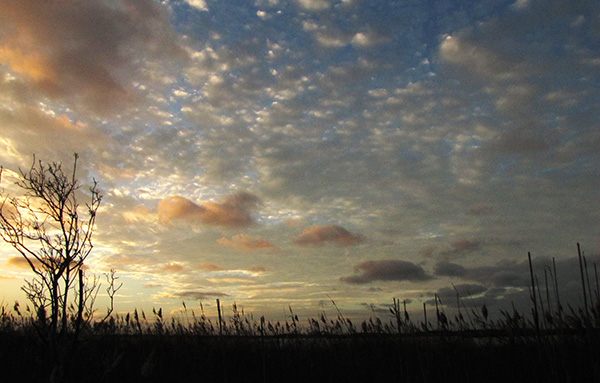
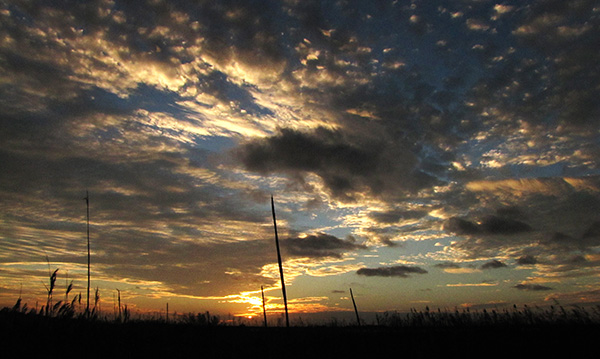
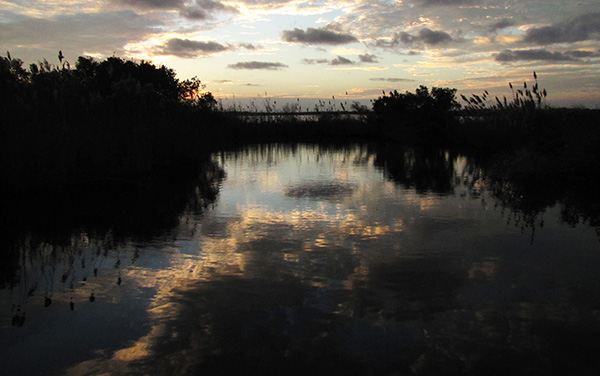
As I tried to organize my photos into pairs, I found the last set of images impossible to manage. On November 4th I took only one photo of the approaching sunset, but on November 5th I snapped frame after frame, hurrying from one vantage point to the next…

November 5
November 5
November 5
November 5
Back Bay Nov 5
November 5

Why do I see beauty in such sunsets? Why do I stop and stare? Why does my breath slow and the noise of necessity fade to a distant murmur?

It is as if the sky stirs something in my memory, something nameless and ageless. Then the sky’s glimmer dies to darkness, and my lungs grow hungry again as the ancient spark inside me dwindles. It’s all so fleeting that, as soon as it’s over, I begin to doubt. Perhaps it was an illusion, or a delusion. Perhaps it was just another sunset, just the end of another November day…

November 5
November 5

A Mammal Mystery (and a Dilemma)

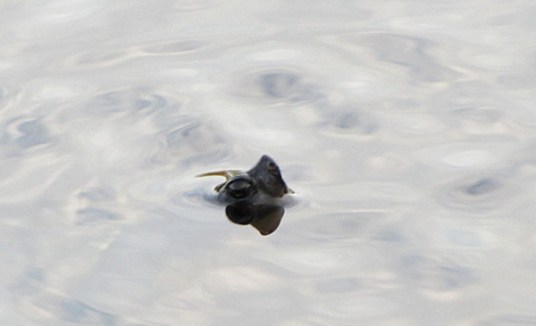
This week I spent two afternoons at Back Bay National Wildlife Refuge. The first visit was cold and windy with heavy, low-hanging clouds. My photos from that day are grainy and blurred, including several photos of a rather large mammal crossing one of the many open areas of water.

Nutria

At first I thought the creature was an otter. It was too big to be a muskrat, and the habitat was wrong for beaver.

But, what about the shape of its head? Doesn’t look like an otter’s head…

Nutria

Which leaves me with nutria. (Please comment if you can correct or confirm my guess!)

Nutria

I returned the next day, lured by warmer temperatures, clearing skies, and continuing curiosity. The animal wasn’t there when I arrived, so I walked the other trails for a few hours and circled back at sunset for one more try. By then the light was even worse than the previous day, so I almost missed the familiar form. Forms, because there were two.

Nutria Nov 5

I took a few photos, though I knew it was too dark for my camera’s lens, and I was on the point of leaving (the refuge closes at dusk) when smaller versions of my mystery mammals appeared.

Nutria Nov 5

The waning light defeated my camera, so all I have to share are shadows and silhouettes. My photos don’t show how the young animals played in the water, how they chased each other in widening ripples. How they ventured into open water, then hurried back to the safety of their parents.

I watched, enthralled, until the sun’s light disappeared completely. The scene was charming. Baby animals are always charming.

Except, in the case of nutria, charm quickly fades.

I have mixed feelings about eradication programs aimed at invasive species. Nutria undoubtedly wreak havoc on marsh ecosystems, but what are the chances they can be eradicated permanently? And what is the cost? The bottom line is that all ecosystems change. Coastal ecosystems, in particular, are under immense pressure. Can we hold back the tide? Should we? I’m not proposing that we do nothing, but I suspect eradication is not a sustainable goal.

American Bittern

Bittern Nov 5

This American Bittern was uncharacteristically exposed when I first saw it, and it seemed a bit embarrassed to be caught in the open. It froze for a few minutes, which made my camera very happy, then began to creep toward cover.

Bittern Nov 5

After a few steps, it paused behind a thin screen of vegetation and practically disappeared. If I hadn’t seen it in the open first, I never would have seen it at all.

Bittern Nov 5

The bittern reminded me how hard it is to see the world. Every day I encounter remarkable, beautiful things, and all too often I fail to see them.

Bittern Nov 5

Poetic Prose: Music

I don’t have a concise definition for music in writing, but I tend to think of it as a pleasing combination of syllable sounds and meaning. It’s heavily dependent on word choice and word order, and the richest music is enhanced by metaphor and imagery. Music is what makes poetry poetic, but there’s no rule that says prose can’t be poetic, too.

Researchers at the University of Exeter recently published a study in which they compared the brain’s response to prose and poetry. The following is from the university’s website:

In a specific comparison between poetry and prose, the team found evidence that poetry activates brain areas, such as the posterior cingulate cortex and medial temporal lobes, which have been linked to introspection. (1)

(I highly recommend reading the brief University of Exeter article in its entirety, because it contains details of how the study was conducted, along with a caution that “This was a preliminary study.”)

A post at Your Universe Online says:

The team also found that emotionally charged writing activated areas of the brain which are known to respond to music. Predominantly on the right side, these regions had previously been shown to give rise to the “shivers down the spine” feeling caused by an emotional response to music. (2)

Perhaps musical writing is music, as far as the brain is concerned. At a minimum, musical writing engages readers’ minds in a more complex fashion than non-musical writing. Does this explain, in part, my emotional connection to books like The Book ThiefThe Story of Edgar Sawtelle, and Shine Shine Shine? And how, as a writer, do I add music to my fiction?

Here’s the first sentence of The White Deer by James Thurber:

If you should walk and wind and wander far enough on one of those afternoons in April when smoke goes down instead of up, and nearby things sound far away and far things near, you are more than likely to come at last to the enchanted forest that lies between the Moonstone Mines and Centaurs Mountain. (3)

The opening lilts through a series of syllables that start with soft sounds and end sharply: “… walk and wind and wander far enough … .” Alliteration is part of the magic, but there’s more than alliteration at work here. It can’t be read aloud without falling into rhythm.

The rhythm changes with “in April,” becoming staccato: “… smoke goes down instead of up … .” Now syllables begin sharply as well. And the words sound like what they mean: “goes down” has a sinking inflection and “up” make the voice rise. The same is true of “nearby things sound far away,” where the words trail off with a train of fading syllables then recover with the crisper syllables of “far things near.”

The images are surreal, setting the scene for the sentence’s eventual arrival in an enchanted forest. Each image is more strange and whimsical than the last, until:

There’s even a tale, first told by minstrels in the medieval time, that rabbits here can tip their heads as men now tip their hats, removing them with their paws and putting them back again. (4)

Intense rhythmic elements continue throughout the book, complete with a few tongue-twisting sections:

“My father and my brothers and I pursued a deer,” said Clode, “which against the wall of Centaurs Mountain underwent a marvelous and mortifying metamorphosis. I am a little touchy on the topic, too, so do not turn your tongue to taunts.”

“He does not turn his tongue,” said Jorn. “He twists your own, to ‘m’s’ and ‘t’s.’ ”

“And ‘w’s,’ ” said the wizard, “as you shall see.”

“Try twice that trick on Tlode,” said the King, with great dignity, “my mousey man of magic, and we will wid these wids of woozards.” King Clode made a royal gesture of arrogance, authority, and austerity, while his sons stared at him in astonishment. (5)

The temptation to read aloud is overwhelming, and the audiobook for The White Deer is the most exquisite recording in my collection.

The White Deer is a masterful example of how word choice and order create music, but the book’s music is not wholly dependent on sound. The imagery is bright and inventive, and the metaphors are layered and slippery. No detail is overlooked. No matter how many times I read The White Deer (or listen to it) I always find something new to love in its pages.

Whenever I get frustrated with my fiction, convinced that too much poetry has crept in, I return to The White Deer. After reading it, I realize how leaden my pages are, how barren of music. My feeble phrases gasp and wheeze. Should I accidentally write a musical paragraph, it looks out of place. I make the mistake of seeing it as “too much.” And, while some stories and genres require more subtle music than others, the problem is never too much poetry in my prose. It is always too little.

References

1. “Poetry is like music to the mind, scientists prove.” Medical School, News. University of Exeter. 9 October 2013. Web. 29 October 2013.

2. Flowers, April. “This Is Your Brain. This Is Your Brain On Poetry.” Your Universe Online, redOrbit.com. 10 October 2013. Web. 30 October 2013.

3. Thurber, James. The White Deer. New York: Harcourt, Brace and World, Inc., 1945. Print. 3.

4. Thurber, James. The White Deer. New York: Harcourt, Brace and World, Inc., 1945. Print. 4.

5. Thurber, James. The White Deer. New York: Harcourt, Brace and World, Inc., 1945. Print. 16.


Mushroom Aug 21

If you pluck one of the ten thousand toadstools that grow in the emerald grass at the edge of the wonderful woods, it will feel as heavy as a hammer in your hand, but if you let it go it will sail away over the trees like a tiny parachute, trailing black and purple stars. (pg 1-2)

Mushroom Aug 21


Hungry Warblers

Warbler October 24

Yellow-rumped Warblers began arriving a few weeks ago. Now they are a constant presence in the wax myrtle as they gorge on the small, unappealing berries that other warblers cannot digest.

Warbler October 23

Warbler October 24

Every year I fall in love with the warblers, all over again, and spend hours trying to photograph them.

Warbler October 24

Cloudy days test my patience with low light and grainy images.

Warbler October 23

Sunny days emphasize the warblers’ camouflage, turning photos into abstract riddles of highlight and shadow.

Warbler October 24

Exposures set for the interior of the wax myrtle flare distractingly bright whenever a bird strays into a patch of sunlight.

Warbler October 26

Exposures set for sunlight fail when a bird retreats into shadow.

Warbler October 24

Every so often, sunlight, shadow, and bird merge into a split-second of breathtaking beauty. At those moments I freeze, too captivated to remember my camera. Then the moment passes, and I’m left snapping a photo of perfection’s echo.

Warbler October 24

These photos are the most frustrating of all, teasing reminders of what might have been. They are also my favorites. They are cause and effect. A reason to keep taking photos. Photos worth keeping.

Warbler October 26

I’m finding that photography, like poetry, is a hunger that returns season after season.