Turning Colder (Arachnophobia Alert!)

Mantis Sept 30

The yard is getting colder and colder, though it’s not cold enough, yet, to use the word winter. In fact, it’s a stretch to use the word cold.

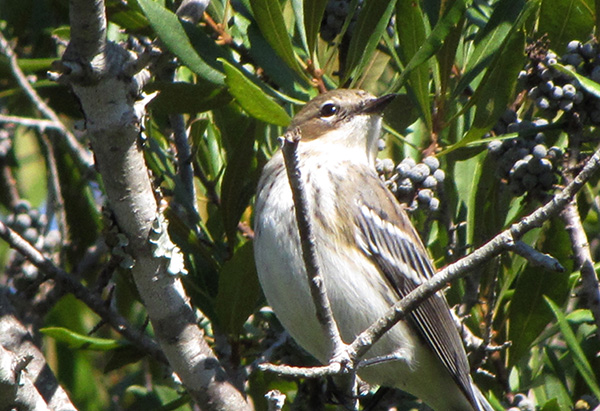
Finch Oct 2

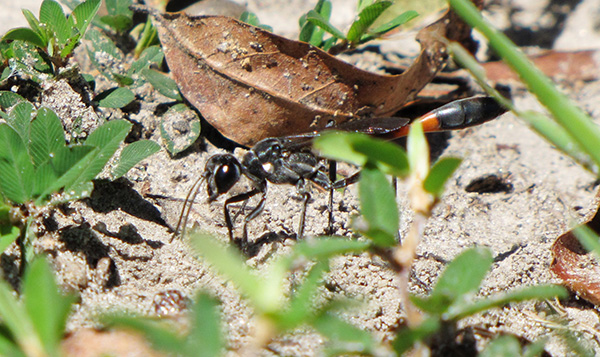
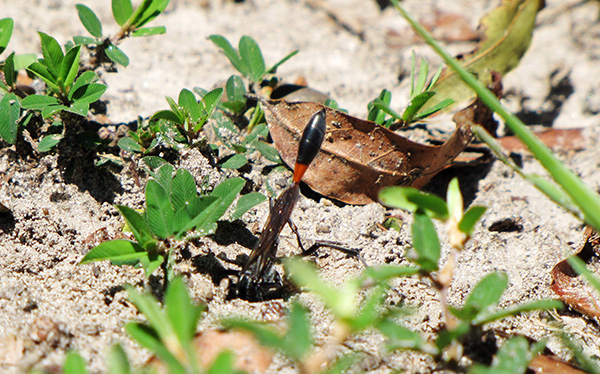
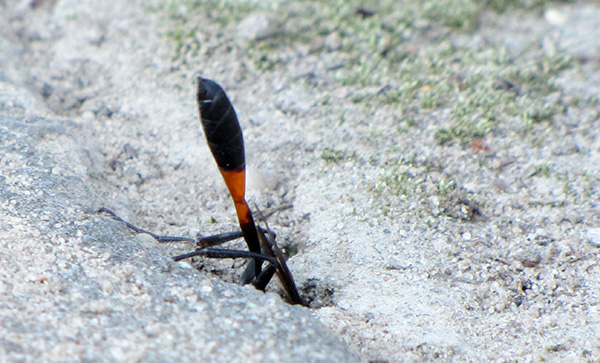
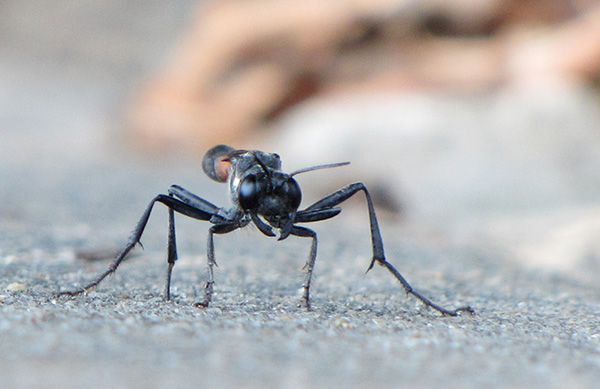
Maybe brisk is a better word. Except, nothing feels brisk. Instead everything feels sleepy and slow. Spider webs ripple in smoke-tinged drafts, and wasps pause for photographs as if posing.

Spider Sept 30

Unknown Wasp Sept 27

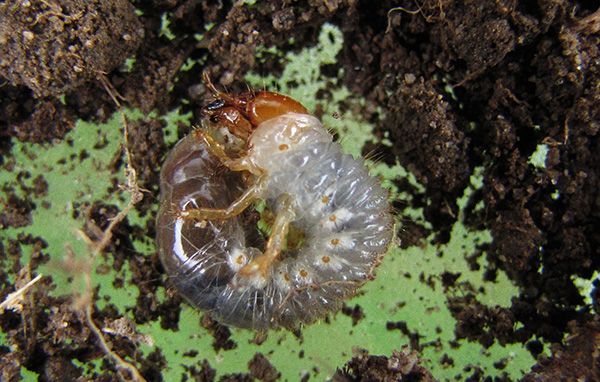
Grubs curl sluggishly when disturbed, and I have to go slow with the mower because fall’s chill has dulled the toads’ reflexes.

Grub Oct 12

Toad Sept 1

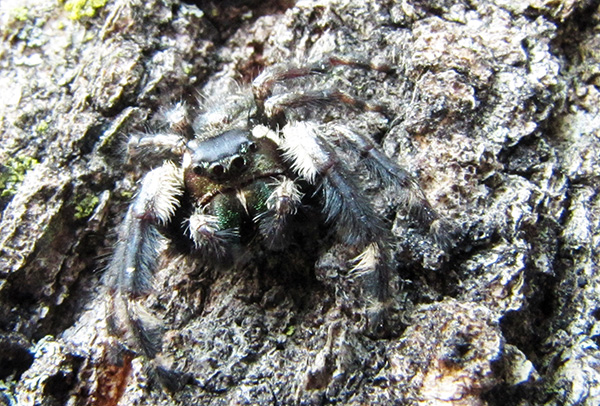
Jumping spiders retreat higher and higher into trees, searching for safe crevices in which to spin their thick winter nests.

Spider Oct 2

It happens like this every year, and every year I succumb to a listless bout of melancholy.

Which reminds me of a poem by Kay Middleton…

O, October what have you done?

Review: At Age Twenty

At Age Twenty by Maxwell Baumbach
(unbound CONTENT, 2012)

Maxwell Baumbach’s poems are perceptive, ambitious, and unapologetic. They are also wryly aware that age seldom listens to youth with the kind of respect these poems yearn for.

the god is………..you
this is your….reality
your………….world (“Kaleidoscopes (an experimental sestina)” pg 20)

but the world does not cease
leaving its oversized handprints on my back
shoving me
onward (“My Fifth Birthday” pg 64)

While I usually prefer more complexity of sound, there’s plenty of music here. It’s a raw music of line breaks and candor: “I am your / zip lock lover” (“Zip Lock Lover” pg 25), “your eyes are gods / they make me believe that I am / capable…” (“the gods in your eyes” pg 28), and “no one kills themselves / on their own” (“Lemmings” pg 69).

There’s chaos and gratitude. Despair, sarcasm, and humor. The world is vulnerable and absurd. Brakes fail, Harry Caray sings through a seventh-inning stretch, and pro wrestlers soar and fall. Orion has a belt but no pants.

Some of these poems are terse fragments of dialogue, others are expansive recollections. They drop F-bombs, have a few drinks, and fall in love. Bruises and broken hearts are part of the journey, as are breathtaking insights.

I couldn’t help seeing the future in this book, nestled inside one of my favorite poems from the collection:

Sphere Within a Sphere

I saw a sculpture
in Ireland
of the new world
emerging from the old one

it is not the
now rusting gold
or the curvature
of the spheres
that made it so wondrous

but rather
that this sculpture
will be perpetually relevant

(reprinted with the author’s permission)

The new world is, indeed, emerging from the old.

Introducing a Live Oak (Treebeard)

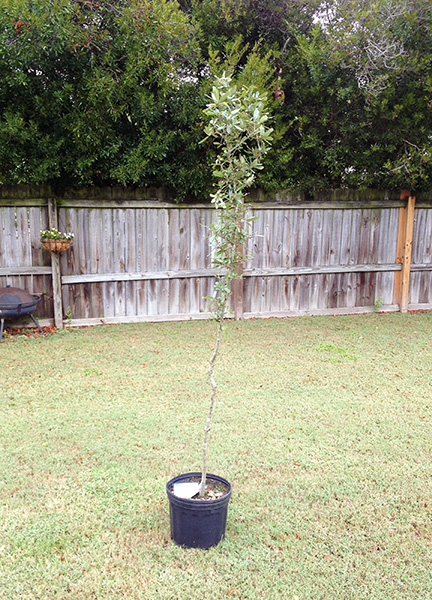
Live Oak Oct 12

We planted a tree yesterday — a live oak from Friends of Live Oaks in Virginia Beach. From the time we left to pick up our tree until the time we stood back and admired our work, the entire process took less than three hours.

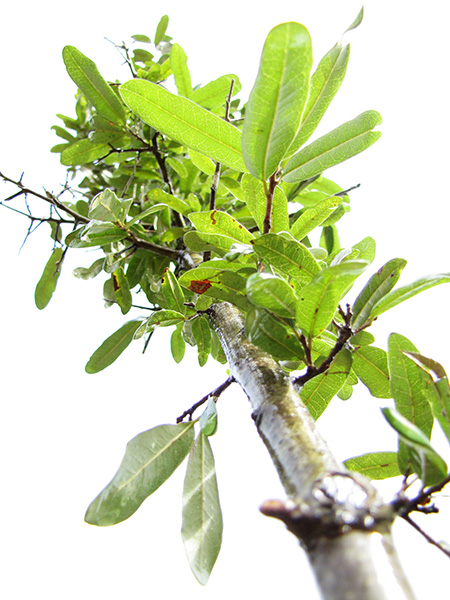
Live Oak Oct 12

The result of our three hour investment will (hopefully) outlive us. It’s a profoundly satisfying concept, that something so simple can be so permanent.

Live Oak Oct 12

The website says these trees may live 1,400 years, a span impossible to feel. I’ve lived forty-four years. My father lived fifty-two years. My mother, seventy-six. My grandmother, one hundred years.

Beyond one hundred years, I’m grasping mist. A few family photos from the late 1800s. A Civil War diary. A name that may or may not be an ancestor. Rumors and speculation.

Live Oak Oct 12

It makes me wish paper could be shaved, sheet by sheet, from a tree’s cross-section. Pages would preserve rings far more interesting than the words I write. Seasons of flood and drought, ages of ice, flashes of fire.

Today our little live oak has two rings, three at most. Each says nursery in healthy excess. Next year a smaller ring will say transplanted. After that? Mist again…

Live Oak Oct 12

I haven’t named any of the yard’s trees, until now. A few days ago I started calling the live oak Treebeard, and the name stuck.

Kleptoparasites

Wasp Sept 7

The tree in our front yard had fewer caterpillars this summer, so the yard had fewer thread-waisted wasps. Instead of a daily swarm of wasps under our tree, I saw one or two a week.

Wasp Sept 7

The wasps dug burrows as usual, but I didn’t see any of them return to their burrows with prey.

Wasp Sept 11

Twice I waited over an hour as wasps searched through leaf litter on the ground and branches overhead. Both times the wasps were still hunting when appointments called me away.

Wasp Sept 11

My wasp failures were disappointing, but it’s always worthwhile to spend a few hours sitting quietly in the yard. Last year as I waited on the wasps, I found a wolf spider carrying her army of spiderlings. This year I found flies.

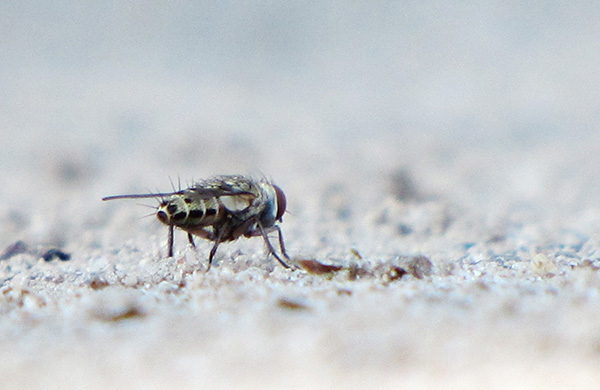
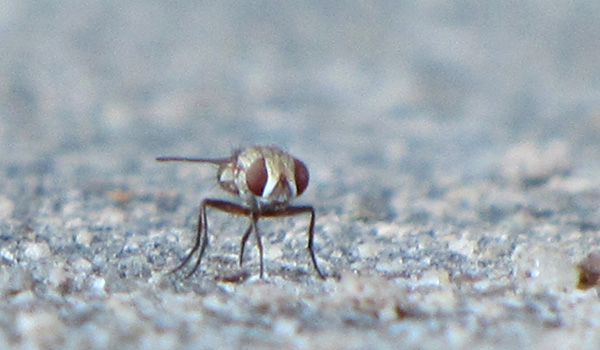
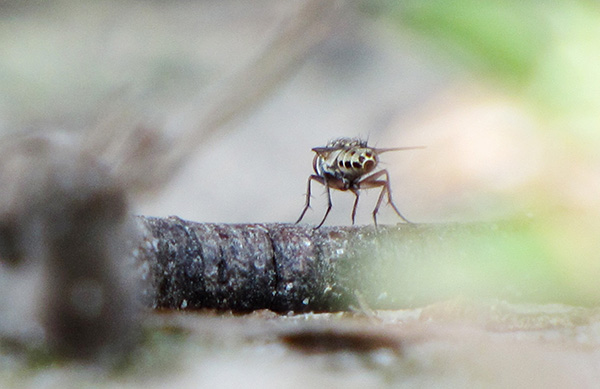
Fly Sept 11

The flies caught my attention because they seemed as interested in the wasps’ activity as I was. They watched as intently as I did.

Fly Sept 11

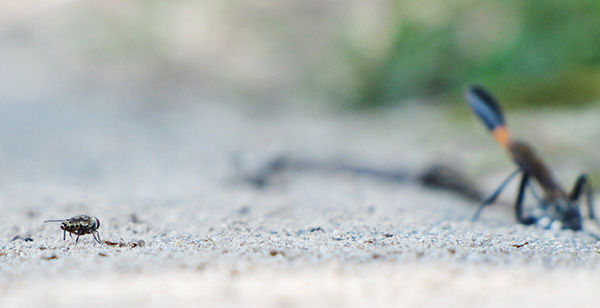
As the wasps dug, three or four flies positioned themselves within a few inches of the developing burrows. Each time a wasp carried a pinch of excavated dirt away, the flies zoomed in and flew quick figure-eight patterns over the burrow. When the wasps returned and resumed digging, the flies lit nearby and watched until the wasps left again.

Fly Sept 11

The longer I watched, the more convinced I became that the flies were kleptoparasites. They were waiting to deposit their larvae in the wasps’ larder, alongside the wasps’ hungry larvae.

Fly Sept 11

The behavior is well-documented. It’s one of those complicated, clever twists of nature that fills me with questions. How do the flies learn to follow the wasps? Generation after generation, flies see a thread-waisted wasp and something whispers deep within their experience. Follow it. And they obey. Why?

Poetic Prose: Metaphor’s Impact on Pace

In 2012, brain studies made headlines with evidence that metaphors activate sensory regions of the brain. The implications for fiction writers are readily obvious. If you want your readers to see, hear, smell, and feel your world, you can help them along by using descriptive metaphors. Articles like “The Neuroscience of Your Brain on Fiction” from the New York Times cover the topic in eloquent detail:

The brain, it seems, does not make much of a distinction between reading about an experience and encountering it in real life; in each case, the same neurological regions are stimulated. Keith Oatley, an emeritus professor of cognitive psychology at the University of Toronto (and a published novelist), has proposed that reading produces a vivid simulation of reality, one that “runs on minds of readers just as computer simulations run on computers.” Fiction — with its redolent details, imaginative metaphors and attentive descriptions of people and their actions — offers an especially rich replica. Indeed, in one respect novels go beyond simulating reality to give readers an experience unavailable off the page: the opportunity to enter fully into other people’s thoughts and feelings. (1)

The New York Times article references, in part, research done at Emory University in Georgia. The university’s website describes the methods employed in one of the more prominently discussed studies:

Seven college students who volunteered for the study were asked to listen to sentences containing textural metaphors as well as sentences that were matched for meaning and structure, and to press a button as soon as they understood each sentence. Blood flow in their brains was monitored by functional magnetic resonance imaging. On average, response to a sentence containing a metaphor took slightly longer (0.84 vs 0.63 seconds). (2)

For me, that last detail adds a new dimension to the discussion about metaphor in writing. Metaphors take longer to process. And, while the time lag may not seem significant when applied to single sentences, it adds up over the course of a book. Even over the course of a paragraph.

Here’s the first paragraph of The Last Unicorn:

The unicorn lived in a lilac wood, and she lived all alone. She was very old, though she did not know it, and she was no longer the careless color of sea foam, but rather the color of snow falling on a moonlit night. But her eyes were still clear and unwearied, and she still moved like a shadow on the sea. (3)

A lilac wood? Is the wood made entirely of lilacs? Is it purple? Maybe it smells like lilacs? Perhaps the intent goes deeper than description. Lilacs appear in mythology, flower lore, and in a well-known poem by Walt Whitman. Since there is no rule limiting each word in a text to a single meaning, lilac may mean all of these things. And, no matter which meanings I choose, I am alert for the next metaphors — a series of sea and water images used to describe the unicorn. These make me thirsty for more.

By the time I finish this first paragraph, the book’s opening pace is established. It flows from page to page in unhurried leisure, giving me plenty of time to explore and enjoy the scenery. At the bottom of the first page I’m told, “Unicorns are immortal.” And I understand. They have no need to hurry.

But things change for the unicorn, and for me, on page six.

From that first moment of doubt, there was no peace for her; from the time she first imagined leaving her forest, she could not stand in one place without wanting to be somewhere else. She trotted up and down beside her pool, restless and unhappy. Unicorns are not meant to make choices. She said no, and yes, and no again, day and night, and for the first time she began to feel the minutes crawling over her like worms. (4)

As the unicorn frets, so does the text. The first part hurries along, a straightforward description of restless indecision. Then time slows uncomfortably with “… minutes crawling over her like worms.” Further down the page, I find this paragraph:

Under the moon, the road that ran from the edge of her forest gleamed like water, but when she stepped out onto it, away from the trees, she felt how hard it was, and how long. She almost turned back then; but instead she took a deep breath of the woods air that still drifted to her, and held it in her mouth like a flower, as long as she could. (5)

The road “gleamed like water.” It’s an arresting image, recalling the first paragraph’s water imagery. I expect the road to ripple when the unicorn steps on it, and I share her surprise at finding it solid. I’m ready for her deep breath, because I need one too, but then I am caught by the uniqueness of “…and held it in her mouth like a flower.” Like a lilac? It’s so captivating that I, too, pause as long as I can.

Comparing the two scenes from page six, the second is shorter than the first, and yet it holds more intricacy. I linger, savoring the shorter passage. The first scene is useful and informative. The second is a critical turn in the plot, and its metaphors force me to pay attention as I read.

I could go on and on, quoting page after page of equally wonderful metaphors in The Last Unicorn. They make the beautiful parts more beautiful, the suspenseful parts more suspenseful, and the emotional parts more emotional. They keep me engaged, and they transform a lovely story about a unicorn into a classic.

But how do I apply lessons learned in The Last Unicorn to my own writing? I begin by planning my metaphors better, capitalizing on their ability to engage a reader’s senses, as well as their pace. Too little metaphor renders stories thin and featureless. Too much slows them to tedium. Where will metaphors enhance my stories, and where will they get in the way?

References

1. Paul, Annie Murphy. “Your Brain on Fiction.” The New York Times. 17 March 2012. The New York Times Sunday Review/The Opinion Pages. Web. 9 September 2013.

2. Woodruff Health Sciences Center. “Hearing metaphors activates sensory brain regions.” Emory News Center. Emory University. 7 February 2012. Web. 9 September 2013.

3. Beagle, Peter S. The Last Unicorn. Fourth Printing. New York: Ballantine Books. 1972. Print. 1.

4. Beagle, Peter S. The Last Unicorn. Fourth Printing. New York: Ballantine Books. 1972. Print. 6.

5. Beagle, Peter S. The Last Unicorn. Fourth Printing. New York: Ballantine Books. 1972. Print. 6.

Butterfly Sept 13

“Say my name, then,” the unicorn begged him. “If you know my name, tell it to me.”
“Rumpelstiltskin,” the butterfly answered happily. (pg 10)

Butterfly Sept 30

You know better than to expect a butterfly to know your name. All they know are songs and poetry, and anything else they hear. They mean well, but they can’t keep things straight. And why should they? They die so soon. (pg 11)