Wolf Spider (Arachnophobia Alert!)

I was trying to record a short video of the thread-waisted wasps when a flash of nearby movement distracted me. At first, I couldn’t find what had moved.

The spider and I recognized each other at the same time, and it’s hard to say which of us was more frightened. She dove back into her burrow as I fought off a wave of arachnophobia-panic. I took a few calming breaths, forced myself to sit next to the burrow, and readied my camera.

After several minutes, she emerged again. Covered with babies! She did a quick survey, decided I was still too close, and carried her children back to safety.

Even when it’s icky and strange, the yard is amazing.

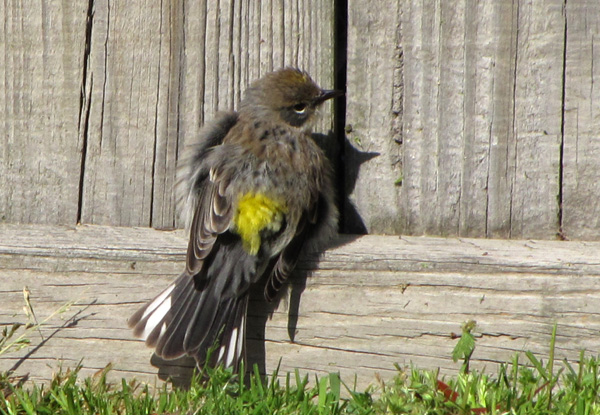
The Wax Myrtle and Yellow-rumped Warblers

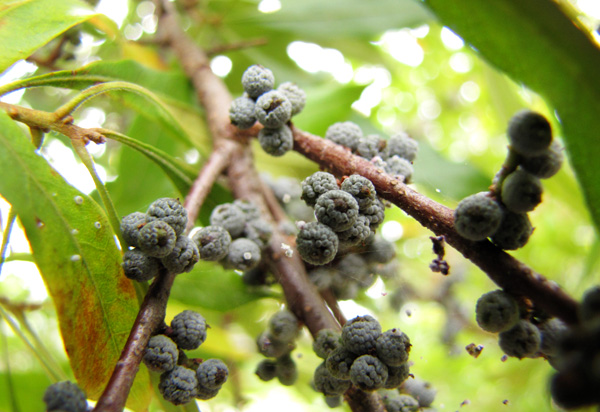
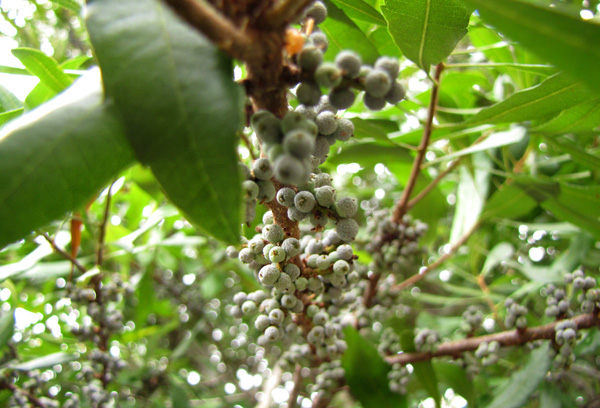
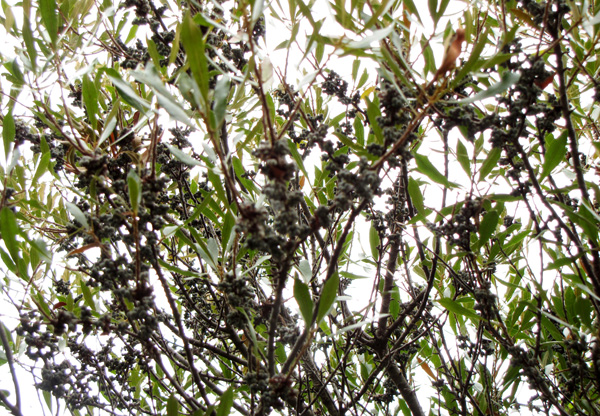
Much of the yard’s fall and winter activity takes place in the wax myrtles. (I believe ours are southern wax myrtle. Other names include Southern bayberry or candleberry.) I’ve never bothered to count, so I don’t know how many individual plants make up the barrier between our fence and the sidewalk. Enough to create a unique habitat in the yard.

More tree than shrub, the wax myrtles are distinctly male and female. Only the females produce berries. (Technically, their fruit is considered a drupe.)

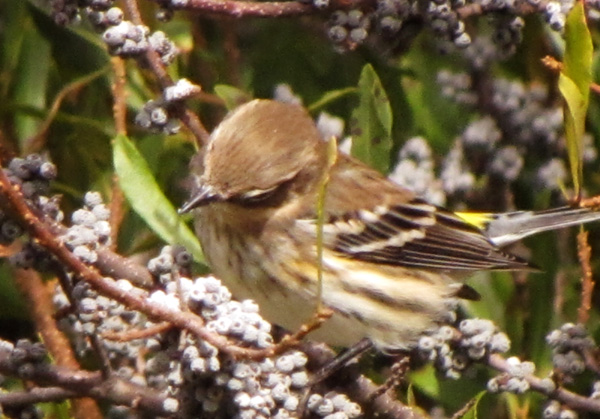
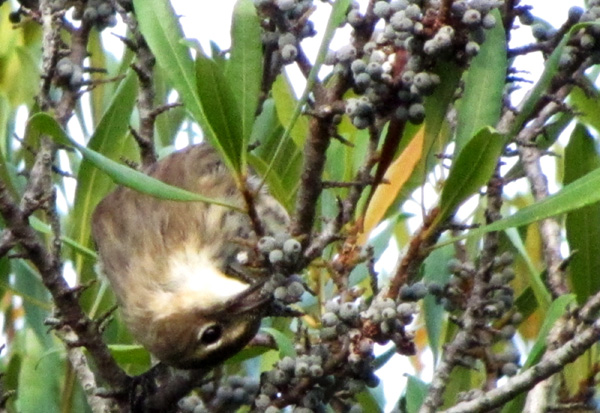
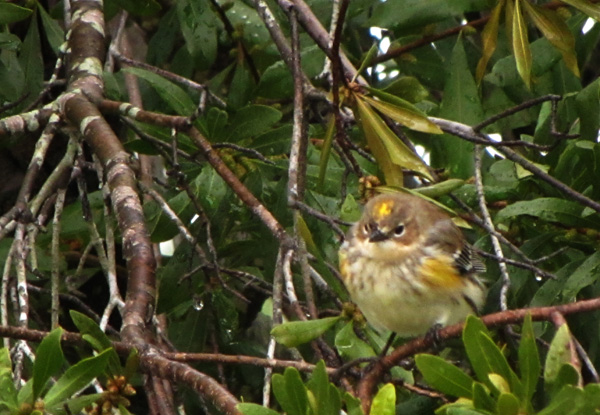
The berries aren’t in high demand. Few of the yard’s visitors bother with them, which leaves more than enough for the yellow-rumped warblers that come each fall and stay until spring.

According to The Cornell Lab of Ornithology’s All About Birds website, yellow-rumped warblers are the only warbler species able to digest the berries.

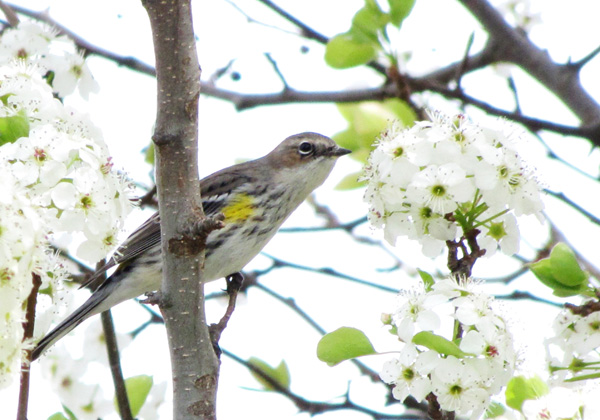
The warblers stay through pear-blooming time, when they spend a few weeks feasting on nectar and soaking up sunshine. Then they disappear.

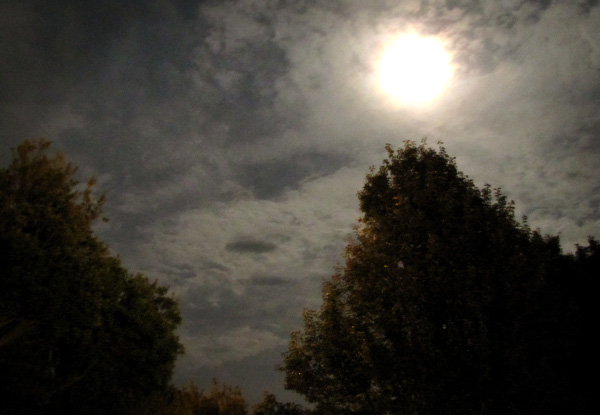
Today I saw fall’s first flock of warblers flitting through the wax myrtle. For me, their arrival is as certain a sign as the Harvest Moon.

Thread-Waisted Wasp

Some years ago, the tree beside our mailbox became infested with yellownecked caterpillars. (I believe the following moth is the adult form of these caterpillars. Please comment if you can confirm or correct my identifications!)

That first summer, the tree’s lower branches were stripped of leaves by fall. The next summer, thread-waisted wasps arrived in the yard.

Dozens of these wasps dug burrows in the loose soil under the tree. The following year, we saw very few caterpillars and even fewer wasps. The tree kept most of its leaves. Another year later, the caterpillars surged again. More wasps, as well.

They continue on in this pattern. Every other summer, we have caterpillars and wasps, with the between years bringing decreased populations of both.

The wasps are very efficient. A burrow takes only fifteen or twenty minutes to complete. They dig with their front legs and jaws, vibrating their wings as if to loosen the soil faster, and carry the excavated dirt several feet away. Each trip clears a pea-sized lump.

When the burrow is deep enough, they fly into the tree, sting a caterpillar, and let the stunned victim fall. They find the caterpillar on the ground, grasp it in their impressive jaws, and drag it into the burrow. A few minutes for egg laying, and the job is done. (I missed this part of today’s activity because my camera batteries died. 😦  Maybe I’ll get another chance tomorrow.) When finished, the female stuffs clumps of dirt and small stones into the burrow’s entrance. Then she moves to a different part of the yard and starts all over again.

The sandy parts of our yard, where grass grows poorly, are peppered with burrows right now. Next year, I expect the tree will keep its leaves all summer.

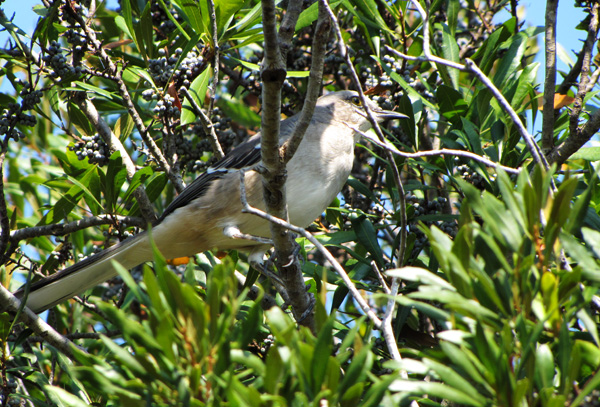
As a final note today, this might be the same mockingbird that I photographed yesterday. It certainly had the same sneeze…

Katydids

Growing up, katydids were my summer lullaby. On hot, still nights, I would move my pillow to the foot of the bed and sleep with my face inches from the open window. I remember the night air’s damp smell and the moonlit silhouette of silver maples. I remember the hollow calls of barred owls in the swamp across the road. And I remember the rhythmic, echoing chorus of katydids. Mother told us they were saying katydid katydid katydid… katydidn’t… katydid katydid…

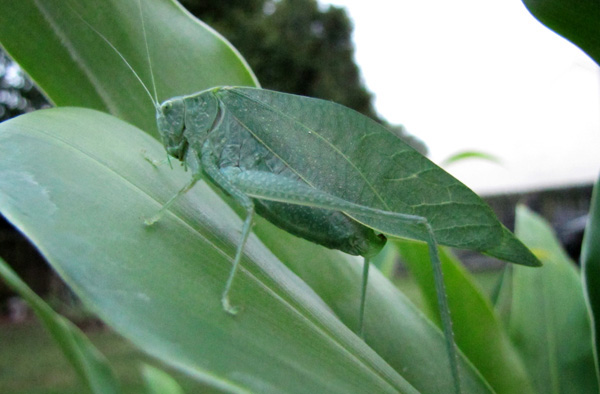
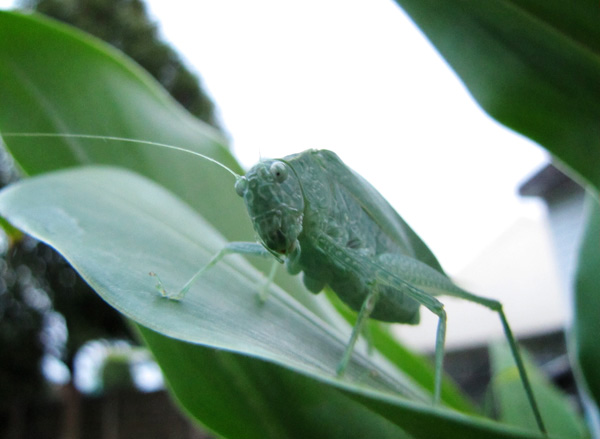
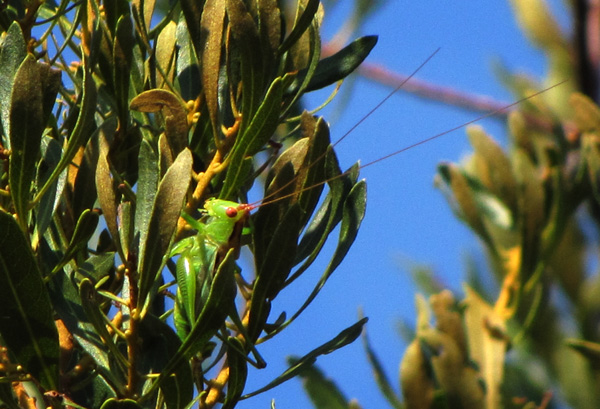
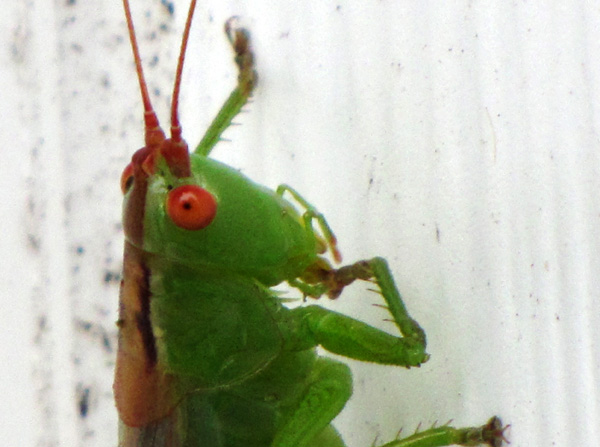
I never imagined that I was leaving katydids behind, when I moved to Virginia. The closest thing I’ve seen, since moving, is the greater angle-wing pictured above. (Photos taken in 2011).

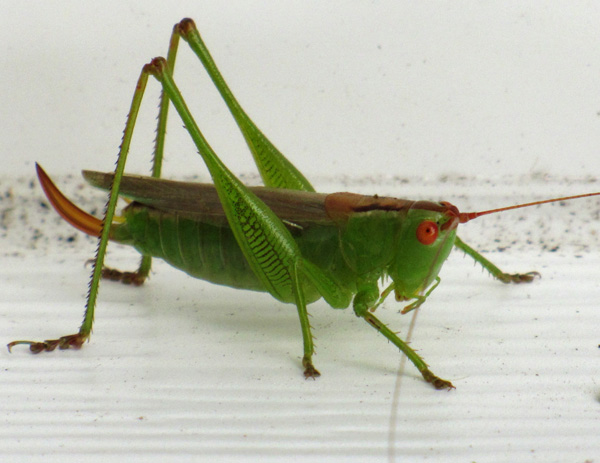
The yard does have a thriving population of small katydid cousins, meadow katydids, but they sound nothing at all like my childhood.

Check out this web page for recordings. Click on the common true katydid, to hear the call I grew up with, then compare it to the common meadow katydid. You might also listen to the greater angle-wing, which solves one of my ongoing yard mysteries. I’ve spent many a night creeping around the yard with a flashlight, trying to figure out who makes that repetitive click…

While I was hunting katydids today, trying unsuccessfully for a video clip, I kept hearing what sounded like a sneeze. A tiny, high-pitched bird sneeze. This mockingbird seemed embarrassed, when I traced the sound to it. I wonder if birds suffer from allergies, too?

Gesundheit!

Cicadas

Cicadas

Youth taps through a labyrinth
Of root, exploring in blind stages
Each nymph counts, each instar
Molts toward the relentless percussion
Of age, where the last skin hardens
And splits at the nape, final
Form shrugging free to unfurl song
In heat, muscles tuned to the sun’s declining
Tenor, late summer’s desperate chorus
Clings to tired limbs that droop
With the weight of leaves past saving
A monotonous harvest of lust
Set to succumb after securing the eggs
Muffling them in summer’s golden pith