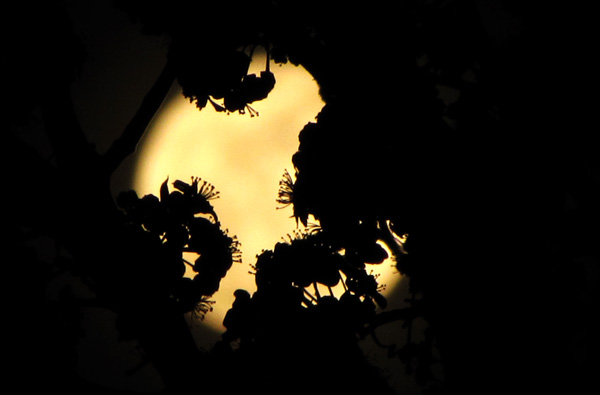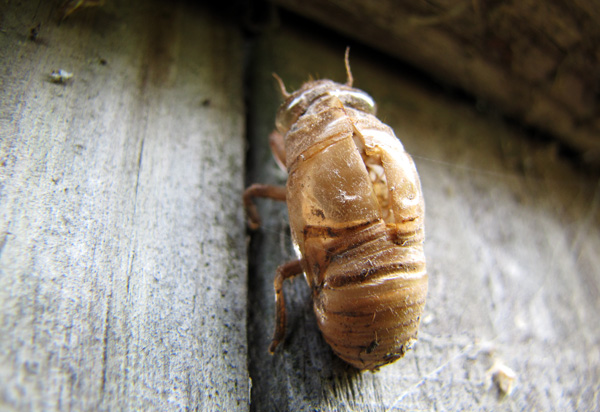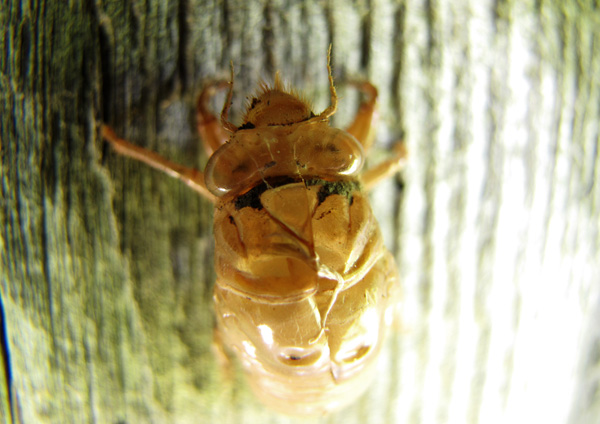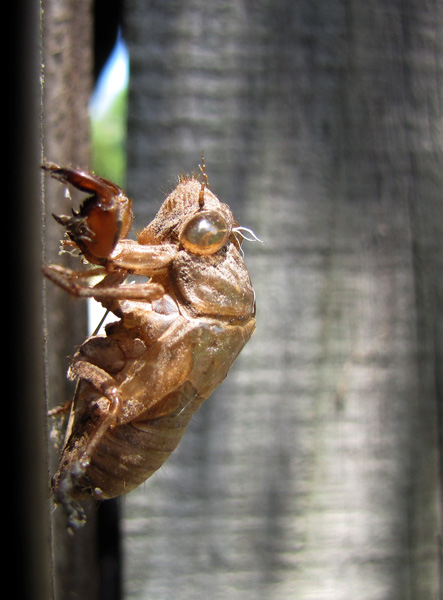
Cicada Molt

I wonder what it feels like to wake up with wings?

Notes from the Yard

The yard isn’t exactly bustling, in this heat, but there are signs of life. Each day, more and more cicadas molt on the fence.

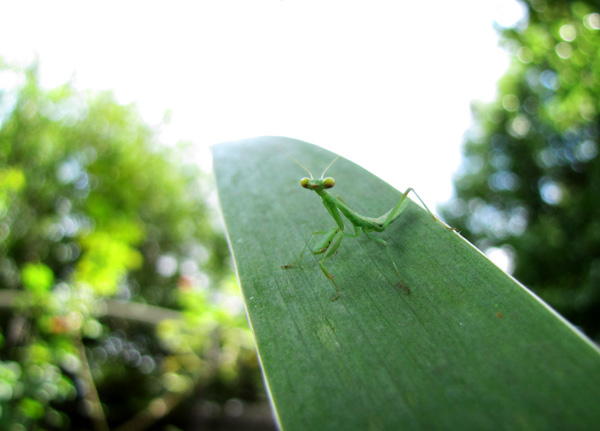
The young praying mantises have spread out into the iris beds.

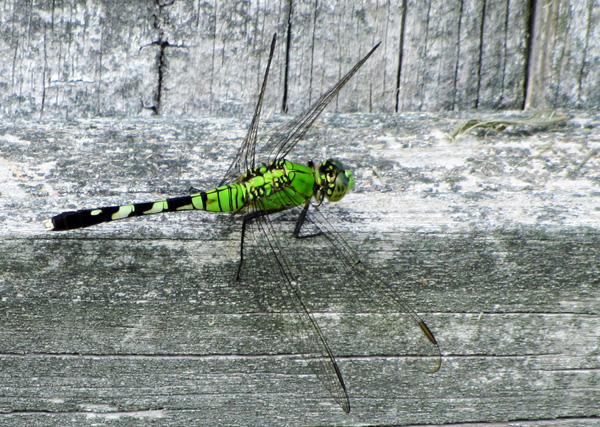
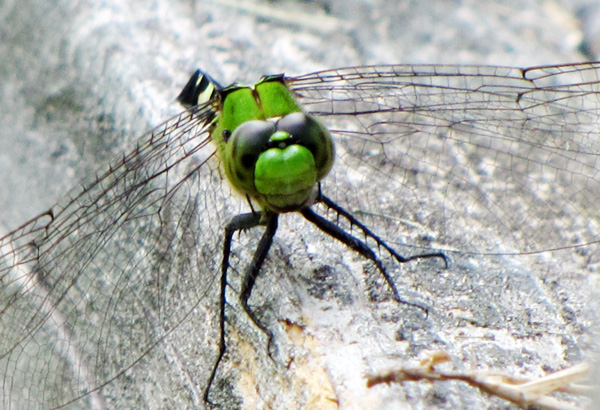
And I’m still seeing pondhawks, though their numbers have decreased over the last two days.

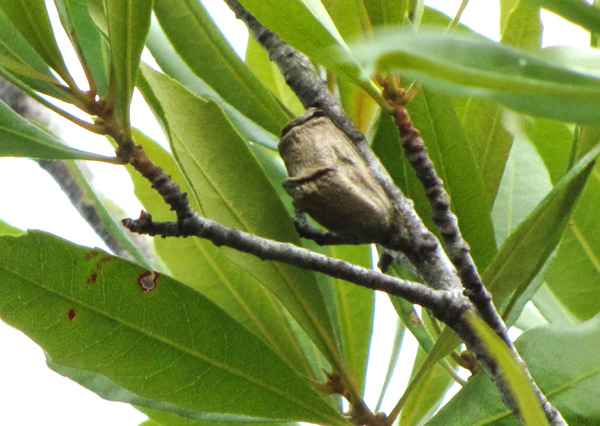
Finally, I’m intrigued by this cocoon. What’s in there? My chances of finding out are slim, because it will likely emerge when I’m busy doing other things. Even so, I check on it several times a day. Just in case…

More from Red Wing Park (and a Publication Note)

Red Wing Park is one of my favorite places to visit when I crave a short walk. Or when I’m in the mood for butterflies. Yesterday, I discovered several new attractions, including lotus blooms in an artificial pond and a skink basking on the pond’s rock border.

Butterflies were out in droves, even a few species I have never seen before. (Add these to the Snowberry Clearwing Moths in yesterday’s post…)

I caught several images of a large, unfamiliar swallowtail. I can’t tell if these are Pipevine Swallowtails or Spicebush Swallowtails. Maybe both species were present? Any ideas?

One individual had a mangled hindwing, with more than half of the wing amputated. In marked contrast to the other butterflies, this one struggled in flight. It flailed and fluttered along in short spurts, stopping to perch on flowers rather than hovering as it drank. It continued to feed and flirt with its companions, but it was decidedly less agile.

As far as wing injuries go, this was as bad as I’ve seen. I felt an uncomfortable surge of empathy, and I couldn’t help but wonder if the wound was painful. The encounter has turned me philosophical.

It’s just a butterfly. An insect. An ephemeral creature, at best. And yet, its fate affected me. I am reminded of that jaded cliche about chaos theory, the one where a butterfly flaps its wings in one part of the world, causing an alteration in the weather pattern of another part of the world. What of this butterfly’s damaged wing? What currents of change might eddy in its wake?

Publication note:  My poem “The Road” was published at vox poetica this week. It is now posted on the poemblog. Many thanks to editor Annmarie Lockhart!

It’s Definitely Not a Bee

I took a walk in Red Wing Park today, looking for butterflies. I found butterflies (there will be photos later), but I also found something I had never seen before. I believe these are Snowberry Clearwing Moths. (Which might be the same as a Bumblebee Moth?)

I was so excited, when I first noticed them, that I forgot my camera. And I’m pretty certain I was talking to myself. All alone, in the middle of a dappled path, mumbling things like “ooh how pretty” and “what odd bees” and, at last, “it’s definitely not a bee.”

Once I remembered my camera, it didn’t take long to realize that the moths moved too fast for me. They hovered to drink, never perching. A quick sip of nectar, then on to the next bloom. Most of my images could be labelled “a moth was here when I pressed the button, but flew away before the shutter clicked.”

I starting having success when I learned to focus on a clump of flowers and wait for a moth to zip into frame. This technique was a stretch for me, because I’m terrible at waiting. Perhaps, after today, I’ll be a tiny bit more patient with my life.

I’m tempted to wish for better photos, but the truth is that I’m lucky to have gotten any useful images at all. Most of my efforts look something like this:

Pondhawk Invasion

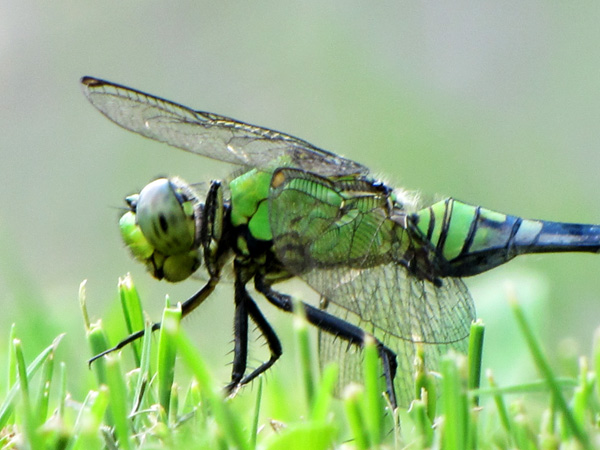
Eastern Pondhawks have taken over the yard. Every available perch is occupied, every patch of grass claimed. Active and aggressive, they patrol one area for five or ten minutes, then attempt to move on. It’s hard to say who wins the resulting bouts of mid-air combat, because I have trouble distinguishing individuals. But it seems to me as if territories steadily shift, so that one dragonfly might begin her morning in the southwest corner, move by noon into the northeast corner, then rotate back to her southwest starting position by evening. As she moves, others crowd in behind her, so that the entire yard is continuously occupied.

Fortunately for all the other dragonflies, the Eastern Pondhawks appear to prefer ground-level hunting and rarely move into the trees.