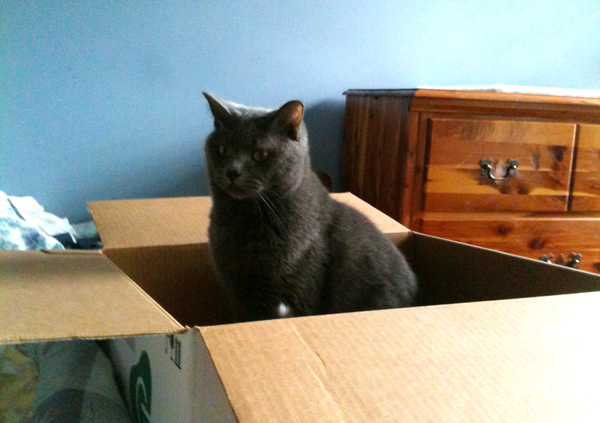
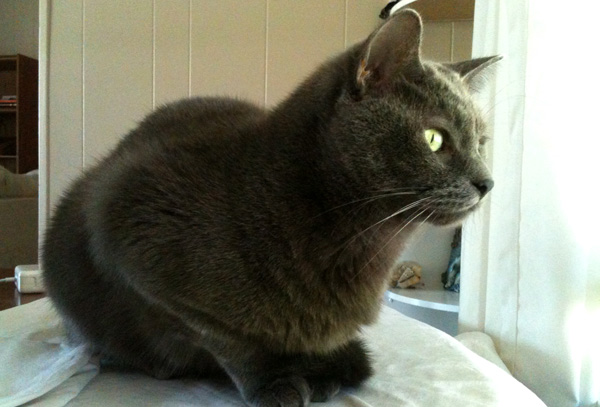
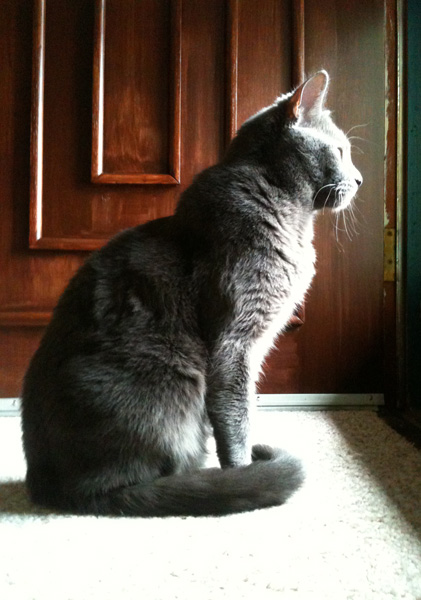
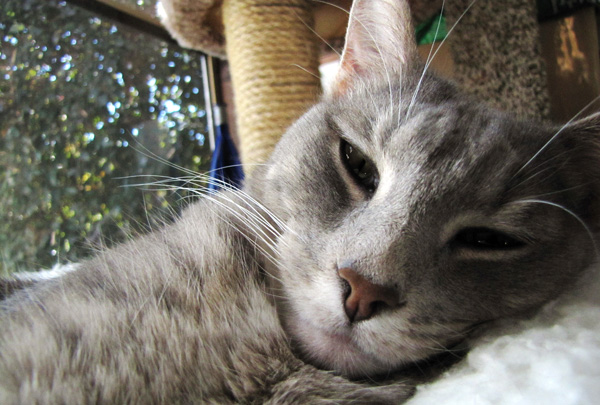
Vanna’s First Christmas Tree

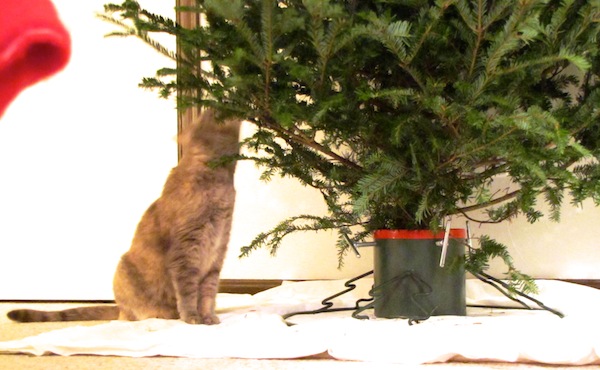
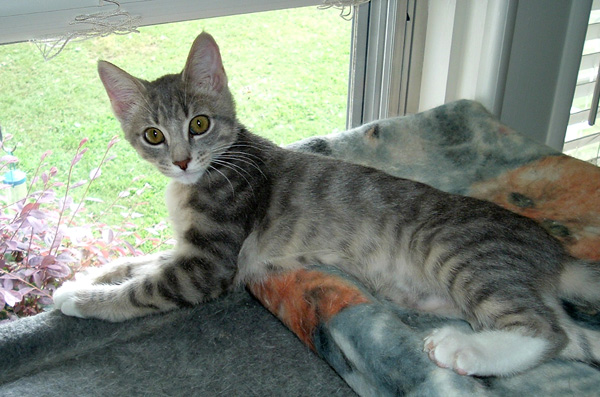
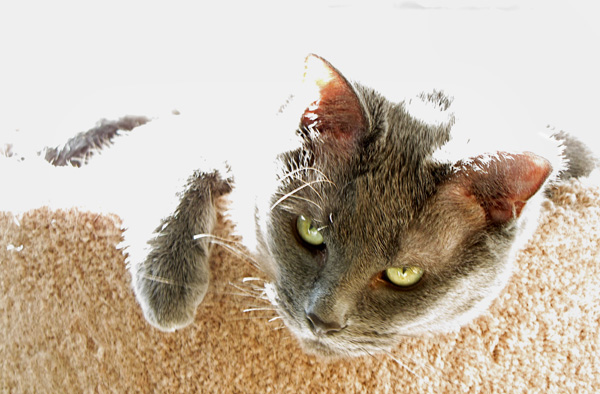
Mother bought an artificial Christmas tree many years ago, tired of fighting the yearly mess. (And the predictable attack of severe allergies.) Eventually she gave up on the artificial tree, too. She replaced it with a small ceramic tree, which fit on the table and was easy to put away when Christmas was over. All of this means that Vanna, who is thirteen years old, has never seen a real Christmas tree. Until last night…

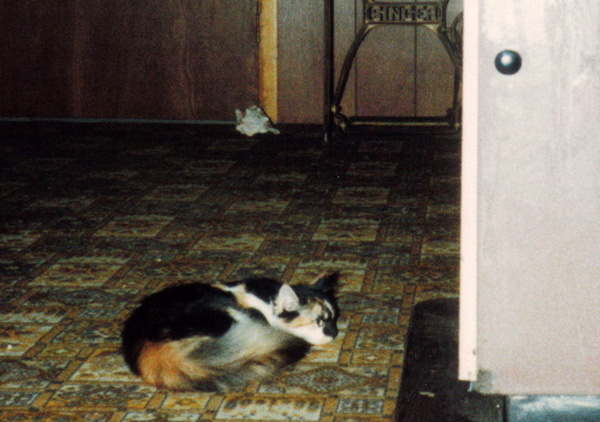
Cats with Tree Dec 15

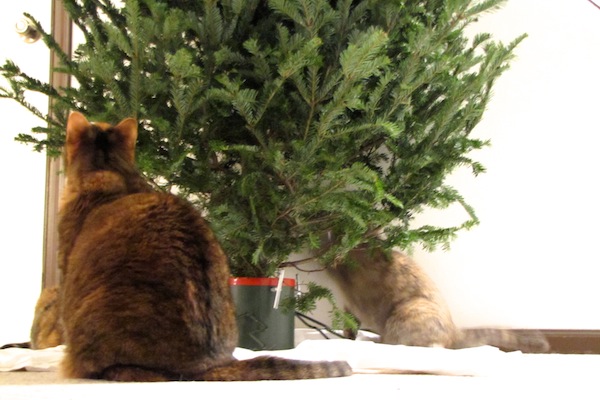
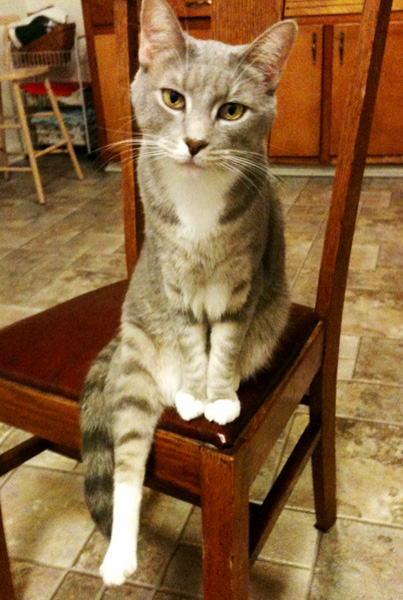
Her housemates are accustomed to our mysterious mid-December decor, but that doesn’t mean they are immune to the tree’s allure.

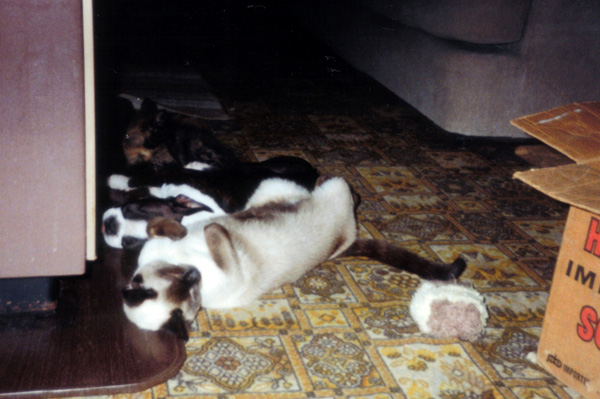
Cats with Tree Dec 15

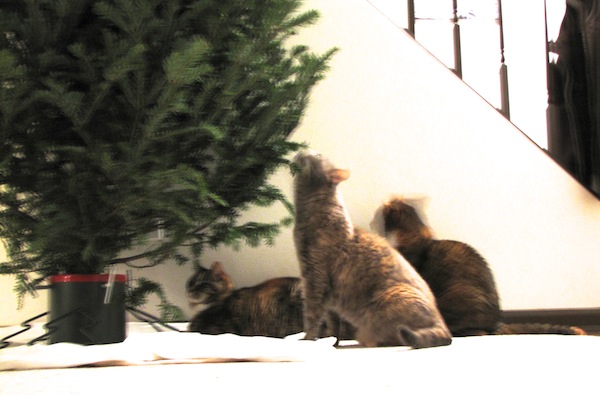
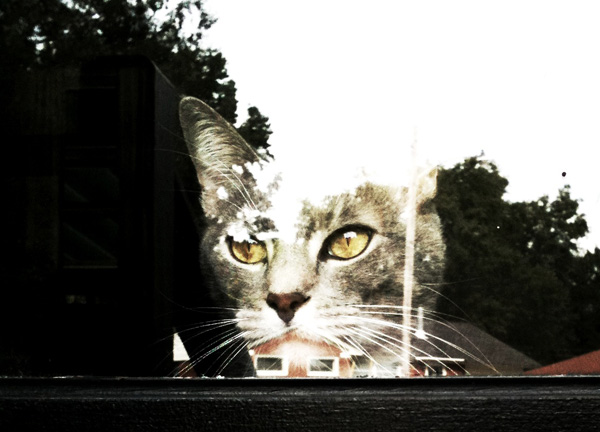
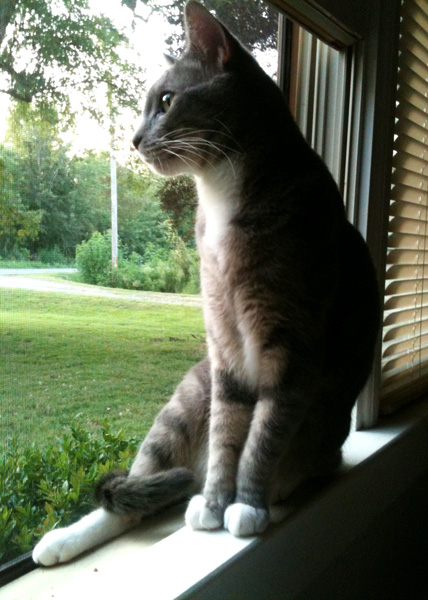
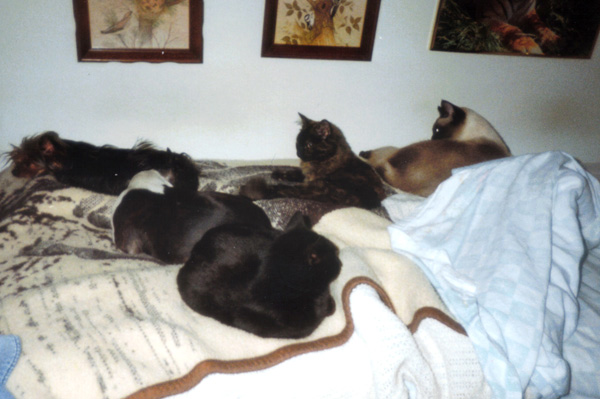
This year’s tree seems to have earned the approval of all three cats. It survived the rigors of feline inspection and is, for the moment, their favorite spot in the house.

Cats with Tree Dec 15

The Pirate Cats

“Silver had two guns slung about him–one before and one behind–besides the great cutlass at his waist, and a pistol in each pocket of his square-tailed coat. To complete his strange appearance, Captain Flint sat perched upon his shoulder and gabbling odds and ends of purposeless seatalk.”
from Treasure Island by Robert Louis Stevenson

In 2005, Mother signed up for a class about pirate literature. The course focused on Peter Pan and Treasure Island, as did most of our telephone conversations at the time. She shared bits of trivia regarding the authors and texts. She followed tangents of memory sparked by Peter’s exploits and Jim’s adventures. And she read from her notes, teaching me how the books fit into the history of literature.

A few years later, when she met a pair of orphan kittens named Captain Flint and Long John Silver, I was tempted to call it fate.

Captain Flint, 2007
Captain Flint, 2007
Long John Silver, 2007
Long John Silver, 2007 (photos provided by my brother and sister-in-law)

These two kittens arrived at Challenger’s House in the summer of 2007. Captain Flint was found, malnourished and abandoned, in front of a local business. Long John Silver was thrown from a car and rescued by the driver who witnessed it. As they were about the same age, and both too weak to keep up with healthy kittens, they were placed in a foster home together. To be exact, they were placed in my brother and sister-in-law’s home.

Flint had trouble gaining weight. Long John needed surgery to repair his broken leg. And Mother talked about them for months, calling with detailed updates after every visit. It seemed to me as if she visited my brother and sister-in-law more often, while the kittens were there, and her attachment to the little pirates grew with each week. All the while, she denied any desire to adopt them.

Then she called one day and said, “Guess what I just did…” She claimed that her decision came from an urge to keep the boys from being separated. They had finally been declared healthy enough to go to the adoption center, and she feared they would not find a home together. So they went to live with her, and our telephone conversations were soon filled with the antics of Long John Silver and Captain Flint.

2010

Long John Silver is a charismatic troublemaker, a bit like his namesake. (Right down to the bad leg, which healed stiff because the joint was too damaged to repair.)

Long John Silver

Long John

Long John

Captain Flint is both buccaneer and parrot, sometimes starting the trouble, and sometimes following Long John’s lead.

Flint

Flint

Flint

Last year, when Mother died, the pirate cats returned to my brother and sister-in-law’s home, which means I get to continue following their adventures. And their misadventures, because they are often very bad boys. A pair of mischievous rogues, well named and well loved.

Long John Silver

Flint

How We Stayed Warm

Warm 01s

I grew up in a house with a wood burning stove, so all of my winter memories are tinged with the scent of smoke.

Warm 12s

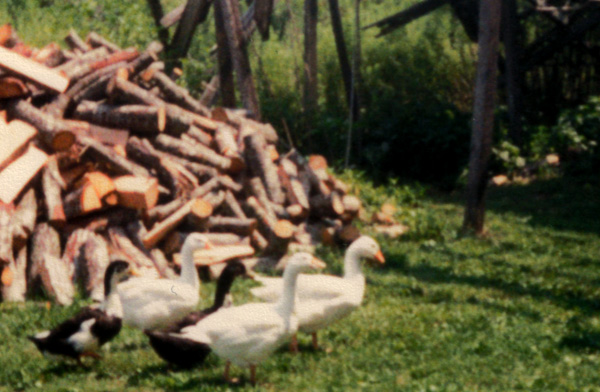
Mother ordered the first load of wood mid-summer, which gave it time to cure. She ordered a cord at a time, requesting a mixture of kindling and longer burning logs. It arrived as a tumbled pile at the end of the driveway, and we hauled it off by armfuls and wheelbarrow loads, stacking neat rows under the tin roof of our open-sided pole shed.

Warm 06s

Starting in my teens, I claimed the wood as my own domain because I enjoyed the physical activity of hauling and stacking. Plus, it gave me an excuse to be outside with the animals, who followed me back and forth as I worked.

Warm 11s

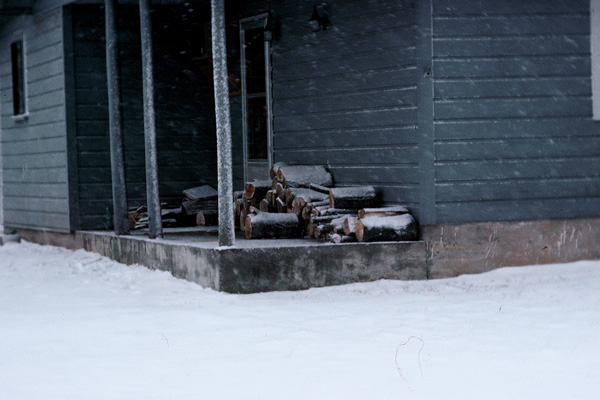
Mother disliked storing firewood on the porch, so she rarely wanted more than one day’s supply brought down each afternoon. However, she relented when we had snow or ice storms. Then I would carry wood until my shoulders and back ached.

(This photo is from Mother's archive, not mine.)

Or until I got bored and wandered off to explore the pasture and woods.

Warm 14s

Warm 15s

The stove was undeniably harder to maintain than central heat, but it was also undeniably warmer.

Warm 09s

Warm 07s

Except it didn’t heat the entire house. Our den was a smoky, sleepy haven, but my bedroom, in the opposite end of the house, stayed so chilly that blankets were not sufficient for a comfortable night’s sleep. Even so, I didn’t suffer. I had plenty of furry companions to keep me warm.

Warm 05s

One Year Later

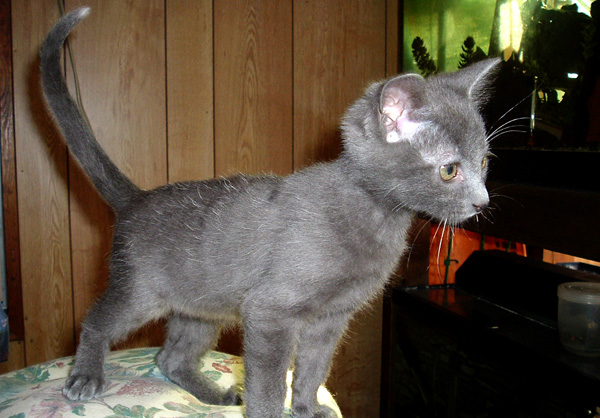
A week after Mother’s accident, I met Vanna. I had seen glimpses of her before, darting through doorways or disappearing under a bed, but I had never really met her. She was a fearful, shy cat who rarely ventured into the open, even around Mother.

When Vanna finally allowed me to pet her, I discovered that her hair was dry and loose, falling out in handfuls. She had not been taking care of herself, and her matted fur felt like a physical manifestation of my own distress.

For the first time in days, I knew exactly what to do. Here was something that I could actually fix. I found Mother’s cat brush and went to work, laughing at Vanna’s ecstatic response to my grooming efforts. She purred and drooled, rolled and kneaded the air. And I fell head over heels in love. Three months later, when I announced that I would be taking Vanna home with me when I returned to Virginia, no one objected.

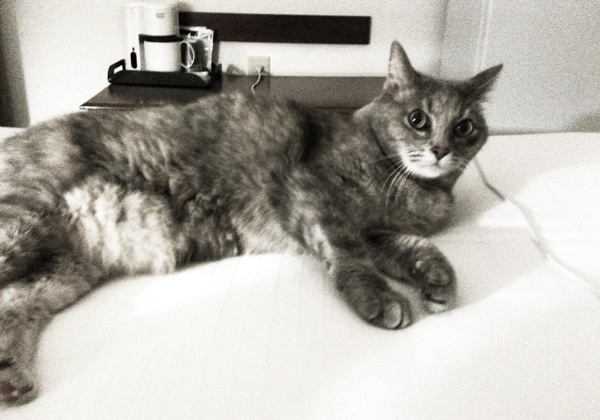
The drive was too long to cover in a single day, so we stopped at the Holiday Inn Express in Emporia. Mother would have laughed herself to tears over the thought of Vanna sleeping on a hotel bed.

Now it’s been a full year since our long drive together. Vanna has settled in and taken over the house. Her two housemates are too lazy to protest as she claims the warmest pools of sunshine and the softest pillows. They move aside as she bolts past them in the hall, as she chases her favorite toys or races to get there first, wherever she is going. They are patient, gentle cats, amiably dodging her jealous swipes and ignoring her touchy temper.

Some of their ease is rubbing off on her, and she is learning to share food bowls and favorite perches. Best of all, she rarely hides anymore. I seldom find her in a closet or under a bed. Instead, she sleeps in front of the windows and sprawls across the beds.

Every so often, usually after a poor night’s sleep, I catch myself indulging in a moment of grief as I watch Vanna. She is Mother’s cat, not mine. Or at least, she should be Mother’s cat. What if Mother had survived her injuries? Would she have consented so readily to my taking her neediest cat?

Such moments are lessening in frequency and intensity. I’m learning to file these questions in the unanswerable category, alongside a litany of other questions that start with “why?” and “what if?” I may as well ask why is there sunshine. Or why are there cats to enjoy the sunshine…

Review: Elegy

Elegy: Poems by Raphaela Willington
(unbound CONTENT, 2012)

In the foreword to Elegy, John Briggs begins by saying, “Raphaela Willington died on January 6, 2004, of ovarian cancer. Death became her muse in her last years.” He goes on to describe a woman of admirable strength and a poet of considerable talent.

The first poem begins: “Sometimes you wake / into silence” (“Sometimes You Wake”, pg 20). From there the book proceeds to muffle death’s dirge with birdsong and rustling leaves. The poems’ gardens are vividly alive. Zucchini and paperwhites thrive there, tomatoes and zinnias. Deer, squirrels, and groundhogs roam the pages, and “The sun is today a citadel / falling falling / yet standing” (“This Day”, pg 28).

In Elegy, death isn’t a morbid centerpiece, nor is it draped in mourning. Instead, it is herded into place as simply another visitor in the gardens. When the author finds the skull of a buck, antlers still attached, she says:

“One ear remains intact, as if listening, I imagine,
for the sound of the voice of my father calling us,
     mother and me,
in from the dusk of the garden
     at the end of a long day.” (“Endgame”, pg 45)

Later, she hears her name in winter’s approach:

“deer feasting on our hearts,
tomatoes crystallized into summer’s rubies
set in circlets of dying vines” (“Growing Seasons”, pg 76)

The foreword says, “A culture plumped with its belief in self-importance and fixated on amassing accomplishment might judge that Raphaela didn’t ‘do’ much with her life.” (pg 12) I say she did much that was remarkable, and I’m particularly grateful to her for writing Elegy. It seems to me as if she peered through the veil that separates life from death and fearlessly recorded what she saw. Then she wrote her observations into beautifully lyrical, meticulously revised poetry.

  • Find out more about the book here.
  • Six poems from Elegy were the inspiration for a song cycle that recently premiered at Western Connecticut State University. Read about “Wrensong” here.
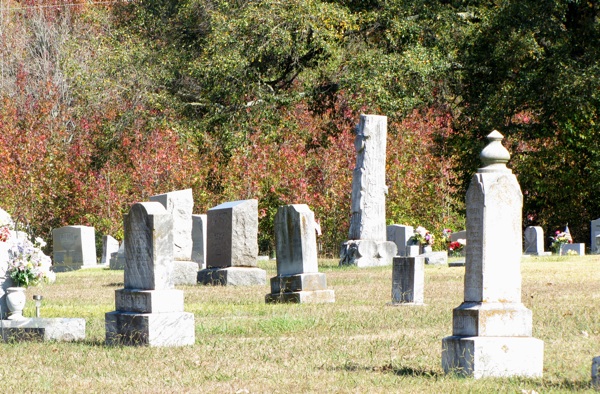
Last week, my trip included a morning in Elora, Tennessee, where my mother’s father is buried alongside his parents and a handful of other relatives. I never met my maternal grandfather, who died before I was born, and I have few memories of his parents.

My visit was intended to honor Mother’s memory, more than theirs, so I was surprised by how their headstones affected me. I became intensely curious, wandering past name after name. Who were these people? How much of them lives on, in me? My connection to these graves was strengthened by my recent experience reading Elegy, which I had finished the day before our drive to Elora.