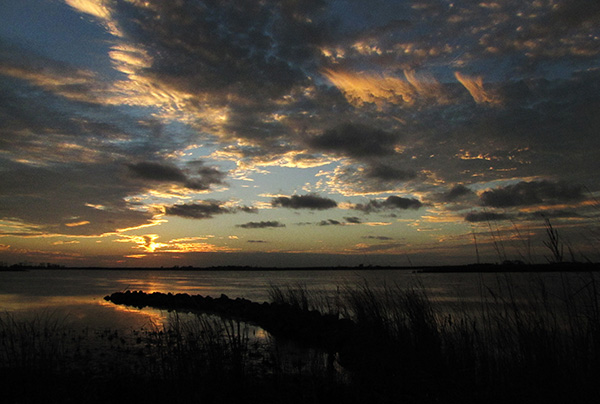
A Short Walk in New Shoes

Tomorrow I am going on an Adventure! I’m so excited about the Adventure that I bought new shoes, which I decided to test by going for a walk today.

Geese Jan 10

I pulled into Ashville Park barely thirty minutes in front of a line of rain, so I didn’t have time to walk very far. I had enough time, though, to find the resident pair of domestic geese. These geese were featured in our local newspaper in 2010, “Sit back and enjoy the tale of Jack, the lonely goose,” and I’m happy they are still thriving.

Geese Jan 10

Geese Jan 10

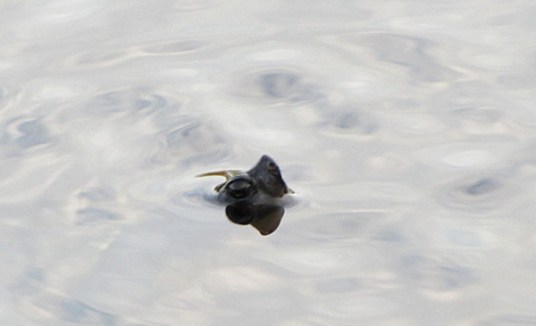
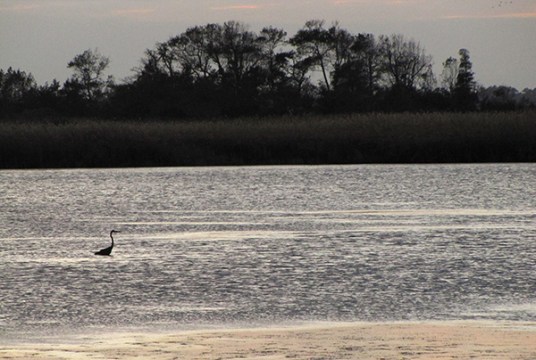
Further down the road, I spotted an unfamiliar silhouette on a long, narrow pond. Before I got close enough to try for a photo, a sparrow began sounding an alarm and the slender diving bird disappeared. I waited a while, but the mysterious diver never returned.

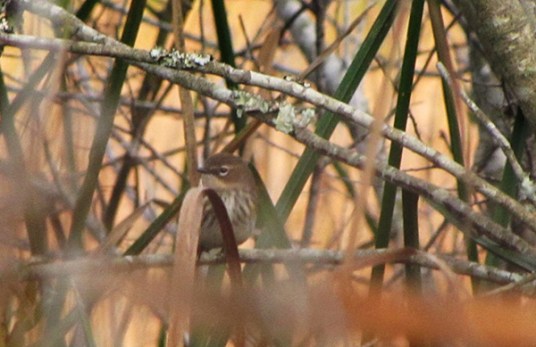
Sparrow Jan 10

While I was photographing the sparrow (I believe this is a Song Sparrow), I spotted some unusual activity in a nearby stand of trees. Several vultures were resting together, at least five, and two more joined the group while I watched.

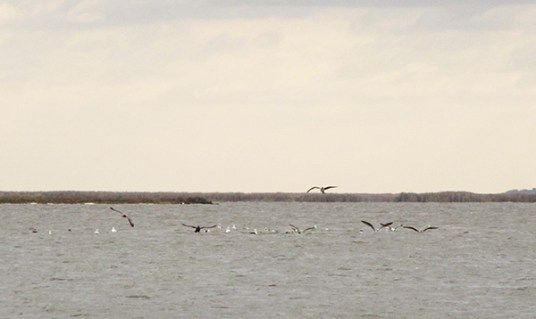
Vultures Jan 10

(The three in the bottom photo are definitely Turkey Vultures, but I can’t decide if the top photo shows a Black Vulture or an immature Turkey Vulture.)

Vultures Jan 10

More vultures were circling in as the rain arrived and chased me back to my car. My camera got a bit wet, as did my new shoes, but both have already dried and are waiting by the door for tomorrow’s Adventure. I may not be able to sleep tonight!

More Ducks

Mallard Jan 8

When it comes to identifying ducks, I am woefully inept. For that matter, most water birds are mysteries to me, though there are a few exceptions. Like Mallards.

Mallard Jan 8

Mallard Jan 8

And American Coots, which were one of my mother’s favorite birds.

American Coot Jan 8

I confess this flock confused me at first, because I am not accustomed to seeing American Coots in such numbers. I usually find single individuals scattered among flocks of geese or gulls, rather than an entire flock all on their own.

American Coot Jan 8

I was bemused by their tight formation. Were they alarmed by something beneath the surface of the water? Were they trying to stay warm? Or is this normal behavior, when American Coots gather into flocks?

American Coot Jan 8

In order to identify a water bird that isn’t a Mallard or an American Coot, I need several clear photos and a prolonged session browsing Cornell Lab of Ornithology’s All About Birds website. That’s how I learned two new ducks on Wednesday.

Ring necked Duck Jan 8

Ring-necked Ducks have distinctive rings around their bills, much more easily seen than the faint, reddish rings around their necks.

Ring necked Duck Jan 8

And Redheads are not the only ducks with red heads, but it seems they are the only red-headed ducks with gray backs and black-tipped blue bills.

Redhead Jan 8

Redhead Jan 8

Two new ducks should add up to a fulfilling walk with my camera, but, inevitably, each discovery is accompanied by elusive riddles. For every bird that strays within my camera’s reach, many others stay too far away to capture in enough detail for identification.

For example, I’m reasonably certain this is a loon, but which species of loon?

Loon Jan 8

And a rather nondescript pair of ducks teased me with glimpses of white wing patches.

Unknown Duck Jan 8

That might suggest Gadwalls, but what about the hint of a collar?
Unknown Duck Jan 8

These photos simply aren’t clear enough. Another entry for the “Unknown Ducks” folder in the archive.

Unknown Duck Jan 8

Sometimes the photos are clear enough for identification, but only just so. Wednesday’s walk added a new pair of Belted Kingfisher images to the archive, but one photo is out of focus and the other is underexposed.

Kingfisher Jan 8

Kingfisher Jan 8

As with everything else I attempt, success is rare and fleeting. Near misses and utter failures are far more common. It all adds up to happiness, though, because misses and failures mean I get to try again tomorrow. And the next day. And the day after that…

Mallard Jan 8

Mergansers, Ducks, and More

Hooded Merganser Jan 5

A few days ago I noticed a group of Hooded Mergansers on a pond near our house. I didn’t have time to stop that day, but today’s mild weather convinced me to spend a few hours with my camera.

Hooded Merganser Jan 5

I counted eight mergansers on the pond today (four males and four females), as well as a pair of Mallards and a pair of Northern Shovelers.

Shoveler Jan 5

Shoveler Jan 5

On the banks, a Great Egret watched from one side and a Great Blue Heron from the other.

Egret January 5

Heron Jan 5

This was the day’s smallest pond, and it had the most birds. A much larger pond (more lake than pond) a few miles away was mostly deserted. Three seagulls rested in the middle, and two Pied-billed Grebes fished near the shore.

Pied Billed Grebe Jan 5

Pied Billed Grebe Jan 5

Finally, we drove through a growing neighborhood that was landscaped with several mid-sized ponds, each populated with sleepy mallards.

Mallards Jan 5

All afternoon clouds gathered and thickened in the sky, and by the time we returned home wind was beginning to blow the day’s warmth out to sea. Now rain is on the horizon, followed by icy cold. I’m sure many of the smaller ponds will freeze over, and again I find myself wondering about the birds. Do they know what is coming? Do they already know where they will go, when ice drives them out? I know where I’ll be–curled up with my blankets and books and cats, grateful as always for the luxuries of home.

Clouds and Sun at Back Bay National Wildlife Refuge

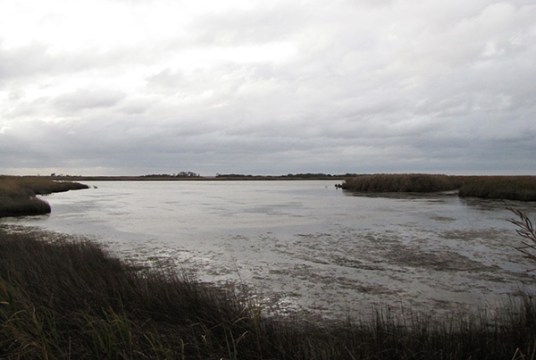
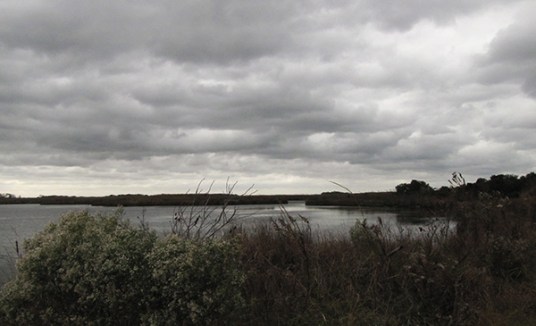
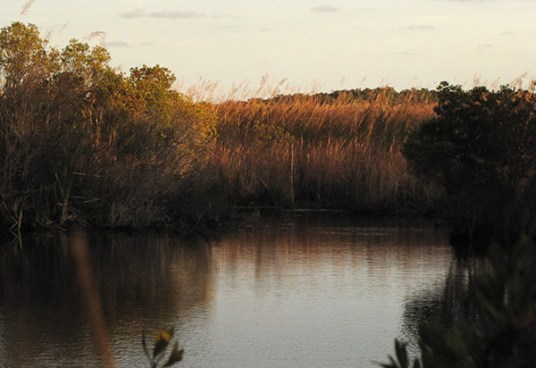
As mentioned in a previous post, I recently spent two afternoons in a row at Back Bay National Wildlife Refuge. Both days the refuge was fully in the grip of fall, but the first day felt a few steps closer to winter than the second. (Doesn’t winter always feel closer on cloudy days?)

November 4
November 4
Back Bay Nov 5
November 5
Back Bay Nov 4
November 4
Back Bay Nov 5
November 5
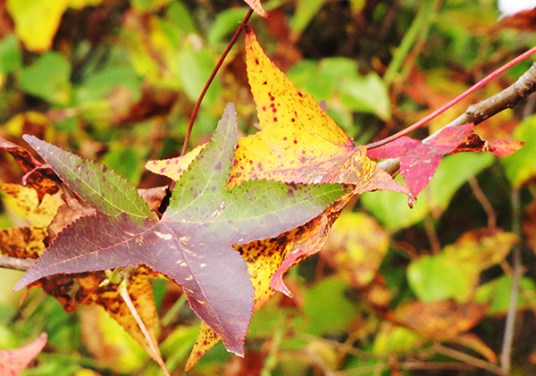
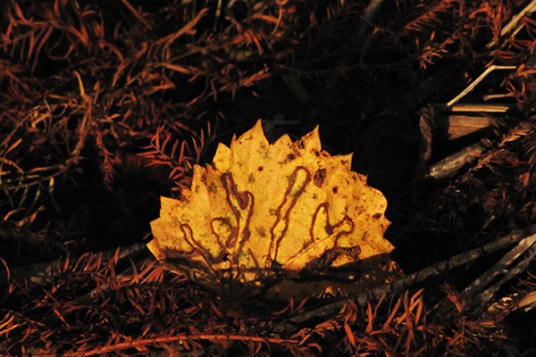
Leaves Nov 4
November 4
Leaf Nov 5
November 5
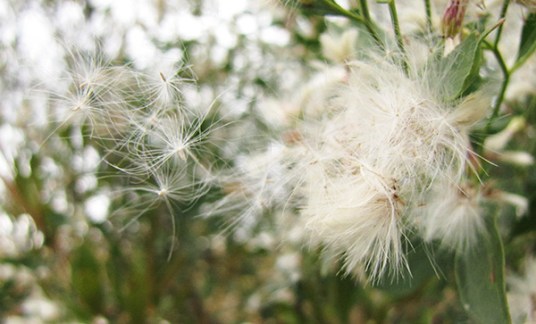
Seeds Nov 4
November 4
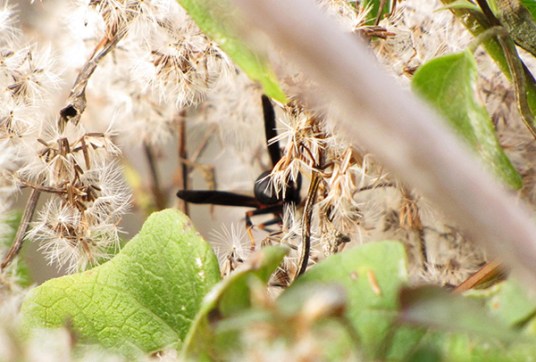
Wasp Nov 5
November 5
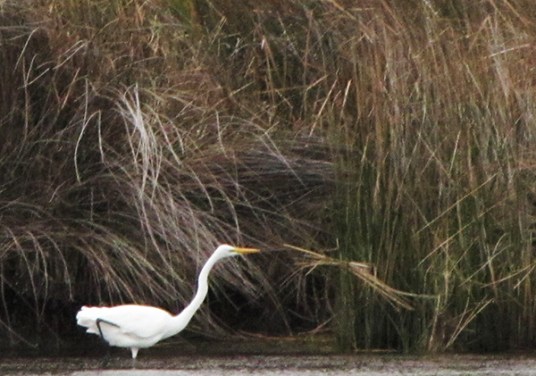
Egret Nov 4
November 4
November 5
November 5
November 4
November 4
November 5
November 5
November 4
November 4
November 5
November 5
Back Bay Nov 4
November 4

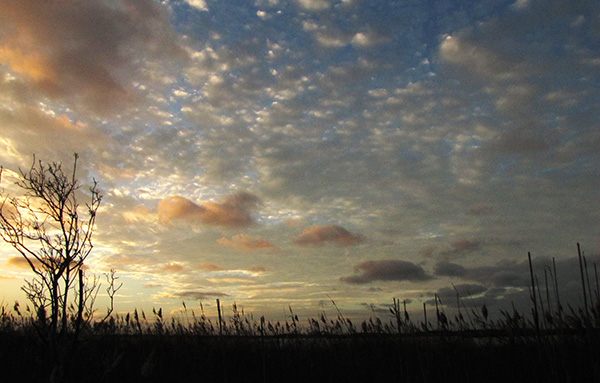
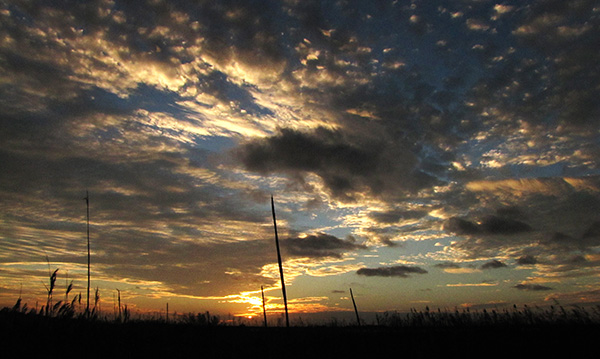
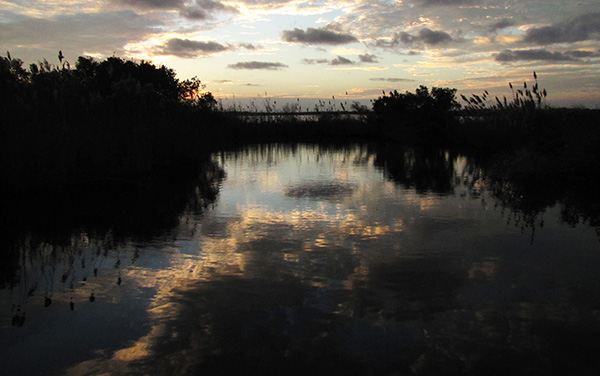
As I tried to organize my photos into pairs, I found the last set of images impossible to manage. On November 4th I took only one photo of the approaching sunset, but on November 5th I snapped frame after frame, hurrying from one vantage point to the next…

November 5
November 5
November 5
November 5
Back Bay Nov 5
November 5

Why do I see beauty in such sunsets? Why do I stop and stare? Why does my breath slow and the noise of necessity fade to a distant murmur?

It is as if the sky stirs something in my memory, something nameless and ageless. Then the sky’s glimmer dies to darkness, and my lungs grow hungry again as the ancient spark inside me dwindles. It’s all so fleeting that, as soon as it’s over, I begin to doubt. Perhaps it was an illusion, or a delusion. Perhaps it was just another sunset, just the end of another November day…

November 5
November 5

A Mammal Mystery (and a Dilemma)

This week I spent two afternoons at Back Bay National Wildlife Refuge. The first visit was cold and windy with heavy, low-hanging clouds. My photos from that day are grainy and blurred, including several photos of a rather large mammal crossing one of the many open areas of water.

Nutria

At first I thought the creature was an otter. It was too big to be a muskrat, and the habitat was wrong for beaver.

But, what about the shape of its head? Doesn’t look like an otter’s head…

Nutria

Which leaves me with nutria. (Please comment if you can correct or confirm my guess!)

Nutria

I returned the next day, lured by warmer temperatures, clearing skies, and continuing curiosity. The animal wasn’t there when I arrived, so I walked the other trails for a few hours and circled back at sunset for one more try. By then the light was even worse than the previous day, so I almost missed the familiar form. Forms, because there were two.

Nutria Nov 5

I took a few photos, though I knew it was too dark for my camera’s lens, and I was on the point of leaving (the refuge closes at dusk) when smaller versions of my mystery mammals appeared.

Nutria Nov 5

The waning light defeated my camera, so all I have to share are shadows and silhouettes. My photos don’t show how the young animals played in the water, how they chased each other in widening ripples. How they ventured into open water, then hurried back to the safety of their parents.

I watched, enthralled, until the sun’s light disappeared completely. The scene was charming. Baby animals are always charming.

Except, in the case of nutria, charm quickly fades.

I have mixed feelings about eradication programs aimed at invasive species. Nutria undoubtedly wreak havoc on marsh ecosystems, but what are the chances they can be eradicated permanently? And what is the cost? The bottom line is that all ecosystems change. Coastal ecosystems, in particular, are under immense pressure. Can we hold back the tide? Should we? I’m not proposing that we do nothing, but I suspect eradication is not a sustainable goal.