From the Butterfly Archives

Today is too warm for March. And too humid. It feels like June. The sky is low and gray. The yard’s air is clotted, a claustrophobic weight that has me hiding in my office, where a tower of neglected paperwork teeters on the brink of deadlines.

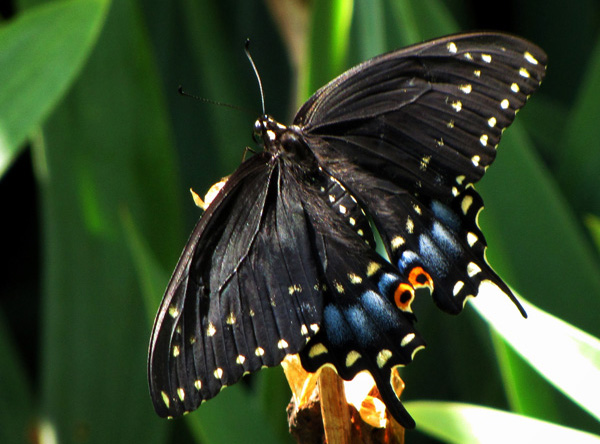
To lighten the mood, I took a brief stroll through the butterfly archives. This was my first “successful” butterfly photo, taken in July of 2010.

Something In the Yard

Yesterday afternoon, an Unidentified Dreadful Object appeared in the yard.

The Object landed in a major squirrel cache, amid a trove of buried tidbits. This squirrel made a wary approach, but quickly lost courage.

From the fence’s safe vantage, the squirrel eyed the Object for a while. After a few nervous changes of direction, over the fence and back again, anxiety defeated hunger.

Once the squirrel was gone, the Object was easy to subdue and remove.

A sidewalk runs along our fence, and litter tends to accumulate in the wax myrtle border. Every so often, something finds a break in the wax myrtles and lands in the yard. As a kid, I did my share of littering, so I pick up what lands in my yard with a weird sense of satisfaction. An atonement, of sorts, as if each current act of responsibility erases a previous moment of carelessness.

More bees

I’m stunned by the number of bees in our yard. Bees of every shape and size, sampling every flower. The pear tree is the main attraction, but only because it is the most flamboyant, positively exploding with blooms. The bees are not so pear-dazzled that they ignore the dandelions and irises, nor any of the other flowers that vie for their attention.

The Birds and The Bees

It’s definitely that time of year. Today’s walk in the park was all birds and bees. (Mostly birds, and most of the birds were osprey.)

This slideshow requires JavaScript.

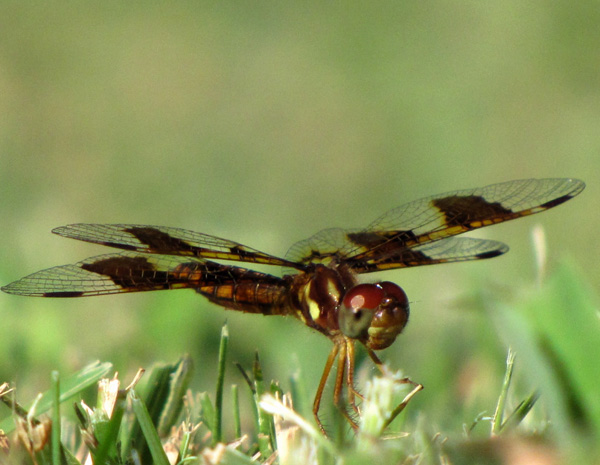
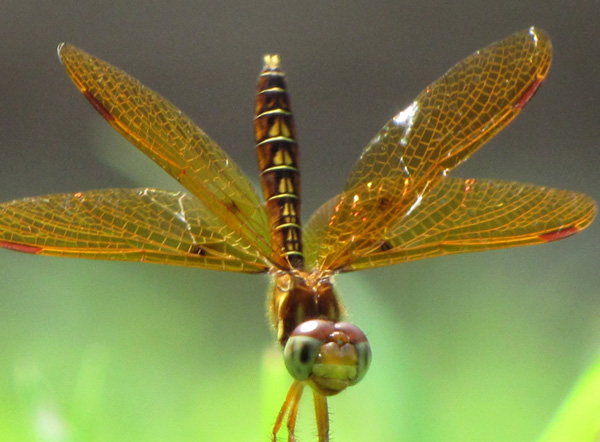
Eastern Amberwing Dragonflies

I want a dragonfly field guide, though I suspect many of my dragonfly photos would defy identification.

Dragonfly identification seems to depend, in large part, on minutiae. “Major” identifying characteristics include eye configuration and wing vein patterns, details that are hard to spot as a dragonfly zips past. Even when they perch, allowing close inspection of eyes and wings, they seldom give me enough time to catalogue the minor variations of thorax and abdomen that are key in separating related species. In some cases, identification is further complicated by differences between males and females.

The more I learn, the less I know. Now, every time I photograph a dragonfly, I want to say, “Pardon me, but could you turn to your left? Your right? Raise your wings a bit? Yes. Very good… Now, here’s a pen. Please write down your name.”

I don’t know why I haven’t given up. Even my successes feel incomplete. Every identification is tentative. I can never say, with complete confidence, “These are Eastern Amberwing dragonflies.” I’ll always need to add, “Please correct me, if I am wrong.”