Yard Work and Spiderlings (not recommended for arachnophobic readers!)

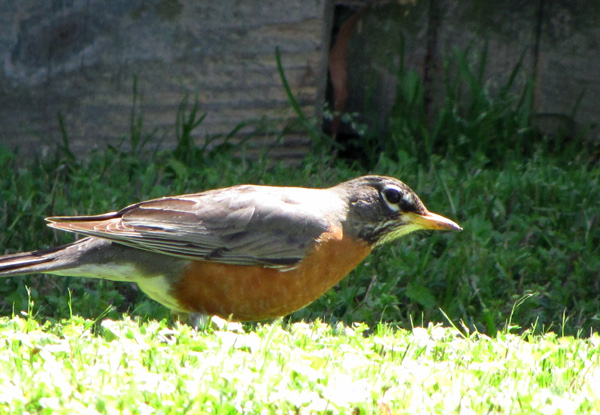
I did a few spring chores in the yard today. I mowed, which thrilled the robins.
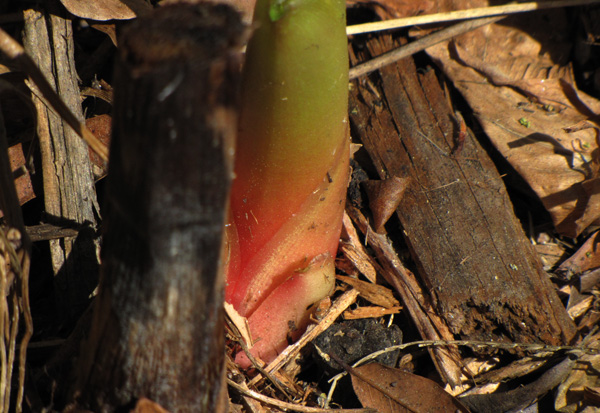
Then I uncovered the ginger lilies. Last winter, we lost an entire bed of ginger lilies, who are more susceptible to cold than any of our other bulbs. I feared losing all the beds as snowstorm after snowstorm plowed through the area. Stung by last year’s losses, this year I have been determined to leave them insulated until well after our last “frost date”. They’ve had other plans, stubbornly growing through and under and around their protective layers. So tonight they are free.
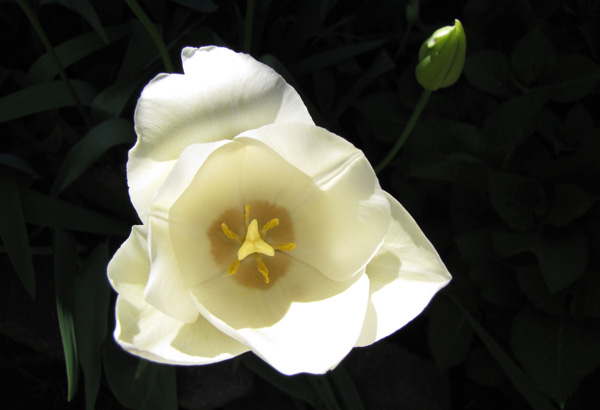
It’s not just the ginger lilies. The tulips are ahead of schedule, too. We don’t have many tulips (six, to be exact), and they don’t seem to thrive in our yard. Some years, they don’t bloom at all. That’s not the case this year.
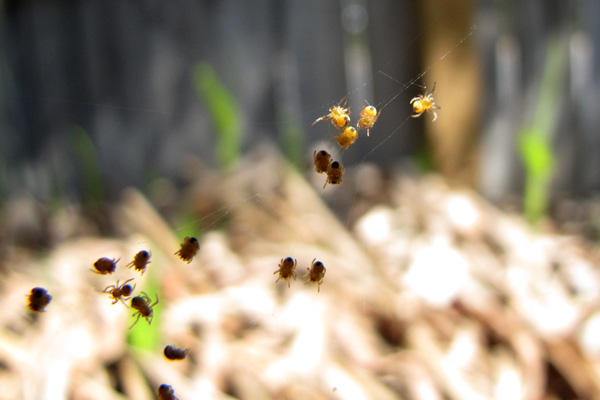
While working in the corner flower bed, I found a family of fresh-hatched spiderlings. (Look away!) I’m wretchedly arachnophobic, but these little motes hardly seemed like spiders. They were almost cute. I watched as they trooped across a tiny span of web, climbed the tallest iris, and floated away on gossamer sails. I wanted to wave goodbye. And wish them luck. And read Charlotte’s Web again.
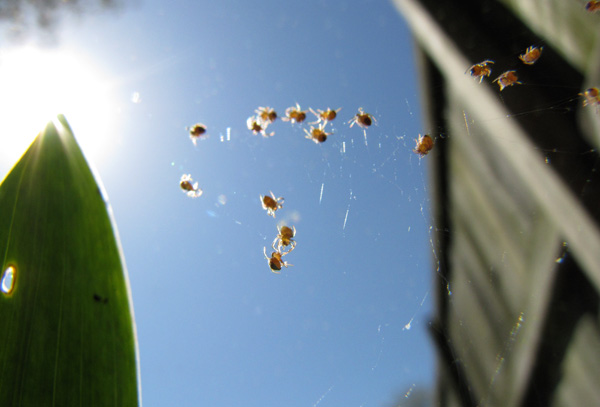
All told, it was a lovely day in the yard.

More bees

I’m stunned by the number of bees in our yard. Bees of every shape and size, sampling every flower. The pear tree is the main attraction, but only because it is the most flamboyant, positively exploding with blooms. The bees are not so pear-dazzled that they ignore the dandelions and irises, nor any of the other flowers that vie for their attention.

Bees!

Bees everywhere. Sparring in the irises. Lurking on the back door handle (ouch!). Patrolling the newly cut grass. Mostly, however, they are in the pear tree.

There’s a varied crop of weeds, should the bees grow weary of pear nectar.

And, should my camera grow tired of bees, there are plenty of other visitors in the yard. I hope these two decide to stay. I would love a nest to watch!

Changing Weather

The ladybug doesn’t lie. It’s “unseasonably warm” today, but not for long. The approaching cold front’s humid gusts have filled the yard with hyacinth perfume, and an electric sense of unease.

On a normal day, I might see two or three seagulls soar over my yard. Today I see dozens. They seem to be fleeing inland.

An angry chorus of crows, as they drive away a hawk, echoes the air’s tingle and buzz.

The sky changes from moment to moment, from frame to frame. It’s unsettling. Perhaps I’ll join the dog as she paces and frets along the leading edge our first spring storm.

Henbit and Purple Dead-nettle

Until last year, I never gave much thought to the “purple stuff” that claims the yard each spring. A few hours experimenting with my camera’s macro function converted indifference to fascination. I had never noticed the delicate, fringed mouths and tapering, graceful throats. I had never noticed the subtle differences that mean there are two distinct species of these purple beauties.

Once again, the urge to name what I photograph sent me into research mode. Aided by a 1968 edition of Peterson’s Field Guide to Wildflowers of Northeastern and North-central North America and Virginia Tech’s online Weed Identification Guide, I discovered that the purple blooms are two related species of the mint family:  henbit and purple dead-nettle.

It still seems ironic that I found them listed as both wildflowers and weeds.

I believe the first two photos are henbit, and the last is purple dead-nettle. Please comment with correction and/or confirmation!