It may be that when the law was enacted, that no such thing was contemplated as that game, killed in the autumn of one year, could be preserved, as in this case, so as to be sold a year afterwards within the permitted period (Phelps v. Racey, 1874, p. 238).
Content Warning: This multi-part blog post contains references to hunting, agriculture, and research practices of killing birds and other wildlife. If you decide not to read on, I respect and admire your choice.

[This post picks up where the last left off. For recaps and links to the rest of the series, please visit my Mallard page.]
Unlimited markets for a limited resource
In the final decades of the 1800s, advances in transportation and cold storage expanded market ranges for professional hunters in the United States. Hunters could travel farther, and faster, in search of game. They could ship their harvests to distant markets within hours or days of slaughter, prolonging freshness with ice and/or refrigeration.
Transportation infrastructure was a national priority, supported by massive public and private investment. Rail lines branched and intersected. Paths hardened into lanes and roads. And the waterways thrummed with engine noise.
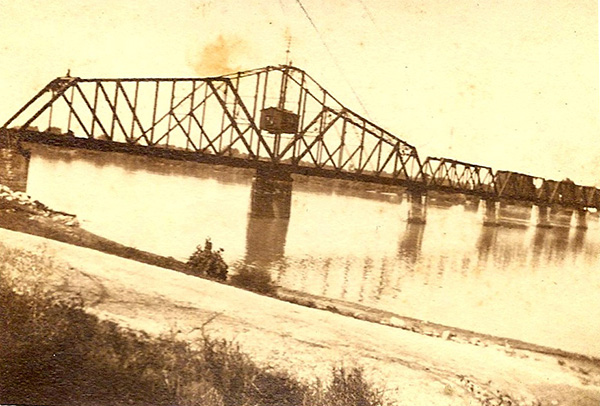
Cold storage garnered fewer headlines, but gained momentum of its own. Ice markets flourished. Inventors and investors patented cooling devices. Shippers outfitted railcars and boats to transport frozen goods. Spurred by a growing beef industry, Texas became an epicenter for ice production.
With so much infrastructure falling into place, US meat-and-feathers merchants faced a bright and profitable future. All that was needed, to fulfill the promise, was unlimited access to game.
It’s no coincidence that game populations were crashing.
I’m not an economist, but I understand the simple arithmetic of supply and demand. Heavy demand combined with dwindling supply equals increased resource value. And increased value bounces any resource into a complex Venn diagram of economic, social, political, and legal spheres.1 All of these spheres overlap at a historically contentious battleground: regulatory oversight.
Hunters in the Mallard Mine
As I’ve noted before, hunters have always held majority stakes in the US portion of North America’s Mallard Mine. And among the various hunting interests of the 1800s, sport and leisure hunters held majority stakes in legislative bodies. So the regulatory winds, in US branches of the Mallard Mine, blew in favor of sportsmen and against market hunters.
For the sport and against the market. Sounds weird, doesn’t it? Especially in our present (2026, US) context.2 (Maybe it’s not so weird, after all.)
Mallards in the Marketplace
Imagine rolling up to the latest fad grocery chain in search of a freshly slaughtered wild Mallard. Then across to the big-box craft store for a bag of mottled hen feathers (not the cheap domestic feathers—wild-grown only, please). Maybe add an impulse purchase of those expensive iridescent-patched primaries, plucked from a young hen who had been slaughtered, shortly after her first molt, on a production marsh leased out by a hunting conglomerate.

While it all seems probable enough for dystopian fiction, it’s impossible on an industrial scale. In the US, anyway. Not with today’s populations, both human and duck. Not with our neglected wetlands and wild places—those small, discontinuous, poorly funded refuges in which many wildlife species survive but cannot thrive.
Mallards in the Zeitgeist, 2026
In today’s version of the US, Mallards are scenery, not agriculture. Wildlife, not livestock.

Wildlife is for nature documentaries; livestock is for grocery shelves.
Yes, sport hunters often (sometimes?) eat their kills. But most of us don’t hunt anymore. Many of us couldn’t afford to hunt waterfowl, even if we had the tradition and urge.
But in the 1800s version of the US, everyone knew a hunter or two. Everyone ate wildlife.
Local market hunters held positions of near-fame. Sawdust-lined crates and barrels stuffed with carcasses of wild-sourced birds arrived, sometimes hourly, at merchant stands. Restaurants served pigeons and songbirds. And Mallards. Such was the norm.
Such was the norm until the pigeons went extinct. Until songbirds and Mallards disappeared from many fields and marshes. Until fields and marshes, themselves, disappeared. Until sport and leisure hunters grew restless under the burden of needing to search farther and wider for binge-shooting opportunities.
Until state legislatures took ownership of wildlife resources.
Gatekeeping the mine (and throttling the market)
Under state ownership, which started in a few states in the late 1800s and quickly trended up, professional-grade harvest equipment was banned from the Mallard Mine. From all the wildlife mines. No more batteries of guns. No more canons or punt guns. These equipment-level prohibitions served as implicit harvest limits.
Sent into the Mallard Mine with only a single- or double-barreled shotgun at hand, like any average sport hunter, market hunters could still harvest hundreds of ducks each day.3 Just like the sport hunters did. But they could no longer harvest hundreds with a single shot.
After leveling the equipment field, invested legislatures set fences around their various wildlife mines and locked the gates. States opened the gates seasonally and sold passes (hunting licenses) to residents within their states. Some states sold higher-fee non-resident licenses.
All of these efforts to limit operations in the Mallard Mine were statutory nods to sport-hunting traditions. As long as market hunters hunted like sportsmen (like European sportsmen) and harvested like (European) sportsmen, they could, during harvest seasons, sell their harvest.
Such gatekeeping didn’t hamper the sportsmen. Sport and leisure hunters only binged intermittently, anyway. Adjusting their schedules around close seasons wasn’t too painful, and observing close seasons supported sportsmen’s claims to a sporting tradition. Seasonal abstinence equated to preserving wildlife, along with the traditions of sport hunting, for future generations.

On the market side of things, this statutory gatekeeping might have triggered immediate and massive change. Might have, but didn’t. Market resilience was intrinsic to the system. Professional hunters had already adapted to travel, to following game. As wildlife fled from progress, hunters flocked into states with undeveloped landscapes. And as states bore down on the market, hunters fled to states with looser (or non-existent) game laws. Enabled, of course, by shipping and storage infrastructure.
Meat and feathers kept flowing. As did profits. For a few more decades, anyway.
An aside about perspective: Triangulating time
Among my immediate family, the people, climates, and landscapes of the decades between 1880 and 1940 are lost to time. All of the living witnesses have passed, leaving only ephemera.
Ephemeral clutter fragments my perspective. Each inherited photo and letter, every generational trinket and token glitters with potential. They are facets of memory chipped from the massive face of the past. They are happy and sad, simple and fraught, heart-full and lonely. They are not the impulse behind these Mallard posts, but they’ve gotten involved. (It’s not their fault.)
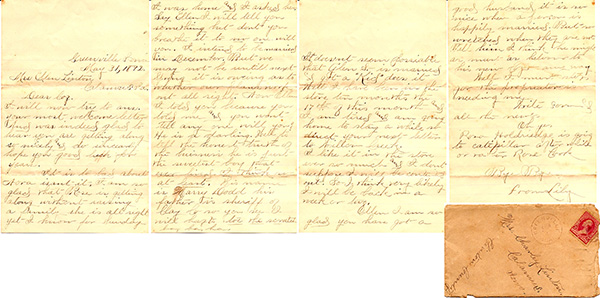
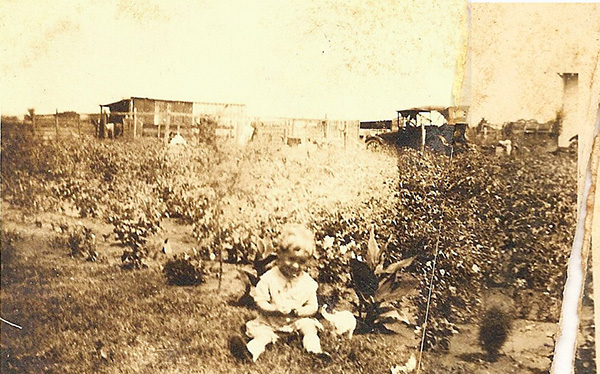
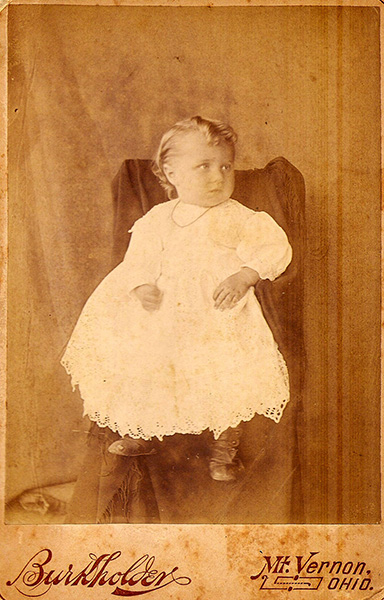
Initially, I intended to resist the urge to supplement these posts with family ephemera. As that resolve weakened, I decided to dip only into the anonymous portion of the archive. The nameless photos.
Now, all of my fences are down. I’m over a century deep in a family archive that is haunted by forgotten names and places, reaching out to known family.

I’m not comfortable, this deep in history. Family history. US history. Mallard history.
I am, after all, a science and nature nerd. I like my histories either so far back that only science can illuminate them (cosmology and paleontology) or immediate enough to see for myself.
Prior to all of this Mallard reading, my journeys into history as a knowledge discipline have been forced marches through coursework and curiosity tours through museums. Anecdotes and specimens. All trees and no forest. Not even trees, really. More like twigs and leaves.
What’s more, my lens for near-distance history is warped. Warped by experiences that are both universal and intensely, unspeakably private. By decades spent in folklore, fiction, and dreams. For much of my life, I’ve been more comfortable in mythologies and multiverses than my own existence. I’ve had little interest in, or use for, actual history.
Now, I appreciate how much near-distance history matters. Or should matter. Especially to a science and nature nerd.
History has become part of my purpose, in these Mallard posts. Historical context. And, given my objective and subjective weakness as a history student, I need personal anchors for context. Even if the anchors are ephemeral.
Taking the game to court
Pennsylvania field to Massachusetts table
On July 15, 1879, in Boston, Massachusetts, George C. Hall and an unnamed partner served a woodcock5 dinner to a paying guest.
At the time of the meal, woodcock season was closed in Massachusetts. Woodcock hunting season, as well as selling, buying, or possessing season. All seasons closed.
Statutorily, this particular close season was an impenetrable umbrella of protection staked out over Massachusetts’s woodcock.
Pennsylvania woodcock, though, were literal fair game. So Hall and his partner served Pennsylvania woodcock to their paying guests in Massachusetts. Loophole exception, unlocked.
Litigation ensued. And, in 1880, the woodcock-dinner tussle landed in front of the Massachusetts Supreme Judicial Court.
“The question presented by the case at bar is whether, in the absence of…explicit manifestation of the intent of the Legislature, the words ‘any of said birds’ are to be construed in the larger sense, as meaning any woodcock, partridge or quail whatever; or in the more restricted sense, as meaning any woodcock, partridge or quail taken or killed in this Commonwealth within the times mentioned” (Commonwealth v. Hall, 1880, p. 411).
The Court bootstrapped a series of logics, in their written opinion. Here’s a sample paragraph, quoted in clause-laden length:
“The object of the statute is to protect these birds during the breeding season, and for such a reasonable portion of the year as may prevent them from being exterminated or their numbers diminished in this Commonwealth. The mode in which the statute seeks to attain this object is by punishing the taking or killing of such birds in this Commonwealth during the times specified, or the buying, selling, offering for sale or having in possession in this Commonwealth, during those times, of birds so taken or killed; and by enacting that the possession in this Commonwealth at such times of any birds of the kinds specified shall be prima facie evidence to convict; leaving it for the defendant to prove, if he can, that the birds found in his possession were not taken or killed in this Commonwealth at a prohibited time. So construed, the statute is reasonably adapted to carry out its object, and is free from all constitutional difficulty” (Commonwealth v. Hall, 1880, pp. 412–413).

Ouch, says every writer who ever wrote. And every reader who ever read. Anyone committed to understanding what was actually said, in that paragraph, will have to read it more than once.
After reading it more than once, some powerful implications live within and between those lines.
First, the Court acknowledged the reality of human-driven species extinctions, accepted the benefits of species protection, and approved statutory intervention as a preventative measure against exterminating game birds. That’s a notable set of statements, history-wise.
Next, the Court positioned legislative interference in the game market as a non-issue. The statute outlawed selling and buying Massachusetts’s woodcock during close season, and the statute was “free from all constitutional difficulty”.
Finally, the Court placed burdens on proof on offenders. Not the other way around. Officials empowered to enforce this amendment didn’t need to prove the intrastate provenance of woodcock. Instead, anyone caught with a woodcock, during close season, had to prove that they had sourced the bird out-of-state.
Which, in this particular case, was stipulated by both the prosecution and the defendants. The woodcock cooked and served in Boston, in 1879, was a Pennsylvania bird.
Without further ado, the court ruled that Hall had not violated the statute. The law applied only to Massachusetts’s woodcock, so Hall and company had served a legal meal to their paying guest.
Aside: I am “…unversed in the mysteries of the subject…”
I’m old enough to remember spinning a dial, to change TV and radio channels. Static, music, static, voice, staticstaticstatic, voices and music.

That’s how these court opinions read, to me. Noise, signal, noise.
“The objection of a want of power in the legislature to pass the act…. …the prohibitory liquor law…was in violation of that provision…which declares that no person shall be deprived of life, liberty or property…. The legislature may pass many laws…to impair or even destroy the right of property. Private interest must yield to the public advantage. …The protection and preservation of game has been secured…and may be justified on many grounds, one of which is…food. …Some of the provisions…might seem, to one unversed in the mysteries of the subject, to be unnecessarily stringent and severe…. …there are many powers conferred upon Congress which, until exercised by it, are regarded as dormant and may be exercised by the States within their limits, among which is the power to regulate commerce” (Phelps v. Racey, 1875, paras. 3–4).
Over a century later, I’m an eavesdropper. I’ve attached a science bug to the fence around the legal sphere, and I’m listening in. Unversed.
Noise. Signal. Noise.

Some of what reaches me as noise is, in fact, noise. Ornate phrases and stacked clauses that a diligent editor, in 2026, would simplify or delete. In-text citations that establish credibility, for doubters who wish to backtrack and verify.
And some of what reaches me as noise is jargon.
Jargon is a loaded word. Laden with negative connotations, the word “jargon” criticizes and accuses disciplinary texts. Except, all disciplines create unique lexicons—terminologies and core allusions common to the field and readily interpreted by readers within the field.6 These lexicons facilitate disciplinary communication. Within the field. Which means that readers outside the field often encounter disciplinary writing as encrypted communication.
I’m an old science major. I spent many long academic years programming the science decrypt key into my firmware, and I’ve downloaded most of the updates. I know the terminologies and catch the allusions. I’m versed.
But I haven’t invested my time or resources into acquiring other decryption keys. I can download the outsider patch and install the eavesdropper update, for these court opinions, but I won’t become versed.
As always, caveat lector.

A benchmark precedent: “The judgment of the General Term must be affirmed.”
Commonwealth v. Hall cited a number of precedents. One particular precedent is common to many of the era’s game cases: Phelps v. Racey (1875). That heavily ellipted quotation, in the above aside, was taken from the New York Court of Appeals’s review of Phelps v. Racey.
I made an initial decision to leave out this particular precedent. Not because the case wasn’t important, in my context, but because I was thoroughly baffled. All I had were two surnames, a date, and a six-paragraph appellate opinion.
The opinion is both dense and thin. Dense with legal logic, but thin on details. Very little who, what, where, and when. Phelps and Racey, quail and penalties, New York, 1870s. That’s it. Which was, apparently, all the judges needed. “The judgment of the General Term must be affirmed” (Phelps v. Racey, 1875, para. 6).
As I accessed other court opinions, researching my Mallard obsession, I followed the first several Phelps v. Racey citations to the online case record. I read and re-read the opinion. Baffled. The next several citations? Re-follow, re-find, re-read. Still baffled.

Repeat, ad nauseam.
Until I reached my nauseam tipping point. In typical OCD fashion, my investment of time tipped from intermittent bafflement to days-long fixation. In the end, I decrypted Phelps v. Racey with a little help from online newspaper archives.
On May 5, 1874, the New York Daily Herald published a short note: “The suit of Royal Phelps vs. J. H. Racey came up yesterday in General Term, Supreme Court. Defendant was prosecuted for violation of the game laws, in having quail and pinnated grouse in his possession during the close season. Defendant put in as answer that the birds were killed before the close season, and preserved by a patent process” (Court of Common Pleas, p. 3).
Did you catch it?
What I had initially accessed—the opinion cited in all of those subsequent cases—was the appellate review dated February 2, 1875.
But the actual case, the one with all the details, was heard on May 4, 1874.
Phelps v. Racey (1874): “…I am wholly at a loss…”
J. H. Racey was a New York city merchant who sold game through a market on Centre Street. On March 15, 1873, during close season, his stock included six quail. On March 19, he added two pinnated grouse and another 100 quail. The birds had been purchased in December of 1872, from Minnesota and Illinois, and preserved with a “patent process”. (I searched in vain for details about the process, which most likely was some form of cold storage.)
Royal Phelps, who was the president of the New York Association for the Protection of Game, got involved, and the local court fined Racey for possession of six quail and two pinnated grouse. Each bird carried a $25 fine, which would have left Racey owing some $200. (Equivalent to roughly $6,000 of spending money, in 2026.)
As I couldn’t find this initial ruling online, I can’t say why the judge imposed fines for only eight birds. But, given that the judge didn’t include the 100 quail Racey had in his possession on March 19, $200 seems a tap on the wrist.
Tap or slap, Racey appealed the ruling.
As did Phelps, who wanted Racey fined for all 108 of the birds.
These competing appeals landed before Judge Daly, of the New York Court of Common Pleas, on May 15, 1874. Daly’s opinion includes the following:
“[The statute] has allowed game, killed before the 1st of January, or in states where the killing of it was at the time lawful, to be sold or kept in possession between the 1st of January and the 1st of March, and that is all. Beyond that, the prohibition is positive, that no person shall have any of the game specified, in his or her possession, and I am wholly at a loss to see upon what ground it can be said that the possession which existed in this case was not the kind of possession which the statute meant. It may be that when the law was enacted, that no such thing was contemplated as that game, killed in the autumn of one year, could be preserved, as in this case, so as to be sold a year afterwards within the permitted period. But we cannot say so as a matter of law, for for all that we know, or for all that appears in this answer, this apparatus may have been known and in use when this law was enacted” (Phelps v. Racey, 1874, p. 238).
Daly’s ruling, later upheld in that widely cited 1875 appeal, bumped Racey’s fine to $2700. A penalty of $2,700, in 1874, equates to about $80,000 worth of spending money in today’s (2026) economy.
While I would love to report further on this case, my journey with Phelps and Racey ends here. I don’t know if, how, or when Racey paid his punishing fine, nor do I know if Phelps targeted other game merchants. (Please comment, if you know more of the story.)
Thin ice: Haggerty v. St. Louis Ice Manufacturing and Storage Company, 1897
In 1892, Missouri statutes included restrictions against possession of game during close season. Starting in 1892 and continuing through 1893, a group of game merchants (lumped in the record as Haggerty et al) tested a cold storage loophole.
According to the court record, the St. Louis Ice Manufacturing and Storage Company crafted a per-pound storage contract with Haggerty et al. The ice company would store game during the close season months of 1893, keeping the meat in good condition until the following open season in November. Then the merchants would retrieve their 1892 overstock and get back to business. (pp. 241–242)
Between November 15 and December 26, 1892, merchants deposited enough game to rack up a massive storage bill. When the bill came due, on November 18, 1893, the merchants paid as contracted and proceeded to withdraw their game. Which had rotted. (pp. 241–242)
The ice hadn’t been icy enough.
Haggerty et al demanded compensation. St. Louis Ice company refused. And on January 9, 1894, the St. Louis Globe-Democrat published the following note: “John E. Haggerty & Sons filed suit against the St. Louis Ice Manufacturing and Storage Company for $11,842.89 damages for game spoiled in the defendant’s cold storage warehouse between January 1, 1893 and November 1, 1893” (Yesterday’s new suits, p. 12).
Such a precise invoice, $11,842.89, deserves precise comparison. Measuring Worth carves out the following 2026 US dollar values:
- if spent on a purchase, $448,472.05
- if received as compensation, $3,414,261.32
- if held as wealth, $4,628,686.25
- if spent on a project, $23,677,759.95
When the case arrived in front of the Missouri Supreme Court, the merchants’ had downsized their ask to $7,000. (Some $250,000 worth of spending money, today.) Downsized, but still sizable.
In the end, Haggerty et al lost. They lost their money, their game, and the appeal. They lost because the entire scheme was a misdemeanor, according to state law, which meant the contract was illegal.
Judge Sherwood, who wrote the opinion, was fond of emphatic italics. “The offense prohibited by section 3902 is a misdemeanor, and in such case the intention of the misdemeanor cuts no figure in the case, since in that class of crimes intention constitutes no element of the offense. It is the act done and that alone which violates the law, and the motive which prompts the violation is altogether dehors the crime committed” (p. 246).
Precedents and italics and all, Sherwood lays out a seven-page explanation, tinged with exasperation in the final paragraphs. “Recurring to the petition, it shows on its face that plaintiffs contracted with the defendant corporation for the commission of a misdemeanor. …The law will not stultify itself by promoting on the one hand what it prohibits on the other, and will for this reason leave the parties to this suit where it finds them, unsanctioned by its favor and unaided by its process” (pp. 247–248).
Haggerty et al would receive no satisfaction from Sherwood’s court. Neither, really, would St. Louis Ice Manufacturing and Storage Company, who won their case by proving that their contract was illegal.
Standing firm on thin ice: “Warrants for Game Dealers”
Haggerty & Sons, with John E. Haggerty at its head, had been a fixture in St. Louis since 1845 (Extensive game depot, 1877, September 28, p 4). Haggerty was a fixture of his own, serving as the market master for Union Market (Mayor Wells’ selections, 1903, April 25, p. 2) and circulating through local politics.
A series of solicitations aimed at market hunters, placed in the St. Louis Globe-Democrat in November and December of 1882, hint at the scale of Haggerty’s business. In order to fill Thanksgiving orders, Haggerty needed 10,000 turkeys, 5,000 dozen (60,000) quail, 1,000 wild turkeys, 1,000 dozen (12,000) grouse, and 500 saddles of venison (Wanted,November 15, p. 5). Christmas orders exceeded Thanksgiving—25,000 turkeys, 10,000 dozen (120,000) quail, 5,000 dozen (60,000) grouse, 1,000 wild turkeys, and 500 saddles of venison (Wanted, December 6, p. 7).
Given the vastness of his enterprise, Haggerty and the game laws were destined for conflict. But an 1882 case against Haggerty and his brother went nowhere: “The cases against the Haggerty’s are virtually dismissed by being continued generally” (Court of Correction notes, 1882, March 31, p. 4).7
Nowhere, again, went an 1897 case against Haggerty, his son, and four other game merchants.
On Tuesday, February 9, 1897, Missouri’s game wardens targeted six St. Louis game dealers: the Haggertys, in their 944 North Broad Street address; Benjamin Kaufmann and Samuel Kaufmann, of stand 1, French Market; Frederick Becktane, stands 9 and 10, Union Market; and Eugene Deane, 1017 North Third Street (Warrants for game dealers, 1897, February 9, p. 12).
“Attorney J. R. Claiborne, who has been retained by [Deputy State Game Warden] Capt. Bull to represent the state, said yesterday that warrants would be issued from day to day against violators of the law, if the six defendants against whom the warrants were issued yesterday were found guilty. The six cases, he said, were merely test ones” (Warrants for game dealers, 1897, February 9, p. 12).
Six test cases, representing less than 1% of the 700 game dealers and caterers that Missouri’s game wardens wanted to prosecute (Warrants for game dealers, 1897, February 9, p. 12).
When the 1897 cases against the Haggertys, the Kaufmanns, and Becktane reached trial, Judge Murphy dismissed them. Murphy based his dismissal on updated statutes—the state’s charges cited violations of 1889 statutes, but those laws had been repealed and replaced by 1891 statutes. (Game dealers not guilty, 1897, March 7, p. 24)
As of 1898, Haggerty was still in business, and still in the newspapers. A May 2 report highlights his efforts to organize North Third Street’s merchants, who had been experiencing a series of robberies. Haggerty wanted the group to demand better police protection for their businesses, which included a saloon, a hotel, and a liquor store. (Will catch burglars, p. 3)

Preview: Parts IX and X, etc.
Enter the era of game smuggling, the Lacey Act of 1900, and the Migratory Bird Treaty of 1918. The game markets collapse, wild duck populations continue to decline, and a hunting-centered North American approach to wildlife conservation takes root.
Notes
1. In what appears to be a true coincidence, Venn’s paper “On the Diagrammatic and Mechanical Representation of Propositions and Reasonings” appeared in The London, Edinburgh, and Dublin Philosophical Magazine and Journal of Science in July of 1880. Using “Eulerian circles” as building blocks, Venn employed circles, ellipses, and other closed shapes to illustrate Boolean logic. “Of course any closed figure will do as well as a circle, since all that we demand of it, in order that it shall adequately represent the contents of a class, is that it shall have an inside and an outside, so as to indicate what does and what does not belong to the class. There is nothing to prevent us from going on for ever thus drawing successive figures, doubling the consequent number of subdivision. The only objection is, that since diagrams are primarily meant to assist the eye and the mind by the intuitive nature of their evidence, any excessive complication entirely frustrates their main object” (pp. 6-7). (Click here to return to your regularly scheduled paragraph.)
2. I wish that I had the time and resources to write the cross-purposes story, the one about agriculture. During this same era, during this half-century timeframe between 1870 and 1920, US agriculture was growing and organizing and lobbying. There’s a signal, in all of this history noise, that ties to a household question: what were Americans eating, between 1870 and 1920? What was the ratio of wildlife-to-livestock animal protein, in the American diet, before and after lawmakers regulated the game market into collapse? When did wild protein give way to farmed protein? To beef from Texas. To other hoofstock and poultry, from other epicenters of organized livestock production. As livestock production scaled up, to fill grocers’ shelves after the game markets closed, the rapidly expanding US Department of Agriculture arrived on scene. Regulatory upgrade, unlocked. (Click here to return to your regularly scheduled paragraph.)
3. The 1923 edition of William Mershon’s Recollections of My Fifty Years Hunting and Fishing includes an article by Hon. Riley L. Crane about a pair of market hunters who gained so much local fame that the marshes they hunted were named after them. In “The DuPraw Marsh in Kochville Township”, Crane states: “The largest number of ducks shot upon this marsh by a single charge were nineteen blue winged teal shot on the fly by Jacques DuPraw with a single barrel, muzzle-loading shotgun. The greatest number of ducks killed there in a single day by two men was two hundred and seventy-two birds, about 1876, Mr. Louis DuPraw getting one hundred and sixty-two with a 10-gauge breech-loading shot gun and Mr. Jacques DuPraw one hundred and ten with a 12-gauge, double-barrel, muzzle-loading gun” (pp. 70–71). (Click here to return to your regularly scheduled paragraph.)
4. Full text of letter: “Greenville Iowa / May 31, 1892 / Mrs. Ellen Linton / Calamus Ia. / Dear Coz. / I will now try to ans. your most welcome letter and was indeed glad to hear you are getting along so nicely and do sincerely hope you good luck for years. / It is to bad about Nora isant it. I am so glad that Rose is getting along without raising a family and she is all right yet I know for Sunday I was home and I asked her. Say Ellen I will tell you something but dont you breathe it to no one will you. I intend to be married in December. But we may not be until next Spring it is owing as to whether our plans work out all right. Now Ellen I told you because you told me and you wont tell any one will you? He is a darling. Well to tell the honest truth of the business he is just the sweetest boy that ever lived. His name is Harry Dodd his father is sheriff of Clay Co so you see I will have to toe the scratch ha, ha, ha. / It doesn’t seem possiable that Glen S.– is married [illegible] got a “Kid” does it. Well I have been in the store ten months the 17th of this month and I am tired and am going home to stay a while so direct your next letter to William Creek. I like it in the store ever so much and I dont suppose I will be contented out. So I think very likely I will be back in a week or two. / Ellen I am so glad you have got a good husband it is so nice when a person is happily married. But so wretched when they are not. Tell him I think he might as must as behave to his new Coz any way. / Well I must stop for the propriator is needing me. / Write soon [illegible] all the news. / Oh yes / Rosa Holdriedge is going to catipillar after while or rather Rose Cook / Bye Bye / from Lily”. (Click here to return to your regularly scheduled text.)
5. Burdened with the common (and adolescently pun-worthy) name of “woodcock”, these oddly charismatic little birds, are also known as timberdoodles and night twisters (among other names). They weigh in around a half-pound or less and merit full membership in the Ministry of Silly Walks. (If you want to watch the Monty Python skit, which is next-level physical comedy, it’s readily available online. If you want to see a woodcock’s silly walk, follow this link and scroll down to the “Behavior” section for a great video.)
According to some articles online, French chef Augusta Escoffier declared woodcock to be the “king of game birds” in the 1921 classic Le Guide Culinaire (which sounds significantly less highbrow in translation: A guide to modern cookery). Fact-check sidequest, unlocked! In the online edition at Project Gutenberg, Escoffier’s text actually reads, “If grouse, which can only be thoroughly appreciated in its native country, were extinct, woodcock would be the leading feathered game. But the latter have this advantage over the former, namely: that their fumet is not so fugitive, and that they may be kept much longer. Woodcock does not yield its full quality unless it be moderately high” (p. 592). Have mercy. Fugitive fumets and high game sound like precursors to gastrointestinal distress. Some side-quests lead straight to queasiness. (Click here to return to your regularly scheduled paragraph.)
6. Note that my acceptance of jargon runs somewhat counter to my earlier criticism of euphemisms. A hazy line separates the two, in my thought processes. The line is so vague, and so apt to change from moment to moment (and subject to subject), that it defies explanation. As is the case for so many of my thought processes, I regret my own lack of clarity. (Click here to return to your regularly scheduled paragraph.)
7. Later that year, the court passed down a perjury indictment against the private detective, one Reginald M. Russell, who had filed warrant against the Haggerty’s (Four court notes, 1882, December 5, p.2). The newspapers of the time published a flurry of articles about Russell, detailing a number of accusations and arrests. Despite the tingling of my tangent-antennae, I never found the time or resources to follow his story in enough detail to report it accurately. (Click here to return to your regularly scheduled paragraph.)
Bonus methods note: The State Historical Society of Missouri (SHSMO) hosts a free, searchable online newspaper archive. I encountered difficulties, though, in linking to the newspaper articles that I found there. Active links uniformly led to a default “unauthorized access page”. I apologize for the inconvenience. If anyone wishes to retrace my steps, for articles cited in my references section but lacking hyperlinks, I recommend starting here. Click the “search digital newspapers” button to get started. I first narrowed my searches to St. Louis, Missouri. Then I searched for 1. “John E. Haggerty” (the quotation marks help further narrow the results), 2. “John Haggerty”, and 3. “Reginald M. Russell”. In each case, I used the date selection boxes to limit results to the 1880s, then a second run for the 1890s, and a final run for the 1900s. Following these steps should led to a results list that includes all of the articles and ads I’ve cited in this post, along with a handful of hits that weren’t pertinent to my work. And, for future reference, the SHSMO archive is a lovely, and free, resource worth bookmarking.
References
Commonwealth v. Hall, 128 Mass. 410 (1880). https://www.courtlistener.com/opinion/6546160/commonwealth-v-hall/
Court of Common Pleas—General Term. Important decision with regard to the game laws. (1874, May 5). New York Daily Herald, 3. https://www.newspapers.com/image/329567764/?match=1&terms=%22royal%20phelps%22%20racey%20game%20quail
Court of Correction notes. (1882, March 31). St. Louis Post-Dispatch, 4.
Crane, R. L. (1923). “The DuPraw Marsh in Kochville Township.” In Mershon, W. S., Recollections of My Fifty Years Hunting and Fishing (68–72). The Stratford Co. https://archive.org/details/recollectionsofm00mers_0/page/68/mode/2up
Extensive game depot. (1877, September 28). St. Louis Post-Dispatch, 4.
Four court notes. (1882, December 5). St. Louis Post-Dispatch, 2.
Game dealers not guilty. (1897, March 7). St. Louis Post-Dispatch, 24.
Haggerty et al v. St. Louis Ice Manufacturing and Storage Company, 143 Mo. 238 (1897). https://www.courtlistener.com/opinion/8055683/haggerty-v-st-louis-ice-manufacturing-storage-co/pdf/
Mayor Wells’ selections. (1903, April 25). St. Louis Globe-Democrat, 2.
Phelps v. Racey, 5 Daly 235 (1874). https://www.courtlistener.com/opinion/6272458/phelps-v-racey/pdf/
Phelps v. Racey, 60 N. Y. 10 (1875). https://www.courtlistener.com/opinion/3606645/phelps-v-racey/#pdf
Venn, J. (1880). “I. On the diagrammatic and mechanical representation of propositions and reasonings.” Philosophical Magazine, Series 5 (9)59. pp. 1–18. https://www.cis.upenn.edu/~bhusnur4/cit592_fall2014/venn%20diagrams.pdf
Wanted. (1882, November 15). St. Louis Globe-Democrat, 5.
Wanted. (1882, December 6). St. Louis Globe-Democrat, 7.
Warrants for game dealers. (1897, February 9). St. Louis Globe-Democrat, 12.
Will catch burglars: Third Street merchants organizing to protect themselves. (1898, May 2). St. Louis Post-Dispatch, 3.
Yesterday’s new suits. (1894, January 9). St. Louis Globe-Democrat, 12.

