Focusing on Mallards Part VIII: Game markets in the late 19th century—fast transportation and cold storage

It may be that when the law was enacted, that no such thing was contemplated as that game, killed in the autumn of one year, could be preserved, as in this case, so as to be sold a year afterwards within the permitted period (Phelps v. Racey, 1874, p. 238).

Content Warning: This multi-part blog post contains references to hunting, agriculture, and research practices of killing birds and other wildlife. If you decide not to read on, I respect and admire your choice.
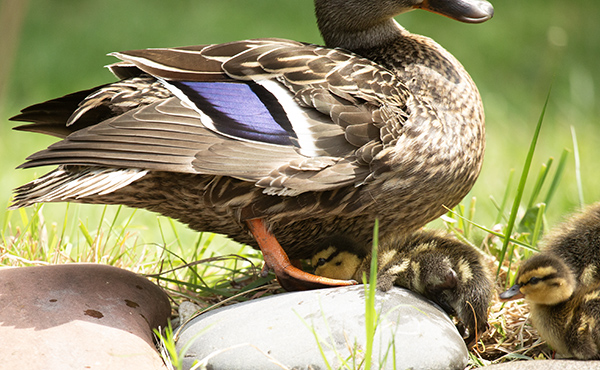
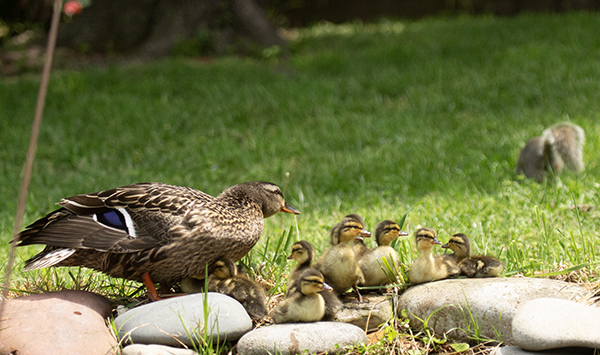
Photograph of a Mallard hen and her downy ducklings exploring a small backyard dragonfly pond. The hen is standing up in shallow water that doesn't reach her chest, while her ducklings are clumped near her in the water, some looking toward her and others showing interest in the pond's stone border.
Photo from the Mallard archive, 2025. Spring is Mallard duckling season, in our tiny suburban dragonfly pond.

[This post picks up where the last left off. For recaps and links to the rest of the series, please visit my Mallard page.]

Unlimited markets for a limited resource

In the final decades of the 1800s, advances in transportation and cold storage expanded market ranges for professional hunters in the United States. Hunters could travel farther, and faster, in search of game. They could ship their harvests to distant markets within hours or days of slaughter, prolonging freshness with ice and/or refrigeration.

Transportation infrastructure was a national priority, supported by massive public and private investment. Rail lines branched and intersected. Paths hardened into lanes and roads. And the waterways thrummed with engine noise.
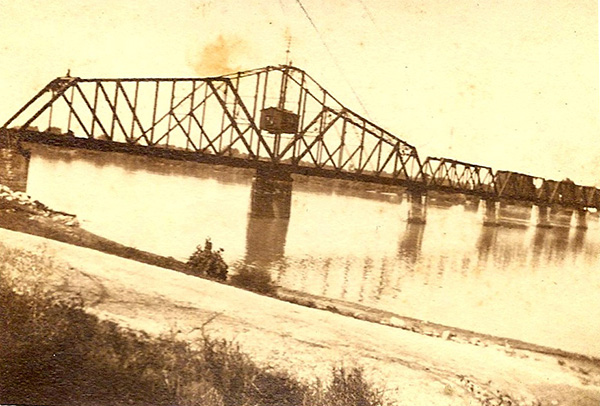
Sepia-toned image of a long truss bridge over a smooth body of water. The bridge has at least five sections set on stone pilings. A large box-like feature hangs over the bridge's final section, secured within the braces of the tallest truss-element. A bare path/lane runs across the foreground, and a treeline is just visible in the far background.
Photo from the family archive, c.1910(?). Based on its archival context, most likely location is South Dakota.

Cold storage garnered fewer headlines, but gained momentum of its own. Ice markets flourished. Inventors and investors patented cooling devices. Shippers outfitted railcars and boats to transport frozen goods. Spurred by a growing beef industry, Texas became an epicenter for ice production.

With so much infrastructure falling into place, US meat-and-feathers merchants faced a bright and profitable future. All that was needed, to fulfill the promise, was unlimited access to game.

It’s no coincidence that game populations were crashing.

I’m not an economist, but I understand the simple arithmetic of supply and demand. Heavy demand combined with dwindling supply equals increased resource value. And increased value bounces any resource into a complex Venn diagram of economic, social, political, and legal spheres.1 All of these spheres overlap at a historically contentious battleground: regulatory oversight.

Hunters in the Mallard Mine

As I’ve noted before, hunters have always held majority stakes in the US portion of North America’s Mallard Mine. And among the various hunting interests of the 1800s, sport and leisure hunters held majority stakes in legislative bodies. So the regulatory winds, in US branches of the Mallard Mine, blew in favor of sportsmen and against market hunters.

For the sport and against the market. Sounds weird, doesn’t it? Especially in our present (2026, US) context.2 (Maybe it’s not so weird, after all.)

Mallards in the Marketplace

Imagine rolling up to the latest fad grocery chain in search of a freshly slaughtered wild Mallard. Then across to the big-box craft store for a bag of mottled hen feathers (not the cheap domestic feathers—wild-grown only, please). Maybe add an impulse purchase of those expensive iridescent-patched primaries, plucked from a young hen who had been slaughtered, shortly after her first molt, on a production marsh leased out by a hunting conglomerate.
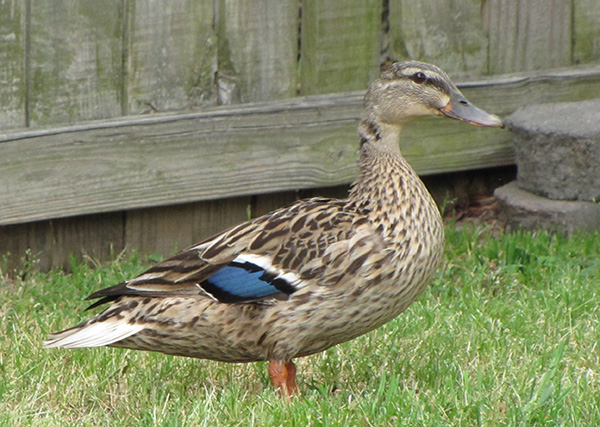
Photograph of a Mallard hen standing in a patch of mown grass in our small suburban back yard. Our wooden fence and a pair of landscape bricks are visible in the background. The primary feathers of the hen's wings are mottled shades of brown, like the rest of her feathers, but with prominent mid-wing patches of bright blue bordered with black and white.
Photo from the Mallard archive. This hen, who visited in 2010, arrived before my Mallard obsession took hold. Check out the blue patches on her wings. In bright sunshine, Mallards’ wing patches glitter and gleam with iridescence.

While it all seems probable enough for dystopian fiction, it’s impossible on an industrial scale. In the US, anyway. Not with today’s populations, both human and duck. Not with our neglected wetlands and wild places—those small, discontinuous, poorly funded refuges in which many wildlife species survive but cannot thrive.

Mallards in the Zeitgeist, 2026

In today’s version of the US, Mallards are scenery, not agriculture. Wildlife, not livestock.
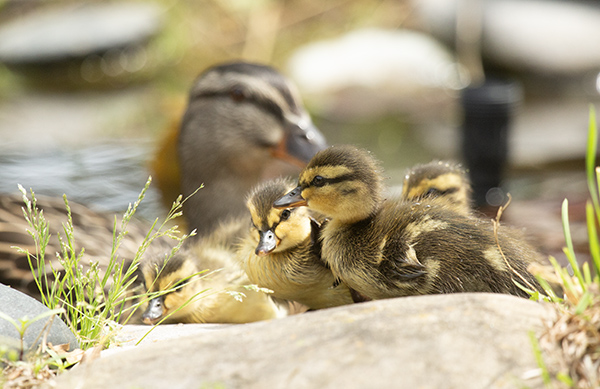
Photograph of a Mallard hen and her ducklings, taken in 2025. Four of the ducklings, in focus in the foreground, are perched on the stone border of the dragonfly pond. The hen was still in the pond, visible in the blurry background, watching over her ducklings.
Photo from the Mallard archive, 2025. Here, four downy Mallard ducklings have climbed onto the stone border of the dragonfly pond while their mother watches from the background.

Wildlife is for nature documentaries; livestock is for grocery shelves.

Yes, sport hunters often (sometimes?) eat their kills. But most of us don’t hunt anymore. Many of us couldn’t afford to hunt waterfowl, even if we had the tradition and urge.

But in the 1800s version of the US, everyone knew a hunter or two. Everyone ate wildlife.

Local market hunters held positions of near-fame. Sawdust-lined crates and barrels stuffed with carcasses of wild-sourced birds arrived, sometimes hourly, at merchant stands. Restaurants served pigeons and songbirds. And Mallards. Such was the norm.

Such was the norm until the pigeons went extinct. Until songbirds and Mallards disappeared from many fields and marshes. Until fields and marshes, themselves, disappeared. Until sport and leisure hunters grew restless under the burden of needing to search farther and wider for binge-shooting opportunities.

Until state legislatures took ownership of wildlife resources.

Gatekeeping the mine (and throttling the market)

Under state ownership, which started in a few states in the late 1800s and quickly trended up, professional-grade harvest equipment was banned from the Mallard Mine. From all the wildlife mines. No more batteries of guns. No more canons or punt guns. These equipment-level prohibitions served as implicit harvest limits.

Sent into the Mallard Mine with only a single- or double-barreled shotgun at hand, like any average sport hunter, market hunters could still harvest hundreds of ducks each day.3 Just like the sport hunters did. But they could no longer harvest hundreds with a single shot.

After leveling the equipment field, invested legislatures set fences around their various wildlife mines and locked the gates. States opened the gates seasonally and sold passes (hunting licenses) to residents within their states. Some states sold higher-fee non-resident licenses.

All of these efforts to limit operations in the Mallard Mine were statutory nods to sport-hunting traditions. As long as market hunters hunted like sportsmen (like European sportsmen) and harvested like (European) sportsmen, they could, during harvest seasons, sell their harvest.

Such gatekeeping didn’t hamper the sportsmen. Sport and leisure hunters only binged intermittently, anyway. Adjusting their schedules around close seasons wasn’t too painful, and observing close seasons supported sportsmen’s claims to a sporting tradition. Seasonal abstinence equated to preserving wildlife, along with the traditions of sport hunting, for future generations.
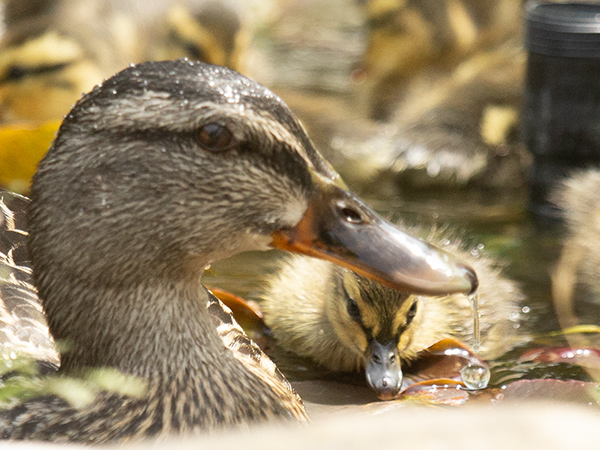
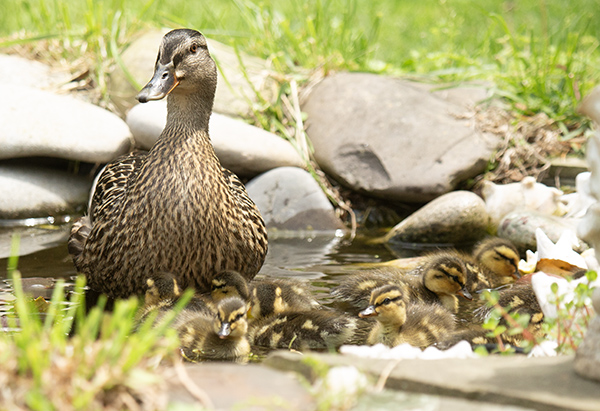
Zoom photograph of a Mallard hen and duckling. Focused tight on the hen's profile, the photo captured her after she surfaced from dabbling underwater. A large droplet of water had just fallen from the tip of her beak. One of her downy ducklings was peering toward the camera from just behind her, framed by the silhouette of her neck and beak.
Photo from the Mallard archive, 2025. Waterfowl conservation, in the US, was started by sport hunters and was/is shaped by sport priorities.

On the market side of things, this statutory gatekeeping might have triggered immediate and massive change. Might have, but didn’t. Market resilience was intrinsic to the system. Professional hunters had already adapted to travel, to following game. As wildlife fled from progress, hunters flocked into states with undeveloped landscapes. And as states bore down on the market, hunters fled to states with looser (or non-existent) game laws. Enabled, of course, by shipping and storage infrastructure.

Meat and feathers kept flowing. As did profits. For a few more decades, anyway.

An aside about perspective: Triangulating time

Among my immediate family, the people, climates, and landscapes of the decades between 1880 and 1940 are lost to time. All of the living witnesses have passed, leaving only ephemera.

Ephemeral clutter fragments my perspective. Each inherited photo and letter, every generational trinket and token glitters with potential. They are facets of memory chipped from the massive face of the past. They are happy and sad, simple and fraught, heart-full and lonely. They are not the impulse behind these Mallard posts, but they’ve gotten involved. (It’s not their fault.)
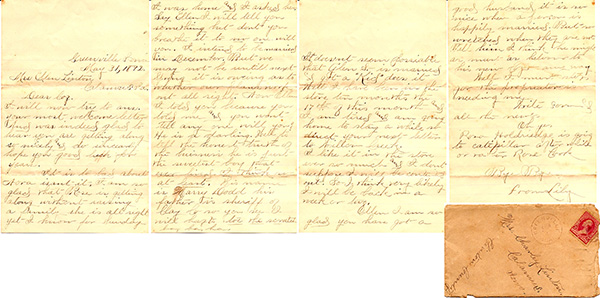
Scanned image of a four page, handwritten letter, including the envelope. The pages are yellowed with time, but the neat cursive writing is still legible. The tiny envelope is simply addressed, "Mrs. Charles Linton/Calamus, Iowa" tilted across the center, with "Clinton County" written upside down and tilted in the opposite direction. A two-cent stamp is in one corner.
Four-page letter, dated May 31, 1892. (Full text in footnote4). On page two, the letter reads: “Say Ellen I will tell you something but don’t you breathe it to no one will you. I intend to be married in December. …Now Ellen I told you because you told me and you won’t tell any one will you?”

Initially, I intended to resist the urge to supplement these posts with family ephemera. As that resolve weakened, I decided to dip only into the anonymous portion of the archive. The nameless photos.

Now, all of my fences are down. I’m over a century deep in a family archive that is haunted by forgotten names and places, reaching out to known family.
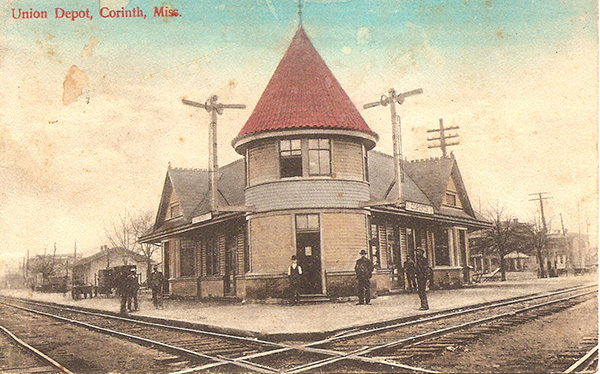
Tinted photo postcard, c. approximately 1900. Text on the image reads "Union Depot, Corinth, Miss." The image shows a train depot situated at intersecting tracks. The two-story depot features a round turret-like construction on the front, and the tile roof of the turret is tinted red. Two tall poles on either side of the turret support wires from power poles that line the streets to either side of the intersection. Several men are standing in front of the depot, and houses are visible along the streets.
Postcard from the decades around 1910. I wanted to use this image to illustrate one of the passages about trains and shipping, but I couldn’t bear to separate it from the text on the back: “Dear Birdie, I received your card O.K. was glad to hear from you and to know you are well and having a good time. I’ll be glad when you come back to work. We are getting along fine at the mill but miss you so much. My little brother Ernest was drowned in Lake Como last Sunday evening and was buried here at the City Cemetery Tuesday. It was extremely sad to have to give him up. Answer soon. Your Friend Gertrude Brady.”

I’m not comfortable, this deep in history. Family history. US history. Mallard history.

I am, after all, a science and nature nerd. I like my histories either so far back that only science can illuminate them (cosmology and paleontology) or immediate enough to see for myself.

Prior to all of this Mallard reading, my journeys into history as a knowledge discipline have been forced marches through coursework and curiosity tours through museums. Anecdotes and specimens. All trees and no forest. Not even trees, really. More like twigs and leaves.

What’s more, my lens for near-distance history is warped. Warped by experiences that are both universal and intensely, unspeakably private. By decades spent in folklore, fiction, and dreams. For much of my life, I’ve been more comfortable in mythologies and multiverses than my own existence. I’ve had little interest in, or use for, actual history.

Now, I appreciate how much near-distance history matters. Or should matter. Especially to a science and nature nerd.

History has become part of my purpose, in these Mallard posts. Historical context. And, given my objective and subjective weakness as a history student, I need personal anchors for context. Even if the anchors are ephemeral.
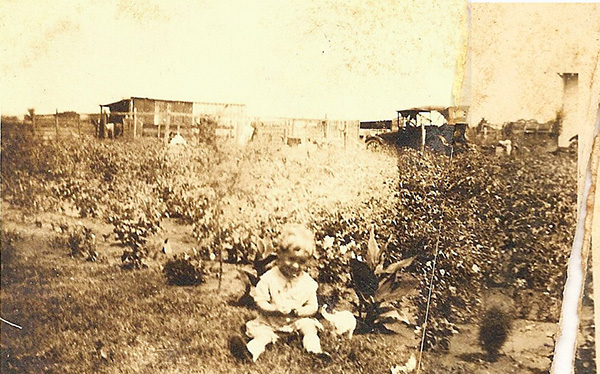
Sepia-toned image from the family archive. A chicken shed and early-model car are in the background, behind a garden that is either winter-weary or spring-immature. A blonde toddler in white clothes is sitting on the ground at the edge of the garden. A white kitten is standing beside the child. The kitten's body language makes me think it was probably being petted in the moments before the photo was snapped.
Photo from the family archive, c. 1910(?). This image has many recognizable elements—a chicken coop, a vintage car, a garden plot, and a toddler with a kitten—and yet is completely anonymous. All of the tensions between familiar and familial move through this photo, just like they move through the rest of the archive.

Taking the game to court

Pennsylvania field to Massachusetts table

On July 15, 1879, in Boston, Massachusetts, George C. Hall and an unnamed partner served a woodcock5 dinner to a paying guest.

At the time of the meal, woodcock season was closed in Massachusetts. Woodcock hunting season, as well as selling, buying, or possessing season. All seasons closed.

Statutorily, this particular close season was an impenetrable umbrella of protection staked out over Massachusetts’s woodcock.

Pennsylvania woodcock, though, were literal fair game. So Hall and his partner served Pennsylvania woodcock to their paying guests in Massachusetts. Loophole exception, unlocked.

Litigation ensued. And, in 1880, the woodcock-dinner tussle landed in front of the Massachusetts Supreme Judicial Court.

“The question presented by the case at bar is whether, in the absence of…explicit manifestation of the intent of the Legislature, the words ‘any of said birds’ are to be construed in the larger sense, as meaning any woodcock, partridge or quail whatever; or in the more restricted sense, as meaning any woodcock, partridge or quail taken or killed in this Commonwealth within the times mentioned” (Commonwealth v. Hall, 1880, p. 411).

The Court bootstrapped a series of logics, in their written opinion. Here’s a sample paragraph, quoted in clause-laden length:

“The object of the statute is to protect these birds during the breeding season, and for such a reasonable portion of the year as may prevent them from being exterminated or their numbers diminished in this Commonwealth. The mode in which the statute seeks to attain this object is by punishing the taking or killing of such birds in this Commonwealth during the times specified, or the buying, selling, offering for sale or having in possession in this Commonwealth, during those times, of birds so taken or killed; and by enacting that the possession in this Commonwealth at such times of any birds of the kinds specified shall be prima facie evidence to convict; leaving it for the defendant to prove, if he can, that the birds found in his possession were not taken or killed in this Commonwealth at a prohibited time. So construed, the statute is reasonably adapted to carry out its object, and is free from all constitutional difficulty” (Commonwealth v. Hall, 1880, pp. 412–413).
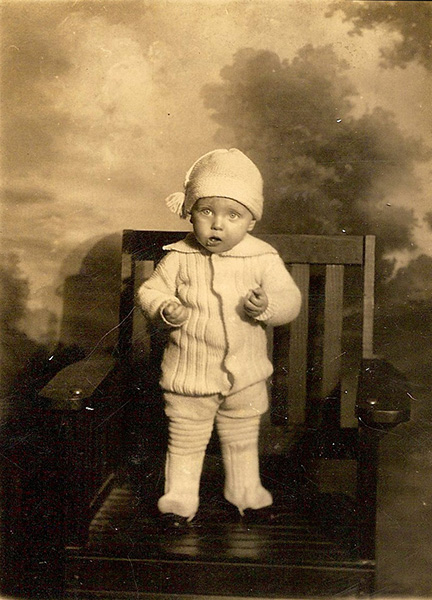
Sepia-toned studio-style photograph of a toddler. The child is dressed in an elaborately knitted outfit (perhaps an early version of the onesie?), complete with a tasseled hat and shoe-cover leggings. They are standing in a wooden chair posed against a cloudy background. I suspect there is a treat clutched in one or both hands, as the photo appears to have been snapped mid-snack. The child is peering just above and to one side of the camera with an expression that strikes me as mild confusion mixed with a touch of reluctant obedience. As if someone has told them to "stand right there and don't move a muscle" (as I was often instructed, for school photos), but the instructions were confusing because standing is chairs is typically discouraged and how can you stand still without moving a muscle but also enjoy the treat you've been bribed with? (I obviously read too much into these photos...)
Photo from the family archive, c. 1900(?). I hope this anonymous child grew up happy and healthy, with plenty of patience for difficult reading.

Ouch, says every writer who ever wrote. And every reader who ever read. Anyone committed to understanding what was actually said, in that paragraph, will have to read it more than once.

After reading it more than once, some powerful implications live within and between those lines.

First, the Court acknowledged the reality of human-driven species extinctions, accepted the benefits of species protection, and approved statutory intervention as a preventative measure against exterminating game birds. That’s a notable set of statements, history-wise.

Next, the Court positioned legislative interference in the game market as a non-issue. The statute outlawed selling and buying Massachusetts’s woodcock during close season, and the statute was “free from all constitutional difficulty”.

Finally, the Court placed burdens on proof on offenders. Not the other way around. Officials empowered to enforce this amendment didn’t need to prove the intrastate provenance of woodcock. Instead, anyone caught with a woodcock, during close season, had to prove that they had sourced the bird out-of-state.

Which, in this particular case, was stipulated by both the prosecution and the defendants. The woodcock cooked and served in Boston, in 1879, was a Pennsylvania bird.

Without further ado, the court ruled that Hall had not violated the statute. The law applied only to Massachusetts’s woodcock, so Hall and company had served a legal meal to their paying guest.

Aside: I am “…unversed in the mysteries of the subject…”

I’m old enough to remember spinning a dial, to change TV and radio channels. Static, music, static, voice, staticstaticstatic, voices and music.
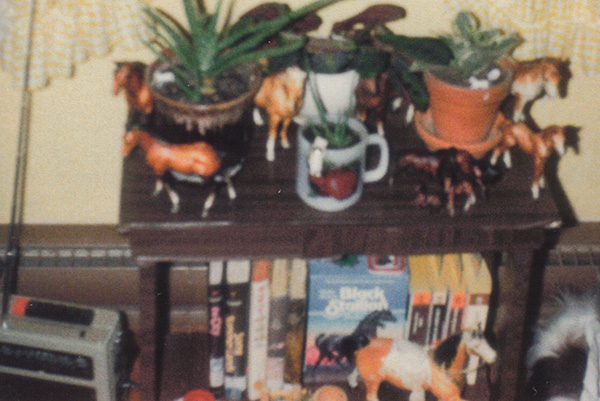
Blurry photo of a contact-paper covered nightstand/bookshelf. The stand was, at this point, being used to display some of my horse collection, a few houseplants, and books. The room was painted yellow with yellow gingham curtains. On the floor beside the stand, my radio/cassette player was a large-ish gray box with a long antenna, thick buttons, and a dial-type radio.
Photo from my personal archive, c. 1985. This is a blurry glimpse into my childhood bedroom, including the earliest of my horse collection, some of my favorite books (the Black Stallion series and the Dune series are prominent in this image), a few houseplants, the baseboard heater that was never ever ever to be turned on lest the house burn down, and my first radio/cassette player. Static music static.

That’s how these court opinions read, to me. Noise, signal, noise.

“The objection of a want of power in the legislature to pass the act…. …the prohibitory liquor law…was in violation of that provision…which declares that no person shall be deprived of life, liberty or property…. The legislature may pass many laws…to impair or even destroy the right of property. Private interest must yield to the public advantage. …The protection and preservation of game has been secured…and may be justified on many grounds, one of which is…food. …Some of the provisions…might seem, to one unversed in the mysteries of the subject, to be unnecessarily stringent and severe…. …there are many powers conferred upon Congress which, until exercised by it, are regarded as dormant and may be exercised by the States within their limits, among which is the power to regulate commerce” (Phelps v. Racey, 1875, paras. 3–4).

Over a century later, I’m an eavesdropper. I’ve attached a science bug to the fence around the legal sphere, and I’m listening in. Unversed.

Noise. Signal. Noise.
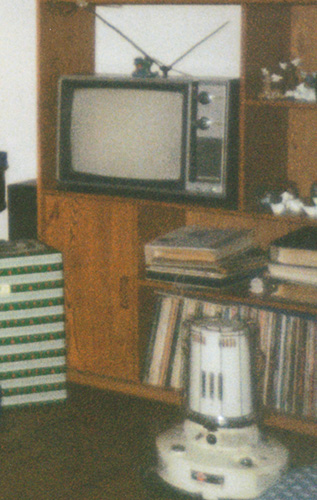
Photo of a large living-room entertainment center loaded with Christmas decorations, a console-type TV with rabbit-ears antenna, photo albums, and vinyl records. A kerosene heater, unlit, is on the floor in front of the stand, and a large wrapped gift is visible to one side.
Photo from my personal archive, Christmas 1992. Our living room TV was a dials-and-rabbit-ears affair. It had some 15 possible VHF channel settings, and, in good weather, picked up four stations. The kerosene heater on the floor was only lit for company and special television events.

Some of what reaches me as noise is, in fact, noise. Ornate phrases and stacked clauses that a diligent editor, in 2026, would simplify or delete. In-text citations that establish credibility, for doubters who wish to backtrack and verify.

And some of what reaches me as noise is jargon.

Jargon is a loaded word. Laden with negative connotations, the word “jargon” criticizes and accuses disciplinary texts. Except, all disciplines create unique lexicons—terminologies and core allusions common to the field and readily interpreted by readers within the field.6 These lexicons facilitate disciplinary communication. Within the field. Which means that readers outside the field often encounter disciplinary writing as encrypted communication.

I’m an old science major. I spent many long academic years programming the science decrypt key into my firmware, and I’ve downloaded most of the updates. I know the terminologies and catch the allusions. I’m versed.

But I haven’t invested my time or resources into acquiring other decryption keys. I can download the outsider patch and install the eavesdropper update, for these court opinions, but I won’t become versed.

As always, caveat lector.
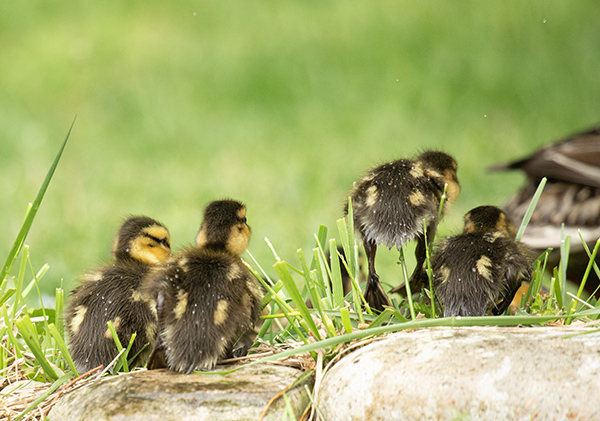
Photo of four downy Mallard ducklings, with the Mallard hen that hatched them exiting the frame to the right. The ducklings have their backs to the camera, and one has been captured mid-air as it hopped down from a stone that makes up part of the border of our backyard dragonfly pond. The mid-air duckling's webbed feet are visible in silhouette against the yard's mown grass.
Photo from the Mallard archive. Here four ducklings are following their mother as she prepares to take a stroll around the yard. One of the ducklings was captured mid-hop, jumping down from the stone border of the dragonfly pond.

A benchmark precedent: “The judgment of the General Term must be affirmed.”

Commonwealth v. Hall cited a number of precedents. One particular precedent is common to many of the era’s game cases: Phelps v. Racey (1875). That heavily ellipted quotation, in the above aside, was taken from the New York Court of Appeals’s review of Phelps v. Racey.

I made an initial decision to leave out this particular precedent. Not because the case wasn’t important, in my context, but because I was thoroughly baffled. All I had were two surnames, a date, and a six-paragraph appellate opinion.

The opinion is both dense and thin. Dense with legal logic, but thin on details. Very little who, what, where, and when. Phelps and Racey, quail and penalties, New York, 1870s. That’s it. Which was, apparently, all the judges needed. “The judgment of the General Term must be affirmed” (Phelps v. Racey, 1875, para. 6).

As I accessed other court opinions, researching my Mallard obsession, I followed the first several Phelps v. Racey citations to the online case record. I read and re-read the opinion. Baffled. The next several citations? Re-follow, re-find, re-read. Still baffled.
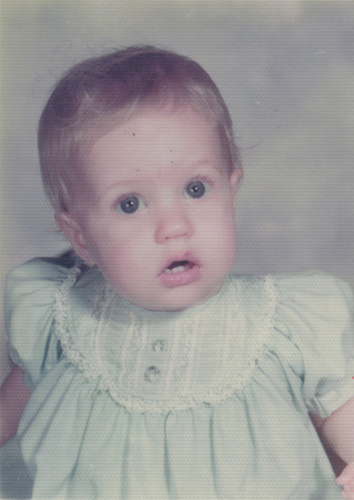
Pale-tinted photo of me somewhere in my age-counted-as-months era. In this studio-type photo, I'm gazing vaguely in the direction of the camera, wide-eyed and open-mouthed and, apparently, confused. Mother had dressed me in what was likely a stiff and itchy blue shirt with puffed sleeves and ruffles and tucks and lace (eww).
Photo from the family archive. This is me as a baffled baby.

Repeat, ad nauseam.

Until I reached my nauseam tipping point. In typical OCD fashion, my investment of time tipped from intermittent bafflement to days-long fixation. In the end, I decrypted Phelps v. Racey with a little help from online newspaper archives.

On May 5, 1874, the New York Daily Herald published a short note: “The suit of Royal Phelps vs. J. H. Racey came up yesterday in General Term, Supreme Court. Defendant was prosecuted for violation of the game laws, in having quail and pinnated grouse in his possession during the close season. Defendant put in as answer that the birds were killed before the close season, and preserved by a patent process” (Court of Common Pleas, p. 3).

Did you catch it?

What I had initially accessed—the opinion cited in all of those subsequent cases—was the appellate review dated February 2, 1875.

But the actual case, the one with all the details, was heard on May 4, 1874.

Phelps v. Racey (1874): “…I am wholly at a loss…”

J. H. Racey was a New York city merchant who sold game through a market on Centre Street. On March 15, 1873, during close season, his stock included six quail. On March 19, he added two pinnated grouse and another 100 quail. The birds had been purchased in December of 1872, from Minnesota and Illinois, and preserved with a “patent process”. (I searched in vain for details about the process, which most likely was some form of cold storage.)

Royal Phelps, who was the president of the New York Association for the Protection of Game, got involved, and the local court fined Racey for possession of six quail and two pinnated grouse. Each bird carried a $25 fine, which would have left Racey owing some $200. (Equivalent to roughly $6,000 of spending money, in 2026.)

As I couldn’t find this initial ruling online, I can’t say why the judge imposed fines for only eight birds. But, given that the judge didn’t include the 100 quail Racey had in his possession on March 19, $200 seems a tap on the wrist.

Tap or slap, Racey appealed the ruling.

As did Phelps, who wanted Racey fined for all 108 of the birds.

These competing appeals landed before Judge Daly, of the New York Court of Common Pleas, on May 15, 1874. Daly’s opinion includes the following:

“[The statute] has allowed game, killed before the 1st of January, or in states where the killing of it was at the time lawful, to be sold or kept in possession between the 1st of January and the 1st of March, and that is all. Beyond that, the prohibition is positive, that no person shall have any of the game specified, in his or her possession, and I am wholly at a loss to see upon what ground it can be said that the possession which existed in this case was not the kind of possession which the statute meant. It may be that when the law was enacted, that no such thing was contemplated as that game, killed in the autumn of one year, could be preserved, as in this case, so as to be sold a year afterwards within the permitted period. But we cannot say so as a matter of law, for for all that we know, or for all that appears in this answer, this apparatus may have been known and in use when this law was enacted” (Phelps v. Racey, 1874, p. 238).

Daly’s ruling, later upheld in that widely cited 1875 appeal, bumped Racey’s fine to $2700. A penalty of $2,700, in 1874, equates to about $80,000 worth of spending money in today’s (2026) economy.

While I would love to report further on this case, my journey with Phelps and Racey ends here. I don’t know if, how, or when Racey paid his punishing fine, nor do I know if Phelps targeted other game merchants. (Please comment, if you know more of the story.)

Thin ice: Haggerty v. St. Louis Ice Manufacturing and Storage Company, 1897

In 1892, Missouri statutes included restrictions against possession of game during close season. Starting in 1892 and continuing through 1893, a group of game merchants (lumped in the record as Haggerty et al) tested a cold storage loophole. 

According to the court record, the St. Louis Ice Manufacturing and Storage Company crafted a per-pound storage contract with Haggerty et al. The ice company would store game during the close season months of 1893, keeping the meat in good condition until the following open season in November. Then the merchants would retrieve their 1892 overstock and get back to business. (pp. 241–242)

Between November 15 and December 26, 1892, merchants deposited enough game to rack up a massive storage bill. When the bill came due, on November 18, 1893, the merchants paid as contracted and proceeded to withdraw their game. Which had rotted. (pp. 241–242)

The ice hadn’t been icy enough.

Haggerty et al demanded compensation. St. Louis Ice company refused. And on January 9, 1894, the St. Louis Globe-Democrat published the following note: “John E. Haggerty & Sons filed suit against the St. Louis Ice Manufacturing and Storage Company for $11,842.89 damages for game spoiled in the defendant’s cold storage warehouse between January 1, 1893 and November 1, 1893” (Yesterday’s new suits, p. 12).

Such a precise invoice, $11,842.89, deserves precise comparison. Measuring Worth carves out the following 2026 US dollar values:

  1. if spent on a purchase, $448,472.05
  2. if received as compensation, $3,414,261.32
  3. if held as wealth, $4,628,686.25
  4. if spent on a project, $23,677,759.95
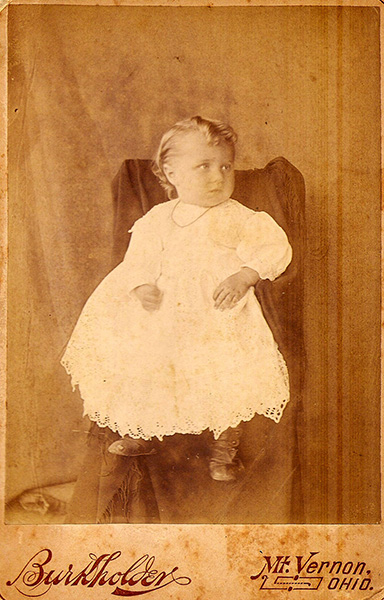
Sepia-toned studio-style photo of an very young (perhaps early toddler-aged) child seated on a draped chair. The child's blond hair is styled in short ringlets. Button-up boots and a lacy white dress, along with a dainty necklace, complete the look. The child is looking to one side with an unsmiling expression.
Photo from the family archive, c. 1900(?), Mt. Vernon, Ohio. Photos were luxuriously expensive, but not $11,842.89 expensive.

When the case arrived in front of the Missouri Supreme Court, the merchants’ had downsized their ask to $7,000. (Some $250,000 worth of spending money, today.) Downsized, but still sizable.

In the end, Haggerty et al lost. They lost their money, their game, and the appeal. They lost because the entire scheme was a misdemeanor, according to state law, which meant the contract was illegal.

Judge Sherwood, who wrote the opinion, was fond of emphatic italics. “The offense prohibited by section 3902 is a misdemeanor, and in such case the intention of the misdemeanor cuts no figure in the case, since in that class of crimes intention constitutes no element of the offense. It is the act done and that alone which violates the law, and the motive which prompts the violation is altogether dehors the crime committed” (p. 246).

Precedents and italics and all, Sherwood lays out a seven-page explanation, tinged with exasperation in the final paragraphs. “Recurring to the petition, it shows on its face that plaintiffs contracted with the defendant corporation for the commission of a misdemeanor. …The law will not stultify itself by promoting on the one hand what it prohibits on the other, and will for this reason leave the parties to this suit where it finds them, unsanctioned by its favor and unaided by its process” (pp. 247–248).

Haggerty et al would receive no satisfaction from Sherwood’s court. Neither, really, would St. Louis Ice Manufacturing and Storage Company, who won their case by proving that their contract was illegal.

Standing firm on thin ice: “Warrants for Game Dealers”

Haggerty & Sons, with John E. Haggerty at its head, had been a fixture in St. Louis since 1845 (Extensive game depot, 1877, September 28, p 4). Haggerty was a fixture of his own, serving as the market master for Union Market (Mayor Wells’ selections, 1903, April 25, p. 2) and circulating through local politics.

A series of solicitations aimed at market hunters, placed in the St. Louis Globe-Democrat in November and December of 1882, hint at the scale of Haggerty’s business. In order to fill Thanksgiving orders, Haggerty needed 10,000 turkeys, 5,000 dozen (60,000) quail, 1,000 wild turkeys, 1,000 dozen (12,000) grouse, and 500 saddles of venison (Wanted,November 15, p. 5). Christmas orders exceeded Thanksgiving—25,000 turkeys, 10,000 dozen (120,000) quail, 5,000 dozen (60,000) grouse, 1,000 wild turkeys, and 500 saddles of venison (Wanted, December 6, p. 7).

Given the vastness of his enterprise, Haggerty and the game laws were destined for conflict. But an 1882 case against Haggerty and his brother went nowhere: “The cases against the Haggerty’s are virtually dismissed by being continued generally” (Court of Correction notes, 1882, March 31, p. 4).7

Nowhere, again, went an 1897 case against Haggerty, his son, and four other game merchants.

On Tuesday, February 9, 1897, Missouri’s game wardens targeted six St. Louis game dealers: the Haggertys, in their 944 North Broad Street address; Benjamin Kaufmann and Samuel Kaufmann, of stand 1, French Market; Frederick Becktane, stands 9 and 10, Union Market; and Eugene Deane, 1017 North Third Street (Warrants for game dealers, 1897, February 9, p. 12).

“Attorney J. R. Claiborne, who has been retained by [Deputy State Game Warden] Capt. Bull to represent the state, said yesterday that warrants would be issued from day to day against violators of the law, if the six defendants against whom the warrants were issued yesterday were found guilty. The six cases, he said, were merely test ones” (Warrants for game dealers, 1897, February 9, p. 12).

Six test cases, representing less than 1% of the 700 game dealers and caterers that Missouri’s game wardens wanted to prosecute (Warrants for game dealers, 1897, February 9, p. 12).

When the 1897 cases against the Haggertys, the Kaufmanns, and Becktane reached trial, Judge Murphy dismissed them. Murphy based his dismissal on updated statutes—the state’s charges cited violations of 1889 statutes, but those laws had been repealed and replaced by 1891 statutes. (Game dealers not guilty, 1897, March 7, p. 24)

As of 1898, Haggerty was still in business, and still in the newspapers. A May 2 report highlights his efforts to organize North Third Street’s merchants, who had been experiencing a series of robberies. Haggerty wanted the group to demand better police protection for their businesses, which included a saloon, a hotel, and a liquor store. (Will catch burglars, p. 3)
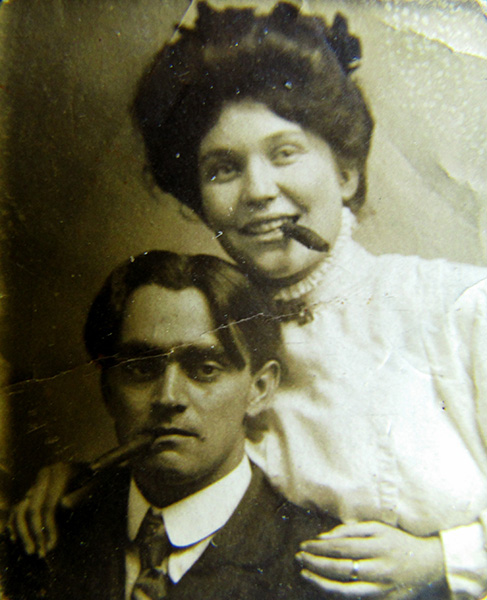
Pale sepia-toned portrait of a mischievous-looking couple. Posed close together with hairstyles and dress that code man and woman, they are leaning against each other with relaxed informality. The man is apparently seated, leaning back against the woman, while she is leaning forward a bit, chin almost resting on his head and her hands on his shoulders. Both are holding cigars in their mouths. The short-haired man is unsmiling, cigar dangling from the corner of his lips, and is dressed in a  dark jacket and tie over a starched-looking white shirt. The woman is smiling, cigar clenched between her teeth, and her hair is styled in a loose updo. She's wearing a high-necked white blouse with short ruffles around the collar and down the front. The blouse is fastened with a brooch at the neck. She has a band-like ring on her left middle finger.
Photo from the family archive, c. 1910(?). I don’t know who they are, but I want to hang out with them. I expect they caused mostly lower-case mischief, but I wouldn’t be too surprised to hear of the occasional upper-case Mischief, somewhere in a district of game markets, saloons, hotels, and liquor stores.

Preview: Parts IX and X, etc.

Enter the era of game smuggling, the Lacey Act of 1900, and the Migratory Bird Treaty of 1918. The game markets collapse, wild duck populations continue to decline, and a hunting-centered North American approach to wildlife conservation takes root.


Notes

1. In what appears to be a true coincidence, Venn’s paper “On the Diagrammatic and Mechanical Representation of Propositions and Reasonings” appeared in The London, Edinburgh, and Dublin Philosophical Magazine and Journal of Science in July of 1880. Using “Eulerian circles” as building blocks, Venn employed circles, ellipses, and other closed shapes to illustrate Boolean logic. “Of course any closed figure will do as well as a circle, since all that we demand of it, in order that it shall adequately represent the contents of a class, is that it shall have an inside and an outside, so as to indicate what does and what does not belong to the class. There is nothing to prevent us from going on for ever thus drawing successive figures, doubling the consequent number of subdivision. The only objection is, that since diagrams are primarily meant to assist the eye and the mind by the intuitive nature of their evidence, any excessive complication entirely frustrates their main object” (pp. 6-7). (Click here to return to your regularly scheduled paragraph.)

2. I wish that I had the time and resources to write the cross-purposes story, the one about agriculture. During this same era, during this half-century timeframe between 1870 and 1920, US agriculture was growing and organizing and lobbying. There’s a signal, in all of this history noise, that ties to a household question: what were Americans eating, between 1870 and 1920? What was the ratio of wildlife-to-livestock animal protein, in the American diet, before and after lawmakers regulated the game market into collapse? When did wild protein give way to farmed protein? To beef from Texas. To other hoofstock and poultry, from other epicenters of organized livestock production. As livestock production scaled up, to fill grocers’ shelves after the game markets closed, the rapidly expanding US Department of Agriculture arrived on scene. Regulatory upgrade, unlocked. (Click here to return to your regularly scheduled paragraph.)

3. The 1923 edition of William Mershon’s Recollections of My Fifty Years Hunting and Fishing includes an article by Hon. Riley L. Crane about a pair of market hunters who gained so much local fame that the marshes they hunted were named after them. In “The DuPraw Marsh in Kochville Township”, Crane states: “The largest number of ducks shot upon this marsh by a single charge were nineteen blue winged teal shot on the fly by Jacques DuPraw with a single barrel, muzzle-loading shotgun. The greatest number of ducks killed there in a single day by two men was two hundred and seventy-two birds, about 1876, Mr. Louis DuPraw getting one hundred and sixty-two with a 10-gauge breech-loading shot gun and Mr. Jacques DuPraw one hundred and ten with a 12-gauge, double-barrel, muzzle-loading gun” (pp. 70–71). (Click here to return to your regularly scheduled paragraph.)

4. Full text of letter: “Greenville Iowa / May 31, 1892 / Mrs. Ellen Linton / Calamus Ia. / Dear Coz. / I will now try to ans. your most welcome letter and was indeed glad to hear you are getting along so nicely and do sincerely hope you good luck for years. / It is to bad about Nora isant it. I am so glad that Rose is getting along without raising a family and she is all right yet I know for Sunday I was home and I asked her. Say Ellen I will tell you something but dont you breathe it to no one will you. I intend to be married in December. But we may not be until next Spring it is owing as to whether our plans work out all right. Now Ellen I told you because you told me and you wont tell any one will you? He is a darling. Well to tell the honest truth of the business he is just the sweetest boy that ever lived. His name is Harry Dodd his father is sheriff of Clay Co so you see I will have to toe the scratch ha, ha, ha. / It doesn’t seem possiable that Glen S.– is married [illegible] got a “Kid” does it. Well I have been in the store ten months the 17th of this month and I am tired and am going home to stay a while so direct your next letter to William Creek. I like it in the store ever so much and I dont suppose I will be contented out. So I think very likely I will be back in a week or two. / Ellen I am so glad you have got a good husband it is so nice when a person is happily married. But so wretched when they are not. Tell him I think he might as must as behave to his new Coz any way. / Well I must stop for the propriator is needing me. / Write soon [illegible] all the news. / Oh yes / Rosa Holdriedge is going to catipillar after while or rather Rose Cook / Bye Bye / from Lily”. (Click here to return to your regularly scheduled text.)

5. Burdened with the common (and adolescently pun-worthy) name of “woodcock”, these oddly charismatic little birds, are also known as timberdoodles and night twisters (among other names). They weigh in around a half-pound or less and merit full membership in the Ministry of Silly Walks. (If you want to watch the Monty Python skit, which is next-level physical comedy, it’s readily available online. If you want to see a woodcock’s silly walk, follow this link and scroll down to the “Behavior” section for a great video.)

According to some articles online, French chef Augusta Escoffier declared woodcock to be the “king of game birds” in the 1921 classic Le Guide Culinaire (which sounds significantly less highbrow in translation: A guide to modern cookery). Fact-check sidequest, unlocked! In the online edition at Project Gutenberg, Escoffier’s text actually reads, “If grouse, which can only be thoroughly appreciated in its native country, were extinct, woodcock would be the leading feathered game. But the latter have this advantage over the former, namely: that their fumet is not so fugitive, and that they may be kept much longer. Woodcock does not yield its full quality unless it be moderately high” (p. 592). Have mercy. Fugitive fumets and high game sound like precursors to gastrointestinal distress. Some side-quests lead straight to queasiness. (Click here to return to your regularly scheduled paragraph.)

6. Note that my acceptance of jargon runs somewhat counter to my earlier criticism of euphemisms. A hazy line separates the two, in my thought processes. The line is so vague, and so apt to change from moment to moment (and subject to subject), that it defies explanation. As is the case for so many of my thought processes, I regret my own lack of clarity. (Click here to return to your regularly scheduled paragraph.)

7. Later that year, the court passed down a perjury indictment against the private detective, one Reginald M. Russell, who had filed warrant against the Haggerty’s (Four court notes, 1882, December 5, p.2). The newspapers of the time published a flurry of articles about Russell, detailing a number of accusations and arrests. Despite the tingling of my tangent-antennae, I never found the time or resources to follow his story in enough detail to report it accurately. (Click here to return to your regularly scheduled paragraph.)

Bonus methods note: The State Historical Society of Missouri (SHSMO) hosts a free, searchable online newspaper archive. I encountered difficulties, though, in linking to the newspaper articles that I found there. Active links uniformly led to a default “unauthorized access page”. I apologize for the inconvenience. If anyone wishes to retrace my steps, for articles cited in my references section but lacking hyperlinks, I recommend starting here. Click the “search digital newspapers” button to get started. I first narrowed my searches to St. Louis, Missouri. Then I searched for 1. “John E. Haggerty” (the quotation marks help further narrow the results), 2. “John Haggerty”, and 3. “Reginald M. Russell”. In each case, I used the date selection boxes to limit results to the 1880s, then a second run for the 1890s, and a final run for the 1900s. Following these steps should led to a results list that includes all of the articles and ads I’ve cited in this post, along with a handful of hits that weren’t pertinent to my work. And, for future reference, the SHSMO archive is a lovely, and free, resource worth bookmarking.


References

Commonwealth v. Hall, 128 Mass. 410 (1880). https://www.courtlistener.com/opinion/6546160/commonwealth-v-hall/

Court of Common Pleas—General Term. Important decision with regard to the game laws. (1874, May 5). New York Daily Herald, 3. https://www.newspapers.com/image/329567764/?match=1&terms=%22royal%20phelps%22%20racey%20game%20quail

Court of Correction notes. (1882, March 31). St. Louis Post-Dispatch, 4.

Crane, R. L. (1923). “The DuPraw Marsh in Kochville Township.” In Mershon, W. S., Recollections of My Fifty Years Hunting and Fishing (68–72). The Stratford Co. https://archive.org/details/recollectionsofm00mers_0/page/68/mode/2up

Extensive game depot. (1877, September 28). St. Louis Post-Dispatch, 4.

Four court notes. (1882, December 5). St. Louis Post-Dispatch, 2.

Game dealers not guilty. (1897, March 7). St. Louis Post-Dispatch, 24.

Haggerty et al v. St. Louis Ice Manufacturing and Storage Company, 143 Mo. 238 (1897). https://www.courtlistener.com/opinion/8055683/haggerty-v-st-louis-ice-manufacturing-storage-co/pdf/

Mayor Wells’ selections. (1903, April 25). St. Louis Globe-Democrat, 2.

Phelps v. Racey, 5 Daly 235 (1874). https://www.courtlistener.com/opinion/6272458/phelps-v-racey/pdf/

Phelps v. Racey, 60 N. Y. 10 (1875). https://www.courtlistener.com/opinion/3606645/phelps-v-racey/#pdf

Venn, J. (1880). “I. On the diagrammatic and mechanical representation of propositions and reasonings.” Philosophical Magazine, Series 5 (9)59. pp. 1–18. https://www.cis.upenn.edu/~bhusnur4/cit592_fall2014/venn%20diagrams.pdf

Wanted. (1882, November 15). St. Louis Globe-Democrat, 5.

Wanted. (1882, December 6). St. Louis Globe-Democrat, 7.

Warrants for game dealers. (1897, February 9). St. Louis Globe-Democrat, 12.

Will catch burglars: Third Street merchants organizing to protect themselves. (1898, May 2). St. Louis Post-Dispatch, 3.

Yesterday’s new suits. (1894, January 9). St. Louis Globe-Democrat, 12.

Focusing on Mallards Part VI: States claim the game

‘When you have killed all your own birds, Mr. Bingley,’ said her mother, ‘I beg you will come here, and shoot as many as you please on Mr. Bennet’s manor. I am sure he will be vastly happy to oblige you, and will save all the best of the covies for you.’ –from Pride and Prejudice by Jane Austen

Content Warning

This multi-part blog post contains references to hunting, agriculture, and research practices of killing birds. This particular installment references various methods and means of Mallard hunting, past and present. If you decide not to read on, I respect and admire your choice.

Photograph from a recent spring nesting in the yard. In this photo, a Mallard hen is leading her day-old ducklings from their nest in the irises bordering the dragonfly pond. The hen is balanced on a large rock, downy nest-fluff sticking to her feet. The ducklings are following in a huddled flock, clinging together for safety.
Photo from the Mallard archive. Here, a Mallard hen and her ducklings are leaving their nest for a family swim in the dragonfly pond.

Limiting (and limited) expectations

It was easy to position my own context for these posts (see Part IV). But all of my (deleted) attempts to contextualize Mallards in pre-1800s North America have been as flawed as my knowledge.

It’s a given that there are records outside of the Mallard archive, outside of the Mallard mine, that explain how and why North America’s waterfowl maintained flagrant abundance within and around the continent’s early nations. But I don’t have a discourse for these records.

In the end, after all of my reading, I am not equipped to know North America’s pre-colonial Mallards, much less describe them. They are, for me, a personal singularity. An infinite intangible that disturbs my erratic journey.

In other words, I’m only telling one facet of the Mallard story: the part written by and for Europe’s descendants.

Caveat lector.

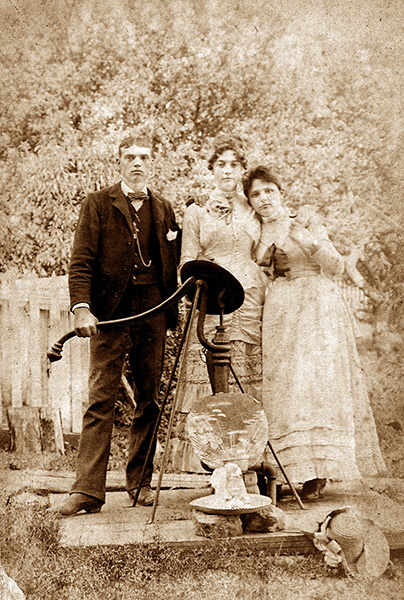
Sepia-toned photograph of three young adults posing beside a pump-handled well in what appears to be a fenced yard. All are wearing formal-appearing attire—two wearing layered and ruffled dresses and one wearing a suit with a prominent pocket-watch chain. A beribboned hat is on the ground in front of the well.
Photograph from the family archive, Iowa, 1881. The trio in this photo were younger than Iowa (granted statehood in 1846) but not a lifetime younger.

In medias res

When I last left the Mallards, in the opening decades of the 1900s, their populations were collapsing. For the moment, I’m leaving them suspended in free-fall.

This post circles back to the 1800s. Back to an era of unchecked habitat destruction and overhunting. Back to the transition years, when state lawmakers claimed title over wildlife and began to legislatively dismantle game markets.

“Wetland utilization in North America provides a classic case of conflict in resource management. The disadvantages of marshes and ponds for the individual farmer encourage their drainage and conversion to cropland. At the same time, these wetlands provide vital habitat for migratory waterfowl, a principle wildlife resource…” (Pospahala, Anderson, & Henney, 1974, pp. 5–6).

Sepia-toned postcard image of a wetland setting in South Dakota. A smallish body of seemingly stagnant water is bordered by dense brush and shrubs.
Photo postcard from the family archive, South Dakota, c. 1900.

“We, who cannot live without wild ducks, must first of all acknowledge two facts: 1. We are the minority; 2. The majority regards any land which is too wet to plow, but unsuitable for swimming or water boating, as useless” (Anderson, 1953, p. 122).

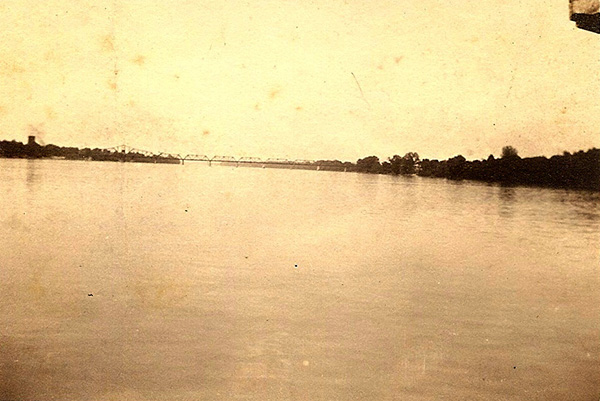
Sepia-toned image of a large body of water with a distant silhouette of truss bridge. The photo's horizon is slightly tilted, the bridge has six visible segments, and a jointed corner of wood is visible in the upper right corner of the frame.
Photo from the family archive, location unknown, c. 1900. A large body of water with a truss bridge in distant silhouette.

These were never the King’s ducks

After fleeing systems in which wildlife belonged to the aristocracy, the English and French colonists in North America drafted new rules. In the colonies, wildlife would belong to the citizens. To the People. (Not, however, to the People who already lived in North America. Only to those who staked their various flags along eastern coastlines and cascaded westward.1)

“The explorations of these settlers were driven by the incredible wealth of North America’s renewable natural resources—and by an unfettered opportunity to exploit it” (Organ, Mahoney, & Geist, 2010, p. 23).

Photograph of a Mallard hen perched on a stone that is part of the border of our dragonfly pond. One of her days-old ducklings is scrambling up the stone's slope, trying to reach the safe and familiar comfort of her protection. Two other ducklings are in line, waiting to test their own climbing skills.
Photo from the Mallard archive, of a Mallard hen standing on one of the stones that border our dragonfly pond. Here, the hen was taking a break from teaching her ducklings to swim and forage.

Who killed (kills) the People’s birds?

During the glut years of the 1800s, US hunters took to the field in three different pursuits: subsistence hunting, sport hunting, and market hunting.

As subsistence hunters took (take) only what they need for survival, their impact on bird populations was (and still is) minimal. But sport hunters, in the 1800s, tended to binge. Each adventure piled up the carcasses:

“The geese were flying all day, thousands upon thousands of them. We killed 163 that day. We had a farm wagon with extra side boards for carrying eighty bushels of wheat. Our kill nearly filled that wagon box. I know that night when we drove back to Dawson, which I think was eight miles distant, we were cold and wet and we all stuck our legs down in the geese and the warmth of their bodies kept us comfortable” (Mershon, 1923, pp. 117–118).

Sepia-toned photo of a horse harnessed to a cart (carriage? buggy?) driven by a man in a suit and hat, complete with thick gloves that have a star emblem on the wide cuff. A cluster of two-story houses make up the background.
Photo from the family archive, location unknown, c. 1900. Not a wagon, I know, but still a reminder that personal transportation in the 1800s was single-digit horsepower.

After each binge, sport hunters returned to their families and their varied professions.

Unless the binge was their profession.

The Meat and Feathers Market

Between 1820 and 1860, America’s cities blossomed from a thin seeding of only 5% of the population to a significant 20% demographic. “Markets for wildlife arose to feed these urban masses and to festoon a new class of wealthy elites with feathers and fur” (Organ, Mahoney, & Geist, 2010, p. 23).

Market hunters earned a living harvesting the wildlife that lived in unclaimed (or claimed and unsupervised) wild places. The siren song of profit penetrated every field, marsh, and wooded acre, tempting hunters to abandon the traditional and self-imposed restraints that defined hunting as a sport.

“A momentary question goes through your mind. ‘Shall I give them the first barrel on the water?’ It is dismissed almost as soon, for early I have been taught it is not the way of the sportsman. Give the birds a chance is the rule. Yet I can not help hoping they will be well bunched and I can get more than one with the first barrel and hope for another with my second. Well, sometimes it works one way and sometimes another. Either way it’s the life worth living” (Mershon, 1923, p. 76).

Giving the birds a chance, for the market hunter, was a profit gamble.

Sepia-toned portrait of two young adults seated at a table. Both are posed with a hand of cards, as if playing poker. Both are wearing suits, though they have taken off their jackets. Both are wearing hats. One is smoking a pipe. The gambler on the right is showing an ace to the camera, held below the level of the table. Paper money, larger than today's bills, is hanging over the edge of the table.
Photo from the family archive, location unknown, c. 1900. Photographer’s stamp: “W. C. Bryant Artistic.”

It was highly likely that a hunter the next county over would happily shoot all the birds on all the waters, rules be damned.

The market wanted meat and feathers, so meat and feathers the market would have.

Sepia-toned portrait, c. 1900, of two young adults wearing hats decked out in feathers. Their coats have big fancy collars, one of thick fur and the other of feathers.
Photo from the family archive, location unknown, c. 1900. Time has taken their names, but their faces and feathers remain.

Any hunter willing to renounce the title of “sportsman” could cash in.

What would you have done?

Endless demand v. limited supply

Around cities and towns, market hunters drained the wildlife from marshes and woodlands and fields. And as nearby wildlife dwindled, sportsmen were forced further afield for their binges.

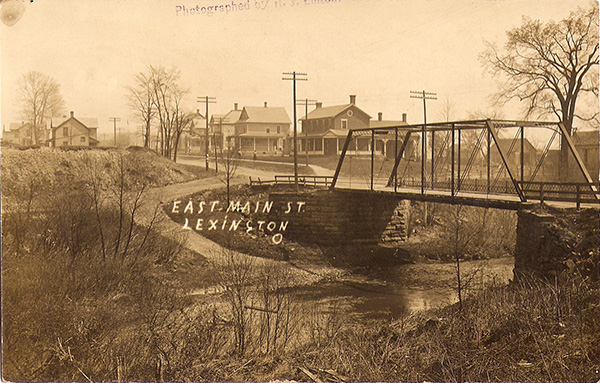
Postcard photograph stamped "Photographed by H. J. Linton" and hand-labelled "East Main St., Lexington, O". A small, single-section truss bridge crosses a brook, several two-story houses line the road beyond the bridge, and utility poles break the horizon.
Photo postcard from the family archive; East Main St., Lexington, Ohio; c. 1900. The photographer’s stamp, HJ Linton, suggests the image was snapped by a relative on some distant branch of a grandmother’s family tree.

“Conflict soon arose between market hunters, who gained fortune on dead wildlife, and the new breed of hunters who placed value on live wildlife and the sporting pursuit of it” (Organ, Mahoney, & Geist, 2010, p. 24).

By the late 1800s, some of the birds had been hunted to extinction.

“The first bird I ever killed on the wing was a wild pigeon. They frequented the Saginaw valley in thousands from early spring until after the harvest. I had been taken with my uncle and father pigeon shooting many times to pick up birds. It was no trick for them to get seventy-five or a hundred birds before breakfast, and soon after I was given my 16-gauge double barrel gun I was taken out to shoot pigeons. The flocks were dense, as I now recall, so it was not a difficult feat to bring one down, and at the very first discharge a pigeon from my shot came fluttering to the ground. I grabbed it and admired it and was satisfied for that morning to have it my entire bag, and proudly took it home to show my mother. It was not long before I was going pigeon shooting regularly every morning, for the flight began at daylight and was generally over by seven o’clock. Then I would get my breakfast and be off to school. My pigeon shooting continued every spring until about 1880, when it was gone forever” (Mershon, 1923, p. 3).

Sepia-toned photo of a group of twenty-seven children, teens, young adults, and adults—seemingly assembled for a school photo. All of the children in the front row are barefoot, most are wearing long-sleeved shirts and coveralls or long-sleeved dresses with large ruffled collars. Two children in the front row are holding hats on their lap, one has a hat hooked over one knee, while yet another hat has been tossed to the side and waits, upside down, to be reclaimed. Some of the younger children have neatly parted hair pulled back in (probably) a braid, others have very short hair that is either too short to style or barely long enough to support styling to one side or the other. The teens and young adults with long hair have puffy updos with a few prominent ribbons, while those with short hair have a suggestion of bangs swept to the side. A dog has joined the first row of students.
Photo from the family archive, location unknown, c. 1890(?). I wonder if the author of the previous passage went to school barefoot, with his hound to keep him company?

“No ordinary destruction”

In the sport v. market skirmishes, sport hunters always had the upper hand. Reputation and tradition amplified their voices.

“Furthermore I will prove by sundry reasons in this little prologue, that the life of no man that useth gentle game and disport be less displeasable unto God than the life of a perfect and skillful hunter, or from which more good cometh. …he shall go and drink and lie in his bed in fair fresh clothes, and shall sleep well and steadfastly all the night without any evil thought of any sins, wherefore I say that hunters go into Paradise when they die, and live in this world more joyfully than any other men” (Edward, Second Duke of York, 1406–1413/1909, pp. 4, 11).

“It is stated that in their migrations northward, the waterfowl often reach the lake in the spring, while it is still covered with ice, and that while huddled in great numbers in the mouths of streams and other open places, they are slaughtered indiscriminately, and that while too poor and unfit for eating. It is also represented that they are killed and wounded in great numbers by the swivel or punt gun, which is a small cannon fixed to a boat, and that by these practices they are driven from their usual feeding grounds and places of resort. It is the well known habit of waterfowl to follow the same line and stop at the same points in their migrations, and such a serious disturbance at this great half-way station, may eventually result in their seeking other quarters. To prevent this it is asked that the killing of waterfowl in the spring be prohibited altogether in certain counties, and that the use of the punt gun be absolutely forbidden. The petitions upon this subject have been so numerous, and the petitioners so respectable, that there evidently must exist good cause for complaint, and their request should be granted. The use of the punt gun along the sea board has been made illegal for like reason, and if it is necessary there, it is still more so here” (Collins, 1860, p. 388).

“The ‘game hog’ is an animal on two legs that is disappearing. May he soon become extinct! The ‘game hog’ formerly had himself photographed surrounded by the fruits of a day’s ‘sport,’ and regarded the photograph as imperfect unless he had a hundred dead ducks, grouse, or geese around him. To-day a true sportsman would be ashamed to be pictured in connection with a larger number of fowls than a decent share for an American gunner, having due regard to the preservation of game for the future” (Lacey, 1900, pp. 4871–4872).

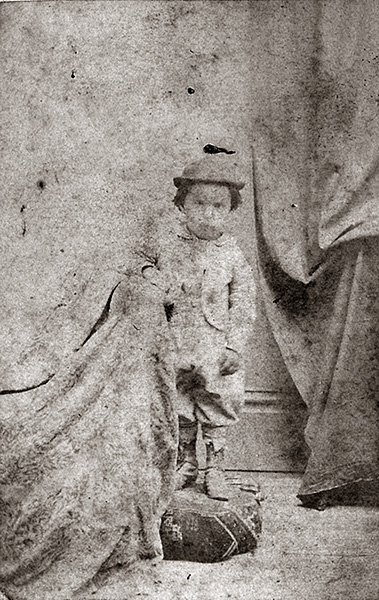
Grainy and faded grayscale portrait of a toddler. The child is standing on an upholstered footrest and is wearing knee breeches, a short jacket with long sleeves, a rounded hat with a small rolled brim, and rumpled boots. One arm rests on a curtain-draped prop. Another heavy drape hangs in the background. Time has robbed the image of most facial features, leaving only the child's dark eyes staring into the lens.
Photo from the family archive; unnamed child (likely surname Linton); Elmore, Ohio; c. 1890. In my internal filing system, this image lives in the “haunted children” file.

Haunted by pigeons

A single piece of market-favorable legislation murmurs from the archival cacophony: an 1848 Massachusetts statute that prohibited anyone from frightening passenger pigeons out of netting-beds, under threat of a $10 fine and compensation for damages (General Court of Massachusetts, 1848, p. 650).

It should be no surprise that this particular law is audible to search engines. After all, passenger pigeon extinction is a holotype cautionary tale that should linger.

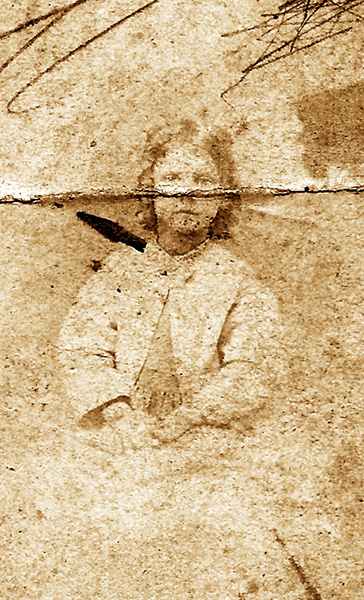
A faded, folded, and foxed photo from February 1, 1887. The child's image has almost completely faded. Loose curly hair, a long-sleeved jacket buttoned at the neck, and what might be a pleated waistline for a dress. Hands folded in lap. Serious eyes peer out over the photo's broken fold.
Photo from the family archive; unnamed child (likely surname Craig); Columbia, TN; February 1, 1887. Another haunted child.

Ohio bids farewell to their big game, but assumes the pigeons will never die

In 1857, as the Ohio legislature sought to revise their “Act to Prevent the killing of Birds and other Game” (Ohio General Assembly, 1857, pp. 107–108), legislators requested assistance from the state’s Board of Agriculture.

The resulting work, published as a select committee report in 1860, wrote off Ohio’s big game as a lost cause: “Ohio has no waste land. It is all useful for agricultural purposes—if not for tillage, at least for pasturage. It has no sterile wastes, marshes, or mountain ranges where the larger game can find permanent security. The deer, the bear, the wolf, and such like animals will soon be gone, and laws that relate to them a dead letter” (Collins, p. 382).

Sepia-toned photo of taken from inside a fenced field that looks recently cut to stubble. In the background three massive, multi-story, wood buildings with steeply framed roofs are surrounded by a field so flat and uniform that it looks like water. A very distant treeline marks the horizon.
Photo from the family archive; The Steele Farm; Cedar Rapids, Iowa; c. 1900.

Wild turkeys, prairie hens, and pheasants were in the same sunken boat. Excepting a few isolated flocks in isolated localities, no protections could save them. Even so, sportsmen wanted the legislature to regulate hunting, so hunting should be regulated. Ohio’s lingering populations of deer, turkey, prairie hens, and pheasants should be granted undisturbed breeding seasons (Collins, 1860, p. 384).

Seasonal protections were recommended for game birds that could adapt to progress—quail, meadow-larks2, kill-deer, doves, flickers, woodcock, and wood ducks (Collins, 1860, pp. 385-387)—as well as for waterfowl around Sandusky Bay (Collins, 1860, p. 389).

The multitudes of warblers, finches, and flycatchers were safe without protection. At least, being small, shy, and drab, they were safe enough. The food-and-feathers market didn’t covet such birds. Besides, providing bird-by-bird protections would require parsing dozens of common and scientific names (Collins, 1860, pp. 383-384).

Sepia-toned portrait, c. 1900, of a young man wearing what looks to me like a scratchy wool suit. His dark hat is garnished with a stiff sail of white primary feathers.
Photo from the family archive, location unknown, c. 1900. The photo was in my great aunt’s album, but was addressed to my grandmother.

Woodpeckers, blue jays, and blackbirds, the kind of birds that damaged agriculture when they ate crops but protected agriculture when they ate insects, could be left to the chances and whims of circumstance (Collins, 1860, p. 384).

The report singled out two game species as immune from overhunting (in Ohio) and in need of no protection: the snipe and the passenger pigeon.

Snipe were mere passers-through, fleeting visitors so well-camouflaged and difficult to flush from wet spring landscapes that only “practiced” sportsmen could hope for success (Collins, 1860, p. 387). During brief April sojourns, snipe were “good sport and a choice morsel for the table”, but “yearly numbers cannot be materially lessened by the gun” (Collins, 1860, p. 387).

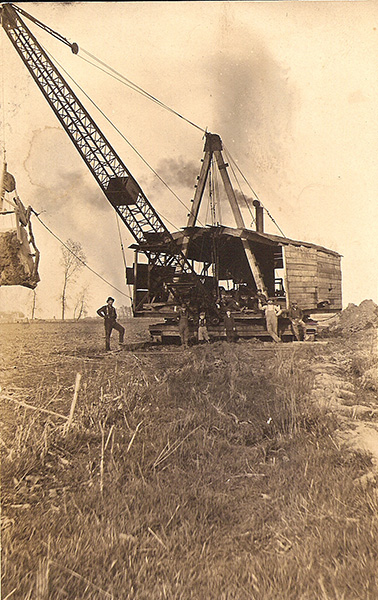
Sepia-toned photograph of a steam crane and six workers in a field in Iowa, c. 1900. The field has been cut to stubble. The steam crane is belching smoke, and the crane's body looks like a wooden building on a massive wood platform. Mounds of bare dirt are visible in the background. The workers are lined up in front of the crane, posing for the photo. A few bare trees are on the horizon, suggesting a winter setting.
Photo from the family archive, Iowa, c. 1900. I don’t know what kind of progress was underway, with this steam crane, but I doubt it involved wetland restoration.

And passenger pigeons?

“The passenger pigeon needs no protection. Wonderfully prolific, having the vast forests of the North as its breeding grounds, traveling hundreds of miles in search of food, it is here to-day and elsewhere to-morrow, and no ordinary destruction can lessen them, or be missed from the myriads that are yearly produced” (Collins, 1860, p. 387).

Forty years later, passenger pigeons were extinct in Ohio3 and functionally extinct everywhere else. It was, indeed, no ordinary destruction.

“Property of the State”

“Section I. That all the game and fish, except fish in private ponds, found in the limits of this State, be and the same is hereby declared to be the property of the State, and the hunting, killing, and catching of same is declared to be a privilege” (Arkansas General Assembly, 1889, p. 173).

Photograph of a female Mallard threatening a squirrel that had ventured too close to her brood of days-old ducklings. The hen is standing over her brood, all gathered on the stone border of our dragonfly pond. The hen's stance is tense, head low and neck coiled, ready to strike at the squirrel should it venture closer. The squirrel's back is turned to the ducks, seemingly unaware that it has disturbed the scene.
Photo from the Mallard archive, of a female Mallard threatening a squirrel that had ventured too close to her brood of days-old ducklings. Mallard hens usually ignore the antics of squirrels in the yard, but new mothers are a different story.

“Section 4650, Wisconsin statutes of 1898 is hereby amended to read as follows: The ownership of and the title to all fish and game in the State of Wisconsin is hereby declared to be in the state, and no fish or game shall be caught, taken or killed in any manner or at any time, or had in possession except the person so catching, taking, killing, or having in possession shall consent that the title to said fish and game shall be and remain in the State of Wisconsin for the purpose of regulating and controlling the use and disposition of the same after such catching, taking or killing. The catching, taking, killing or having in possession of fish or game at any time, or in any manner, or by any person, shall be deemed a consent of said person that the title of the state shall be and remain in the state for said purpose of regulating the use and disposition of the same, and said possession shall be consent to such title in the state whether said fish or game were taken within or without this state” (Wisconsin General Assembly, 1899, pp. 576–577).

Sepia-toned photo of a young woman wearing a pale dress with a fur collar. Her dark hat is tipped to a jaunty angle and is decorated with (maybe?) feathers, flowers, or ribbon. (The decoration fades into the background, so it is difficult to say exactly what has been attached to the hat.) The woman's head is slightly tipped, she is looking off to the side, and her lips are not quite smiling.
Photo from the family archive, location unknown, c. 1900. Her expression captures my bemusement, on trying to follow Wisconsin’s the “shall be and remain” syntax.

Such legislative grabs by Arkansas and Wisconsin, asserted during the closing years of the 1800s, didn’t materialize out of thin air.

State legislatures had been controlling the game within their borders since the 1820s, and courts had upheld a variety of statutes.

Let the alewives migrate

One of the earliest challenges to game laws came in Maine, after members of a town’s fish committee destroyed a dam on private property. On May 3, 1839, the fish committee took action on behalf of alewives, a type of herring.

Charles Peables had maintained a dam on his portion of Alewive Brook, in Cape Elizabeth, for some 12 previous years, diverting the water to power his mill. In May of 1839, local Fish Committee members Hannaford and Davis demanded that Peables open his dam and let the alewives pass.

When Peables declined, the Fish Committee disabled the dam in question. Litigation followed, and the Supreme Judicial Court of Maine eventually ruled for Peables, citing a technicality: Hannaford and Davis had acted early.

As the statute required the brook to be open May 5–June 5, Peables should have been able to run his mill straight up to the stroke of midnight on May 5. As long as the alewives could migrate upstream on May 6, Peables was not in violation of the statute (Peables v. Hannaford, 1841, 106).

Had Hannaford and Davis waited until May 6, they could have destroyed the dam at their leisure, and Peables could not have stopped them.

Peables v. Hannaford set a precedent, at state levels, for the states’ authority (embodied in local officers) to regulate game on private property.

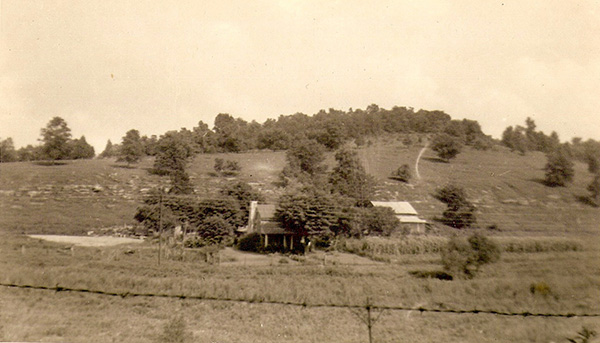
Sepia-toned photo of a house and barn at the foot of a hill, surrounded by a large empty field. The house is set within a cluster of trees, while the field has been cleared for (probably) pasture usage. A line of large rocks and boulders runs along the hill's lower slope, and a thick tree line obscures the top of the hill. A utility pole and utility lines run through the field in front of the house, and a single strand of barbed wire stretches between the camera and the farm.
Photo from the family archive, unknown location, c. 1920(?). The barbed wire running across the foreground would be a distinct “no trespassing” indicator, in the rural area of my childhood.

“We see nothing unconstitutional in the Act”

On July 8, 1874, David S. Randolph served two dressed and cooked prairie chickens to diners in his St. Louis restaurant. According to a Missouri statute, these were the wrong birds in the wrong season.

Even though Randolph could prove that he had purchased the birds in Kansas, where July hunting was legal, he was cited and fined $9. Which would be about $250, today. Randolph appealed, but the Missouri Court of Appeals upheld the fines:

“We see nothing unconstitutional in the act. The game law would be nugatory if, during the prohibited season, game could be imported from the neighboring States. It would be impossible to show, in most instances, where the game was caught. The State of Missouri has as much right to preserve its game as it has to preserve the health of its citizens, and may prohibit the exhibition for sale, within the State, of provisions out of season, without any violation of the Constitution of the United States. So far as we know, this right has never been disputed, and its exercise by the absolute prohibition of the having in possession, or sale, of game within the State limits, during certain period of the year, is no more an illegal attempt to regulate commerce between the States than would be a city ordinance against selling oysters in July” (Missouri v. Randolph, 1876, p. 15).

Did you catch it?

Sepia-toned postcard photo of my great-aunt Birdie as a toddler. She is standing up, one hand balanced on a blanket-draped prop. Her ankle-length dress is a dark material with heavy-looking gathers at the collar and a bright band of (probably embroidered) zig-zags around the hem and cuff. Her eyes are very wide as she looks at a spot just to one side of the lens. Under her image, print on the card reads "The Park Gallery, Chas. Eberhardt, Artist, 20th Street, Rock Island, Ill." Handwritten on the back of the card was "To GrandMa from Birdie Dec 7 1894".
Photo from the family archive; my great-aunt Birdie; Rock Island, Illinois; December 7, 1894.

In knotting up the import loophole, Missouri had stepped ever so softly on the interstate commerce boundary. And the appeals court didn’t mind.

Sepia-toned photo taken inside a hat store, probably in the 1920s. The long narrow room has shelving, tables, and glass-front cupboards that were probably display cases. A table in the middle of the frame is stocked with a variety of hats, decorated mostly with ribbons. A group of adults are posed together, two wearing formal-appearing suits, one wearing a dark ankle-length skirt and white long-sleeved shirt, one wearing a dark ankle-length dress, and one wearing a calf-length skirt, pale shirt, a long coat, and calf-high (at least) boots. I suspect, but am far from certain, that the one wearing the daringly short skirt (calf-length) is my great aunt Birdie. In the background, a shopper wearing a pale calf-length dress is browsing.
Photo from the family archive; location unknown, c. 1920(?). Great-aunt Birdie worked in millinery. I suspect (though I am far from certain) that Birdie is on the far left, in this photo.

‘…the congress shall have power to regulate commerce among the several states…’

When a somewhat related case landed before the Kansas judiciary, in 1877, the commerce question heated up.

On November 8, 1876, an agent for the carrier Adams Express Company received a package for transport—a shipment of four prairie chickens that had recently been killed. The agent, C. A. Saunders, delivered the birds to Chicago, and received a $10 fine (plus court costs) for his efforts.

Kansas had recently adopted the kind of boilerplate “no possession, no import, no export” law that was popular at the time. In Kansas, the wording had been adjusted to prohibit all import and export of game or birds, independent of season.

During open season in Kansas, in 1876, it was legal to possess prairie chickens that had been legally killed, as long as they had been killed within the state. During closed season, it was illegal to possess them at all. And it was illegal to import or export them, ever.

No matter the season, no one could move prairie chickens across the state lines.

Legislatively, this act seemed loophole-free. During open season, prairie chickens were fair game. Hunt them, eat them, sell them anywhere within the state of Kansas. All perfectly legal. But don’t ship them out of state. Don’t buy them out of state and bring them into Kansas. And during closed seasons, prairie chickens were entirely off-limits. Don’t kill them or have them anywhere in your possession.

The single exception written into this law involved shipments of prairie chickens that happened to pass through Kansas on their way to and from other states. Carriers handling such shipments were safe during their journey through the state.

Sepia-toned photo of a wooden train depot. Stairs in the background lead up to a platform protected by an elaborately-braced awning. A set of windows (rather like a bay window) protrude from the building near the foot of the stairs. The five people in the image are wearing suits and dresses. Two are inside, leaning out through the station windows, and three are outside, leaning against the building. The woman on the far left is one of my great grandmothers, Dora. My great grandfather was an engineer on the line that ran through Elora, TN.
Photo from the family archive; L to R (per my mother’s notes) Dora Craig, Edd Strong (Elora Agent), Wilburn Craig, Mrs. Strong, Vint Hamilton; Columbia side depot, Elora, TN; c. 1901. Dora was one of my great grandmothers.

The appellate judges for Saunders’s case glided straight past a series of technicalities regarding the title and wording of the act. They didn’t need to rule on those matters, because a larger issue took precedence:

“Section 8 of article 1 of the federal constitution provides among other things that, ‘the congress shall have power * * * [sic] to regulate commerce with foreign nations, among the several states, and with the Indian tribes.’ Ever since the adoption of this provision, the judges of the supreme court of the United States seem to have been groping their way cautiously, but darkly, in endeavoring to ascertain its exact meaning, and the full scope of its operation. They have many times construed it, but as yet have hardly fixed its boundaries, or its limitations. They have no doubt generally construed it correctly, but some of their decisions with reference thereto seem to be conflicting and contradictory, and scarcely one of such decisions has been made without a dissenting opinion from one or more of the judges. We think however that amidst all their conflicts and wanderings they have finally settled, among other things, that no state can pass a law (whether congress has already acted upon the subject or not,) which will directly interfere with the free transportation, from one state to another, or through a state, of anything which is or may be a subject of inter-state commerce. …For instance, a law which prohibits the catching and killing of prairie chickens, may be valid, although it may indirectly prevent the transportation of such chickens from the state to any other state; but a law which allows prairie chickens to be caught and killed, and thereby to become the subject of traffic and commerce, and at the same time directly [emphasis in original] prohibits their transportation from the state to any other state, is unconstitutional and void” (Kansas v. Saunders, 1877, pp. 129–130).

This means game is commerce, right? And that the Kansas legislature had stepped a little too far over the interstate commerce boundary. Right?

It meant, at any rate, that Saunders didn’t have to pay his fine.

Photo of a Mallard hen trying to get a short rest behind the grass-and-stone border of the dragonfly pond. The hen's eye is wide and her expression is tense, despite her pre-sleep posture of tucked head and neck. They aren't visible at all in the photo, but all eleven of her ducklings were gathered beneath her, as if back in the nest. The ducklings were safe from the hungry eyes of predators, but they weren't comfortable enough to sleep soundly. Their constant fretting and shifting was keeping the hen awake.
Photo from the Mallard archive. Here, the hen has gathered her ducklings beneath her for a nap. The ducklings were squirming and fidgeting, so the hen was having trouble getting comfortable.

Preview of Part VII: More court cases, more decisions, and federal lawmakers patch the interstate commerce bug

The next post dives into game smuggling and game police. If you are starting to wonder if I’ve gotten game laws mixed up with prohibition laws, I haven’t, though there are certainly familiar elements.

Hold on to your feathered hats.

Sepia-toned photo of a young woman wearing a pale, short-sleeved blouse and a dark skirt. (The short sleeves, alone, are remarkable, as long sleeves are far more common in the archive.) She is holding a small bouquet of flowers, and her hat is elaborately decorated with feathers and what looks like a large tiara. She's wearing at least one necklace of beads or gemstones and several rings. Her expression, for me, is a difficult combination of stern eyes with a hint of smile.
Photo from the family archive; location unknown, c. 1890(?). There’s a lot going on with that hat, but, for me, her eyes are the real story. I can’t read that expression, and somehow she makes me feel like I should stop trying to.

Also in the next installment, the courts decide that birds and game aren’t commerce, after all.


A note about previous previews: The schedule has changed, so the previews aren’t accurate

Even the most casual readers will have noted, by now, that this project is constantly expanding. Previews included in previous posts have been preempted and put off, as my reading has taken unexpected turns (I do love a good tangent).

My notes sprawl through four full composition books.

I will likely get to all of the topics introduced in previous previews, but not in order. I’ve given myself permission to keep exploring the Mallard mine, as long as my interest holds, and to keep chasing the tangents. My challenge, now, is to convince readers to keep exploring, as well.

Image of a Mallard hen and her eleven ducklings (which are difficult to count, in this photo) swimming the in a small backyard pond. The pond is bordered by large worn river rocks, with grass and weeds behind and between the rocks. The spout of a pond filter/fountain is visible, and a few reddish-orange water lily leaves float on the surface. (The water lily leaves only turn green after emerging into sunshine.) The ducklings are fluffy with down and have brown and yellow markings. The hen's feathers range from light tan to dark brown with light edging. She is staring into the lens, keeping an eye on me in case I venture too close.
Photo from the Mallard archive. Here, a Mallard hen keeps watch as her ducklings explore the dragonfly pond.

If you’re still with me, Thank You!


Footnotes

1. This particular piece of the Mallard story, part of the pre-1800s history of North America’s colonization, is beyond both my tangent-tolerance (for these blog posts) and my philosophy/history horizon. Even so, an excerpt from a book assigned in a technical writing course resonates:

“Among the many arguments that Locke made in the Two Treatises is one that justifies appropriating lands from indigenous peoples where they are living in a state of nature. According to this argument, settlers who cultivate and improve the land—thereby rendering the ‘greatest conveniences’ from it—will have rights to the property:

“‘God gave the world to man in common; but since he gave it them for their benefit and the greatest conveniences of life they were capable to draw from it, it cannot be supposed he meant it should always remain common and uncultivated. He gave it to the use of the industrious and rational—and labour was to be his title to it (Second Treatise 137).’

“…British settlers under Locke’s rationale could claim property rights because they took resources from the land. These resources could be used to create a favorable balance of trade for England, where Board of Trade member Locke saw excessive imports as a source of unstable coinage practices” (Longo, 2000, pp. 51–52).

Mallards were one of the resources that colonists took and took and took. (Click here to return to your regularly scheduled paragraph.)

2. In 1885, while collecting in Canada, Robert Miller Christy wrote a love-note to Meadowlarks:

“I have often thought what a capital thing it would be to introduce the Meadow Lark in to England. So far as plumage and song are concerned, it would rank among our brightest-coloured and most admired songsters; while its hardy nature would allow of its remaining with us the whole year round, as indeed it often does in Ontario and other districts farther south than Manitoba. Perfectly harmless and accustomed to grassy countries, it would quickly become naturalised in our meadows, where it would find an abundance of insect-food, and would doubtless soon increase sufficiently in numbers to serve, if need be, as a game- and food-bird, as it largely does in the United States. No other songster that I ever heard equals this bird in the sweetness and mellowness of its notes” (p. 125). (Click here to return to your regularly scheduled paragraph.)

3. Ironically, Ohio’s deer rebounded. After being sentenced to local extinction, in 1860, deer found ways to survive in Ohio. And then conservation efforts across the 1900s helped deer to flourish. In the 2024–2025 hunting season, Ohio hunters bagged 238,137 white-tailed deer (Ohio Department of Natural Resources, 2025, para. 1). (Click here to return to your regularly scheduled paragraph.)


References

Anderson, J. M. (1953). Duck clubs furnish living space. In J. B. Trefethen (Ed.), Transactions of the eighteenth North American wildlife conference (pp. 122–129). Wildlife Management Institute. https://wildlifemanagement.institute/conference/transactions/1953

Arkansas General Assembly (1889). Acts and resolutions of the General Assembly of the State of Arkansas: passed at the session held at the capital, which began on Monday, January 13th, and adjourned on Wednesday, April 3rd, 1889. Press Printing Co. https://babel.hathitrust.org/cgi/pt?id=nyp.33433009076492&seq=193

Christy, R. M. (1885). Notes on the birds of Manitoba. In J.E. Harting (Ed.), The Zoologist, 3rd series, Vol. IX. No. 100 (pp. 121-133). John van Voorst, Paternoster Row. https://ia801303.us.archive.org/27/items/Zoologist85lond/zoologist85lond.pdf

Collins, W. O. (1860). Report of Senate Select Committee, upon Senate Bill No. 12, ‘For the protection of birds and game.’ In Fifteenth annual report of the Ohio State Board of Agriculture with an abstract of the proceedings of the county Agricultural Societies to the General Assembly of Ohio for the year 1860 (pp. 381-390). Richard Nevins, State Printer. https://babel.hathitrust.org/cgi/pt?id=mdp.39015038792258&seq=549

Edward, Second Duke of York (1909). The master of game: The oldest English book on hunting. (W. A. Baillie-Grohman & F. Baillie-Grohman, Eds.). Duffield and Company. https://archive.org/details/TheMasterOfGame/page/n7/mode/2up (Original work published 1406–1413).

General Court of Massachusetts (1848). Acts and resolves passed by the General Court of Massachusetts in the years 1846, 1847, 1848; Together with the rolls and messages. Dutton & Wentworth, Printers to the Commonwealth. https://archive.org/details/actsresolvespass184648mass/page/n5/mode/2up

Kansas v. Saunders, 19 Kan. 127 (1877). https://www.courtlistener.com/opinion/7934084/state-v-saunders/pdf/

Lacey, J. (1900). Enlarging the powers of the Department of Agriculture. In Congressional Record, House of Representatives, Monday, April 30, 1900 (pp. 4858–4980). The Government Printing Office. https://www.congress.gov/bound-congressional-record/1900/04/30/33/house-section/article/4858–4980

Longo, B. (2000). Spurious coin: A history of science, management, and technical writing. State University of New York Press. https://www.jstor.org/stable/jj.18254358

Mershon, W. B. (1923). Recollections of My Fifty-years Hunting and Fishing. The Stratford Co., Boston. https://archive.org/details/recollectionsofm00mers_0

Missouri v. Randolph, 1 Mo. App. 15 (1876). https://www.plainsite.org/opinions/279xdv9rm/state-v-randolph/

Ohio Department of Natural Resources (February 4, 2025). Ohio’s final 2024–25 deer harvest report. Ohio Department of Natural Resources. https://ohiodnr.gov/discover-and-learn/safety-conservation/about-ODNR/news/ohios-final-2024-25-deer-harvest-report

Ohio General Assembly (1857). Acts of a general nature and local laws and joint resolutions passed by the Fifty-second General Assembly of the State of Ohio: At its second session begun and held in the city of Columbus, January 5, 1857 and in the fifty-fifth year of said state: Volume LIV. Richard Nevins, State Printer. https://books.google.com/books?id=S1lOAQAAIAAJ&pg=PA107#v=onepage&q&f=false

Organ, J. F., Mahoney, S. P., & Geist, V. (2010). Born in the hands of hunters: The North American model of wildlife conservation. The Wildlife Professional, 4(3), 22–27. https://www.researchgate.net/publication/267749137_Born_in_the_hands_of_hunters_the_North_American_Model_of_Wildlife_Conservation

Peables v. Hannaford, 18 Me. 106 (1841). https://www.courtlistener.com/opinion/5108727/peables-v-hannaford.pdf

Pospahala, R. S., Anderson, D. R., & Henney, C. J. (1974). Resource Publication 115: Population ecology of the Mallard II. Breeding habitat conditions, size of the breeding populations, and production indices. U. S. Department of the Interior, Fish and Wildlife Service, Bureau of Sport Fisheries and Wildlife. https://nwrc.contentdm.oclc.org/digital/collection/p16473coll29/id/10213/rec/1

Wisconsin General Assembly (1899). The laws of Wisconsin, joint resolutions and memorials passed at the biennial session of the Legislature, 1899. Democratic Printing Co., State Printer. https://babel.hathitrust.org/cgi/pt?id=wu.89096040076&seq=7