More Cicadas

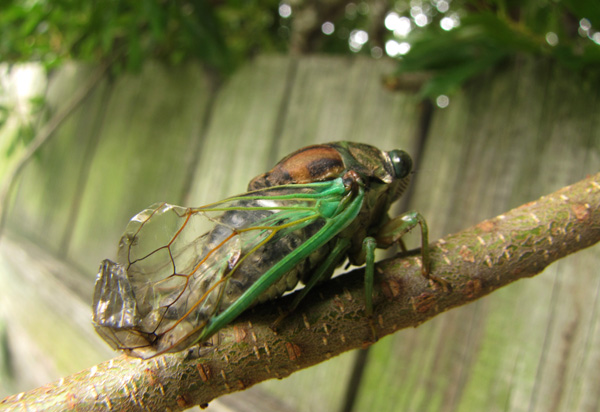
Adult cicadas are not built for survival. After years underground, the mature males and females tunnel upward and undergo a final, laborious molt. Then they test new wings. Adjust their eyes to the unfamiliar sky. Their last weeks are spent in sunlight and flight and pheromones. They feed and sing. Mate and die.

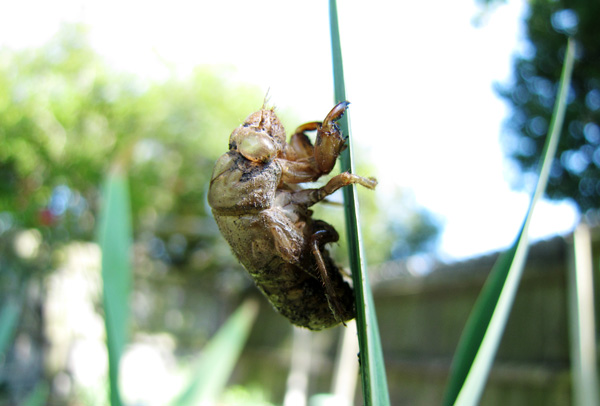
This summer I’ve watched the cicadas more closely than usual, though I don’t know why. Something about their abandoned husks on the fence caught and held my attention. My moonlit strolls in the yard turned into vigils as I witnessed the cicadas’ midnight molts. I’ve found them in the trees and on the driveway and on the deck. And I’ve begun to wonder if they mourn for the dim, damp earth of their youth. I wonder if they dread what emerges with their wings, if they fear their rapid senescence and dwindling strength. Does death mean anything different to a cicada than it does to me? Maybe it is simply another form of molting, for both of us.
Early August in the Yard

A few new arrivals in the yard:

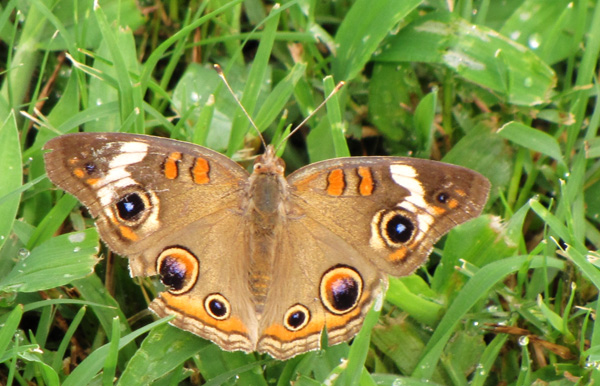
I believe this butterfly is a Common Buckeye.

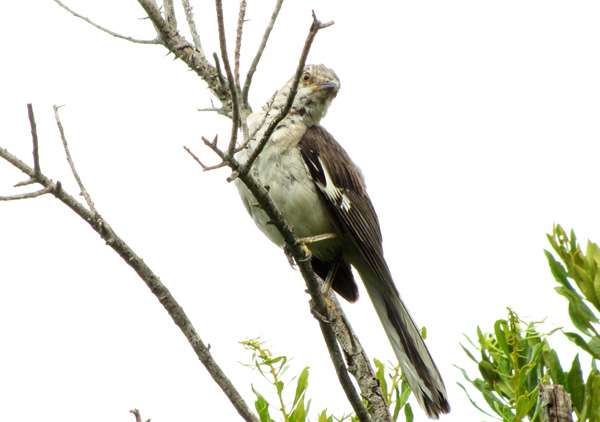
After a brief thunderstorm, this young Northern Mockingbird seemed very unhappy with its damp and disheveled feathers.

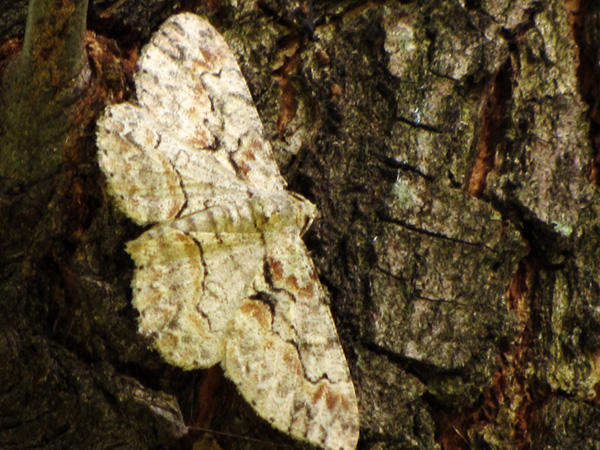
And I would love some help identifying this moth. Any ideas?

Injured Cicada

Over the last few summers, I’ve developed a genuine affection for cicadas. I like their gargoyle faces, which seem perpetually surprised. I’m fascinated by the deceptively delicate veins that trace through their sturdy wings. And I like the challenge of finding them, which is quite difficult for me, even though they noisily advertise their exact location.

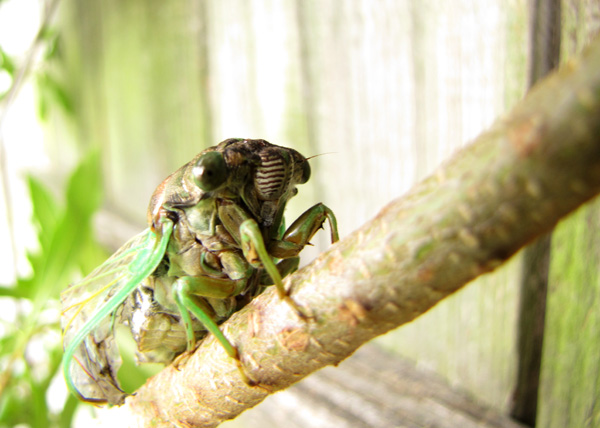
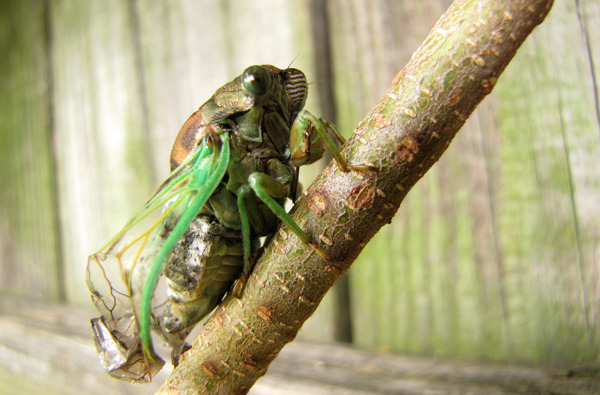
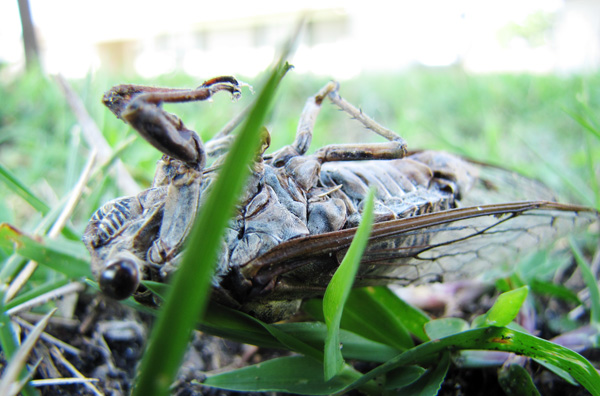
So when I found this injured cicada on our driveway, looking like a premature autumn leaf, I felt a stab of regret and pity. It’s wings were curled and brittle, seemingly charred at the tips.

There’s no hope that it will ever fly, but I couldn’t bear to leave it struggling on the driveway, exposed to every passing predator. And when I offered it a stick, it eagerly climbed aboard. Despite the obvious futility, I ferried it into the back yard and released it in the wax myrtle.

I can’t pretend to have rescued the cicada. I can’t wish for it to meet a kinder fate among the wax myrtle’s branches than what loomed on the driveway. It’s injuries were too severe. Nature makes no exceptions, does not soften with regret and pity, even in such a tame yard as ours.

But as I walked away, the cicada was inching higher and higher, gradually disappearing against the dappled foliage overhead.

Recently in the Yard (with another arachnophobia alert…)

A few recent images from the yard…

And finally, this last picture makes me a little sad. When she was a young dog, before the arthritis and hearing loss and vision loss, Indigo was a dedicated rabbit-chaser…

Black Widow Spider (Arachnophobia Alert!)

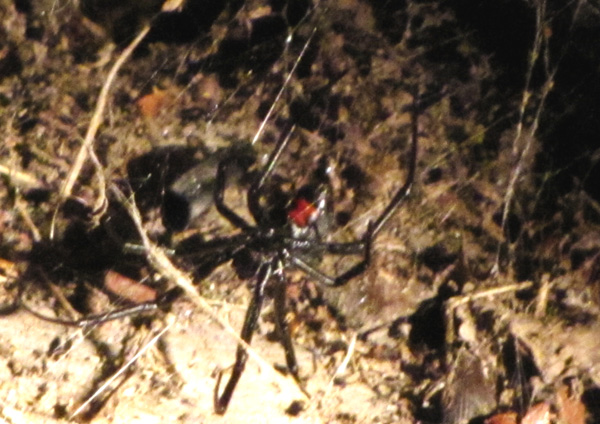
A few nights after our cicada adventure, the dog and I found a black widow during our late night stroll. In fact, we found three black widows. Once I knew what to look for, how to spot their messy web-nests, I was astonished at how many there were in the yard. Astonished and horrified.

(I apologize for the poor quality of this photo. It was taken from my camera’s greatest possible zoom distance, with shaking hands and racing heart and a powerful urge to run away.)

I don’t remember being afraid of spiders, when I was a child, but I have certainly become afraid of them in my adulthood. Whenever I find a spider, my reactions range from sweaty anxiety to paralyzed terror. The closer the arachnid, the more severe my physiological response. It’s not so much a fear of being bitten as it is a shivering revulsion of all those legs and eyes. 

I don’t like this part of me, this unwanted instinct to race for a broom or break out a can of insecticide. So I’m working to overcome my fear. In the process, I’ve made peace with the orb weavers and jumping spiders in my yard. I’ve even perfected a glass-and-postcard system of wolf spider relocation, for when I find them in the house.

Even so, I cannot embrace the idea of a population of venomous spiders lurking under the fence and flower-bed borders. In this case, brooms and insecticide seem reasonable. Unless there are better ways to eradicate black widows. Any ideas?