Luminiferous Ether

Luminiferous Ether

They imagined a substance
Something made and measurable
That transmitted light
Bore the spectrum from shore
To shore, from planet to planet

Star to star they embraced
Aristotle’s ether, confounded
By the idea of waves
Crossing a sea of nothing
To a boundary that moves

Receding edge of confidence
Calculated into stability
Into constancy, a cosmological
Solution to infinity, dark shadow
Of mass ungrasped, cast across

Galactic coordinates and mapped
Against math, logic to simplify
The special fields of time and space
Elegant descriptions of the refuted
Ether, the vacuum tension condensed

Intelligible, static notation collapsing
Observation and paradox
Particulate light and magnetic
Matter graphed into balance
The observable universe illuminated
By luminous equations
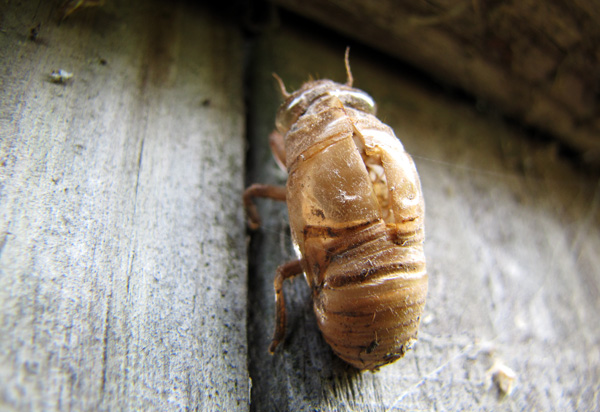
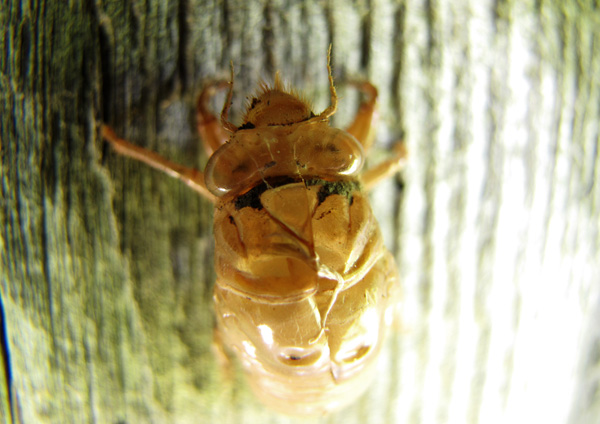
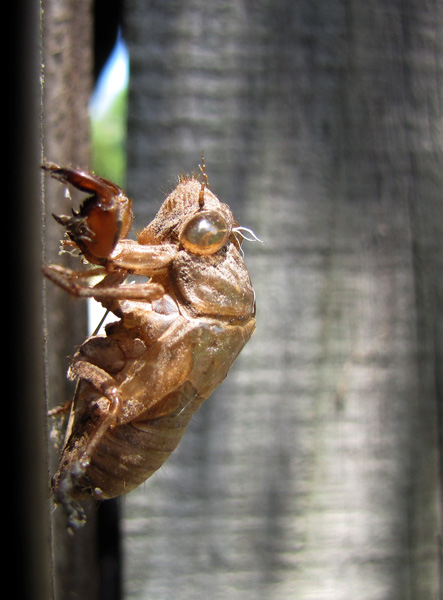
Cicada Molt

I wonder what it feels like to wake up with wings?

Notes from the Yard

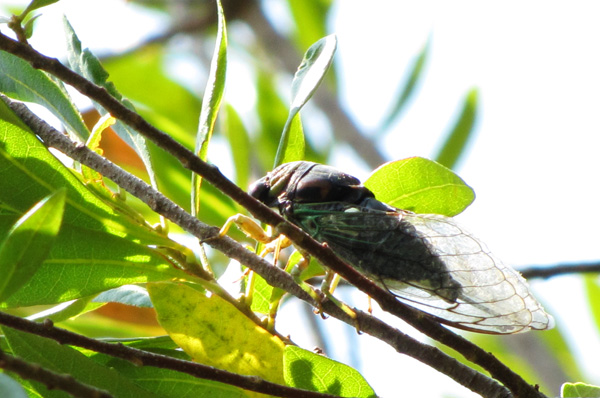
The yard isn’t exactly bustling, in this heat, but there are signs of life. Each day, more and more cicadas molt on the fence.

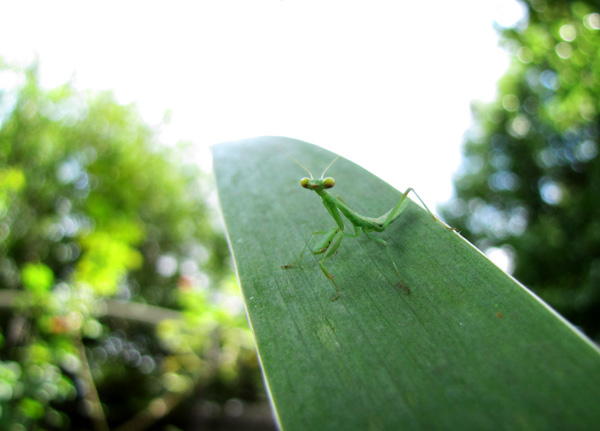
The young praying mantises have spread out into the iris beds.

And I’m still seeing pondhawks, though their numbers have decreased over the last two days.

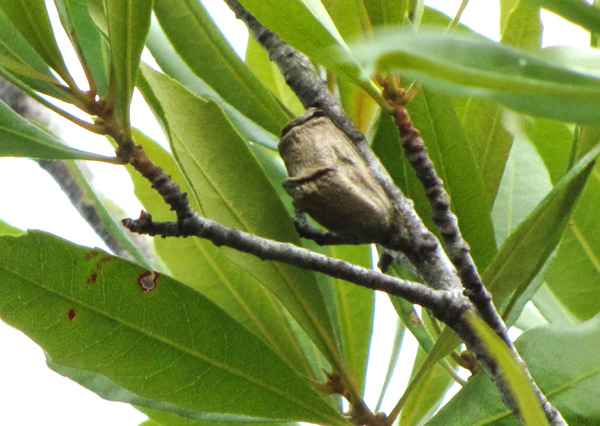
Finally, I’m intrigued by this cocoon. What’s in there? My chances of finding out are slim, because it will likely emerge when I’m busy doing other things. Even so, I check on it several times a day. Just in case…

Pondhawk Invasion

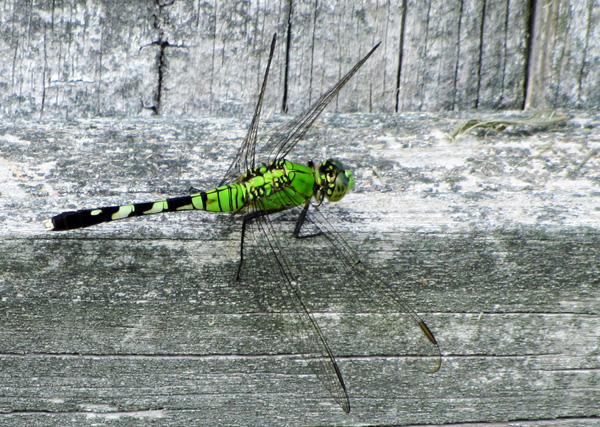
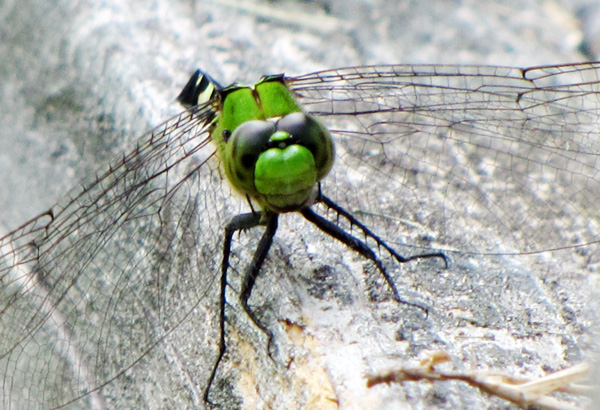
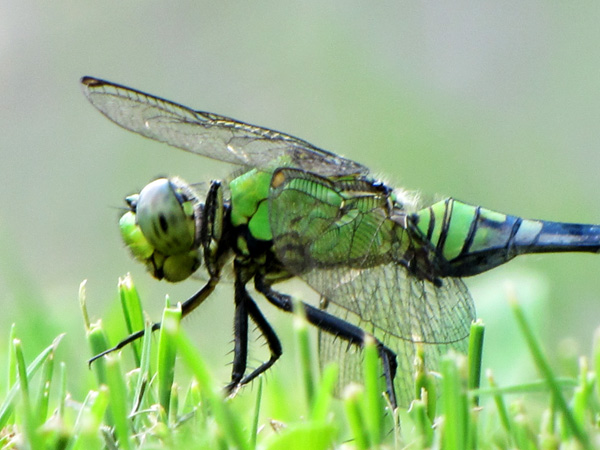
Eastern Pondhawks have taken over the yard. Every available perch is occupied, every patch of grass claimed. Active and aggressive, they patrol one area for five or ten minutes, then attempt to move on. It’s hard to say who wins the resulting bouts of mid-air combat, because I have trouble distinguishing individuals. But it seems to me as if territories steadily shift, so that one dragonfly might begin her morning in the southwest corner, move by noon into the northeast corner, then rotate back to her southwest starting position by evening. As she moves, others crowd in behind her, so that the entire yard is continuously occupied.

Fortunately for all the other dragonflies, the Eastern Pondhawks appear to prefer ground-level hunting and rarely move into the trees.

Blue Dragonfly Notes

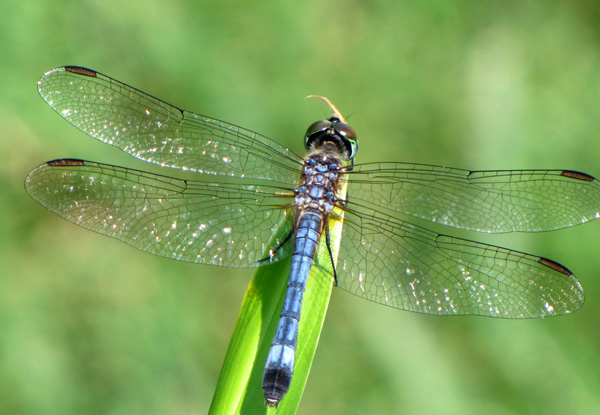
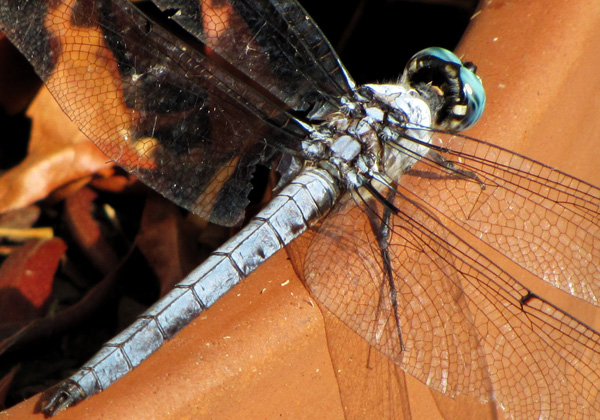
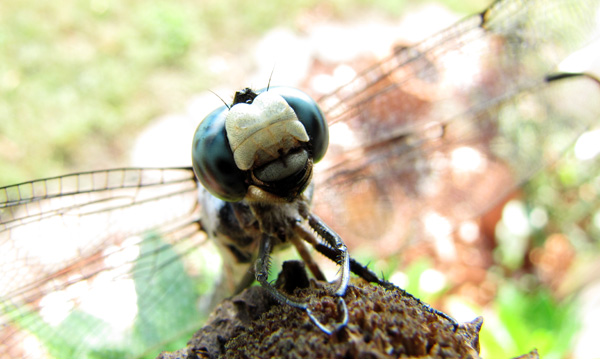
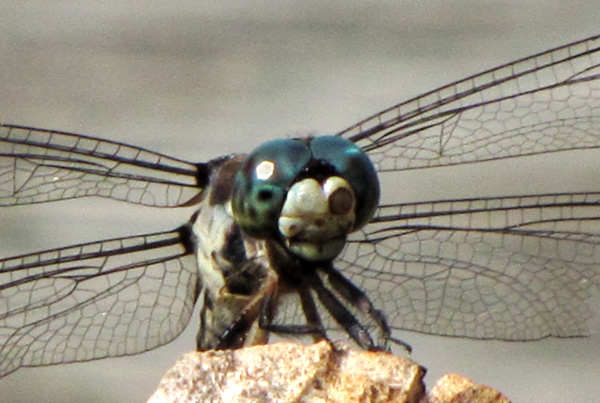
The blue on these mature dragonflies (I believe the top image is a Blue Dasher and the next is a Great Blue Skimmer) is called “pruinescence”. Often described as a powdery accumulation of pigment, the phenomenon of pruinescence is not confined to dragonflies. (I couldn’t find a definitive resource for a link, but this Wikipedia article contains some interesting observations.)

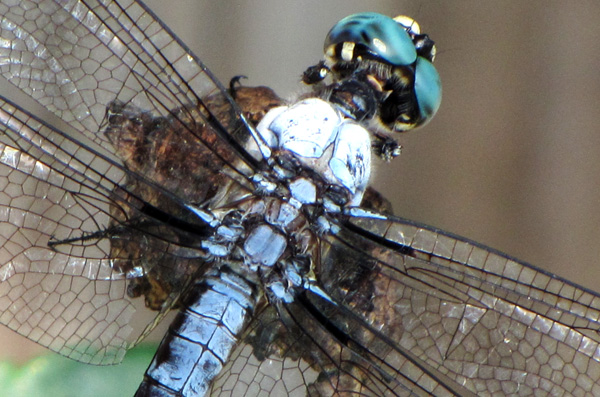
I tend to gravitate toward pruinose dragonflies, when I’m out with my camera. I like how the pale coloration exposes seams and joints, highlighting the intricate anatomy of these amazing insects.

(This male Great Blue Skimmer was a very patient subject. Most of my dragonfly photos are taken using the zoom feature, but he let me experiment with the macro setting, which produced the next image.)

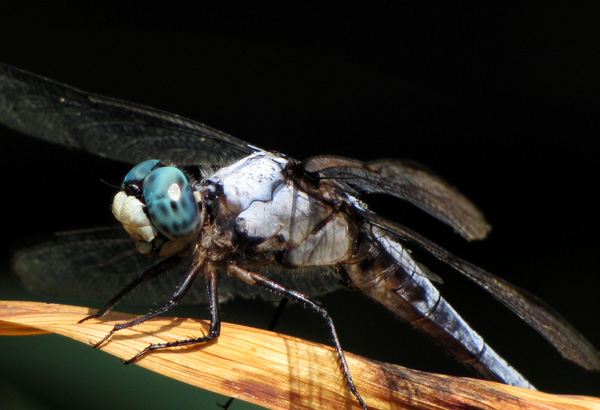
While coloration and wing patterns catch my attention first, wounds hold my attention. This female Great Blue Skimmer has a rather typical set of wing tears, but the wounds on her face are unusual. I wondered if the loss of symmetry made her less attractive, in dragonfly terms.

One final note (completely off-topic):  I’m happy to report that the summer’s first cicadas arrived this week.