Mississippi Kites Dining on Cicadas (while flying over Virginia Suburbs)

Last summer, during cicada season, I saw my first ever Mississippi Kite(s).

Photo of a Mississippi Kite gliding overhead, passing just over and behind the obscuring branches of our young live oak tree.
A Mississippi Kite entering the yard’s airspace. (July 30, 2025)

(At least, I believe these birds were Mississippi Kites. I’m happy to be corrected, if I’ve mis-identified them. Please comment with confirmations or corrections!)
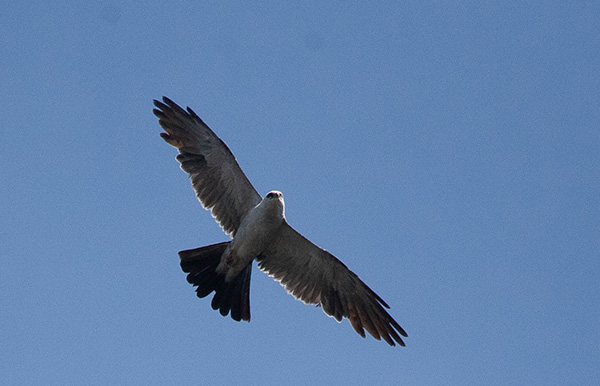
A mid-sized falcon-type bird (a Mississippi Kite) soars overhead, nearly silhouetted against a bright blue sky. The bird's feathers are shades of white and gray. It has long wings with irregular-length primaries, suggestive of some recent molting. The bird's white face has dark, deep-set eyes and a small, sharp beak.
A Mississippi Kite soaring overhead. (August 4, 2025)
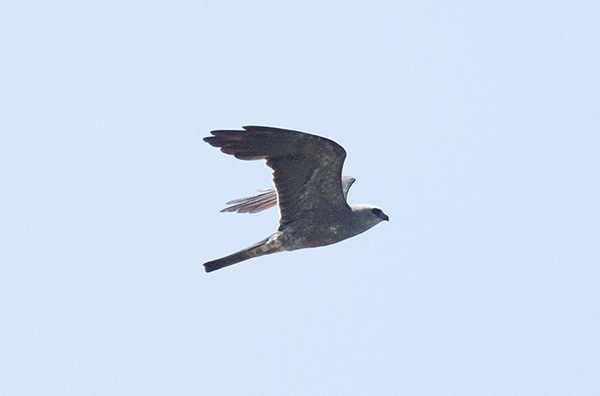
Profile photo of a Mississippi Kite soaring overhead, nearly silhouetted against a pale blue sky. The bird's feathers are mottled shades of gray, lightening to white on its face. Its long wings, long blunt tail, and sharp raptor beak are notable in this photo.
Profile view of a Mississippi Kite. (July 24, 2025)

The cicada-season part is important.

I had been finding cicada wings in the yard with unusual frequency, and the riddle proved easy to solve. The kites were feasting on cicadas, catching and eating their meals mid-flight.
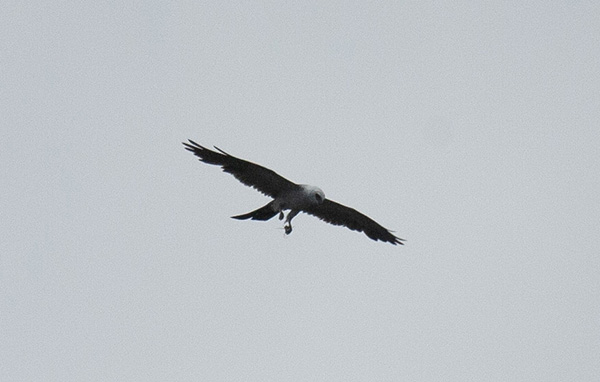
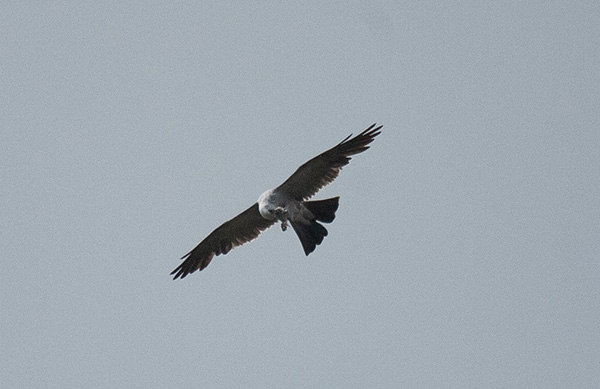
Grainy photo of a Mississippi Kite flying high overhead, grasping a cicada in the claws of its left foot. The bird's head is slightly bent toward its catch, preparing to eat.
Just soaring past with a cicada in its claws. (July 30, 2025)

Eating, but only after removing the wings.
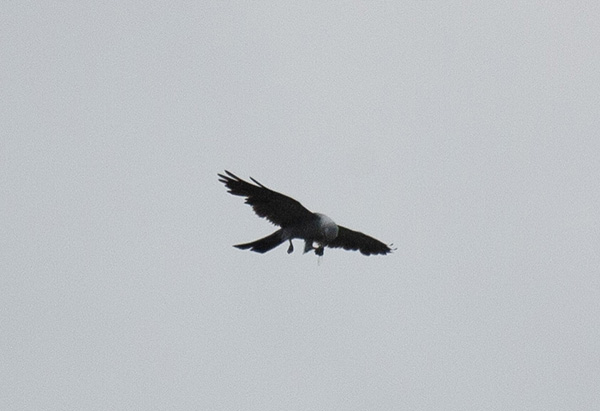
Grainy photo of a Mississippi Kite flying high overhead, grasping a cicada in the claws of its left foot. The bird is reaching down with its head and beak, eating the cicada mid-flight.
Everything but the wings, which got dropped in the yard. (July 30, 2025)
Grainy photo of a Mississippi Kite flying overhead, eating a cicada that is clutched in the claws of its left foot.
Over and over again. Cicada feast, underway. (July 30, 2025)

The kites spent most of their time over a nearby row of pines, circling at tree-top height. I assume the cicadas were thickest there.
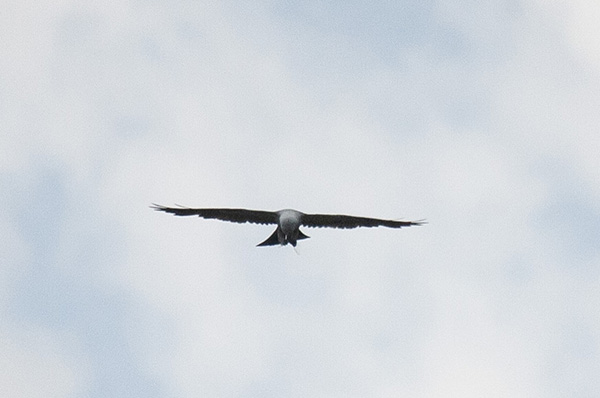
Grainy photo of a Mississippi Kite flying toward the camera. The bird's head is bent as it eats, mid-flight, a cicada that is grasped between its feet.
Another capture, another pair of cicada wings drifting to the ground. (July 30, 2025)

The crows, who favor this same row of pines for different reasons, had more than a few objections.
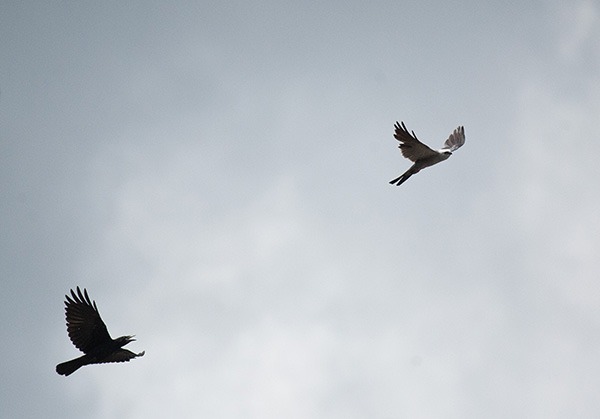
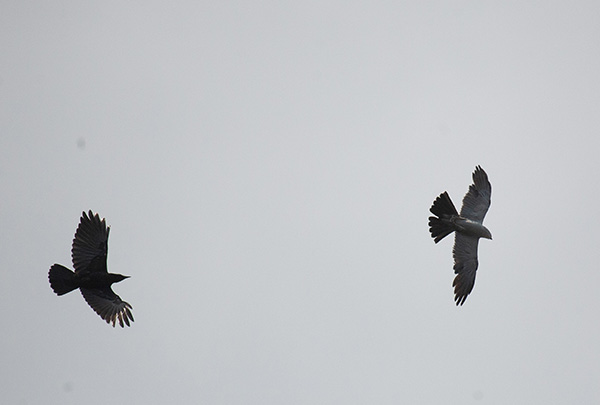
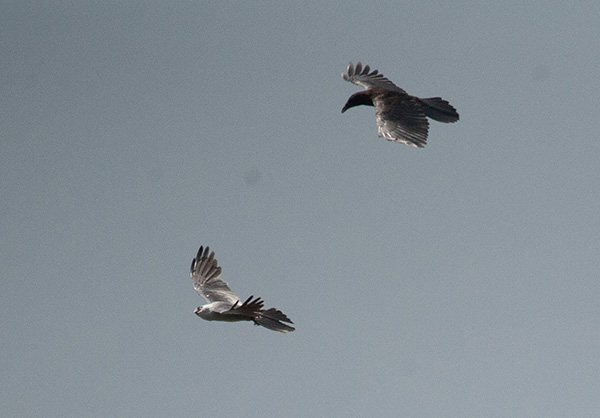
Photo of a crow chasing a Mississippi Kite. The crow is some distance behind the kite and appears larger in the frame than the kite. The crow's wings are fully extended and its beak is open, scolding as it flies. The kite's wings are also fully extended, primaries curved for soaring. The kite's primaries are of irregular length and its tail appears to be missing a feather, signs of recent molting.
The bird version of a grumpy neighbor yelling “get off my lawn!” (July 30, 2025)

I admit that today, as I post these photos, I’m surprised again by the relative sizes of the birds.

I’m accustomed to hawk and falcon visitors who are significantly (or, at least, noticeably) larger than crows. Seeing these crow-sized kites in-frame with the crows themselves, I start questioning my birding skills.
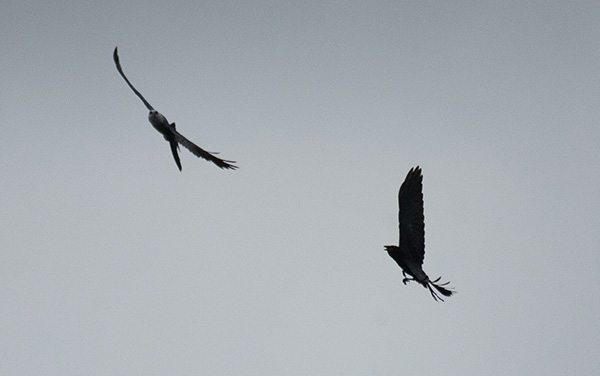
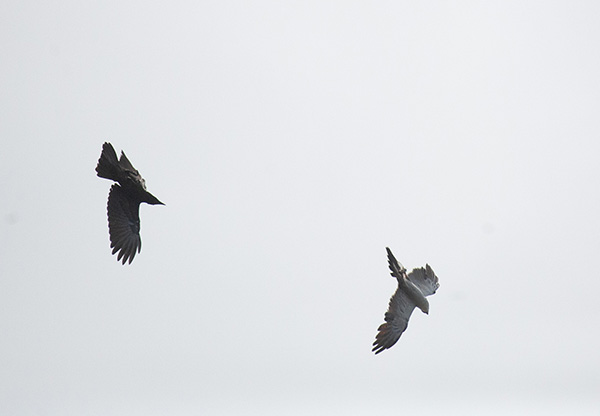
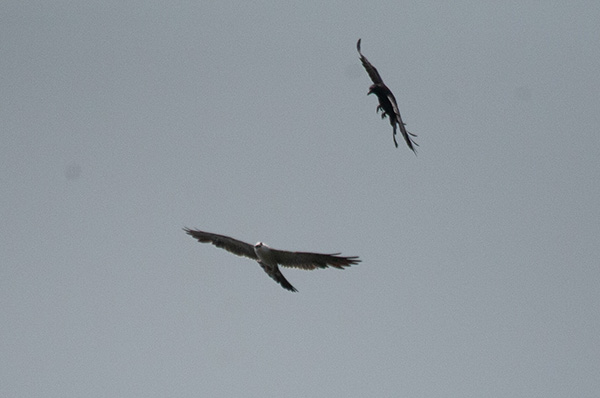
Photo of a crow flying toward a Mississippi Kite that is soaring overhead. The crow's mouth is open, scolding, and its feet are curling forward, as if readying to yank a few feathers.
Pursuit mode, engaged. (July 30, 2025)

Do I really know a crow from a raven? (The answer is, not really. I simply live in an area where crows are abundant and ravens are rare.)
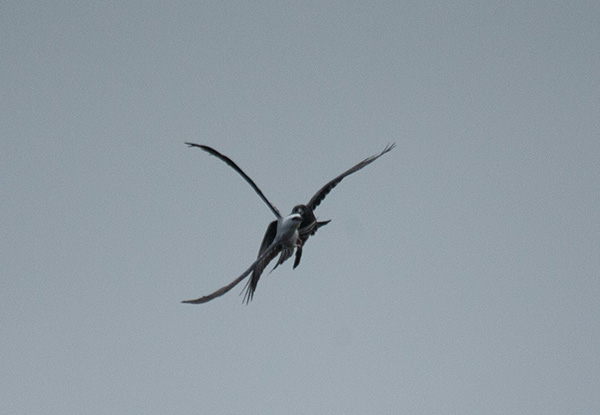
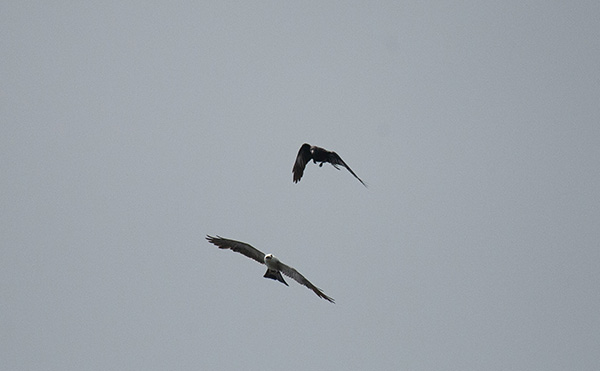
Photo of a crow closing in on a Mississippi Kite, mid-air. The kite's wings are flexed upward, beginning a maneuver to dodge the crow.
Is the crow really larger than the kite? (July 30, 2025)

Do I know a falcon from a hawk? (Sadly, also no. But I’m working on it.)
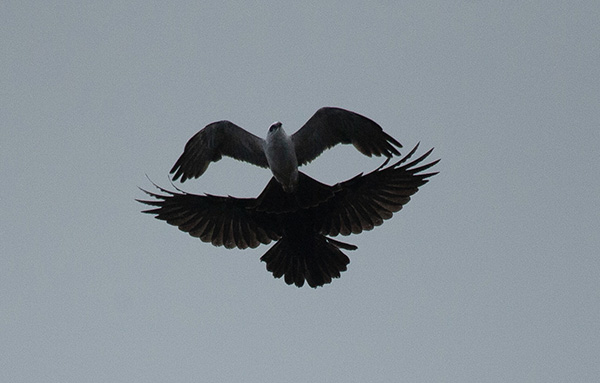
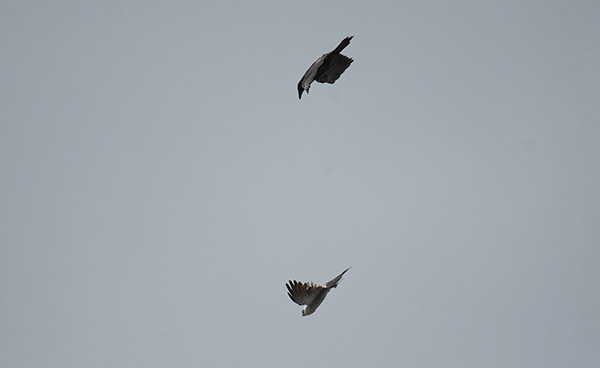
Photo of a crow dropping toward a Mississippi Kite as both fly overhead, nearly silhouetted against a dark gray sky. The crow is above and behind the kite, and appears to be slightly larger than the kite—partly because the crows wings are fully extended, feathers spread, while the kite's wings are slightly tucked for maneuverability. The two birds' silhouettes are overlapping and merged, in this photo, due to close proximity and poor lighting.
These photos definitely suggest that the crow is larger than the kite. (July 30, 2025)

What I do know for certain is that the kites were faster in flight than the crows, and quicker in a turn. The wing-tip acrobatics were astonishing.
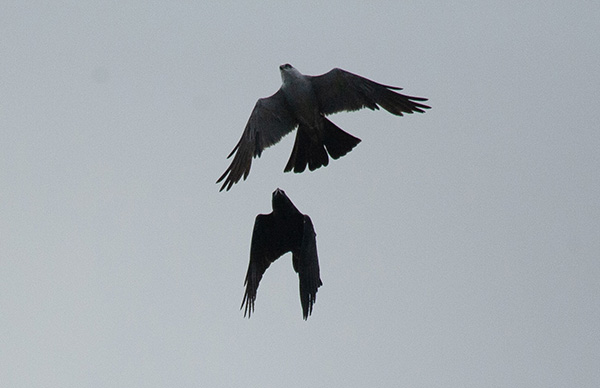
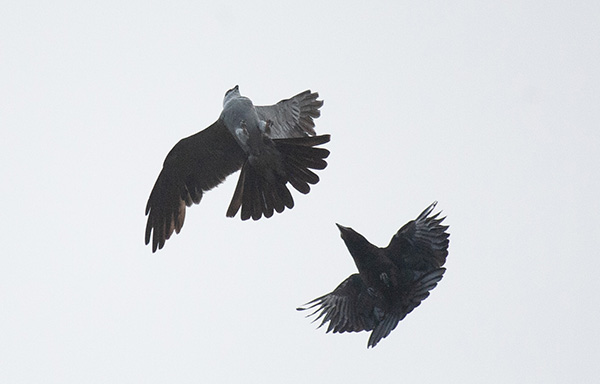
Photo of a crow approaching a Mississippi Kite, mid-air. The crow is closing in from behind and above the kite, while the kite appears to be unaware of the crow's approach.
Looks like the crow has the advantage, here, doesn’t it? Sneaking up in a blind spot and closing fast. (July 30, 2025)
Photo of a Mississippi Kite dodging a crow, mid-air. The kite's wings and tail feathers are angled for braking and climbing, while the crow's body position suggests a full-stop braking maneuver.
Nope. (July 30, 2025)
Photo of a crow chasing a Mississippi Kite against the background of a cloudy gray sky. The mid-air pursuit is climbing and banking slightly, both birds turning away from the camera.
Never…
Photo of a crow chasing a Mississippi Kite into a steep climb. The kite is looking up and sideways, preparing for a tight banking maneuver, while carrying a cicada clutched in its claws.
had…
Photo of a crow chasing a Mississippi Kite through a mid-air bank-and-loop maneuver. The kite has a cicada clutched in its claws.
a…
Photo of a Mississippi Kite evading a crow after a mid-air bank-and-roll maneuver. The kite has a cicada clutched in its claws.
chance. (July 30, 2025)
Photo of a Mississippi Kite evading a crow after a mid-air chase. The kite's head is swiveled around, eyeing the crow.
Not only did the kite fly literal circles around the crow…
Photo of a Mississippi Kite flying away from a crow after a mid-air chase.
It held on to its cicada through the entire chase, then ate in front of the crow once it had gained enough distance.
Photo of a Mississippi Kite gaining distance on a crow after a mid-air chase.
Ready to circle back for more cicadas, while the crow was running short on fuel. (July 30, 2025)

The air show lasted about a week, a daily spectacle of cicada-wing-rain and crow chaos.

I did wonder, occasionally, if the crows had designs on stealing the kites’ catches. It seemed unlikely, as I never saw any of the kites drop any of their cicadas. I suspect the crows were simply territorial, guarding flock-mates and resting spots against invaders that were all-too-clearly birds of prey.
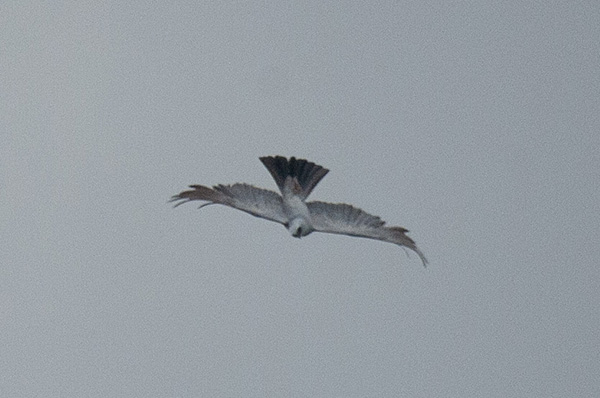
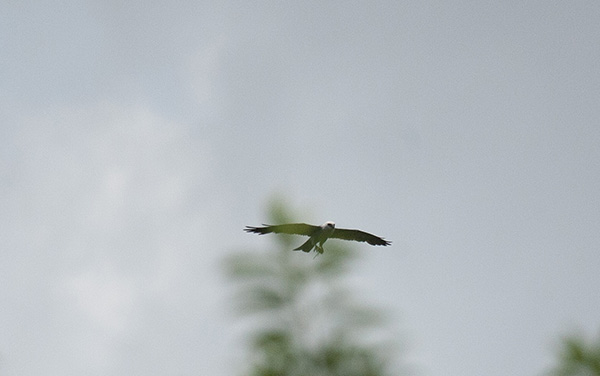
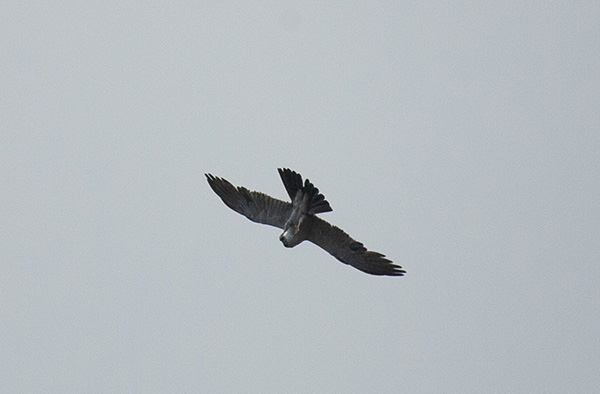
Grainy photo of a Mississippi Kite captured mid-dive. The bird is facing directly ground-ward, its head angled to one side as it hunts cicadas.
The light wasn’t great, on the 30th, and my camera skills were not up to the task. I ended up with a lot of grainy near-misses. (July 30, 2025)
Photo of a Mississippi Kite flying overhead, clutching a cicada between its feet. The bird's silhouette is partially obscured by the blurry branches of a neighborhood tree.
Partially blocked by branches, but you can still see the cicada. (July 30, 2025)
Photo of a Mississippi Kite soaring overhead while dining on a cicada. The bird has stretched one foot forward, clutching the cicada in its claws, and curved its head down to reach the meal with its beak.
The cicadas must have been extra perfect, because the kites mostly ignored all of the crow commotion. (July 30, 2025)
Photo of a Mississippi Kite banking into a turn while dining on a cicada, mid-flight. The bird has stretched one foot forward, holding the cicada clutched in its claws, and curved its head and neck down, reaching for the cicada with its beak.
Just need to get the wings off, then it’s snack time!

By August 1, when the light conditions improved dramatically, the cicada feast had ended. I managed to catch a few fly-over images, but then the kites moved on.
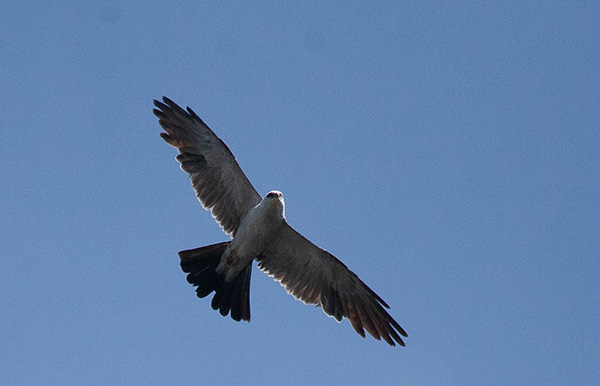
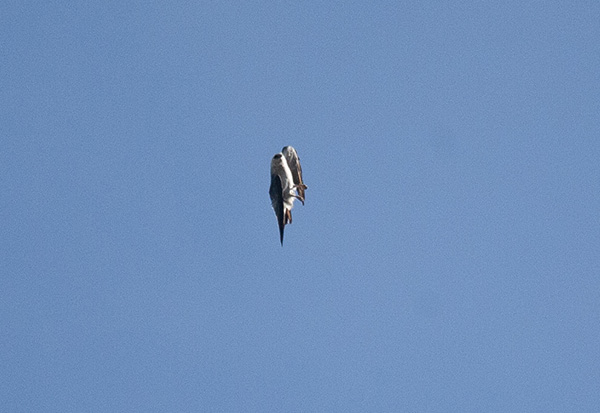
Photo of a Mississippi Kite soaring overhead against a background of bright blue sky.
Nicer light, but poorer hunting. (August 1, 2025)
Photo of a Mississippi Kite swerving into a steep bank-and-turn against a background of bright blue sky. The bird is completely sideways in frame, legs partly extended and wings tightly tucked as it swerves.
Time to hunt cicadas somewhere else. (August 1, 2025)

The crows finally had a day off, and I quit finding cicada wings in the yard.

Maybe the kites will return, this year, and put on another show. If they do, I’ll let you know.
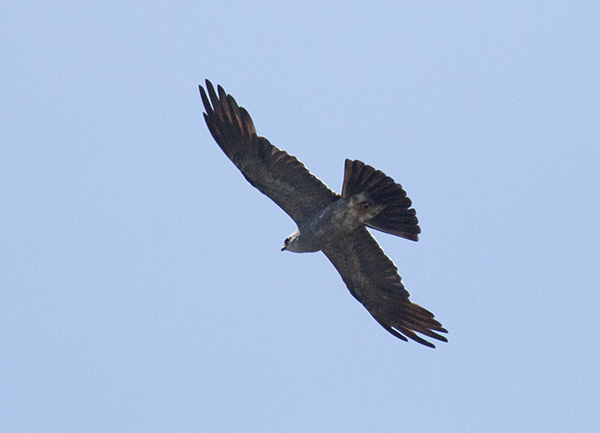
Photo of a Mississippi Kite soaring overhead against a background of light blue sky. The bird is in a relaxed soaring position—wings extended, tail feathers spread, and eyes focused forward.
Mississippi Kite folder, headed for the archive. (July 24, 2025)

Nearing the End of a Hot Summer

Lizard Sept 7

Our hot, humid summer is turning brittle around the edges

Mantis July 27

Rabbit July 29

It’s reassuring, really, how fall arrives

Dragonfly July 28

Mockingbirds August 6

Even after the hottest of summers

Mantis July 31

I will miss the months of extravagance

Lantana July 6

Monarch July 21

But not for long

Bee July 17

Because spring is assured, even after the coldest of winters

Bee July 27

Zebra Swallowtail Butterfly

Zebra Swallowtail August 30

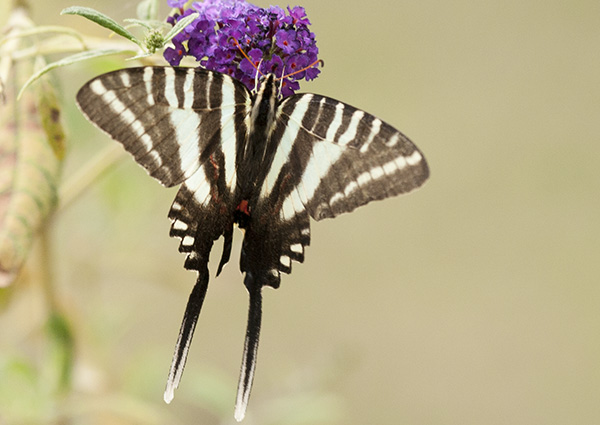
Yesterday a new species of swallowtail butterfly visited the yard. This zebra swallowtail stopped a while to explore the butterfly bush, letting me snap a few photos before it wandered off. Now I’m reviewing my plans for the yard, trying to find a place to plant pawpaw

Zebra Swallowtail August 30

A Few Butterfly Answers

I ended yesterday’s post about Black Swallowtail Butterflies with a few questions:

I wonder if there is enough summer left for them? Will they emerge and mate this year? Or will they wait until spring, pausing the cycle as they sleep through winter’s dreary interlude?

Chrysalis August 26

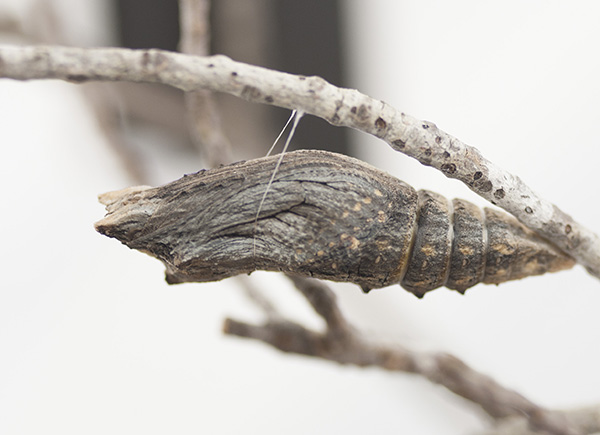
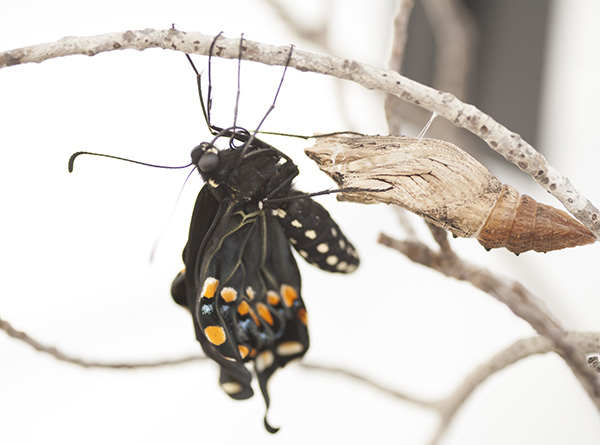
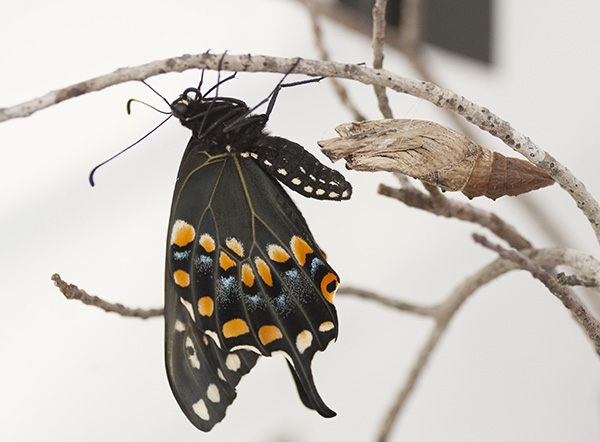
This morning, the yard answered with uncharacteristic directness. There is definitely enough summer left — plenty of time for another generation of swallowtails.

Butterfly August 27

Butterfly August 27

Butterfly August 27

Of all the remaining chrysalises, why should the one I photographed yesterday be the one to open today?

Butterfly August 27

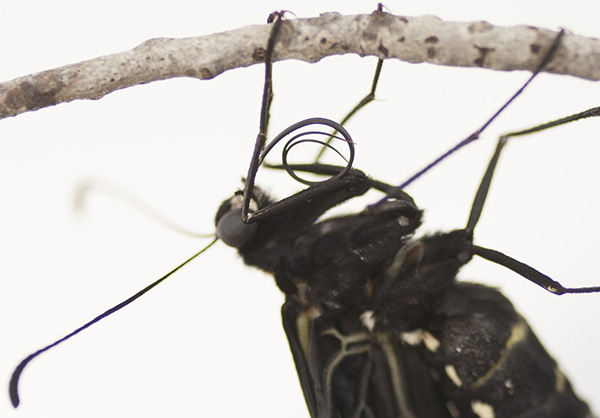
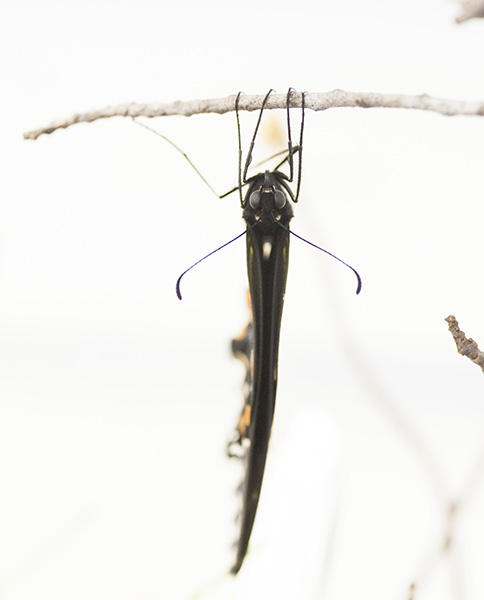
Maybe because I had some time available today, for research? Why else would she allow me to photograph the strange fork at the end of her proboscis? I’ve noticed something similar before, but not on all of the butterflies. What’s going on here?

Butterfly August 27

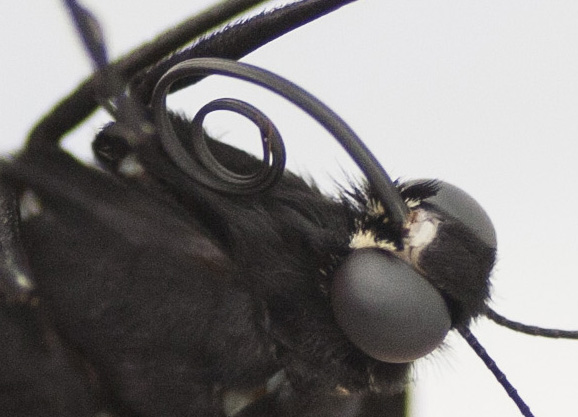
This afternoon I learned that many species of butterflies emerge with their proboscises incompletely fused. After emerging, they mechanically connect the two halves, forming a tube. This has to be done fairly quickly, or the butterfly may end up with a permanently divided (and therefore non-functional) proboscis. In the above photo (taken only minutes after emergence), the process simply wasn’t complete.

The following enlargement, cropped from one of yesterday’s emergence photos, shows the groove that results when the two halves of the proboscis are properly connected. (The tip of this proboscis had a tiny fork remaining, evidence that the butterfly still had a bit of work to do.)

Butterfly 2 August 26

So much complexity, packed into so small a creature. Wonders and miracles in every detail.

Butterfly August 27

More Swallowtails

Swallowtail August 5

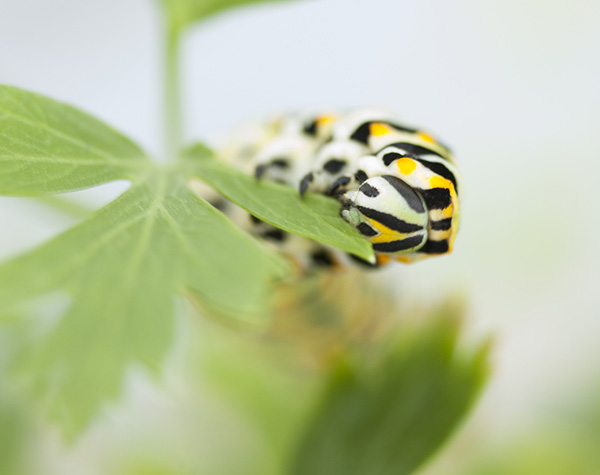
The yard’s swallowtail cycle went into high gear through the early weeks of August. Which meant that, for a while, there were more caterpillars than the predators could eat. (And then the caterpillars ate faster than the parsley and fennel could grow, which meant another trip to the garden store.)

Swallowtail August 5

At one point there were so many caterpillars on the parsley, and so many eggs being laid, that mistakes were made.

Caterpillar and Egg Aug 5

Caterpillar and Egg Aug 5

Since I had a container ready, I decided to collect “a few more” caterpillars. (As it turned out, twenty-two was a few too many, forcing yet another trip to the garden store.)

Caterpillar August 20

I dreamed of waking one day to a container full of butterflies. An unlikely dream, yes, but a lovely one!

Butterfly August 20

(Unlikely because only three of my first thirteen caterpillars survived to become butterflies. Some died of unknown causes, some were destroyed when a predator broke into their enclosure, and three fell victim to what I suspect was a parasitoid.)

Chrysalis Damage Aug 19

I was thrilled when twenty-one of the twenty-two caterpillars survived to become chrysalises.

This slideshow requires JavaScript.

And, while the butterflies haven’t emerged in a coordinated swarm, they have begun to emerge. Twelve, so far, of the twenty-one. (Including two this morning.)

This slideshow requires JavaScript.

This is a vast improvement over three of thirteen!

This slideshow requires JavaScript.

Thrilled with this success, and having a bit of parsley left over, I’m still collecting caterpillars. Last weekend four of the latest group roamed until they were exhausted, then settled into chrysalises.

Caterpillar August 20

I wonder if there is enough summer left for them? Will they emerge and mate this year? Or will they wait until spring, pausing the cycle as they sleep through winter’s dreary interlude?

Chrysalis August 26