The Yard’s First Monarch Butterflies

Monarch Caterpillar Sept 23

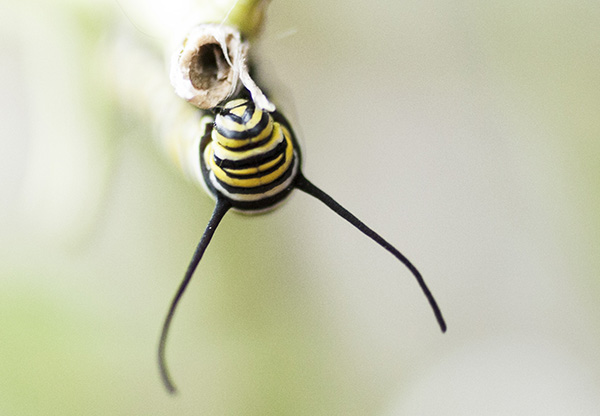
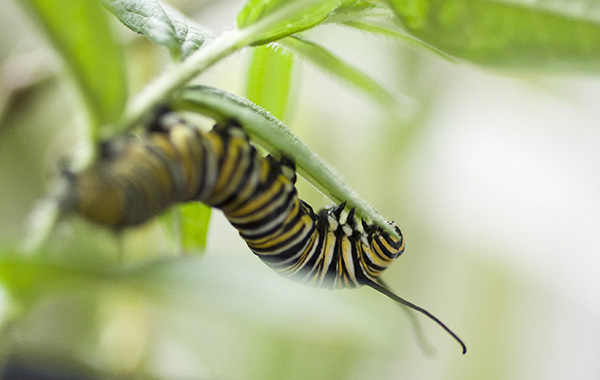
Butterfly metamorphosis is one of nature’s most spectacular spectacles. I’ve always wanted to see the whole cycle, and this fall the yard cooperated. It started with nine caterpillars feasting on the milkweed.

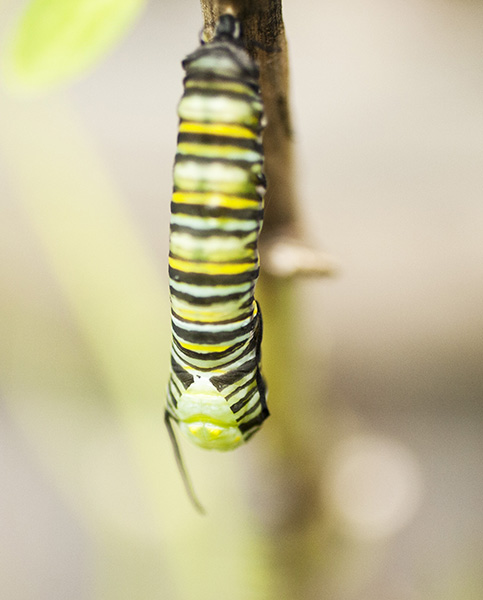
Monarch Caterpillar Sept 23

Monarch Caterpillar Sept 23

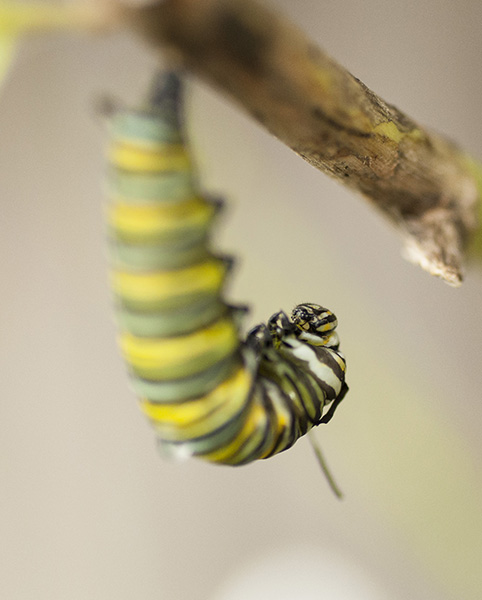
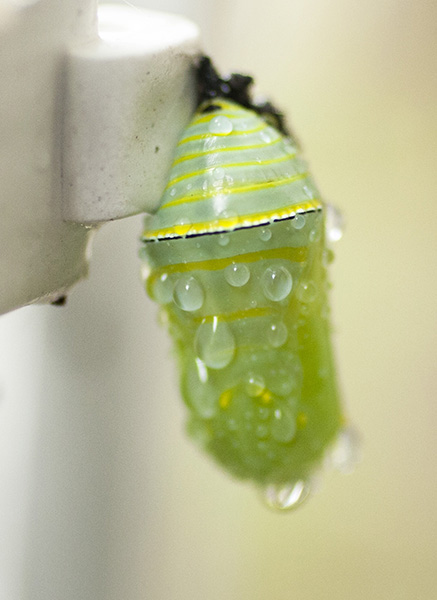
Five survived to maturity. One by one they stopped eating, anchored their last pair of legs with silk, and slipped into the characteristic upside-down pose that precedes a monarch caterpillar’s final molt.

Monarch Caterpillar Sept 25

Then they began their transformation.

Monarch Caterpillar Sept 25

Monarch Caterpillar Sept 25

One died before completing its molt…

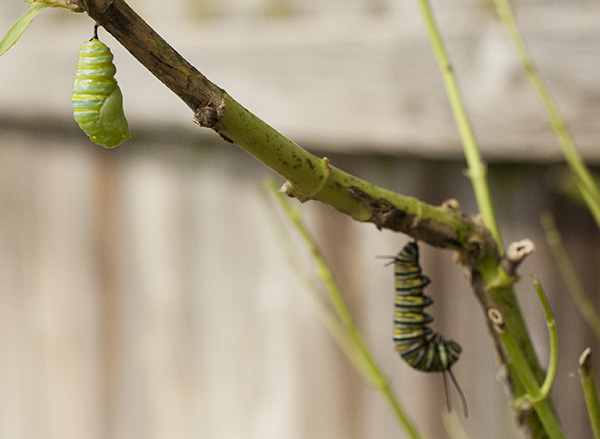
Monarch 5 Chrysalis Sept 30

…but the other four safely hardened into chrysalises, where they remained for the next two weeks.

Then:

This slideshow requires JavaScript.

One by one they emerged, the first during the morning of October 10th and the last close to noon on October 11th.

This slideshow requires JavaScript.

I was too excited to remember my camera, most of the time, so I only have a few photos for three of the four.

This slideshow requires JavaScript.

But I managed to capture a full sequence for one of the monarchs. The following slideshow covers a period from September 25th to October 11th.

This slideshow requires JavaScript.

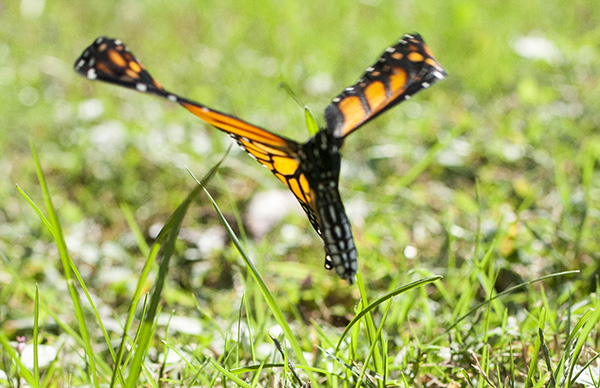
All four butterflies struggled in their first moments of flight, crashing a few times as they tested their wings.

Monarch 4 Oct 11

Monarch 4 Oct 11

But after a few hours of short flights with long rests between, all four took to the air and fluttered off in search of nectar.

Monarch 4 Oct 11

I wished, in the moments after watching them leave the yard, that they might stay a while longer. Then I took a deep breath and wished them warm winds to ease their southward journey.

Monarch Caterpillar Sept 24

Whatever fate finds my four butterflies, their brief weeks in the yard contributed something permanent and lovely to my world. I hope they thrive during their long migration, and I hope they stop as often as possible, each time bringing something lovely into someone else’s world.

Monarch 1 Oct 10

Hellbender Salamanders

I spent countless hours, when I was young, exploring the creek that ran through our woods. I found crawdads and snails, snakes and minnows, darters and stream lamprey. I also found an amazing variety of small, slippery salamanders, the kind that lived in every creek in the county. But I never found a hellbender.

Woods

I didn’t know hellbenders existed until one of my classmates brought one to school. I was fascinated, but I was also jealous. So jealous that I didn’t want to look too closely at the giant salamander, which I remember as a vague, slimy shadow, curled up and completely covering the bottom of a five-gallon bucket. Instead of participating in the general excitement over the hellbender, I hung near the back of the crowd, wishing the bell would ring so that I could go home and catch one of my own.

(As with all of my memories, it’s possible this story isn’t true. The past is treacherously malleable, changing as I change, fading as I age. It’s possible that I stared at the hellbender for hours. I might have reached in and touched it. There might have been some other creature in the bucket, or there might not have been a bucket at all.)

I never did find a hellbender of my own. Not in my creek (I realized later it had always been too small and shallow for hellbenders) and not in any of the other creeks I visited. But I never quit looking.

Abrams Falls

I now live in eastern Virginia, where there are no hellbenders. My childhood creek belongs to someone else, and hellbenders are increasingly rare, even in suitable creeks. At this point, my chances of finding a hellbender are roughly equal to my chances of finding a dragon. But the story isn’t over. There is hope for the future, for hellbenders and for me. Conservation efforts are making progress, so perhaps hellbenders won’t disappear altogether. And the next time someone shows up with a bucket full of wonder, I won’t be too jealous to look.

Northern Black Racer Snake (Ophidiophobia Alert!)

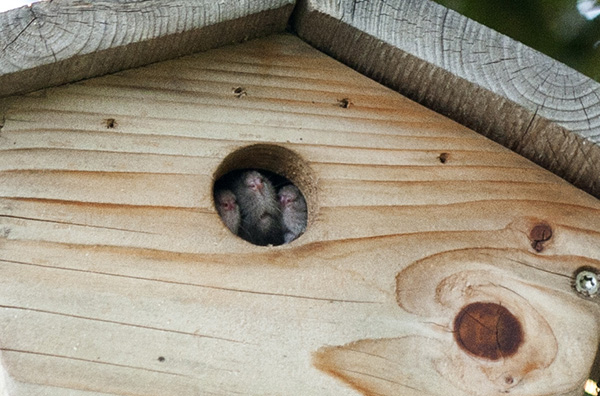
A few weeks ago, when the wren house was invaded by rodents, I half-jokingly said to my husband, “What we need is a snake.”

Snake Oct 14

Apparently the yard was listening.

Snake Oct 14

(My first instinct was to label these photos “Eastern Rat Snake.” A few clicks through the Virginia Herpetological Society’s website changed my mind, and their quick response to my e-mail ID request confirmed that our visitor was a Northern Black Racer.)

Snake Oct 14

I gave the snake an hour or so, to recover from the fright of being photographed by a pajama-clad woman carrying a noisy camera, then I measured the fence with a ruler. Each board in the fence is a little over five inches wide…

Snake Oct 14

…and the snake was about seven boards long.

Snake Oct 14

Perhaps that’s big enough to tackle the wren house rats? Because after we took down the wren house, one of the rats moved into a small pile of branches we keep forgetting to haul away. Today, the snake moved into that same pile of branches.

Snake Oct 14

 The last time we had a rat problem, a hawk solved it. I think a snake is an equally elegant solution.

Praying Mantises

Praying Mantis July 5

While I am fascinated with all insects, I have a special fondness for praying mantises. It started with Mother, with foggy memories of her passing bewildered mantises into my cupped hands and telling me to release them somewhere safe, somewhere beyond the reach of our hungry chickens.

Praying Mantis Sept 30

It’s possible these memories aren’t real. It’s possible that I began saving praying mantises from the chickens without any prompting from Mother, though it’s the kind of lesson she would have taught.

Praying Mantis July 30

Sadly, our yard is currently without chickens. (Sad for me, at least. The praying mantises probably don’t mind.) With no hungry chickens about, I no longer catch and move mantises when I find them. Instead I crawl after them with my camera — slow motion chases complicated by grass allergies, mosquitoes, and arachnophobia.

Praying Mantis Aug 10

I’m a skeptic when it comes to animal symbolism, but many sources say praying mantises are symbols of patience and stillness, appearing when life has become too busy.

Praying Mantis Aug 10

This summer has seen month after month pass with distractions ranging from minor to major. A series of household repairs. A trio of elderly cats, two in failing health. A new bout of depression and anxiety.

And now the yard is full of praying mantises. More praying mantises than ever before. In every flower bed, on every overhanging branch, even in the hanging baskets.

Praying Mantis Aug 31

Perhaps I’m not such a skeptic after all.

Praying Mantis July 5

Perhaps it’s time to slow down and try a different approach.

Praying Mantis Aug 5

Yard Surprises and Writing Surprises

When the wild rabbits ate multiple sets of coneflowers this summer, I allowed myself one final purchase before freezing the garden budget. I bought milkweed for the monarchs. More specifically, I bought swamp milkweed. Which the rabbits promptly ate.

Rabbit Aug 12

Milkweed is toxic, so I don’t know how the rabbits were able to eat it without getting sick. Far from getting sick, they ate until every last leaf was devoured. Fortunately, by the time the bare stalks recovered enough to put on new leaves, the rabbits had tired of milkweed.

I assumed (such a dangerous verb) that my milkweed’s season had passed, that it would see no monarch activity until next summer. I was wrong, as I discovered on Monday.

Monarch Caterpillar Sept 22

There were nine caterpillars when I found them. One disappeared by nightfall on the first day and another died during the night, but seven continued to gorge on the milkweed’s leaves.
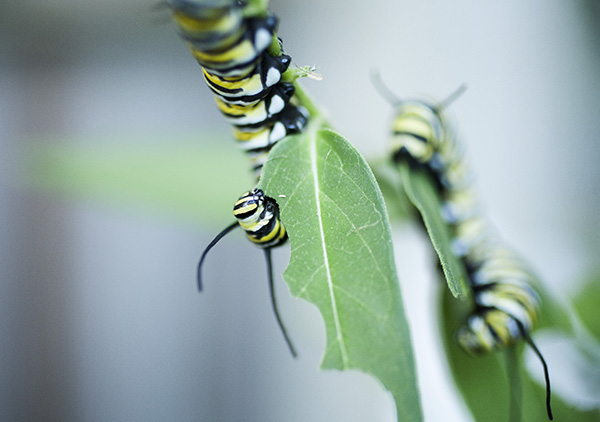
Monarch Caterpillar Sept 22

Monarch Caterpillar Sept 22

On Tuesday, one caterpillar decided it was time for wings. It hung from its back legs all afternoon and evening, twitching every so often, swaying in a storm-front breeze. I waited and waited, hoping to see it molt into a chrysalis, but when night came it was still a caterpillar.
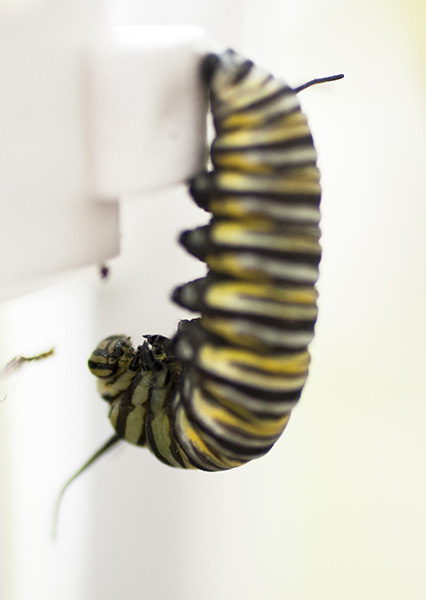
Monarch Caterpillar Sept 23

Prior to finding the monarchs, I spent Thursday evening, all day Friday, and most of Saturday at the 6th Annual Hampton Roads Writers Conference. This year I went to sessions about the mechanics of fiction and nonfiction, the world of independent publishing, and twitter. (Yes, twitter!) I made new friends and took reams of notes, and on Saturday my poem “The Tracking” won first place in the 2014 Barbara Dunn Hartin Memorial Poetry Prize!
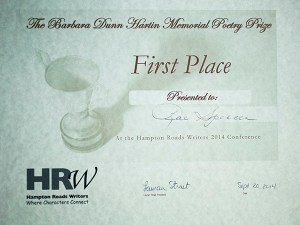
Poetry 1st Place

Then my fantasy short story “The Silvershaper” won third place in the 2014 Frank Lawlor Memorial Fiction Prize!

Fiction 3rd Place

Best of all, the conference brought an epiphany regarding my unpublished fantasy manuscript. A trio of sessions about story openings, plot, and voice uncovered the root of a pacing problem in the first five chapters. It’s a problem I can fix, now that I can see it.

As exciting as awards and epiphanies are, they represent a small part of my writing experience. They’re like finding monarchs in the yard, flashy glimpses of wonder. Most of writing’s surprises are quieter discoveries. Accidental phrases open new perspectives; plots turn slippery and skid off in unexpected directions; sub-plots bloom into stories of their own.

Those are the happy surprises. Unpleasant surprises happen, too. Failed poems, unresolvable stories, harsh critiques (which I’ve found are more common online than in person), lost submissions, and sudden doubts so ferocious that success seems impossible. These are like rodents moving into my wren house.
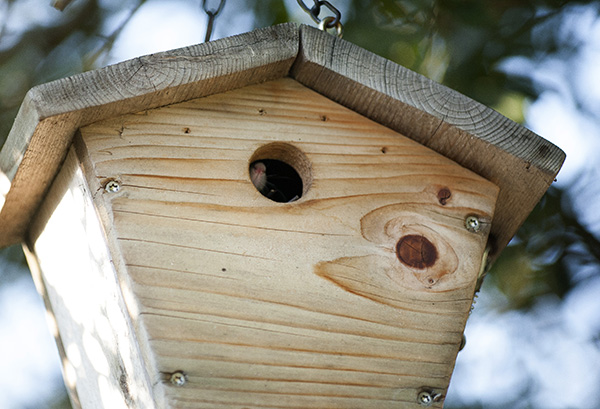
Rats Sept 21

(When I spotted movement in the wren house on Sunday, I hoped for a late-season nest. I should have been more specific and hoped for a bird nest. Luckily, the rodents didn’t stay.)

Rats Sept 21

Rats Sept 21

Rats Sept 21

Were I allowed to choose my yard and writing surprises, I would always opt for monarchs and awards. There would be no lost submissions, no anxious waves of doubt, and no unwelcome rodents*. So perhaps it’s best that I’m not allowed to choose. Because if yards were made only of monarchs and writing meant only awards, think of all the stories that would never be told.
Monarch Caterpillar Sept 24


* I had a pet rat, when I was a teen, and a pair of pet mice during college. I find it hard to despise rodents, but in my alternate reality the rats and mice would all be free of diseases. And they would clean up after themselves. No more breaking into pantries for food, no more trails of droppings and urine, no more Hantavirus or listeria or plague, nor any of the other devastating illnesses mice and rats carry in the real world.