When the wild rabbits ate multiple sets of coneflowers this summer, I allowed myself one final purchase before freezing the garden budget. I bought milkweed for the monarchs. More specifically, I bought swamp milkweed. Which the rabbits promptly ate.

Milkweed is toxic, so I don’t know how the rabbits were able to eat it without getting sick. Far from getting sick, they ate until every last leaf was devoured. Fortunately, by the time the bare stalks recovered enough to put on new leaves, the rabbits had tired of milkweed.
I assumed (such a dangerous verb) that my milkweed’s season had passed, that it would see no monarch activity until next summer. I was wrong, as I discovered on Monday.

There were nine caterpillars when I found them. One disappeared by nightfall on the first day and another died during the night, but seven continued to gorge on the milkweed’s leaves.
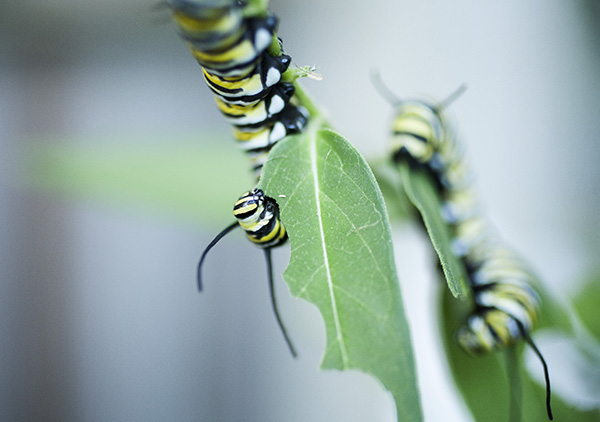

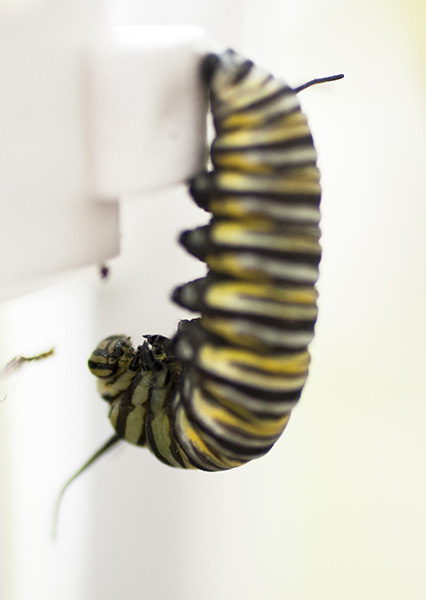
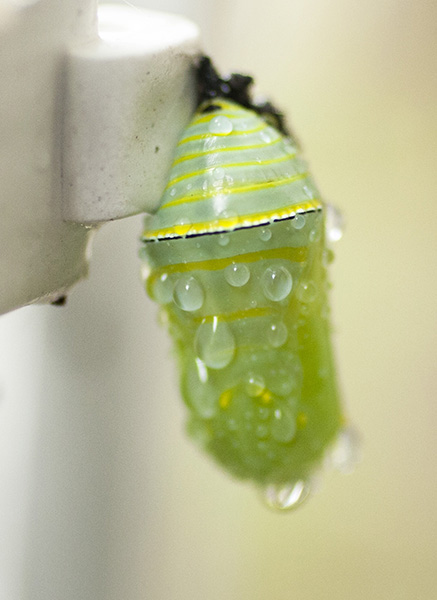
On Tuesday, one caterpillar decided it was time for wings. It hung from its back legs all afternoon and evening, twitching every so often, swaying in a storm-front breeze. I waited and waited, hoping to see it molt into a chrysalis, but when night came it was still a caterpillar.
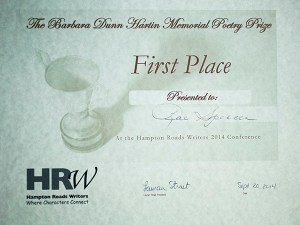
Prior to finding the monarchs, I spent Thursday evening, all day Friday, and most of Saturday at the 6th Annual Hampton Roads Writers Conference. This year I went to sessions about the mechanics of fiction and nonfiction, the world of independent publishing, and twitter. (Yes, twitter!) I made new friends and took reams of notes, and on Saturday my poem “The Tracking” won first place in the 2014 Barbara Dunn Hartin Memorial Poetry Prize!
Then my fantasy short story “The Silvershaper” won third place in the 2014 Frank Lawlor Memorial Fiction Prize!

Best of all, the conference brought an epiphany regarding my unpublished fantasy manuscript. A trio of sessions about story openings, plot, and voice uncovered the root of a pacing problem in the first five chapters. It’s a problem I can fix, now that I can see it.
As exciting as awards and epiphanies are, they represent a small part of my writing experience. They’re like finding monarchs in the yard, flashy glimpses of wonder. Most of writing’s surprises are quieter discoveries. Accidental phrases open new perspectives; plots turn slippery and skid off in unexpected directions; sub-plots bloom into stories of their own.
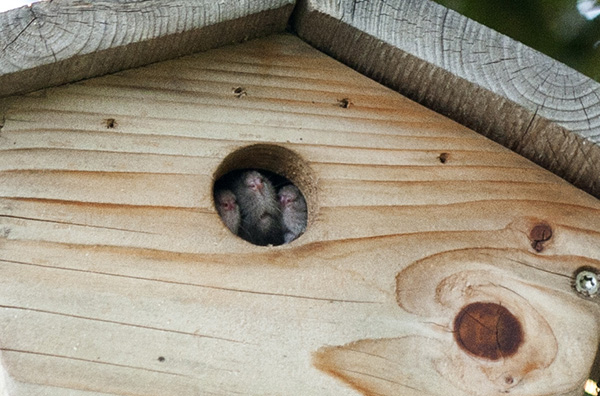
Those are the happy surprises. Unpleasant surprises happen, too. Failed poems, unresolvable stories, harsh critiques (which I’ve found are more common online than in person), lost submissions, and sudden doubts so ferocious that success seems impossible. These are like rodents moving into my wren house.
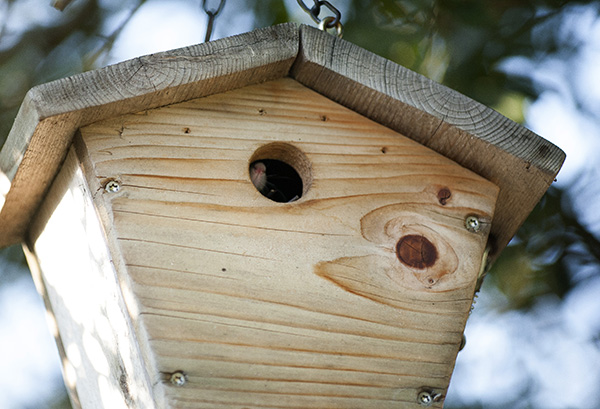
(When I spotted movement in the wren house on Sunday, I hoped for a late-season nest. I should have been more specific and hoped for a bird nest. Luckily, the rodents didn’t stay.)


Were I allowed to choose my yard and writing surprises, I would always opt for monarchs and awards. There would be no lost submissions, no anxious waves of doubt, and no unwelcome rodents*. So perhaps it’s best that I’m not allowed to choose. Because if yards were made only of monarchs and writing meant only awards, think of all the stories that would never be told.
* I had a pet rat, when I was a teen, and a pair of pet mice during college. I find it hard to despise rodents, but in my alternate reality the rats and mice would all be free of diseases. And they would clean up after themselves. No more breaking into pantries for food, no more trails of droppings and urine, no more Hantavirus or listeria or plague, nor any of the other devastating illnesses mice and rats carry in the real world.

 Rae Spencer