Kleptoparasites

Wasp Sept 7

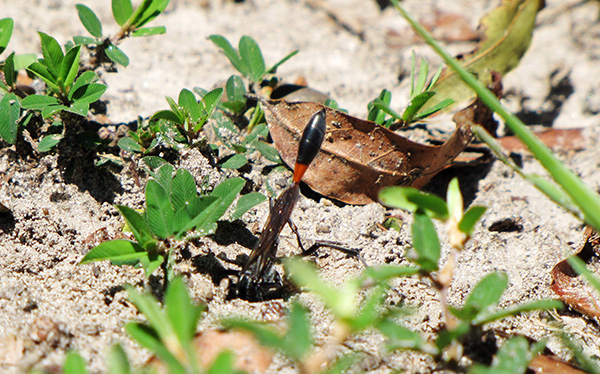
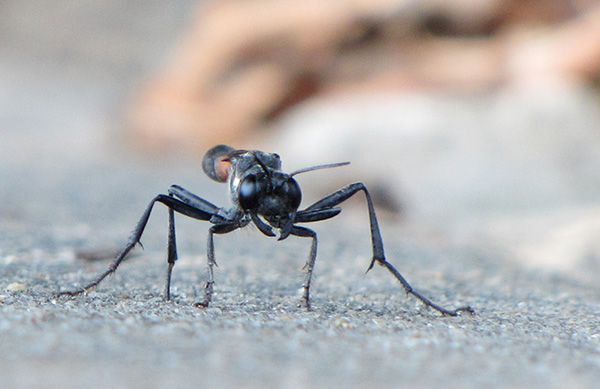
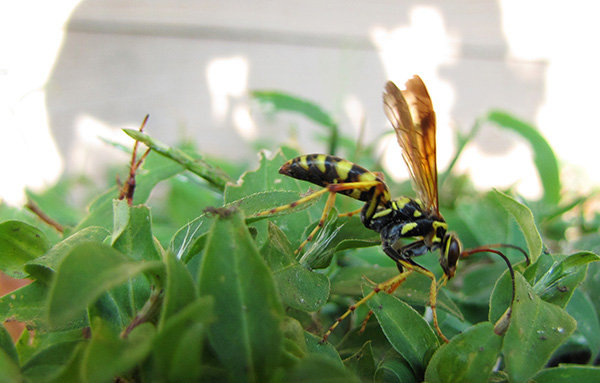
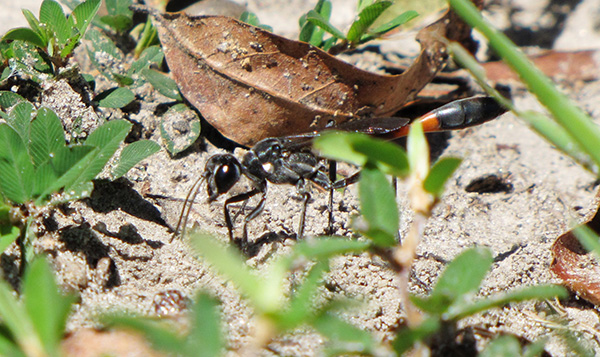
The tree in our front yard had fewer caterpillars this summer, so the yard had fewer thread-waisted wasps. Instead of a daily swarm of wasps under our tree, I saw one or two a week.

Wasp Sept 7

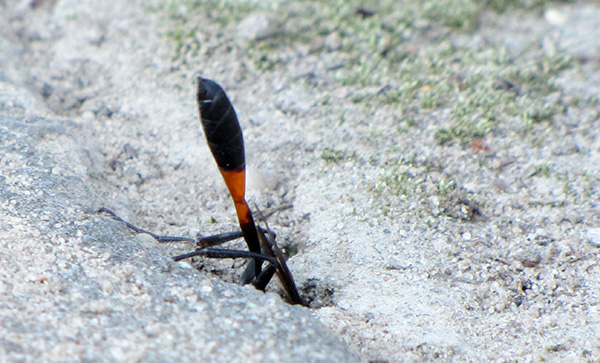
The wasps dug burrows as usual, but I didn’t see any of them return to their burrows with prey.

Wasp Sept 11

Twice I waited over an hour as wasps searched through leaf litter on the ground and branches overhead. Both times the wasps were still hunting when appointments called me away.

Wasp Sept 11

My wasp failures were disappointing, but it’s always worthwhile to spend a few hours sitting quietly in the yard. Last year as I waited on the wasps, I found a wolf spider carrying her army of spiderlings. This year I found flies.

Fly Sept 11

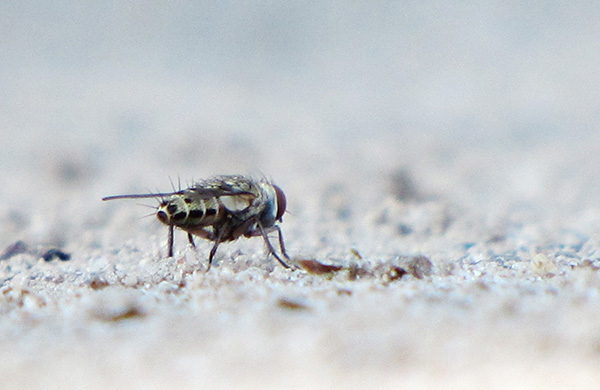
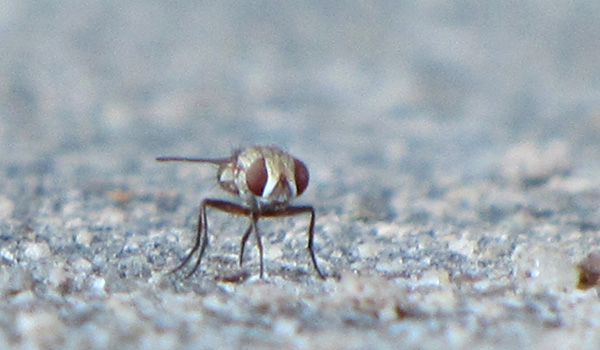
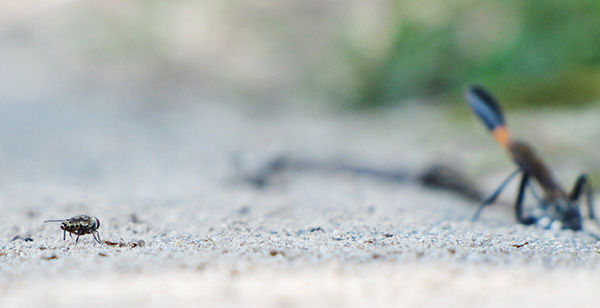
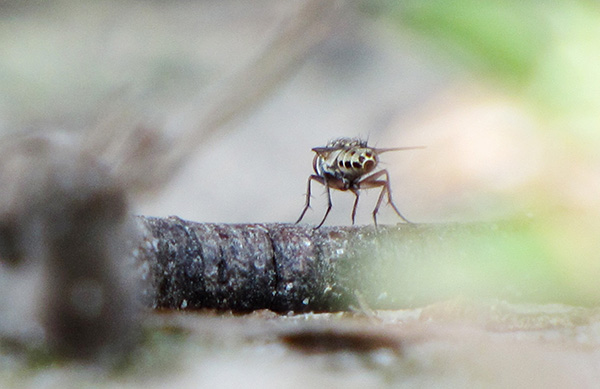
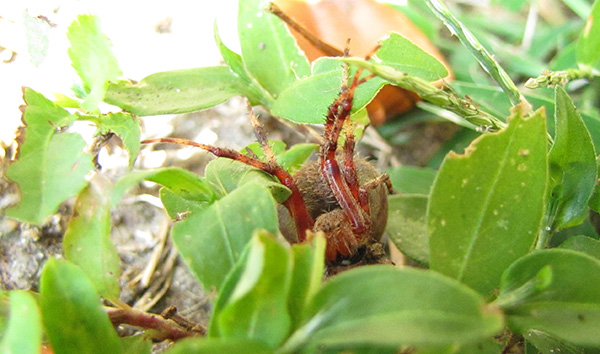
The flies caught my attention because they seemed as interested in the wasps’ activity as I was. They watched as intently as I did.

Fly Sept 11

As the wasps dug, three or four flies positioned themselves within a few inches of the developing burrows. Each time a wasp carried a pinch of excavated dirt away, the flies zoomed in and flew quick figure-eight patterns over the burrow. When the wasps returned and resumed digging, the flies lit nearby and watched until the wasps left again.

Fly Sept 11

The longer I watched, the more convinced I became that the flies were kleptoparasites. They were waiting to deposit their larvae in the wasps’ larder, alongside the wasps’ hungry larvae.

Fly Sept 11

The behavior is well-documented. It’s one of those complicated, clever twists of nature that fills me with questions. How do the flies learn to follow the wasps? Generation after generation, flies see a thread-waisted wasp and something whispers deep within their experience. Follow it. And they obey. Why?

Poetic Prose: Metaphor’s Impact on Pace

In 2012, brain studies made headlines with evidence that metaphors activate sensory regions of the brain. The implications for fiction writers are readily obvious. If you want your readers to see, hear, smell, and feel your world, you can help them along by using descriptive metaphors. Articles like “The Neuroscience of Your Brain on Fiction” from the New York Times cover the topic in eloquent detail:

The brain, it seems, does not make much of a distinction between reading about an experience and encountering it in real life; in each case, the same neurological regions are stimulated. Keith Oatley, an emeritus professor of cognitive psychology at the University of Toronto (and a published novelist), has proposed that reading produces a vivid simulation of reality, one that “runs on minds of readers just as computer simulations run on computers.” Fiction — with its redolent details, imaginative metaphors and attentive descriptions of people and their actions — offers an especially rich replica. Indeed, in one respect novels go beyond simulating reality to give readers an experience unavailable off the page: the opportunity to enter fully into other people’s thoughts and feelings. (1)

The New York Times article references, in part, research done at Emory University in Georgia. The university’s website describes the methods employed in one of the more prominently discussed studies:

Seven college students who volunteered for the study were asked to listen to sentences containing textural metaphors as well as sentences that were matched for meaning and structure, and to press a button as soon as they understood each sentence. Blood flow in their brains was monitored by functional magnetic resonance imaging. On average, response to a sentence containing a metaphor took slightly longer (0.84 vs 0.63 seconds). (2)

For me, that last detail adds a new dimension to the discussion about metaphor in writing. Metaphors take longer to process. And, while the time lag may not seem significant when applied to single sentences, it adds up over the course of a book. Even over the course of a paragraph.

Here’s the first paragraph of The Last Unicorn:

The unicorn lived in a lilac wood, and she lived all alone. She was very old, though she did not know it, and she was no longer the careless color of sea foam, but rather the color of snow falling on a moonlit night. But her eyes were still clear and unwearied, and she still moved like a shadow on the sea. (3)

A lilac wood? Is the wood made entirely of lilacs? Is it purple? Maybe it smells like lilacs? Perhaps the intent goes deeper than description. Lilacs appear in mythology, flower lore, and in a well-known poem by Walt Whitman. Since there is no rule limiting each word in a text to a single meaning, lilac may mean all of these things. And, no matter which meanings I choose, I am alert for the next metaphors — a series of sea and water images used to describe the unicorn. These make me thirsty for more.

By the time I finish this first paragraph, the book’s opening pace is established. It flows from page to page in unhurried leisure, giving me plenty of time to explore and enjoy the scenery. At the bottom of the first page I’m told, “Unicorns are immortal.” And I understand. They have no need to hurry.

But things change for the unicorn, and for me, on page six.

From that first moment of doubt, there was no peace for her; from the time she first imagined leaving her forest, she could not stand in one place without wanting to be somewhere else. She trotted up and down beside her pool, restless and unhappy. Unicorns are not meant to make choices. She said no, and yes, and no again, day and night, and for the first time she began to feel the minutes crawling over her like worms. (4)

As the unicorn frets, so does the text. The first part hurries along, a straightforward description of restless indecision. Then time slows uncomfortably with “… minutes crawling over her like worms.” Further down the page, I find this paragraph:

Under the moon, the road that ran from the edge of her forest gleamed like water, but when she stepped out onto it, away from the trees, she felt how hard it was, and how long. She almost turned back then; but instead she took a deep breath of the woods air that still drifted to her, and held it in her mouth like a flower, as long as she could. (5)

The road “gleamed like water.” It’s an arresting image, recalling the first paragraph’s water imagery. I expect the road to ripple when the unicorn steps on it, and I share her surprise at finding it solid. I’m ready for her deep breath, because I need one too, but then I am caught by the uniqueness of “…and held it in her mouth like a flower.” Like a lilac? It’s so captivating that I, too, pause as long as I can.

Comparing the two scenes from page six, the second is shorter than the first, and yet it holds more intricacy. I linger, savoring the shorter passage. The first scene is useful and informative. The second is a critical turn in the plot, and its metaphors force me to pay attention as I read.

I could go on and on, quoting page after page of equally wonderful metaphors in The Last Unicorn. They make the beautiful parts more beautiful, the suspenseful parts more suspenseful, and the emotional parts more emotional. They keep me engaged, and they transform a lovely story about a unicorn into a classic.

But how do I apply lessons learned in The Last Unicorn to my own writing? I begin by planning my metaphors better, capitalizing on their ability to engage a reader’s senses, as well as their pace. Too little metaphor renders stories thin and featureless. Too much slows them to tedium. Where will metaphors enhance my stories, and where will they get in the way?

References

1. Paul, Annie Murphy. “Your Brain on Fiction.” The New York Times. 17 March 2012. The New York Times Sunday Review/The Opinion Pages. Web. 9 September 2013.

2. Woodruff Health Sciences Center. “Hearing metaphors activates sensory brain regions.” Emory News Center. Emory University. 7 February 2012. Web. 9 September 2013.

3. Beagle, Peter S. The Last Unicorn. Fourth Printing. New York: Ballantine Books. 1972. Print. 1.

4. Beagle, Peter S. The Last Unicorn. Fourth Printing. New York: Ballantine Books. 1972. Print. 6.

5. Beagle, Peter S. The Last Unicorn. Fourth Printing. New York: Ballantine Books. 1972. Print. 6.
Butterfly Sept 13

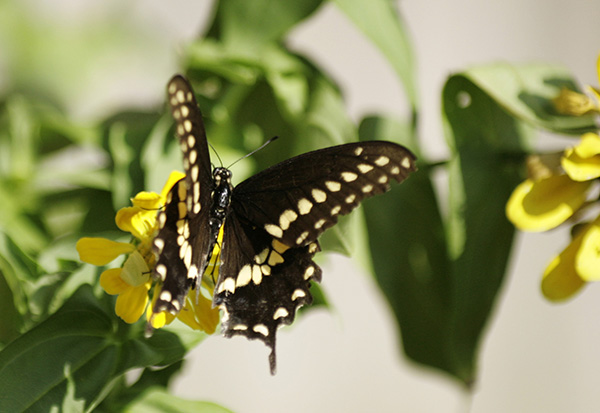
“Say my name, then,” the unicorn begged him. “If you know my name, tell it to me.”
“Rumpelstiltskin,” the butterfly answered happily. (pg 10)
Butterfly Sept 30

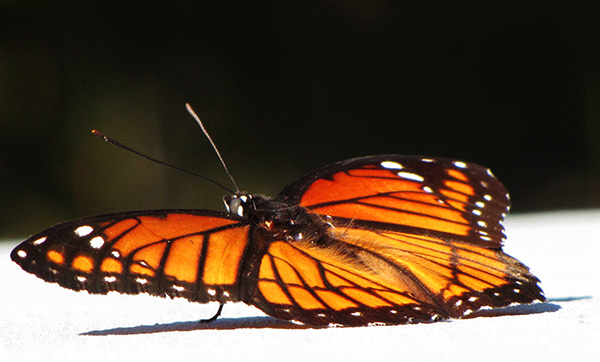
You know better than to expect a butterfly to know your name. All they know are songs and poetry, and anything else they hear. They mean well, but they can’t keep things straight. And why should they? They die so soon. (pg 11)
Praying Mantis, September 2013

Last night I found a praying mantis on the kitchen window. As I watched it groom its antennae and feet, I imagined it was using the window as a mirror.

Mantis Sept 26

I have no doubt that clean antennae and feet matter on a functional level, but does some portion of a praying mantis’s experience reflect a sentiment I would call vanity?

Mantis Sept 26

I thought about the mantis off and on all night. Does fall make it anxious? Are these last few weeks of summer, its last few weeks of life, more urgent than all of its previous weeks?

I decided to look for the mantis again today, starting with the flower beds closest to the kitchen window. When I found it (or a similarly sized mantis) the situation was decidedly urgent.

Mantis Sept 27

At first I thought a mantis had caught one of the yard’s few remaining dragonflies. Then I realized it had caught another praying mantis. Or rather, the two insects had caught each other.

When I approached with my camera, they retreated to the underside of the ginger lily’s leaf.

Mantis Sept 27

The battle took place in slow motion, a strained embrace of stamina, strength, and will. Both sustained significant injuries:  the larger mantis mauled its opponent’s bent and broken wing, while the smaller mantis locked one barbed foreleg over a vulnerable eye.

Mantis Sept 27

Gradually, the smaller mantis extracted its damaged wing, and it seemed on the verge of gaining an advantage.

Mantis Sept 27

But the larger mantis broke its opponent’s grip and disabled the smaller mantis by biting through the major joints of both forelegs.

Mantis Sept 27

It was a brutal way to end the battle, precursor to an even more brutal death for the defeated. I didn’t stay to watch the victor dine, but when I returned a half-hour later, little remained of the smaller mantis.

Mantis Sept 27

I’m fond of praying mantises. They are among my favorite subjects to photograph. But this encounter? This is not why I love praying mantises, and I didn’t enjoy taking these photos. I don’t know why I watched so long.

In particular, I regret that my presence changed the course of their struggle. Except, it’s possible my presence in the yard changes the course of every struggle. Perhaps my camera affects everything I photograph, and my eyes affect everything I see.

Mantis Sept 27

Hampton Roads Writers 5th Annual Conference, 2013

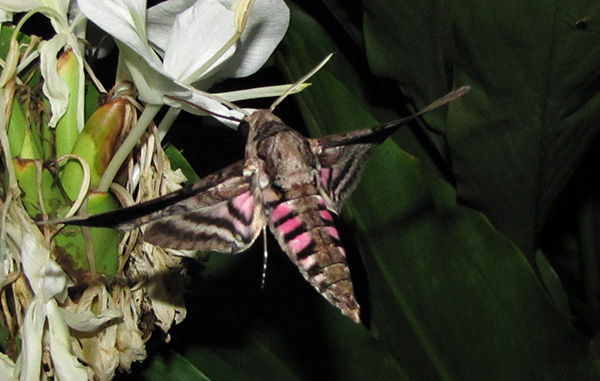
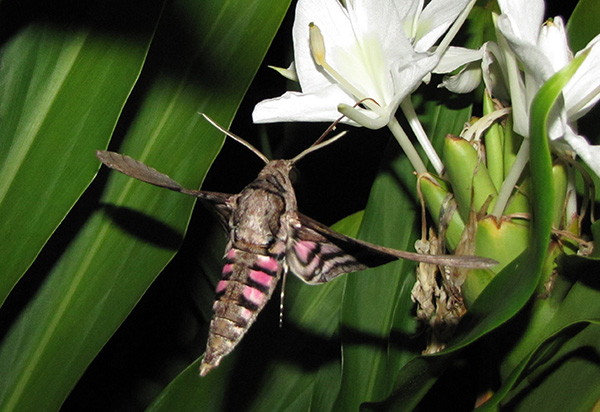
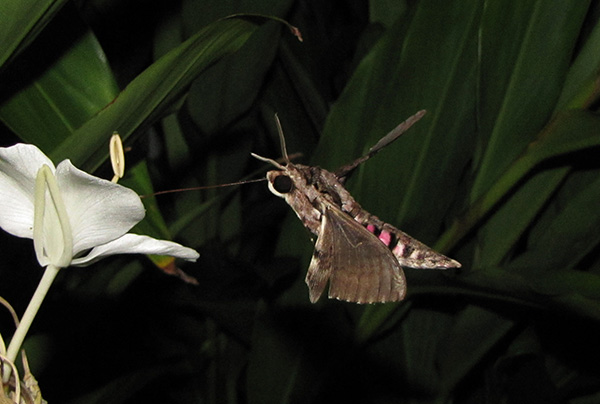
Pink Spotted Hawkmoth Sept 22

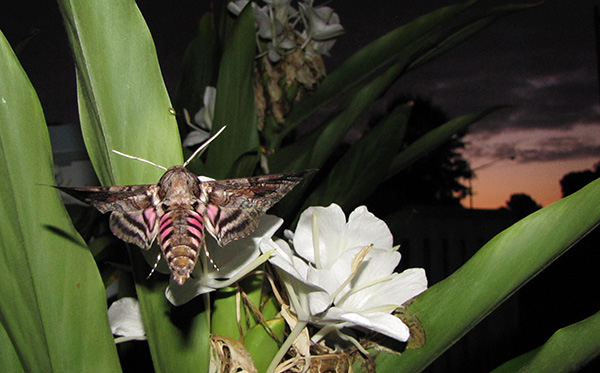
As evening approached on Thursday, September 19, the writers gathered. Drawn by the promise of shared wisdom and new perspectives on writing, we made our way to the second floor of the Westin Virginia Beach Town Center.

Pink Spotted Hawkmoth Sept 22

This year I challenged myself with sessions about short story writing and first person point of view. (I rarely attempt short fiction, and I never write in first person.) Between challenges, I attended sessions about copyright, novel writing, and poetry.

  • Creating the World in a Short Story — Clifford Garstang
  • Copyrights and Wrongs: Fair use of quotes & other things to avoid a lawsuit — Jeff Ourvan
  • Where Does My Story Start: How to Write a Winning First Chapter — Lisa McMann
  • First Person Problems: The specific challenges and opportunities of writing first person — Lydia Netzer
  • Different Voices, Different Times — Lydia Netzer
  • Do Put Words in my Mouth: Creating realistic and effective dialogue — Ethan Vaughan
  • Exquisite Sounds — Jeanne Larsen

Pink Spotted Hawkmoth Sept 22

Each morning of the conference started with a keynote address followed by First Ten Lines Critique sessions. The critique panel consisted of authors Lisa McMann (Friday morning only) and Kevin Maurer, along with literary agents Ethan Vaughan, Jeff Ourvan, and Dawn Dowdle.

Recurrent themes emerged as the panelists discussed samples of writing submitted by conference attendees. Overwriting hampered many openings. Weak dialogue and too much description slowed the pace. Shifts in tense and point of view distracted from the stories.

Pink Spotted Hawkmoth Sept 22

Each of these problems exist in my writing, but they are easier to see in someone else’s lines. I came away from these sessions with renewed gratitude for my writing partners, who see my mistakes more readily than I do.

Pink Spotted Hawkmoth Sept 22

I could spend weeks cataloguing what I learned and fail to cover it all. I could read for months and not read all the books I discovered.* Instead of attempting either, I’m writing.

Pink Spotted Hawkmoth Sept 22

I’m following paths of scent and light, spreading grains of pollen gathered at the conference. Perhaps a few of my poems and stories will germinate, will take root and grow.

Pink Spotted Hawkmoth Sept 22

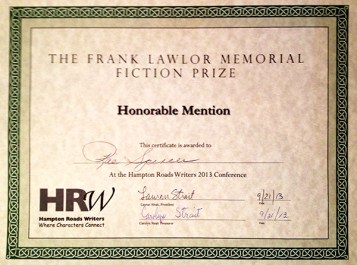
The conference ended with a delightful surprise. My short story (my only “finished” short story) won Honorable Mention in The Frank Lawlor Memorial Fiction Prize!

HRW 2013

* I came home with a new title from Unbound Content, and I’m waiting impatiently for delivery of books by Jeanne Larsen and Lisa McMann. Next year, I’ll order Lydia Netzer’s new book as soon as it is released. In the meantime, I’ll read Shine Shine Shine again.

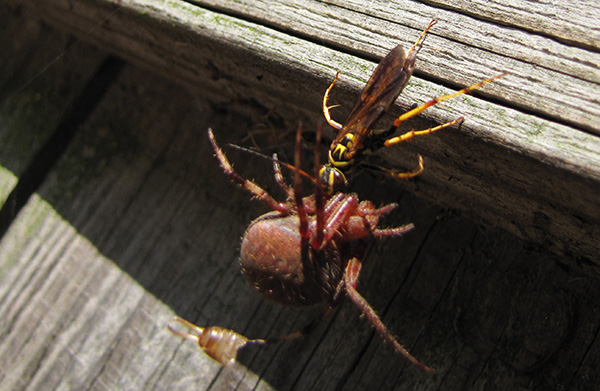
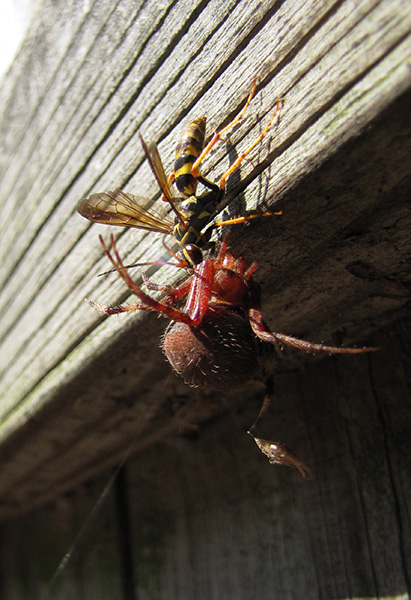
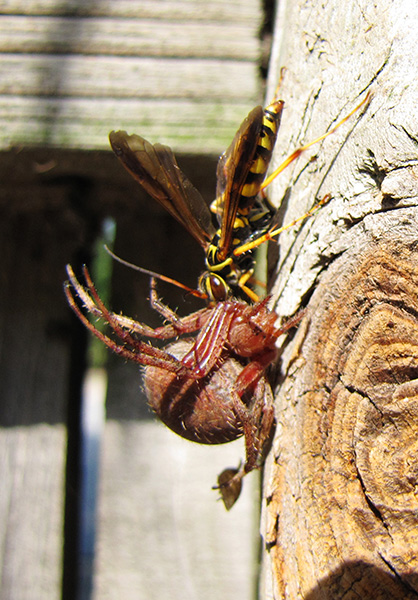
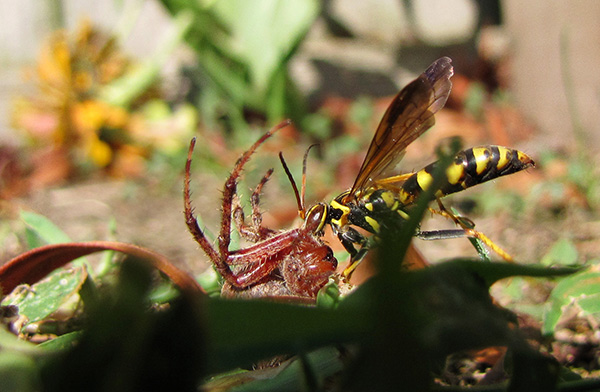
Spider Wasp (Arachnophobia Alert!)

I was talking on the phone yesterday afternoon, laughing (and cringing) about how awful it feels to walk through a spider web, when I noticed something moving along the fence. It looked like a leaf, caught (of course) in one of the yard’s many spider webs, being blown about by the wind. But it moved too far along the fence to be anything anchored in a web, and it moved far too purposefully.

Wasp and Spider Sept 12

After I hung up the phone and raced to find my camera, I spent nearly an hour watching this little wasp. First she hauled her prey along the middle rail of the fence …

Wasp and Spider Sept 12

… lowered it down one of the posts …

Wasp and Spider Sept 12

… and tugged it over the ground until she found a clump of grass big enough to hide it.

Wasp and Spider Sept 12

Wasp and Spider Sept 12

Wasp and Spider Sept 12

Then she crawled under an adjoining clump of grass and started digging, emerging every so often to check her catch. She seemed to be measuring, trying to see if her burrow was big enough yet.

Wasp and Spider Sept 12

Wasp and Spider Sept 12

Once the burrow was finished, she turned the spider around a few times, wrestled it down through the clump of grass, and presumably buried it in her burrow with one (or more?) of her eggs.

Wasp and Spider Sept 12

The dynamic between these two predators, between the web spinner and its stinging foe, seems particularly cruel to me. Chances are the spider wasn’t dead when the wasp buried it with her egg. Merely paralyzed by her sting.

It’s a story that belongs in a horror movie or a nightmare, not in the yard. Except, it does belong in the yard. It belongs anywhere there are spiders and spider wasps. Perhaps what doesn’t belong are my words. Perhaps there is no place in the yard, at least in the lives of spiders and spider wasps, for words like “cruel” and “nightmare.” But where is the line? Where on the spectrum of consciousness do words begin? More importantly, where does empathy begin?