Lost Time

Squirrel May 2

Every so often, time slips sideways. One week it’s May, and the next week July scrolls into August. I have photos and bills to prove that June actually happened, but it happened in a blur of travel, home repairs, and unhoarding.

Rabbit May 11

My unhoarding saga began after Mother died, when the extent of her hoarding (and mine) could no longer be overlooked.

Eggs May 14

Mother’s hoard was generational. Parts of it accreted as she raised five children, other parts were passed down from two much-loved grandmothers, a formidable mother, a pair of admired aunts, and a somewhat difficult mother-in-law. With each obituary and burial came new photos, letters, books, furniture, glassware, doilies, and quilts.

Hoverfly May 14

The women who raised Mother had filled their homes with small treasures, and, because each of them had very real memories of hard, empty years, they treasured everything. Everything held a story, and all of the stories were passed to Mother (who had no siblings) for safe-keeping.

Ladybug July 15

Fighting her own memories of hard, empty years, Mother made room for everything, stuffing her house to the eaves with family history. She made room in her heart, too, and genuinely loved this patchwork collection of heirlooms.

Dragonfly July 15

She loved it, that is, until it overwhelmed her.

Swallow May 26

The hoard took over Mother’s house, just as my hoard was taking over mine. In her house, as in mine, cabinets were jammed full, drawers wouldn’t close, shelves bowed under their burdens, one entire room was given over to storage.

Ducks May 11

In the wake of Mother’s car accident and death, as I helped my siblings sort and pack five generations of Mother’s belongings, I resolved to make a change. I didn’t want to carry on this tradition, the death ritual of dividing the hoard. Treasures or not, I no longer needed or wanted most of the stuff I had been hoarding.

Robin May 24

Resolve is one thing, doing is another. And unhoarding is ridiculously hard work. It got even harder after I scraped off the easiest layers — books I was never going to read, clothes I was never going to wear, dishes I was never going to use. Then came the emotional stuff. Tattered childhood books. Scarred toys and threadbare stuffed animals. Memory-laden trinkets and gifts that warmed my hoarder’s heart.

Bee July 16

I spent hours and days and weeks putting off decisions, moving containers from one room to another, painting around them as I dithered. Some days I was tempted to ship them all off to thrift stores, unopened and unsorted. Other days I fought an urge to unpack everything, to binge on dusty memories.

Skipper July 8

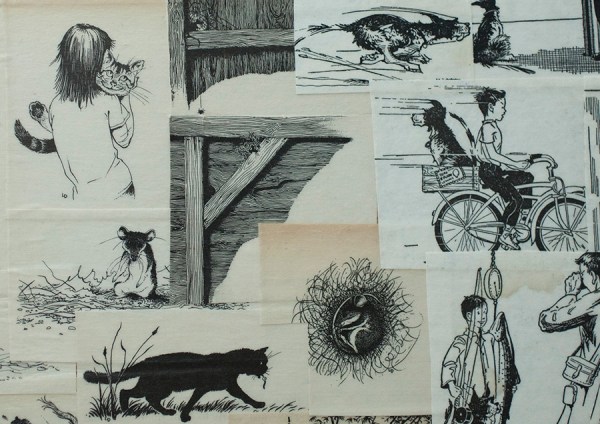
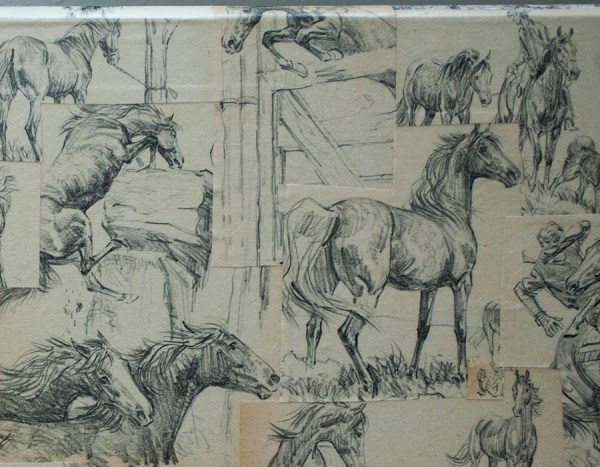
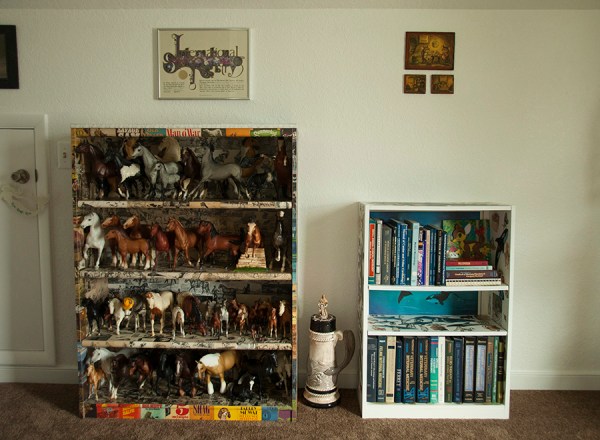
But I don’t want to live in a box of memory. To be owned by the past. So this summer I’ve been cleaning and repairing toys and stuffed animals. Some few will stay with me, others will go to thrift stores. What can’t be salvaged will be recycled or sent to the landfill. (After being photographed, of course.) I’ve also been cutting up old books, calendars, and posters for use in current and future art projects.

Clearwing Moth July 16

Some memories I’m voluntarily discarding, others have been lost in the commotion. But the house gets lighter and brighter with each newly emptied container, with each completed project.

Carpenter Bee July 16

And it feels like an even exchange — memories for light. Time for time.

Tiger Swallowtail July 9

I think Mother would approve. I think all of them would approve.

Scamper, 2001-2016

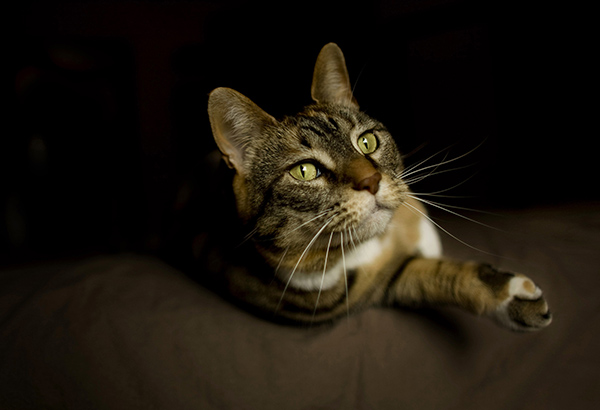
BOTH CATS DEN

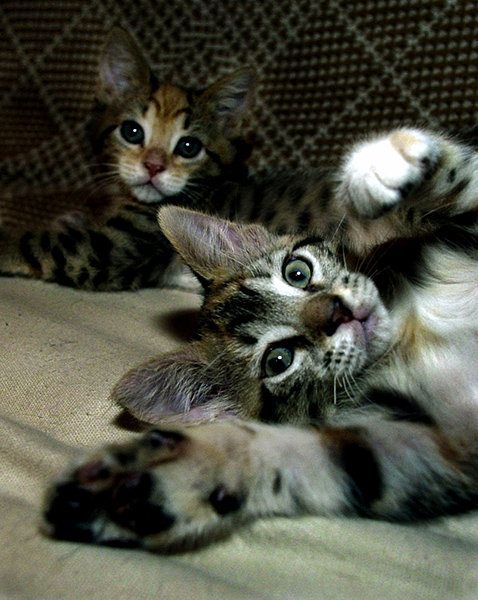
In 2001 we moved from a small duplex to a house with a garage and yard. We had one cat and one dog, and soon added a pair of orphaned kittens.

BOTH CATS

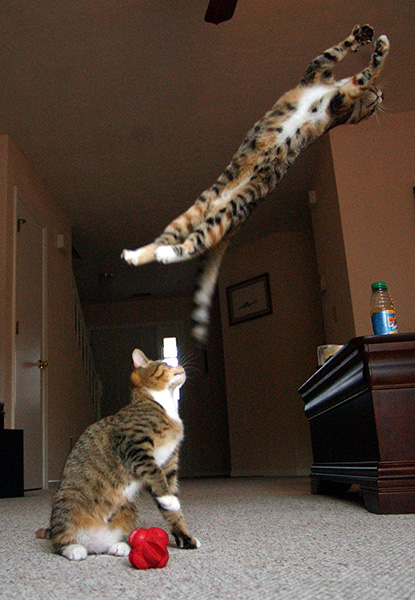
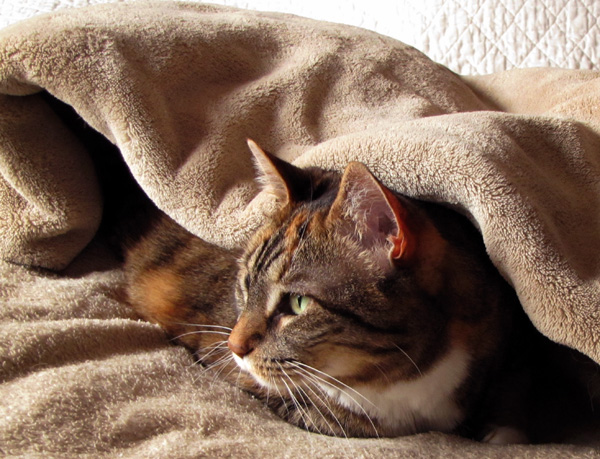
One of the kittens (on the left in the above photos) was sweet and gentle, and the name “Sabrina” seemed just right for her. The other kitten was fierce and playful and somewhat neurotic, and she defied naming. Nothing quite fit. She became “Scamper” on her medical chart, because I had to put something on her chart, but at home she changed names as often as she changed moods. She was The Scamperer. Thing 2. Her Neediness. The Bad Cat. The Wee Baby Kitty. Supercat.

SCAMPER 1

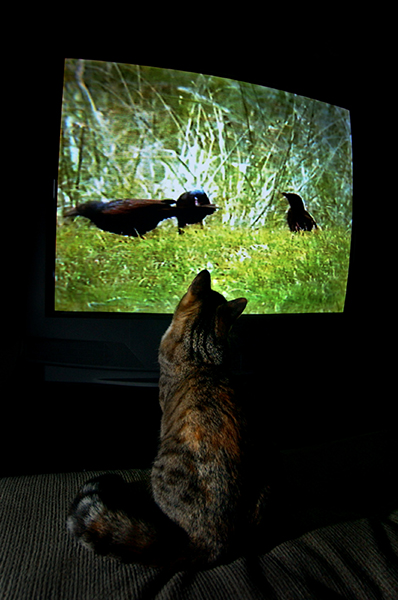
She was The Bird Watcher. (When it was too cold for open doors and windows, birds on television were better than no birds at all.)

CAT TV 3

Cats May 15

Cat March 26

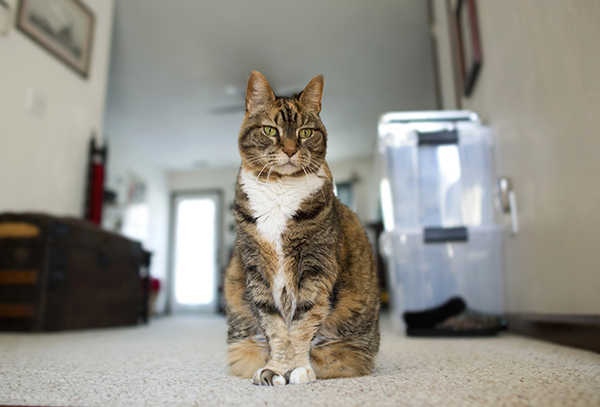
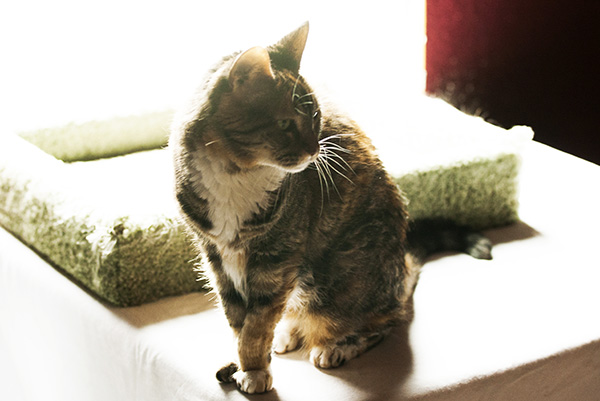
In her middle years, she grew overweight and lazy. None of her kitten names fit anymore, if they ever had. She was still Scamper when she went to the vet, but at home she was Herself.

Scamper 2014

Cats Aug 24

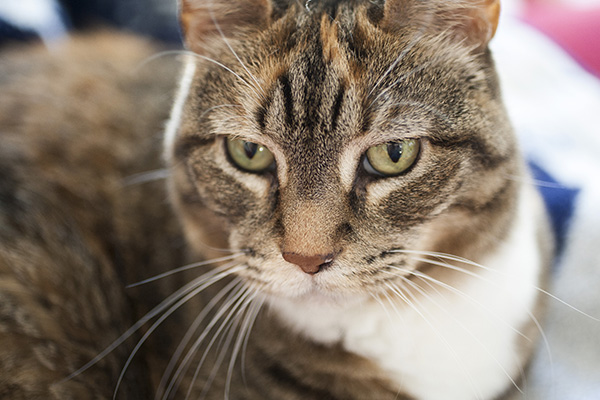
In many ways, she was the essence of what I love about cats — neuroses and all.

Scamper 2008

In her later years she liked blankets and patches of sunlight and, every so often, an afternoon nap on the couch with me.

Scamper Jan 2011

Health problems came with age. There were medicines and special diets, all of which helped for a time, but as 2015 progressed her condition declined steadily. She lost weight faster than medicine, food, and love could counter. The calendar turned and she lost more weight. Then, in early February, she stopped eating altogether.

So I made one last trip to the vet with our cat of many names. I stayed with her through the euthanasia process, which was gentle and peaceful, and drove home to a house that is achingly incomplete. There’s an empty spot near her favorite upstairs window, one that can never be filled.

Cat Nov 9

Note: Most of the photos in this post were taken by my husband.

Sleep, eat, read… blog

Yard December 30

When I didn’t put together a blog post in late October, I resolved to make up for it in November. After November passed without a post, I planned something for December. And when January loomed with the blog still silent, I finally admitted that I had been neglecting more than the blog. I wasn’t procrastinating. I was depressed. Again.

Yard December 30

My inertia started with procrastination, but, as the days grew shorter and shorter, depression took over. In retrospect, I knew this all along. I tried to ignore the symptoms, but in mid-October I had quit doing most of the things I enjoy. The blog was just my most public absence.

Flowers Nov 9

By November, the yard and I were weather-worn and brittle.

Flowers Nov 9

Flowers Nov 9

Off and on in November I picked up my camera, took a few photos, and thought vaguely of how I would describe them in a blog post. Each time I decided to pay bills or clean out the closet instead. (More often than not, I then decided to put off the bills and the closet, too.) So this photo of spider eggs never posted:

Eggs November 24

Nor this exquisite moth:

Moth Sept 17

I woke briefly in mid-November, when the Yellow-rumped Warblers arrived, but soon drifted back into my sleep-eat-read-sleep routine.

Warbler Nov 16

Squirrel Nov 9

Rabbit Nov 9

As December counted down, I told myself lies about how busy I was with holiday preparations.

Ornaments Dec 26 2015

I told others these lies, too, because they were easier than admitting to everyone that the holidays made me feel sad and lonely. That, despite my love for festive decorations, much of my nostalgia is tinged with grief.

Ornaments Dec 26 2015

During my lost months, I watched flocks of birds gather and move on, feeling each time as if I had missed an important message.

Flock Nov 20

Birds Nov 9

Crow Nov 9

Then, one bright and unseasonably warm afternoon, a pair of vultures paused over the yard, basking in the sun. These beautiful, under-appreciated birds sent me scrambling for my camera, something I had not done in weeks.

Vulture Dec 10

Vulture Dec 10

Vulture Dec 10

And on Christmas Eve, despite dreary clouds and a threat of storms, I enjoyed an afternoon in the yard with my camera.

Starling Dec 24

This time I felt closer to getting the message.

Birds Dec 24

In the after-Christmas lull, I slept and ate and read and slept, but there was a spark of something different in the routine. A current of ambition to do more than sleep and eat and read. As I put away our decorations, I noticed a pot of pansies that I had never planted. And all the empty bird feeders.

Muscovy Jan 3

On the first Sunday of 2016, I took a walk with my old camera. As I photographed ducks and geese and seagulls, my internal dialogue became a patter of possible captions for the photos. That evening I edited the images with extra care, eager to post them. But I couldn’t decide how to post them. The blog had been silent for so long. Now that I was ready to post again, how should I explain my absence? Should I simply resume posting? Gloss over two months fogged by recurring depression?

Merganser Jan 3

If I tried to explain, would I be able to describe depression without being depressing? (I don’t believe I’ve succeeded, but I decided to post this anyway. Too many people avoid talking about depression for too many reasons, which makes it that much lonelier.)

Heron Jan 3

I’ve lived with depression (and its frequent companion–anxiety) for a very long time. Longer than I’ll usually admit. Compared to past experience, this bout was mild and short-lived. Now I’m making changes that should help speed my recovery. Over the weekend I stocked the kitchen with healthier food, started exercising, and spent more time outside with my camera. These are, I’ve learned, my best defenses.

Seagull Jan 3

So as January progresses, along with a more mindful schedule of sleeping and eating and reading, I’ll be walking and writing and blogging. (And renewing my efforts to learn meditation. More on this later.)

Mallard Jan 3

And as the days get longer and longer, I’ll start looking forward to spring. Because spring will come. It always does.

Mallard Jan 3

Hellbender Salamanders

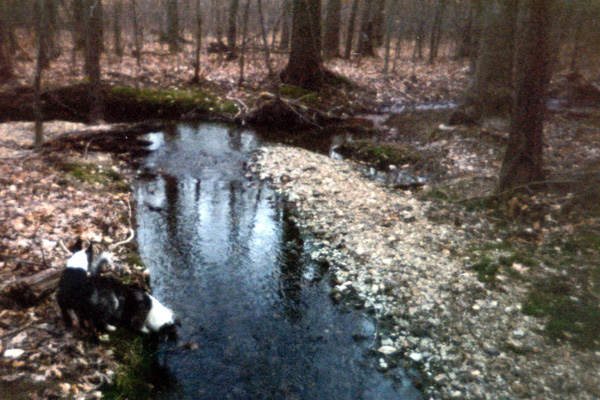
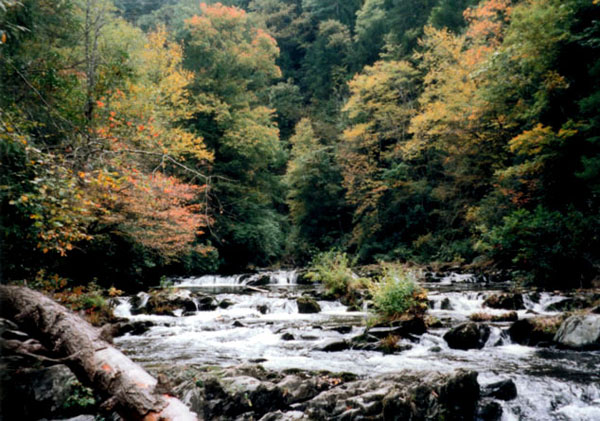
I spent countless hours, when I was young, exploring the creek that ran through our woods. I found crawdads and snails, snakes and minnows, darters and stream lamprey. I also found an amazing variety of small, slippery salamanders, the kind that lived in every creek in the county. But I never found a hellbender.
Woods

I didn’t know hellbenders existed until one of my classmates brought one to school. I was fascinated, but I was also jealous. So jealous that I didn’t want to look too closely at the giant salamander, which I remember as a vague, slimy shadow, curled up and completely covering the bottom of a five-gallon bucket. Instead of participating in the general excitement over the hellbender, I hung near the back of the crowd, wishing the bell would ring so that I could go home and catch one of my own.

(As with all of my memories, it’s possible this story isn’t true. The past is treacherously malleable, changing as I change, fading as I age. It’s possible that I stared at the hellbender for hours. I might have reached in and touched it. There might have been some other creature in the bucket, or there might not have been a bucket at all.)

I never did find a hellbender of my own. Not in my creek (I realized later it had always been too small and shallow for hellbenders) and not in any of the other creeks I visited. But I never quit looking.

Abrams Falls

I now live in eastern Virginia, where there are no hellbenders. My childhood creek belongs to someone else, and hellbenders are increasingly rare, even in suitable creeks. At this point, my chances of finding a hellbender are roughly equal to my chances of finding a dragon. But the story isn’t over. There is hope for the future, for hellbenders and for me. Conservation efforts are making progress, so perhaps hellbenders won’t disappear altogether. And the next time someone shows up with a bucket full of wonder, I won’t be too jealous to look.

Anaxyrus (formerly Bufo)*

Toad May 2

Early in May I found this little toad while I was mowing. After taking a few photos, I helped it into a flower bed and continued mowing, planning out a blog post as I made circuit after circuit around the yard.

I thought it would be a fun exercise to identify my toad. In the past, I’ve had good luck identifying reptiles and amphibians using the information provided on the Virginia Herpetological Society’s website, so I started there.

Have a look at this page from the website, which outlines the anatomy of a toad’s head, particularly the cranial crests, postorbital ridges, and parotid glands. The next page illustrates how these structures help identify three of the six species of toads found in Virginia.

Based on a visible (but not prominent) cranial crest, I narrowed the list of possibilities to either an Eastern American Toad or a Fowler’s Toad. But the pertinent detail for separating these two species, whether or not the postorbital ridge contacts the parotid gland, was not discernible. Falling back on secondary characteristics, I spent some time counting the number of warts in each of the toad’s spots. One or two warts per spot indicates an Eastern American Toad, while Fowler’s Toads have three or more. My toad had one or two in most of its spots, but three in a few. Since the two species are known to hybridize, was this inconsistency enough to identify my toad as a hybrid?

Two of the other listed characteristics aren’t visible in my photos. I can’t say whether my toad had spots on its chest and abdomen, nor if it had any enlarged warts on its tibia. (No enlarged warts are visible in my photos, but the photos do not show the full length of both tibias.)

Having exhausted my vague knowledge of toad anatomy, but still without a definite identification, I was curious as to whether an expert might have better luck. I sent my photos to the Virginia Herpetological Society’s e-mail identification resource, and their prompt response said my toad was likely a Fowler’s Toad. But they added a note: “Toad ID can be a bit tricky…”

Toad May 2

* In the last decade, genetic findings have shaken up the world of toad nomenclature. One of the changes removed some North American toads from the genus Bufo and shifted them into a new group with an old name, Anaxyrus. This article provides a good overview. So, for most of my Virginia toads, Bufo has been reduced to a parenthetical:  Anaxyrus (formerly Bufo). I feel a bit bereft, as Bufo was one of the few genus names I had bothered to memorize, but I suppose Anaxyrus is easy enough to remember. Except, I’m not quite certain why I would ever need to remember the genus names of North American toads…