Spring is in the Air (and in the Ground)

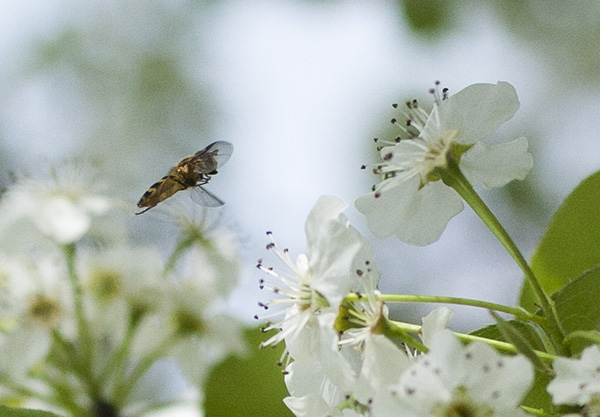
Fly April 10

When the pear tree’s pollinators finally arrived, they arrived in encouraging numbers. Hoverflies were the first wave, pretending to be bees.
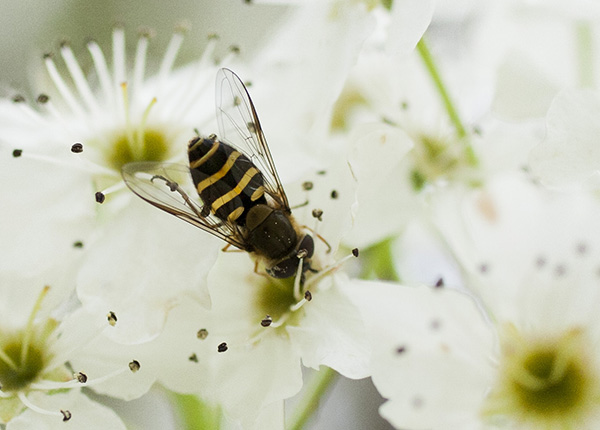
Fly April 10

Fly April 10

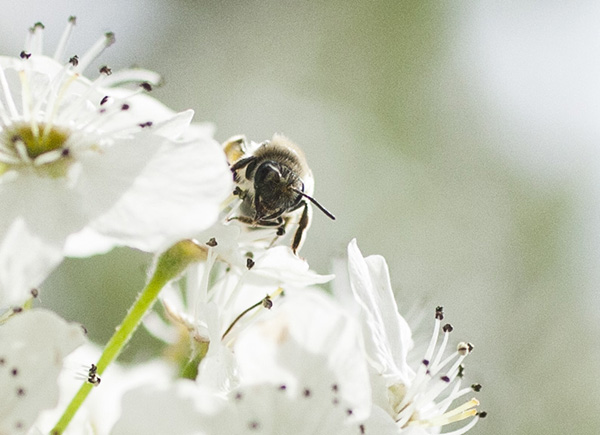
A wave of true bees followed.

Bee April 10

Bee April 10

Happily, a few Question Mark butterflies drifted in near the end.

Question Mark April 10

Question Mark April 10

While the pear blooms lasted, the yard’s winter flock of yellow-rumped warblers divided their time between sipping nectar, foraging for insects, and sampling the last block of winter suet.

Warbler April 11

Warbler April 11

(As an aside, I spotted the following warbler yesterday and was confused by its complete lack of yellow feathers. I believe it is a yellow-rumped warbler, but I’ve never seen one that didn’t have at least a blush of yellow under its wings. Please comment if you can correct or confirm my identification!)

Warbler April 22

As the pear tree dropped its petals, we readied the yard for summer. We replaced damaged boards on the aging deck, uncovered the ginger lilies, and swept leaves out of the cactus bed. (The carpenter bees ignored us and concentrated on chasing each other. They also chased warblers, chickadees, crane flies, hoverflies, beetles, bees, leaves, dandelion fluff, and pear petals.)

Bee April 22

The garden stores aren’t fully stocked yet, but we found most of the plants on our list: dill, fennel, milkweed, columbine, annual lantana, snapdragons, salvia, and cosmos.

Flowers April 22

Yesterday, this American Painted Lady butterfly made me wish we had planted more cosmos. (The yard’s 2015 butterfly sightings, so far, are a major improvement over last year’s butterfly drought, but they don’t begin to equal 2012’s impressive migration.)

Butterfly April 22

The yard’s birds have been getting ready for summer, too. This little house wren doesn’t have a mate yet, but he clearly has a favorite house.
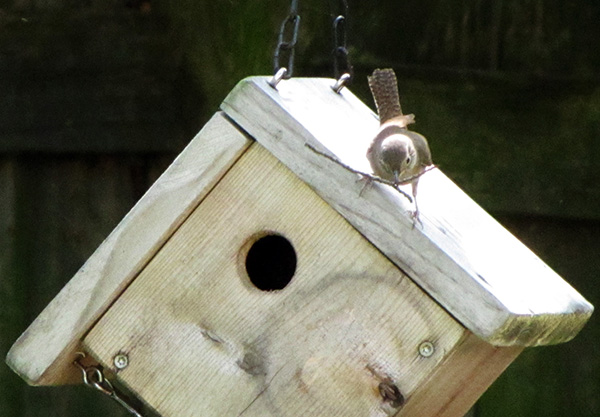
House Wren April 21

House Wren April 21

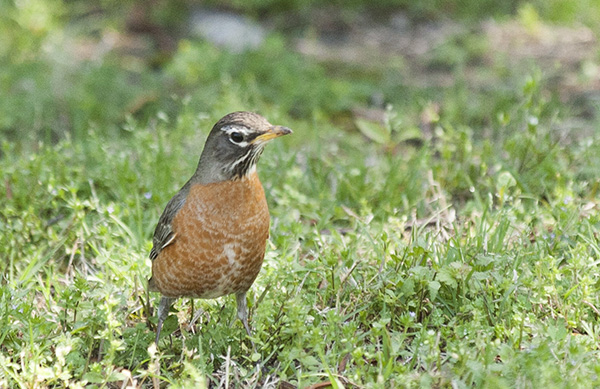
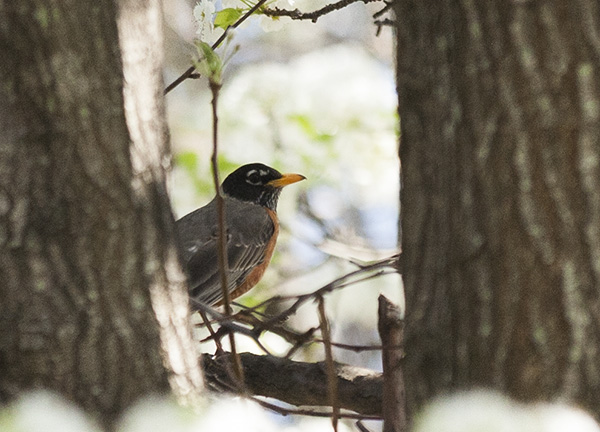
A pair of robins finished their nest last week and now spend most of their hours foraging.

Robin April 22

Robin April 22

(I am amazed by how many worms they find and eat each day.)
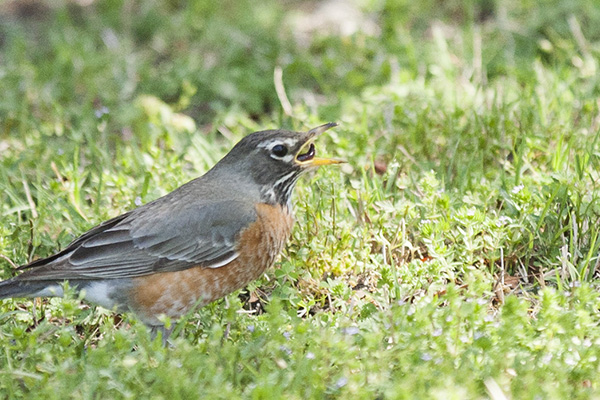
Robin April 22

The robins aren’t the only efficient foragers in our area. A pair of osprey make regular passes over the yard, carrying fish. Yesterday I caught a few frames as one of the pair nearly dropped its lunch on the deck.

Osprey April 22

After a brief struggle, which lasted no more than two wingbeats, the osprey managed to subdue its lunch and flew on. What would happen if the fish managed to break free? Would the osprey land on my deck and reclaim its catch? (I’d probably drop my camera and break it, leaving me with no proof of why I dropped it…)

Over the years I’ve found many surprising things in the yard, but never a fish. Perhaps this summer?

Osprey April 22

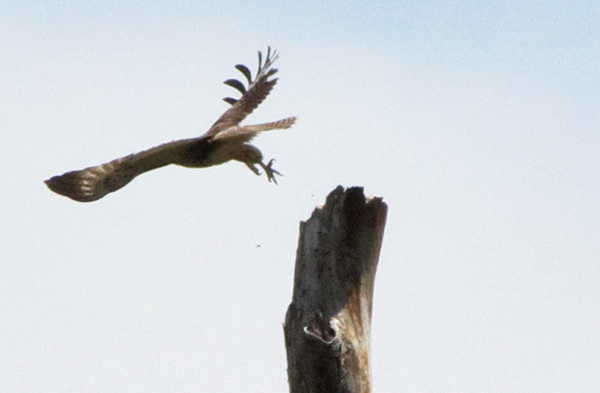
Except, it’s not summer yet. Today the windows are closed against a surge of chill that moved in overnight and is forecasted to last through the next few days. Mother would have called it dogwood winter, expecting the dogwoods to bloom after the chill passed. Or blackberry winter, if the blackberries were due to bloom. I’m content to call it the end of winter.
Hawk April 18

Poetry Publication Note

My poem “The Calculus of Parting Lovers” posted at vox poetica on April 7. Many thanks to editor Annmarie Lockhart!

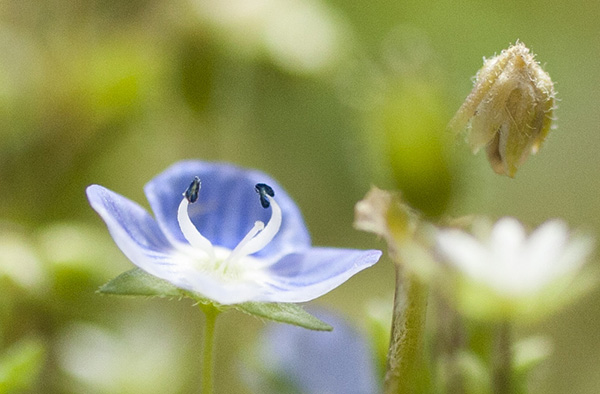
(And, because I can’t resist adding photos, here are two recent images from the yard….)

Dandelion April 10

Speedwell April 10

Grackles, Crows, and Hawks

Crow and Grackle April 10

With so many birds building nests in the yard, conflicts are inevitable. The grackles have been particularly testy over the last few days, mobbing crows whenever the larger birds enter the yard’s airspace.

Crow and Grackle April 10

And the crows, who routinely retreat once the grackles have spotted them, will not tolerate the presence of a hawk. Sunday morning I managed to capture a few images as three crows chased a Cooper’s Hawk back and forth over the yard.

Hawk April 12

Hawk April 12

Hawk April 12

Hawk April 12

Hawk April 12

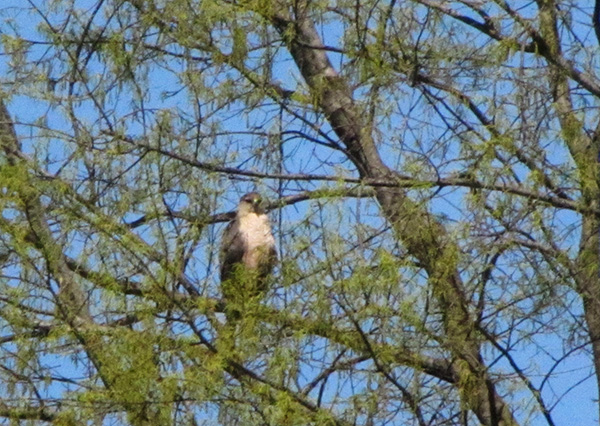
About ten minutes after the chase circled off to the north, I spotted another hawk in a tree two yards over. (Or maybe it was the same hawk, returning for another try at breakfast?) The grackles saw it, too, and began voicing their alarm. Soon a pair of blue jays arrived, also calling alarm. None of the commotion seemed to bother the hawk, until an approaching group of crows added their caws to the chorus. Then it gave up and moved off to try its luck in a quieter hunting spot.

Hawk April 12

Which led me to ponder the relationships between larger and smaller birds. Why would a larger, stronger bird flee from smaller birds? I suspect it has something to do with energy conservation, it simply being easier to leave when you aren’t hungry enough to risk losing a few feathers, but I wonder what they are all thinking as they call and chase and flee.  And how will their reasoning change, when hungry nestlings enter the equation?

Photos of Spring and a Publication Note

Flowers April 6

The daffodils, all three of them, bloomed this week. As did the pear tree.

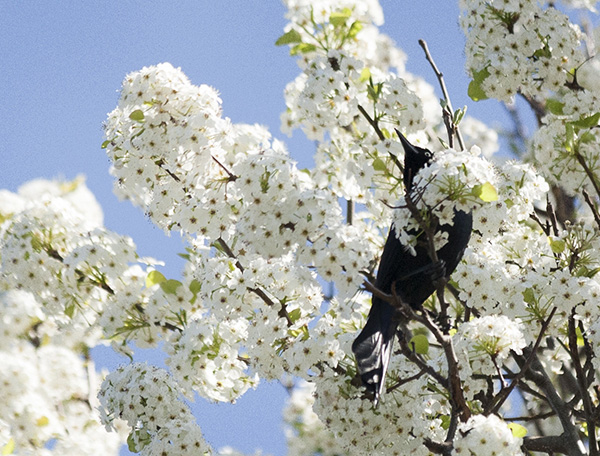
Grackle April 6

While it has plenty of bird visitors, the pear tree hasn’t seen its usual complement of pollinators.

Robin April 6

The pear blooms usually draw bees and beetles by the hundreds, but many of the pollinators seem to be sleeping in this year. Yellow-rumped warblers are getting most of the nectar.

Warbler April 6

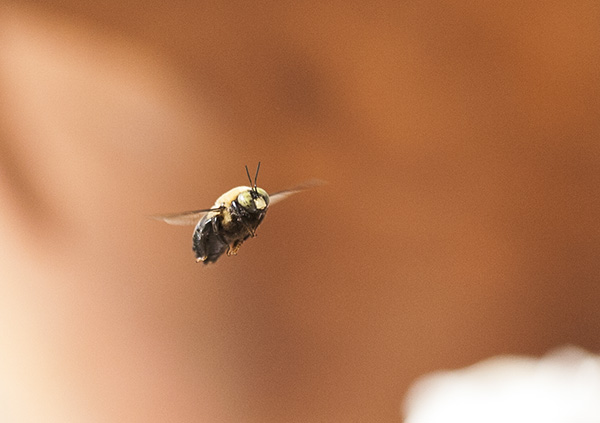
The pear tree’s pollinators may be sleeping in, but the carpenter bees are awake and active. Territorial males have claimed pockets of airspace near the house, fence, and deck. Their physiology must be wondrously efficient, because they patrol and defend their claims with seemingly endless vigor, never pausing to eat. They aren’t interested in nectar. They’re waiting for females to arrive.

Carpenter Bees April 6

My favorite news from the yard this week comes from the milkweed. It survived our long, cold winter, which means we might have more monarchs this year!

Milkweed April 6

My favorite other news involves a publication note. My short story “Numbers” is now posted at The Blue Hour Magazine. This is my first fiction publication!

“Numbers” is the first short story I ever attempted. For nearly ten years I returned to it periodically, each time applying what I had learned since its last revision. Finally, in 2013, the story seemed to defy further revision. By then the opening had been entirely restructured and the word count cut by more than half. That year “Numbers” won Honorable Mention in the Frank Lawlor Memorial Fiction Prize at the Hampton Roads Writers’ Conference.

I let “Numbers” drift to the bottom of my to-do pile after its award, but in January of this year I decided to give the story one final edit and begin submitting it for publication. Then I selected a new practice manuscript from the archive, because I am not through learning. My journey with “Numbers” has reached a happy and satisfying conclusion, but my journey with writing will never end.

Chickadees and Writing Events

Chickadee March 26

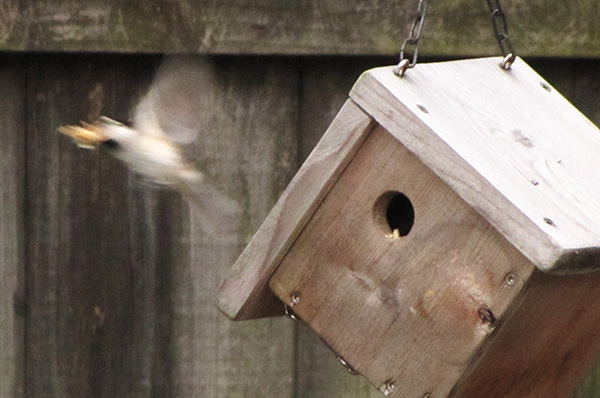
Thursday a lone chickadee decided to do a little spring cleaning in one of the wren houses.

Chickadee March 26

Thick clouds were moving in, ahead of a line of heavy rain, and the little bird seemed aware that there wasn’t much time for nest clearing.

Chickadee March 26

It made trip after trip into the house, sometimes tossing wood shavings straight out through the door, sometimes carrying them several feet away and scattering them in the honeysuckle.

Chickadee March 26

Chickadee March 26

When the rain arrived, the chickadee kept working a while longer, then it gave up and moved into the cover of the wax myrtles.

As Thursday’s rain cycled into a dreary, cold Friday, I kept watching for the chickadee to return. But there has been no sign of further interest in the nest box.

I suspect the little bird’s interest was never more than a passing fancy, mostly because it was working alone. In the past, the yard’s chickadee nests have been built by pairs of birds working together. (On the other hand, there haven’t been many chickadee nests in the yard, and all of them have failed. Maybe I shouldn’t use those nests for comparison?)

Chickadee March 26

On Saturday I left the yard’s mysteries to take care of themselves while I attended Coastal Crime Fest 2015. This single-day writing conference was sponsored by Mystery by the Sea, The Southeastern Virginia Chapter of Sisters in Crime. The day’s sessions included mystery authors talking about writing and publishing, tales of real-world experience from a retired FBI agent, and a presentation about situational awareness from a pair of self-defense instructors. I’m already looking forward to next year’s conference.

What’s more, Saturday’s conference was not my first writing event this month. Last weekend I attended one of the Hampton Roads Writers’ Traveling Pen Series, a morning-long workshop about paranormal and fantasy writing. The workshop included several very helpful writing exercises, and I was excited to learn that the guest speaker, Vanessa Barger, will be presenting more workshops at the Hampton Roads Writers’ 2015 Conference in September.

After both of my recent writing adventures I rushed home brimming with inspiration, eager to write something new. Or revise something old. Or maybe, most alluring of all, read something timeless. (Hopefully I will do all three while watching a chickadee nest…)

Chickadee March 26