From the Summer Archive

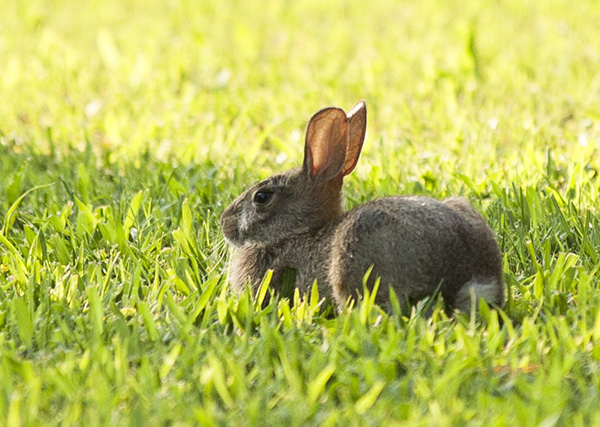
Rabbit July 29

Today’s winter storm should bring nothing more than miserably cold rain and a few flurries to our area, but I decided to stay inside anyway. I dug out my digital to-do list, pulled on my favorite socks, and settled in for an afternoon of computer work. Mid-way through organizing my 2014 photo archive, I opened a forgotten folder and found a forgotten cache of summer.

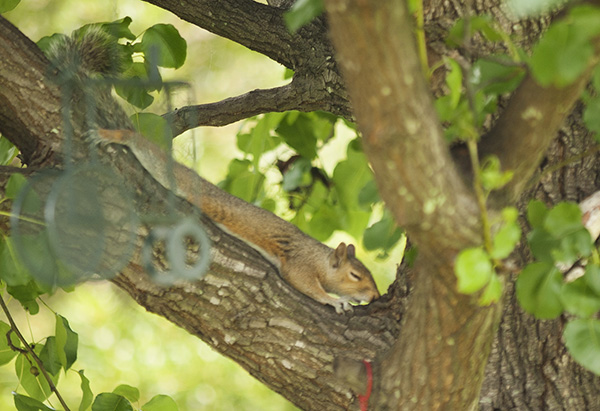
Squirrel July 8

These images don’t make my house warmer, and they won’t melt snow or ice, but they reminded me that summer is only a few months away.

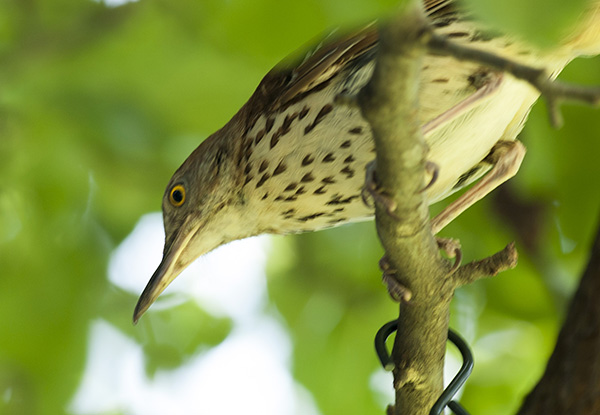
Brown Thrasher July 26

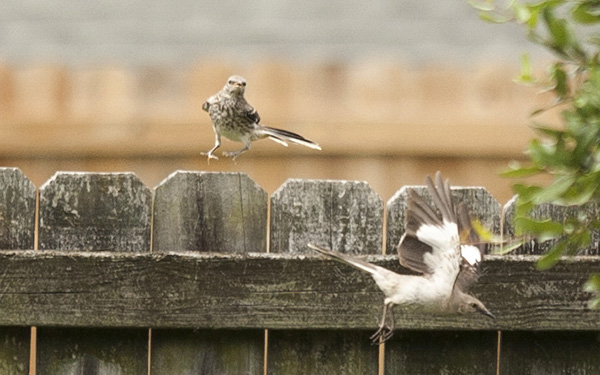
Mockingbird July 20

It won’t be too long before spring rustles in — waking the yard’s flowers, urging birds to nest, and breathing life into new generations of insects.

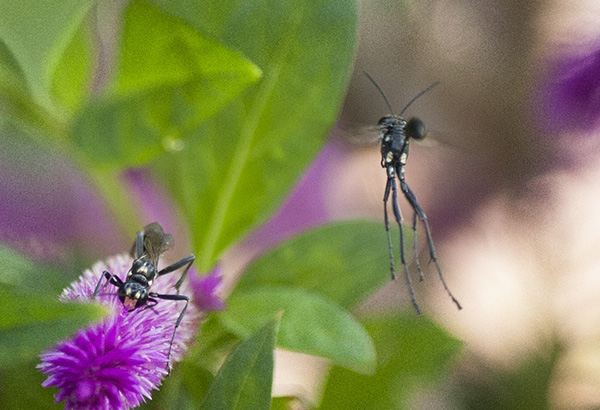
Wasp Aug 31

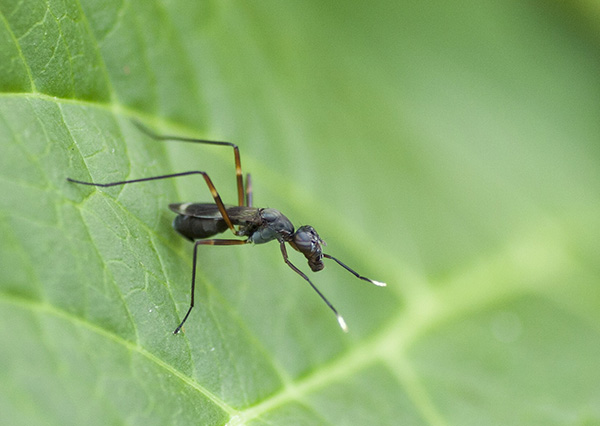
Unknown July 6

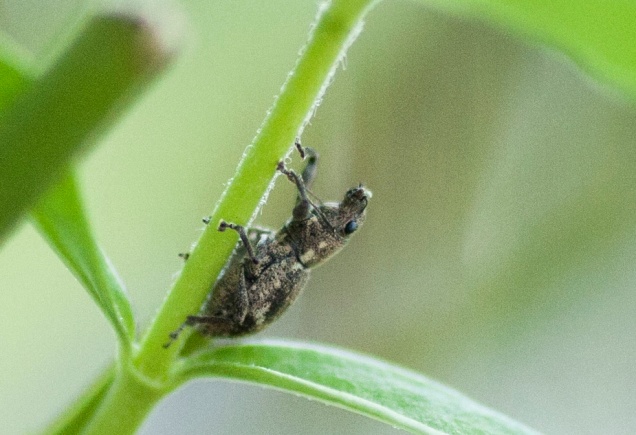
Unknown Beetle Oct 10

Soon, sooner than February ever lets me imagine, it will be time to put away my favorite socks, turn off the heat, and open all the windows.

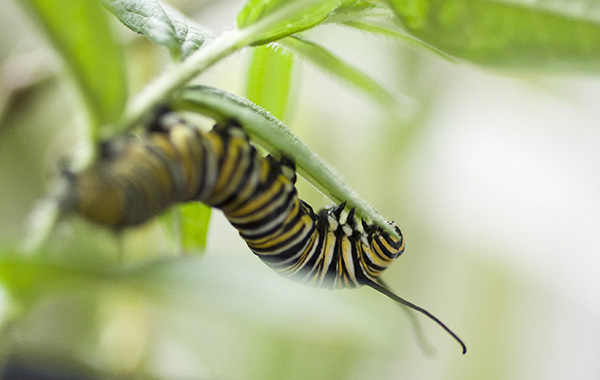
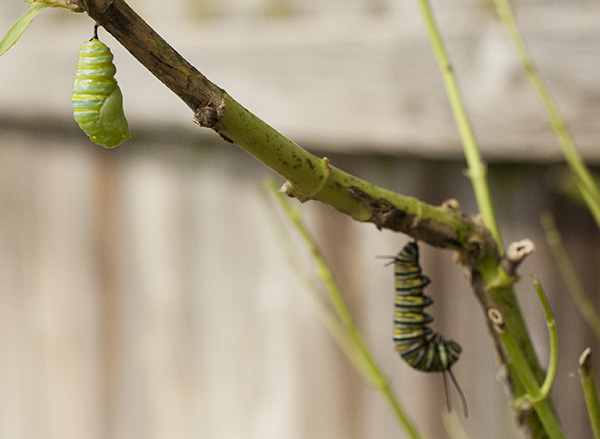
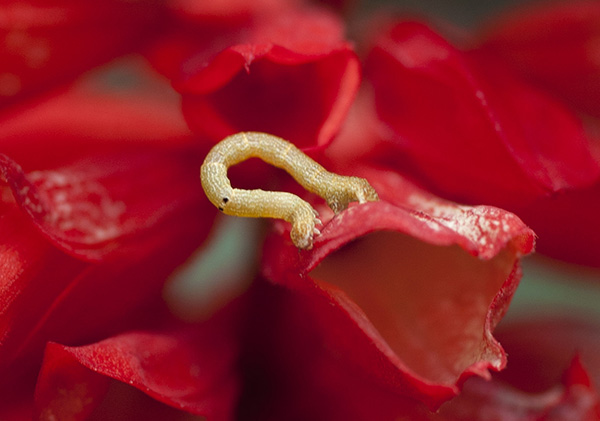
Caterpillar July 28

Soon…

Hydrangea June 27

January Sunrise

Sunrise Jan 11

After my last post, life became a bit hectic (as it tends to do from time to time.) I wasn’t the only one affected by November and December’s frantic rush. My writing friends’ schedules suffered similar disruptions, and January found many of us returning to projects in various stages of completion. So our annual writers’ weekend at the beach felt particularly well-timed this year, and the icy sunrise I photographed on our last day has been tugging at me, demanding to be my first blog images of 2015.

Sunrise Jan 11

Two weeks have passed, but the warm infusion of inspiration hasn’t waned. Now it’s time to gather my notes and begin a manuscript revision that is long overdue…

The Yard’s First Monarch Butterflies

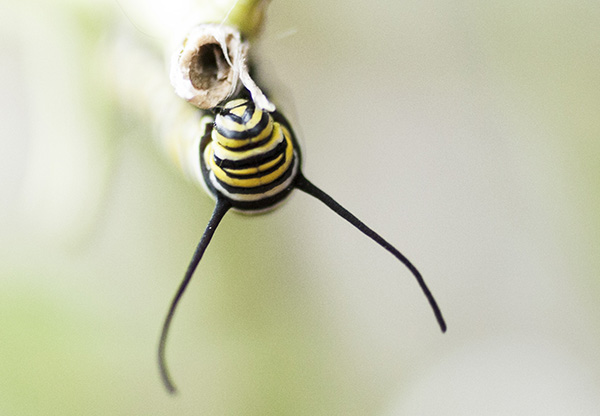
Monarch Caterpillar Sept 23

Butterfly metamorphosis is one of nature’s most spectacular spectacles. I’ve always wanted to see the whole cycle, and this fall the yard cooperated. It started with nine caterpillars feasting on the milkweed.

Monarch Caterpillar Sept 23

Monarch Caterpillar Sept 23

Five survived to maturity. One by one they stopped eating, anchored their last pair of legs with silk, and slipped into the characteristic upside-down pose that precedes a monarch caterpillar’s final molt.
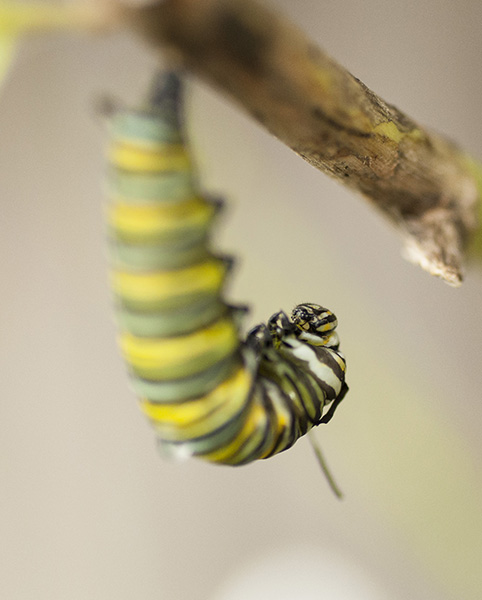
Monarch Caterpillar Sept 25

Then they began their transformation.
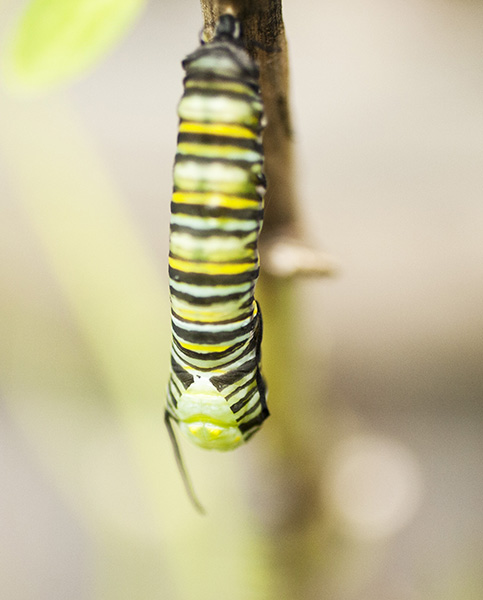
Monarch Caterpillar Sept 25

Monarch Caterpillar Sept 25

One died before completing its molt…

Monarch 5 Chrysalis Sept 30

…but the other four safely hardened into chrysalises, where they remained for the next two weeks.

Then:

This slideshow requires JavaScript.

One by one they emerged, the first during the morning of October 10th and the last close to noon on October 11th.

This slideshow requires JavaScript.

I was too excited to remember my camera, most of the time, so I only have a few photos for three of the four.

This slideshow requires JavaScript.

But I managed to capture a full sequence for one of the monarchs. The following slideshow covers a period from September 25th to October 11th.

This slideshow requires JavaScript.

All four butterflies struggled in their first moments of flight, crashing a few times as they tested their wings.
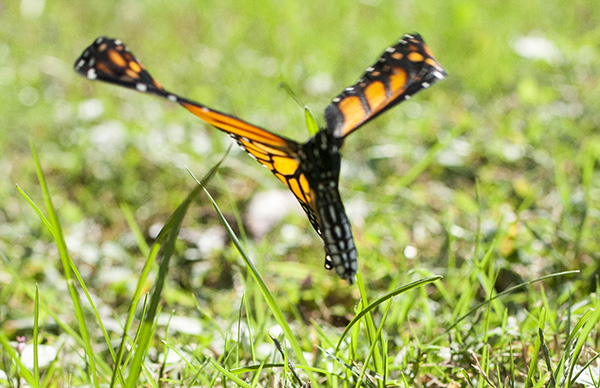
Monarch 4 Oct 11

Monarch 4 Oct 11

But after a few hours of short flights with long rests between, all four took to the air and fluttered off in search of nectar.

Monarch 4 Oct 11

I wished, in the moments after watching them leave the yard, that they might stay a while longer. Then I took a deep breath and wished them warm winds to ease their southward journey.

Monarch Caterpillar Sept 24

Whatever fate finds my four butterflies, their brief weeks in the yard contributed something permanent and lovely to my world. I hope they thrive during their long migration, and I hope they stop as often as possible, each time bringing something lovely into someone else’s world.

Monarch 1 Oct 10

Hellbender Salamanders

I spent countless hours, when I was young, exploring the creek that ran through our woods. I found crawdads and snails, snakes and minnows, darters and stream lamprey. I also found an amazing variety of small, slippery salamanders, the kind that lived in every creek in the county. But I never found a hellbender.

Woods

I didn’t know hellbenders existed until one of my classmates brought one to school. I was fascinated, but I was also jealous. So jealous that I didn’t want to look too closely at the giant salamander, which I remember as a vague, slimy shadow, curled up and completely covering the bottom of a five-gallon bucket. Instead of participating in the general excitement over the hellbender, I hung near the back of the crowd, wishing the bell would ring so that I could go home and catch one of my own.

(As with all of my memories, it’s possible this story isn’t true. The past is treacherously malleable, changing as I change, fading as I age. It’s possible that I stared at the hellbender for hours. I might have reached in and touched it. There might have been some other creature in the bucket, or there might not have been a bucket at all.)

I never did find a hellbender of my own. Not in my creek (I realized later it had always been too small and shallow for hellbenders) and not in any of the other creeks I visited. But I never quit looking.

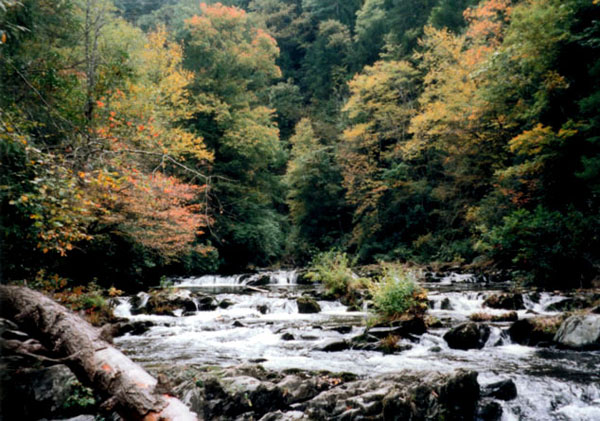
Abrams Falls

I now live in eastern Virginia, where there are no hellbenders. My childhood creek belongs to someone else, and hellbenders are increasingly rare, even in suitable creeks. At this point, my chances of finding a hellbender are roughly equal to my chances of finding a dragon. But the story isn’t over. There is hope for the future, for hellbenders and for me. Conservation efforts are making progress, so perhaps hellbenders won’t disappear altogether. And the next time someone shows up with a bucket full of wonder, I won’t be too jealous to look.

Northern Black Racer Snake (Ophidiophobia Alert!)

A few weeks ago, when the wren house was invaded by rodents, I half-jokingly said to my husband, “What we need is a snake.”

Snake Oct 14

Apparently the yard was listening.

Snake Oct 14

(My first instinct was to label these photos “Eastern Rat Snake.” A few clicks through the Virginia Herpetological Society’s website changed my mind, and their quick response to my e-mail ID request confirmed that our visitor was a Northern Black Racer.)

Snake Oct 14

I gave the snake an hour or so, to recover from the fright of being photographed by a pajama-clad woman carrying a noisy camera, then I measured the fence with a ruler. Each board in the fence is a little over five inches wide…

Snake Oct 14

…and the snake was about seven boards long.

Snake Oct 14

Perhaps that’s big enough to tackle the wren house rats? Because after we took down the wren house, one of the rats moved into a small pile of branches we keep forgetting to haul away. Today, the snake moved into that same pile of branches.

Snake Oct 14

 The last time we had a rat problem, a hawk solved it. I think a snake is an equally elegant solution.