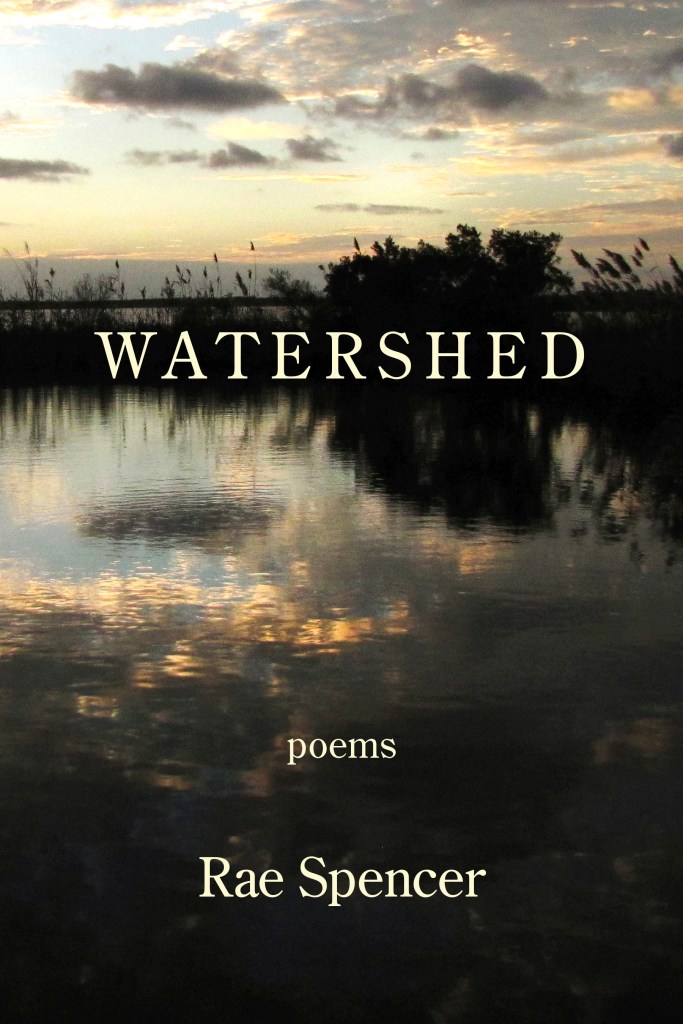
I’m delighted to announce that my first poetry collection, Watershed (Kelsay Books), has been released in paperback and Kindle ebook formats. The paperback ($20/US) is available through the Kelsay Books website (here) or through Amazon (here), while the Kindle ebook ($9.99/US) is available through Amazon (here). (For more details, I’ve created a permanent page for Watershedhere.)
Watershed front cover: a pale sunset image of clouds and sky over a pool of water, which reflects the clouds and sky, surrounded by seagrasses and shrubs. Text on the cover reads: Watershed, poems, Rae Spencer.
The poems in Watershed are mostly autobiography, written within my nostalgia for the landscapes of Tennessee, my journey into Virginia’s coastal landscapes, and my tenuous understandings of how “growing up” changes my gaze.
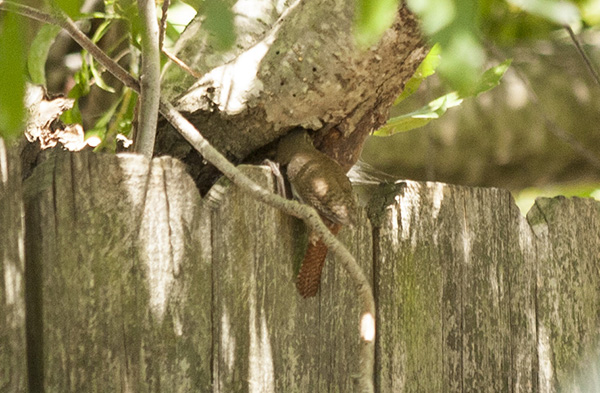
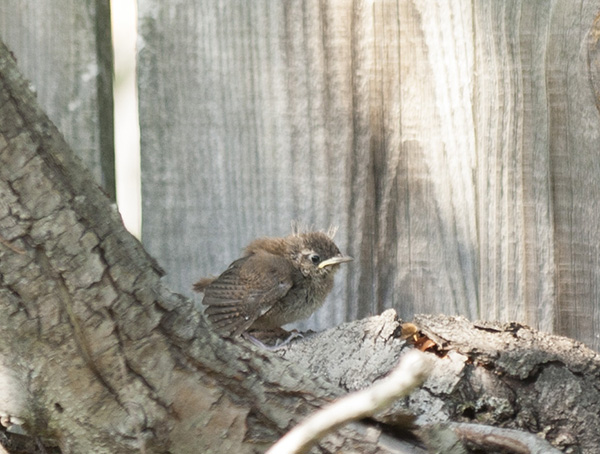
Photograph of a chickadee fledgling perched on our deteriorating fence. The young chickadee is shedding downy nestling feathers, while the fence’s aged wood is cracked and weathered.
As I pondered this post, how to introduce my debut collection, I finally grasped the word connection between debut and debutante. How ridiculous to contrast myself–middle-age, married, and profoundly awkward–against the idealized debutantes of historical romances.
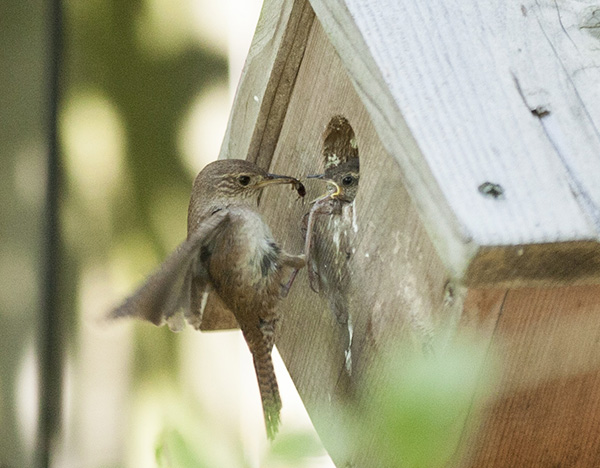
Photograph of my reflection in a window. My face is hidden by the camera I used to capture the image. My graying hair is shoulder-length in tangled layers. I’m wearing a sleeveless shirt, so the tattoos on my hands and arms are visible–an ink collection of flora and fauna.
And yet, here I am, a debut author sending my first poetry collection into the world. I’ve loved every minute of the process, from the writing to the planning to the organizing to the submission to the rounds of editing after acceptance, all the way through this final phase of setting up author pages and posting announcements. I suppose all of this means that I’m finding my way.
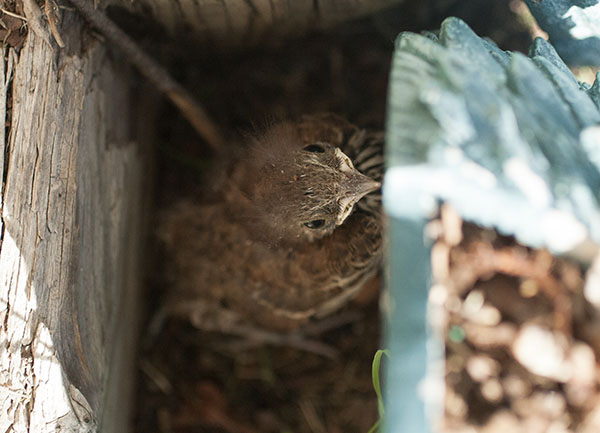
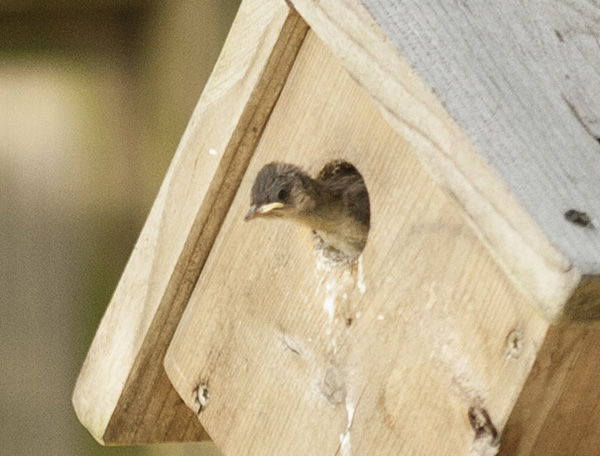
Photograph of a brown thrasher fledgling hiding in a nook between a planter and our fence. The little fledgling is brown-and-tan-striped with the exaggerated beak, forehead, and eyes that render baby birds endearingly cute.
Finding my way to where?
To here, for now. To exactly where I am.
Photograph of an osprey passing overhead with a large fish grasped in its talons. The osprey’s muscular wings are fully extended, long tan-striped primary feathers spread at the tips, and its sharp beak and eyes are turned toward some unseen destination.
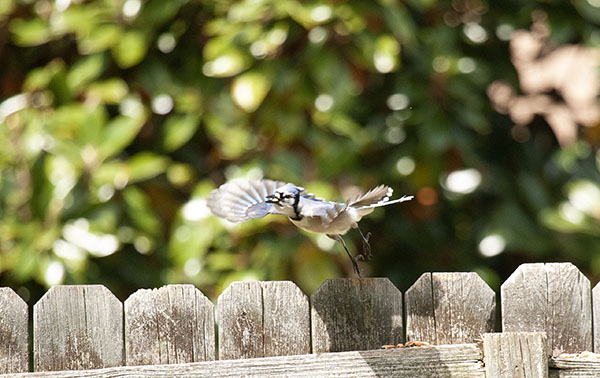
Photograph of a blue jay in the process of taking flight from the top of our wooden fence. The blue jay’s wings are extended, tiny black feet stretched into its launch. The bird is carrying in its beak a peanut, selected from a small pile of peanuts we left on the fence.
To a small yard in a sprawling suburb, somewhere in the middle of life’s extremes, poised between the lush luxuries of nostalgia and hope. There’s always something precarious on the horizon, but, for today, I’m here.
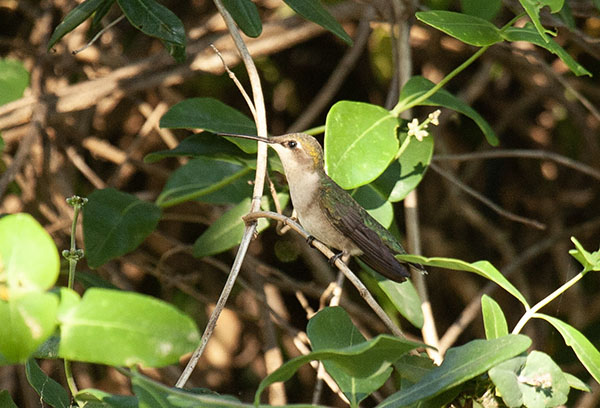
Photograph of a hummingbird perched on a woody vine of honeysuckle. There are no honeysuckle blooms in frame, so everything is green and brown, including the hummingbird’s feathers.
The following links lead to articles, essays, and posts that are more important and more interesting than my debut poetry collection:
Each spring, our semi-wild population of suburb mallards leave their lakes, ponds, and canals in search of private nesting habitats. This local migration often brings pairs of mallards to the yard, though none have stayed to nest. Until this year.
In this photo, taken April 29, five baby mallards huddle under their mother as she stands on a rock beside our pond. A sixth baby sits on the next rock over. These mallard ducklings were less than 18 hours out of the egg and are only half of the clutch. Six more babies were waiting in the nest behind their siblings.
Less than a week after I posted about the dragonfly pond, a pair of mallards arrived and began redecorating the pond. They shoved rocks from the border, collapsed minnow caves, uprooted plants, stirred sediment into columns of mud, and added enough nutrient (in the form of duck poop) to start a massive algae bloom.
In this photo, taken March 3, a pair of semi-wild mallards visit the pond. The male mallard floats near the center of the pond, preening his wings, while the female searches for underwater food. The water is still relatively clear and the pond‘s rocks and plants are still somewhat in place.
This photo, taken March 7, shows the view from our kitchen window as the mallards nap in the pond. Both ducks have their heads resting along their backs, beaks tucked into the feathers between their wings. The water is turbid and dark, with scattered remnants of uprooted plants. The rocks are still mostly in place, though that didn’t last.
Photo of the pond, taken March 14, showing filthy greenish-brown water. The pond heater is still deployed, though I removed it shortly after. A board shaped like a fish floats in the far end of the pond.1
The dragonfly pond soon looked and smelled like a cattle pond.
The ducks ate everything they could catch in the water. Minnows and dragonfly larvae, damselfly larvae and snails. Anything that swam or wriggled.2
We shooed and herded the pond-wrecking mallards, who returned day after day for further wreckage. I complained to family and friends about the mallards’ destructive invasion, but I also hoped for a nest. Truth be told, I always hope for nests. Plus, I have nostalgic affection for ducks.
This photo3 shows me at some early elementary school age, complete with crooked bangs, ill-fitting shorts and halter top, knobby knees, and a welter of mosquito bites. I’m holding our pet duck Fred, who was very spoiled.
This photo, dated 1975, shows a group of mature white ducks in our Tennessee back yard.
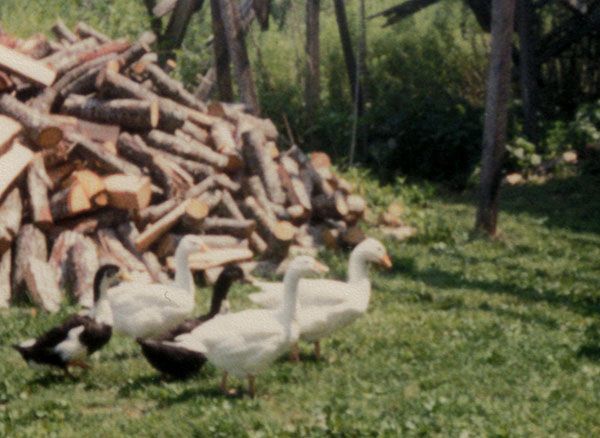
In this later photo, probably late 1980s, three white geese and two black-and-white ducks amble past a newly delivered cord of winter wood in our Tennessee yard.4
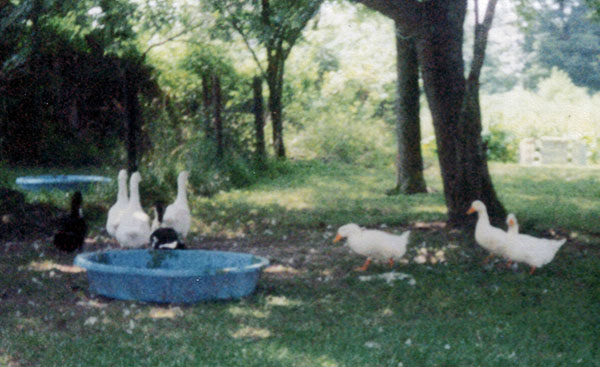
This photo, dating to the late 1980s or early 1990s, shows three white geese, two black-and-white ducks, and three white ducks visiting their blue plastic wading pool in our Tennessee back yard.5
Hoping to lure the mallards away from the pond for at least a few hours each day, I purchased a blue plastic wading pool (definitely a theme in my lifelong efforts to keep waterfowl happy) and an extra bag of wild bird feed. Pool and feed in hand, I set up a duck station near the fence in our Virginia back yard, including steps for easy entry into the pool. Then I herded the mallards out of the pond and toward the pool.
In this photo from March 12, a blue plastic wading pool is wedged into the back seat of my car. Many thanks to the very patient Target employee who brought the wading pool out for curbside pickup and helped load it while we both fought off fits of the giggles because who buys a wading pool in March? For ducks? While masking and social distancing because COVID is not over? (I’ll add that COVID is still not over. Especially for families, like mine, who have immunocompromised households.)
Not surprisingly, the mallards saw peril in the duck station and refused to try the wading pool. At that point, the pair were still semi-wild, after all. They retreated into the pollinator beds and rummaged through duff when I was in the yard, then circled back to the pond when I went inside.
And the pond grew more and more fetid. (I had almost forgotten the smell of our chicken house in Tennessee, and sometimes the yard when our flocks grew too populous, but now I’ve been reminded.)
In this photo from March 14, the male mallard watches warily from behind the irises that shore up one end of the pond. Neither of the mallards tried the wading pool until after I quit trying to convince them to try the wading pool.
When the female mallard built her nest in the irises and began laying, we stopped all efforts to shoo or herd or otherwise interfere. Almost immediately, the mallards took to the wading pool for luxurious sessions of bathing and splashing.
Photo from March 21, showing the female mallard bathing in the wading pool as the male mallard stands guard.
Photo, dated April 14, showing the female mallard bathing in the wading pool as the male mallard stands guard.
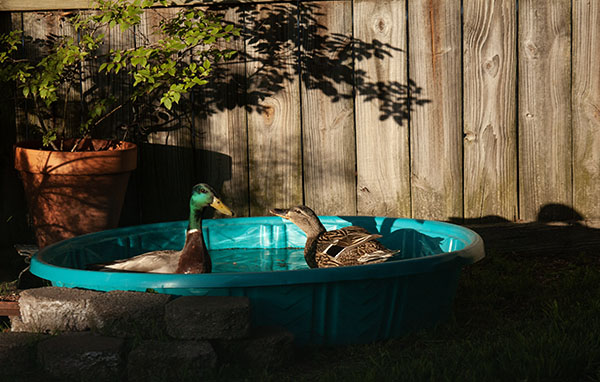
Photo, dated April 18, showing both mallards in the wading pool.
Resigned to a lengthy mallard residency, we invested in a pump and filter for the pond. For the next month, I cleaned the pond filter daily, dumped and refilled the wading pool every other day, put out feed each morning and evening, and lingered in the kitchen window for hours on end, watching. The mallards hunted in the pond (and further rearranged the rocks), bathed and basked in the wading pool, ate their feed and grazed through the yard, and generally unwilded until they were as comfortable in the yard as our domestic flocks had been in the yard of my childhood home.
And while the mallards unwilded, the nest grew.
Photo, dated March 20, of the nest with a single egg.
Photo, dated March 28, of the nest with five eggs.
Photo, dated April 1, of the nest with nine eggs.
On April 1, with nine eggs in the nest, the female mallard settled to incubating. Giving up all pretense of productivity, I sat in the kitchen window, day after day. While she sat on her nest. Day after day.
Photo, dated April 14, of the female mallard on her nest.
Photo, dated April 18, of the eggs nestled in layers of down.
Photo, dated April 18, of the female mallard on her nest.
And then, on April 28, the hatching commenced. All afternoon the mallard fidgeted and turned and tended, eating some of the discarded shells and membranes, tucking the rest under the nest’s foundation of dried grasses. By nightfall the nest was filled with ducklings instead of eggs.
In this photo, taken April 28, a freshly hatched mallard is nestled deep into the downy feathers lining the nest. The female mallard is half-standing in the nest, with two still-unhatched eggs visible beneath her.
Here a duckling, still damp from hatching, is just visible under the female mallard as she stands in her nest.
Here the ducklings are getting their first views of the world from inside their nest, still guarded by their mother.
I set my alarm for sunrise the next morning, certain that the female mallard would lead her brood away as soon as the hatchlings were mobile enough. I didn’t want to miss a moment of their brief stay in the yard.
April 29. The now-fluffy-and-dry baby mallards peer out from around their mother as the little family begins to stir in their nest.
The baby mallards follow their mother from the nest for their first outing. In this photo, two babies hover under their mother as she stands on the rocks just in front of the nest.
All twelve eggs hatched seemingly healthy babies. Their first clamber down the rocks was eager for some and timid for others. In this photo, one of the eager ducklings takes an awkwardly long step down from the first rock.
The eager duckling from the previous photo experiences a bit of a rough landing in the water. The impromptu dive didn’t phase the duckling, which swam busily away.
The more timid ducklings took more care climbing down from the nest. In this photo, a group of three ducklings linger on the first rock as one of their siblings stretches a careful foot down toward the next step.
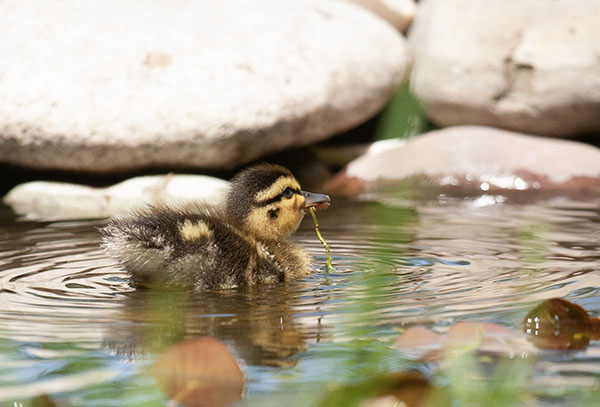
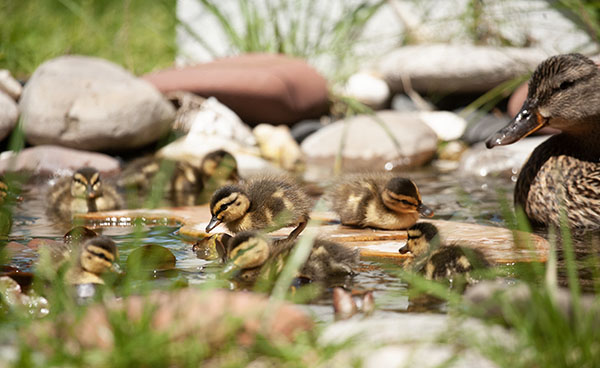
The ducklings tasted everything they found. Here, a baby mallard floats on the pond and nibbles at a long plant stem.
The fish-shaped board proved a popular resting spot for the ducklings as they practiced swimming and diving and eating. Here, two ducklings perch on the board while their siblings swim around them. The female mallard is just visible in frame, keeping an eye on her brood.
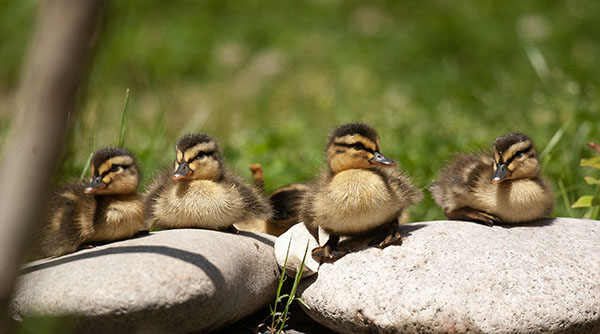
The ducklings also rested on the pond’s bordering rocks, which were warm from the sun. Here, four ducklings sit on the warm rocks.
A baby mallard, less than 24 hours out of the egg, perches on one of the warm rocks bordering our small dragonfly pond.
Exhausted after their first few swim lessons, the mallard family returned to their nest between adventures. Here, two of the babies have tipped over into awkward sleeping positions on the rocks while their siblings gather in the nest beneath the female mallard.
And, of course, they didn’t stay.
I followed the mallards as their mother led them out of the yard and down our street and through a playground and up the next street over to a house on a canal without a fenced back yard. The homeowner was working in his yard when our odd parade arrived, and he nodded and shrugged when I waved from the sidewalk across the street. He told me that mallard mothers lead their brood through his yard, the only unfenced yard along the canal, all spring long. They head for the canal despite its dangerous populations of snapping turtles, snakes, and bullfrogs large enough to eat a baby duck. We agreed that yards are safer but mallards need canals.
Then I trudged home alone, wishing for a world both more and less wild.
I was shocked when the mallard led her brood back, that evening. My husband saw them coming up the sidewalk and called for me. The female mallard had guided her dozen day-old ducklings out into the canal and back again, safe and tired. We opened the gate and welcomed them home, pond wreckage forever forgiven as the sleepy family spilled back into their nest.
The next morning they left for good, of course. The yard, for all of its unwild safety, is not meant for mallards. Nor are mallards meant for the yard.
They haven’t returned, and they won’t. At least, not as the same little family that left. But every mallard I see, for all my years to come, will be one of them.
The Unwild Mallards

The unwild mallards were stubborn and messy
Unwily in their need
And the pond was water enough for nesting

An unwild nest
In unwild irises

A quick meal and a bath
Then back to the nest

Days growing longer and hotter
In the unwild yard
With unwild waters

And then
The unwild dozen

That afternoon, they left
Then returned for one last night
Before they left for good

Heading toward the good wild waters
Where unwild mallards might learn
To be wild
Video comprised of still images and iPhone video clips of the mallards’ time in the yard. Text over the images repeats the poem printed above. The audio is a separate recording made in the yard as I edited this video. Traffic noise and wind dominate the audio, but crows and a blue jay make guest appearances.
Footnotes
1 We added the board after removing a commercial floating planter/island. We removed the island because it was ruined, then added the board because we felt sorry for the minnows that had enjoyed hanging out under the island. (Click here to go back.)
2 The ducks were not so efficient as to depopulate the minnows and invertebrates. I’m not certain how anything survived, between the feasting and the fouling, but some survived and carried on. Currently, the pond is teeming with baby minnows and every surface is clumped with snail eggs. (Click here to go back.)
3 This is another of my oldest sister’s “Rae with pets” series of photos, which span years and will likely continue to appear on this blog. In the background, two chickens and our shepherd make guest appearances. (Click here to go back.)
4 After our father left, the job of stacking wood fell to me. Mother purchased cut wood from a neighbor, who unloaded it in a heap. I would sort the wood by size and age, stacking it all in our pole shed. The freshest cuts went at the bottom of the pile (to age/cure) and the aged/cured wood at the top. The largest logs started at the left and the smallest kindling at the right. I even sorted the wood according to Mother’s lore: she believed that the hardest woods (usually hickory and oak) burned long and hot, the softer woods (often maple and hackberry, but sometimes others that I didn’t recognize) burned fast and cool, and the evergreens (pines and the occasional cedar) burned oily and deposited more creosote in the chimney. When bad weather was forecast, I brought days or weeks worth of wood to the porch, where it stayed drier than the shed. But Mother didn’t like keeping wood stacked on the porch because warm air escaping through the door woke the woodpile’s insects, who followed the warm air indoors. (I never had cause to doubt Mother’s wood fire lore and would likely stack wood by size and hardness, away from the porch, if we burned wood for heat today.) (Click here to go back.)
5 The wading pool was the closest thing they had to a pond. A second blue plastic wading pool, visible in the background, was in the dog pen and helped our dogs stay cool. The second pool also kept the dogs from digging under the fence because they wanted to play in water. (Click here to go back.)
I regret that I do not have a list of links, for this post, to articles and essays that are more important and more interesting than the small unfoldings in our small yard. I have been tired, of late, and taking a break from the larger world. I will resume reading and exploring and learning once I have regathered my energy, both emotional and physical. In the meantime, please post links of your own, to articles and essays that have helped you better understand the world. (Please also note that I screen comments.)
All of my reading and research keeps circling back to a frustrating conclusion: America’s current crisis runs deeper than I am capable of understanding. There are too many facets, too many fractures, too many nuances.
What I do grasp makes me want to hide, to retreat into my fiction reading list and never pick up another non-fiction book, never read another article or essay or blog post.
It feels as if everything I care about is under attack and there’s nothing I can do about any of it.
And, while nothing is an exaggeration, not much is the hardly-more-comfortable truth.
Even so…
Not much might be a fragile incentive, but it’s compelling when everything is at stake.
I recently read The Next American Revolution by Grace Lee Boggs. She refers a number of times to a quote from Mahatma Gandhi… Live simply so that others may simply live.
This, at least, I understand. Live simply.
Facets, fractures, and nuance.
I can help by living simply.
It is, indeed, not much. It’s also a tiny piece of everything.
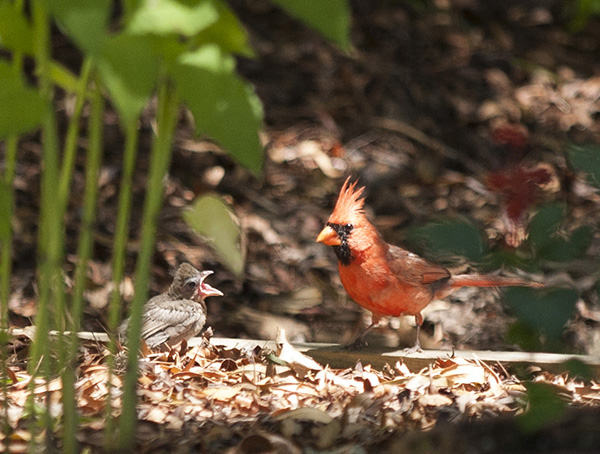
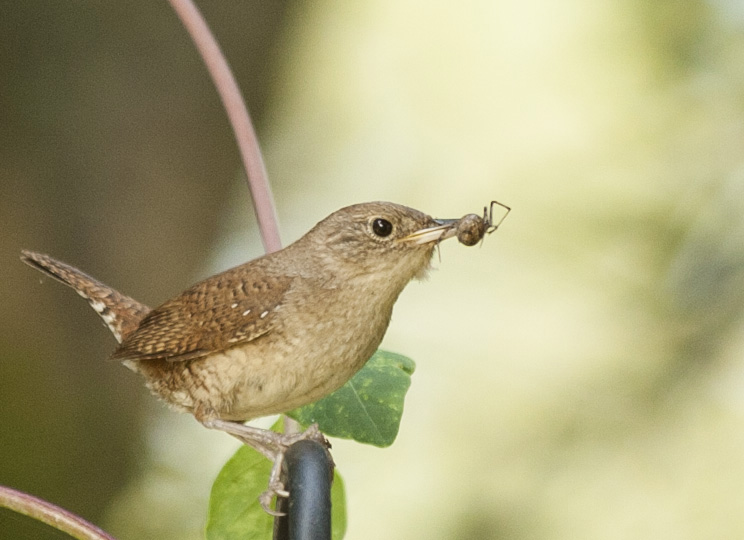
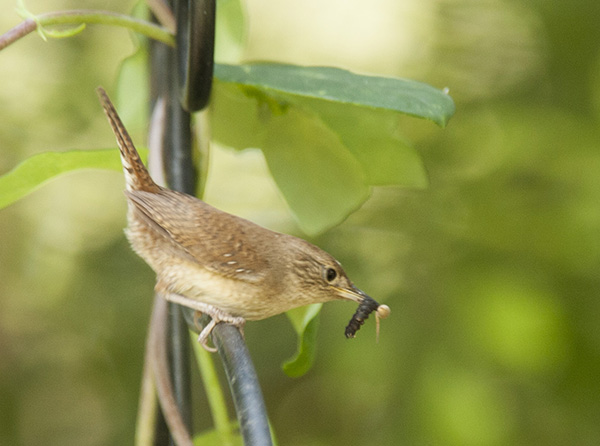
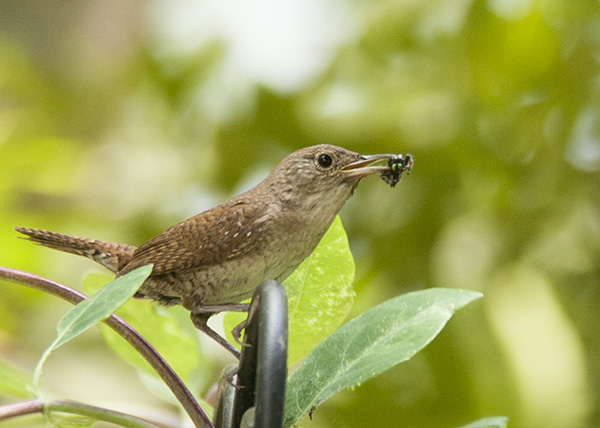
In June of 2015, I noticed that one of the yard’s House Wrens had begun feeding a family of Northern Cardinal nestlings. (Read my initial blog post here.)
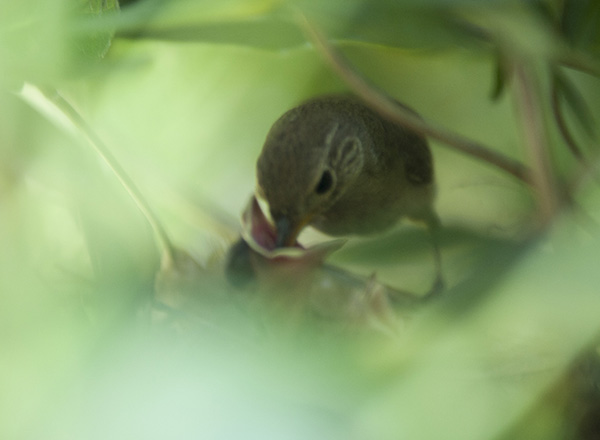
The adult cardinals, especially the male, were also feeding the nestlings.
In that early blog post I wrote, “I wonder if this kind of behavior is common. Have the yard’s birds been feeding each other all along?”
And now, as Paul Harvey might have said, it’s time to post the rest of the story…
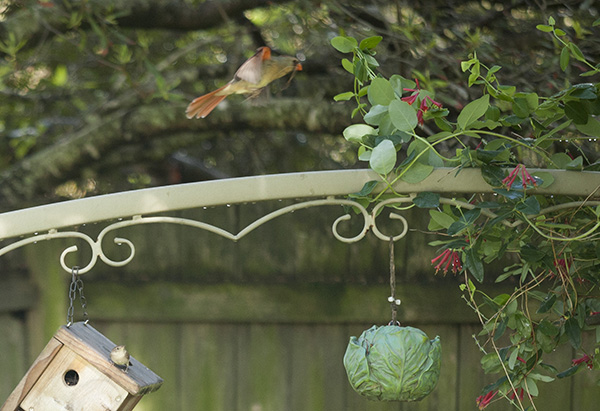
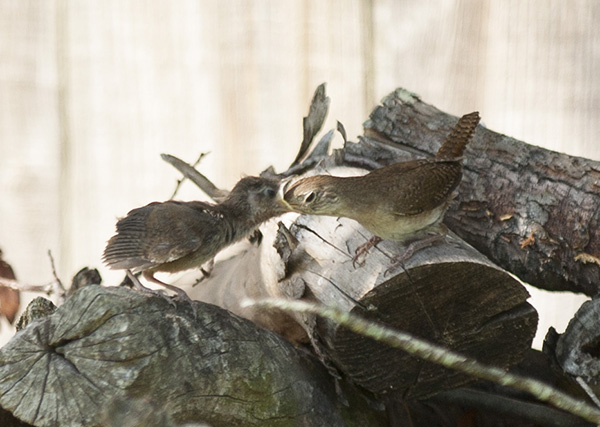
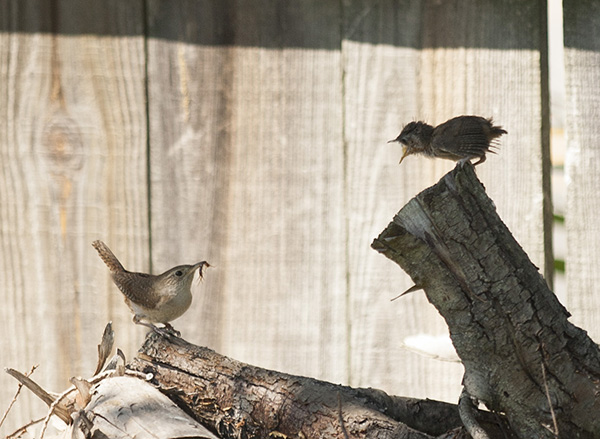
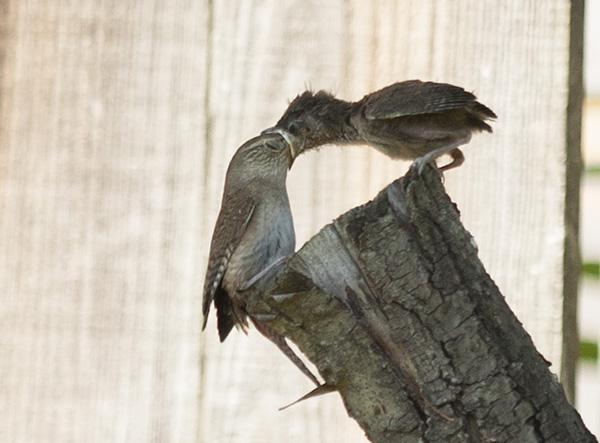
Back in June of 2015, while I was searching for answers online, the wrens’ brood hatched. For a few days the male wren stayed busy feeding both nests, dividing his time somewhat unequally in favor of the young cardinals. But something changed as the cardinals neared fledging. The last time I saw the cardinal nestlings accept food from the wren was on June 5th, and the last time I saw him approach their nest was on June 6th. (They greeted his visits on the 6th with silence.) On June 7th, the young cardinals left their nest.
The yard stayed in a turmoil on the 7th, loud with the cries of hungry cardinal fledglings and nervous cardinal parents. (The male cardinal was particularly aggressive with larger birds that day, much to the dismay of a hungry brown thrasher.)
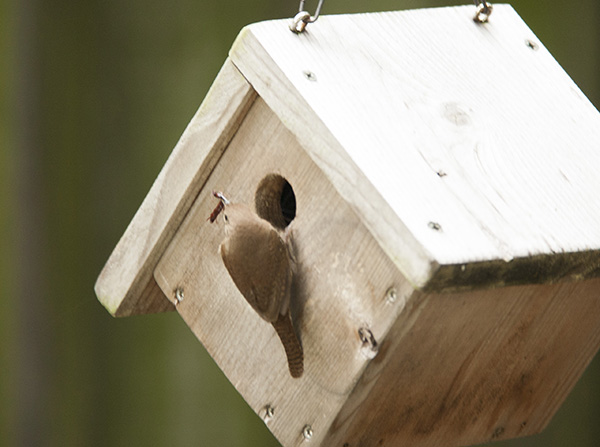
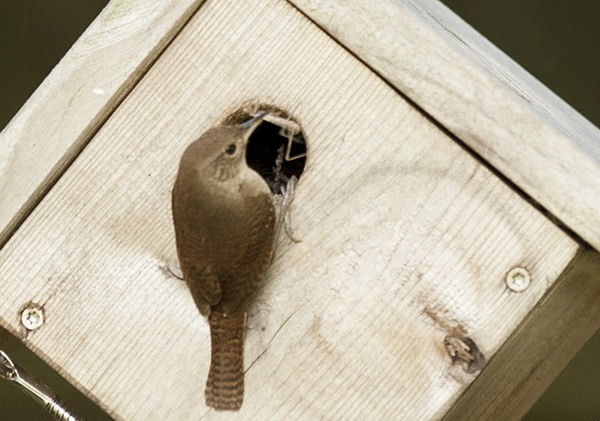
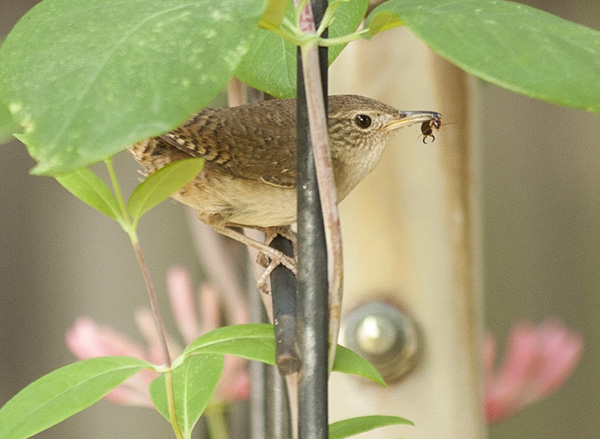
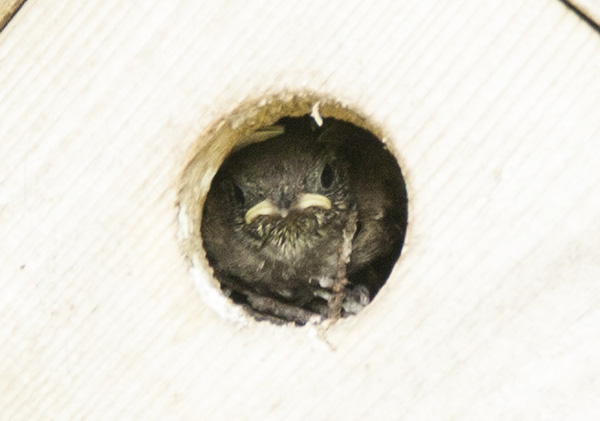
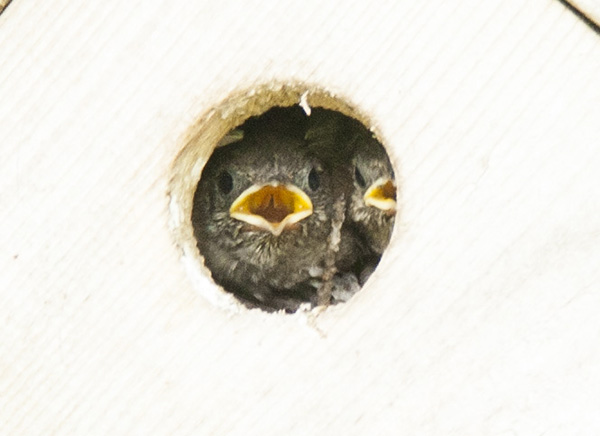
The wren, formerly so devoted to the cardinal nestlings, never approached the cardinals after they fledged. Instead he spent the 7th, and the following days, feeding his own nestlings. The young wrens stayed in their nest box until June 16th and 17th, eating spiders and praying mantises and a variety of other insects brought by their parents.
The nestlings grew bigger and bolder each day.
And their parents worked harder and harder to keep them fed.
By June 16th they showed signs of leaving.
And on June 17th …
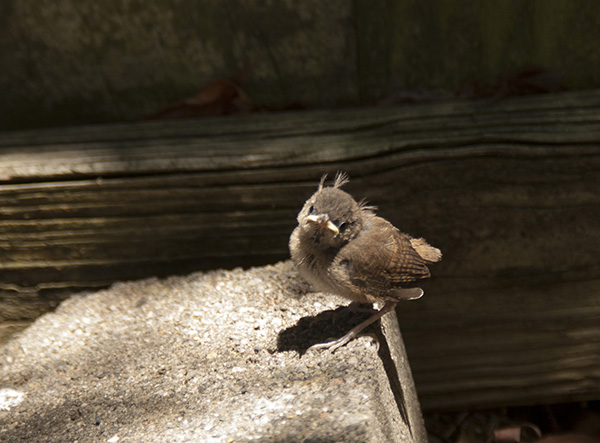
They were out of the nest box, but they were still hungry!
When they left the yard that evening, I felt bereft. As I always do when the yard’s children move on.
I wished, as I always do, to follow the fledglings. Or at least to know their futures. Did any of them survive? Have they, perhaps, visited the yard again in the weeks and months since?
Every so often, time slips sideways. One week it’s May, and the next week July scrolls into August. I have photos and bills to prove that June actually happened, but it happened in a blur of travel, home repairs, and unhoarding.
My unhoarding saga began after Mother died, when the extent of her hoarding (and mine) could no longer be overlooked.
Mother’s hoard was generational. Parts of it accreted as she raised five children, other parts were passed down from two much-loved grandmothers, a formidable mother, a pair of admired aunts, and a somewhat difficult mother-in-law. With each obituary and burial came new photos, letters, books, furniture, glassware, doilies, and quilts.
The women who raised Mother had filled their homes with small treasures, and, because each of them had very real memories of hard, empty years, they treasured everything. Everything held a story, and all of the stories were passed to Mother (who had no siblings) for safe-keeping.
Fighting her own memories of hard, empty years, Mother made room for everything, stuffing her house to the eaves with family history. She made room in her heart, too, and genuinely loved this patchwork collection of heirlooms.
She loved it, that is, until it overwhelmed her.
The hoard took over Mother’s house, just as my hoard was taking over mine. In her house, as in mine, cabinets were jammed full, drawers wouldn’t close, shelves bowed under their burdens, one entire room was given over to storage.
In the wake of Mother’s car accident and death, as I helped my siblings sort and pack five generations of Mother’s belongings, I resolved to make a change. I didn’t want to carry on this tradition, the death ritual of dividing the hoard. Treasures or not, I no longer needed or wanted most of the stuff I had been hoarding.
Resolve is one thing, doing is another. And unhoarding is ridiculously hard work. It got even harder after I scraped off the easiest layers — books I was never going to read, clothes I was never going to wear, dishes I was never going to use. Then came the emotional stuff. Tattered childhood books. Scarred toys and threadbare stuffed animals. Memory-laden trinkets and gifts that warmed my hoarder’s heart.
I spent hours and days and weeks putting off decisions, moving containers from one room to another, painting around them as I dithered. Some days I was tempted to ship them all off to thrift stores, unopened and unsorted. Other days I fought an urge to unpack everything, to binge on dusty memories.
But I don’t want to live in a box of memory. To be owned by the past. So this summer I’ve been cleaning and repairing toys and stuffed animals. Some few will stay with me, others will go to thrift stores. What can’t be salvaged will be recycled or sent to the landfill. (After being photographed, of course.) I’ve also been cutting up old books, calendars, and posters for use in current and future art projects.
Some memories I’m voluntarily discarding, others have been lost in the commotion. But the house gets lighter and brighter with each newly emptied container, with each completed project.
And it feels like an even exchange — memories for light. Time for time.
I think Mother would approve. I think all of them would approve.