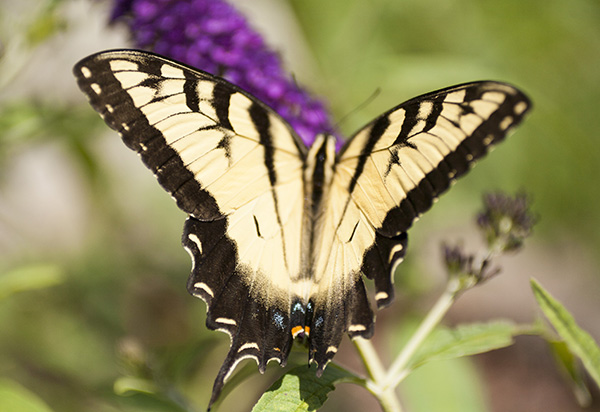
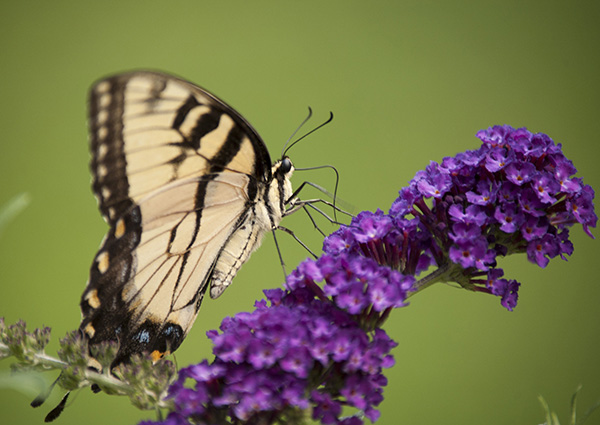
A few weeks ago, this Eastern Tiger Swallowtail was so distracted by nectar that it didn’t object as I crept closer and closer with the macro lens.
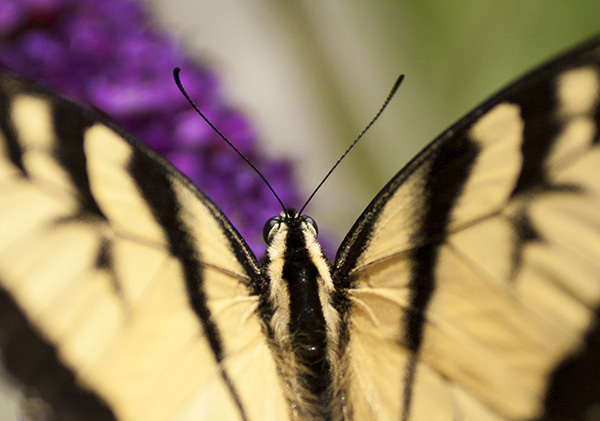
Now my growing butterfly addiction wants me to add Tiger Swallowtail host plants to the yard.
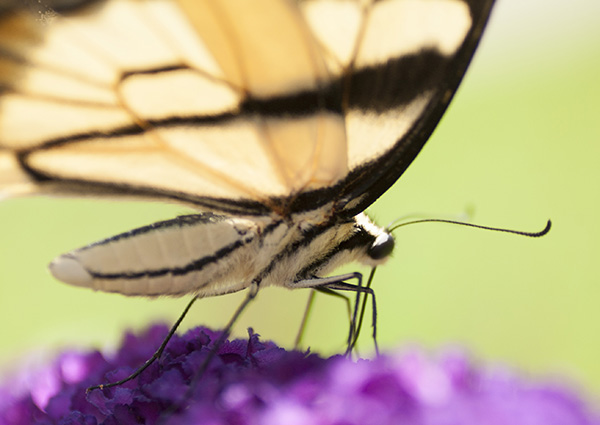
A few weeks ago, this Eastern Tiger Swallowtail was so distracted by nectar that it didn’t object as I crept closer and closer with the macro lens.
Now my growing butterfly addiction wants me to add Tiger Swallowtail host plants to the yard.

After last summer’s monarch success, I was eager to attract more butterflies to the yard. My sister-in-law frequently sees Black Swallowtail caterpillars on the dill she grows in her garden, so I planted a basket of dill this spring. A bit of online research convinced me to plant fennel and parsley, too.

Soon there were eggs.

Then there were caterpillars.


Dozens of caterpillars.


And then the caterpillars began disappearing.
The yard has many caterpillar predators, but I suspect the house wrens were responsible for most of the swallowtail disappearances. I don’t believe any of summer’s early caterpillars survived, though new eggs constantly dotted the parsley leaves.

In late June, the caterpillars molted through four instar stages before the predators found them.


One evening I counted twenty-one caterpillars on the parsley. The next morning, all but one were gone. I spent half the day arguing with myself, debating the wisdom of interfering with the yard’s processes. (Past experience has taught me that nothing ever goes as planned. Complications arise.)
When the final parsley caterpillar disappeared shortly after noon, I caved. I dug out an old butterfly tent I had purchased on impulse several years ago and moved eleven caterpillars from the fennel and dill into the tent, adding “feed the caterpillars” to my daily routine.


They seemed content with the new arrangement, and proceeded to eat every morsel of the remaining parsley, fennel, and dill. When I had nothing left to feed them, I made a return trip to the garden store.

(At this point, the part of me that had argued against adopting the caterpillars said “I told you so.”)

Thirty dollars later, the caterpillars were eating again. There were twelve hungry mouths now, because one of the new fennel plants came with a new caterpillar.

And the new parsley came with a chrysalis hidden deep within its stems, raising my possible butterfly count to thirteen.

As any fan of The Hobbit knows, thirteen is not a happy number. So I wasn’t surprised when two of my adopted caterpillars died of unknown causes during the following days. But those deaths seemed as if they might be the end of my swallowtail setbacks, because the other ten caterpillars gorged until they were ready for their final molts.

One-by-one they stopped eating and began roaming, exploring every inch of the tent. I couldn’t tell if they chose certain spots, or if they simply crawled until they were too tired to crawl any more. Whichever was the case, when they finally stopped, they belted themselves in place with a strand of silk and relaxed into waiting poses.

And then they molted one last time.
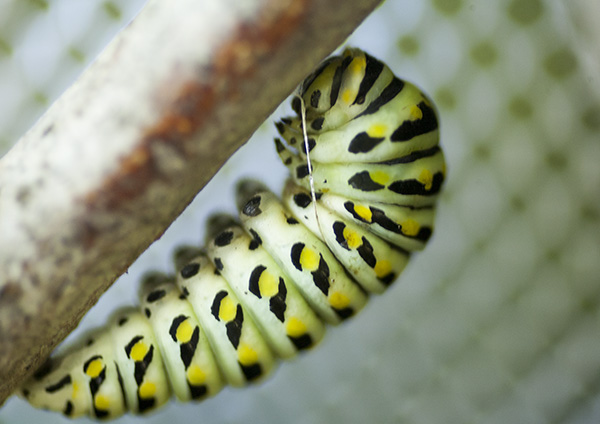
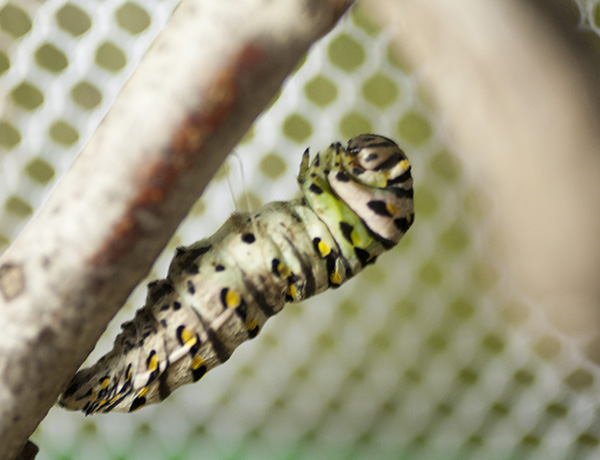


Some of them made brown chrysalises, but most were green.


Before my ten caterpillars finished molting, the chrysalis hidden in the parsley opened unexpectedly. When we released the butterfly, it flew away too fast for photos.
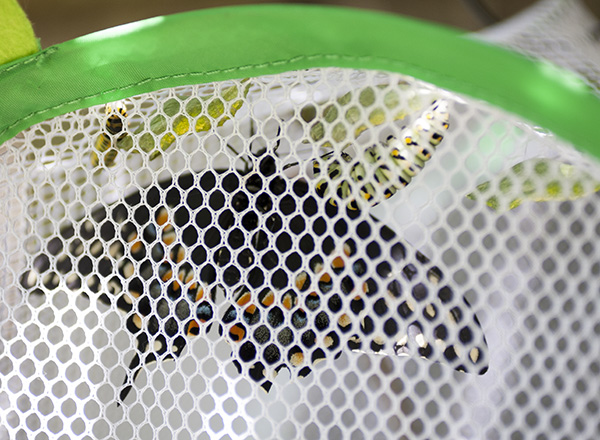
Two days later I woke to find that something had torn a hole in the tent, during the night, and destroyed four of the chrysalises.

(The part of me that had argued against adopting the caterpillars might have muttered “I told you so” as I surveyed the damage.)

Still determined to see butterflies, I took the tent apart and fashioned a new, stronger butterfly habitat out of a plastic storage container. Then the six remaining chrysalises began spending their days outside and their nights in the garage.


Today the first chrysalis opened, and the first butterfly emerged.
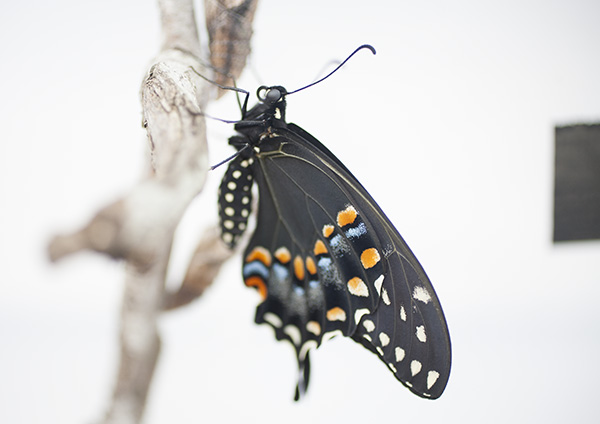
As I watched her fly away in search of nectar, the part of me that had argued in favor of adopting the caterpillars said, “I told you so.”

Next week, after all of my butterflies have flown away, I’ll adopt some of the new caterpillars that have recently hatched on the parsley, and I’ll start all over again.
Summer has filled the yard with flying insects.
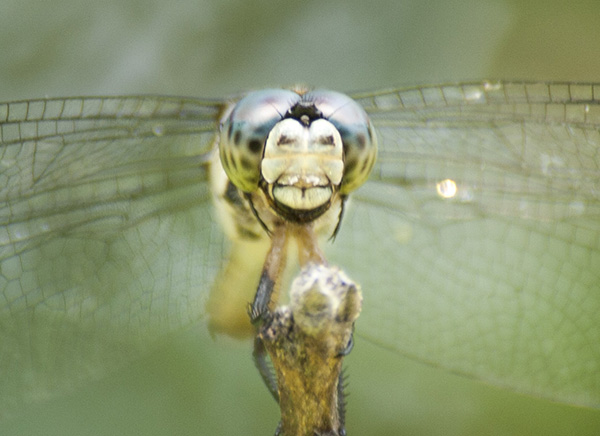
I don’t care for the sudden swarms of biting flies and mosquitoes, but the dragonflies seem happy. They hunt ravenously from dawn to dusk, eating everything they can catch–including flies and mosquitoes.
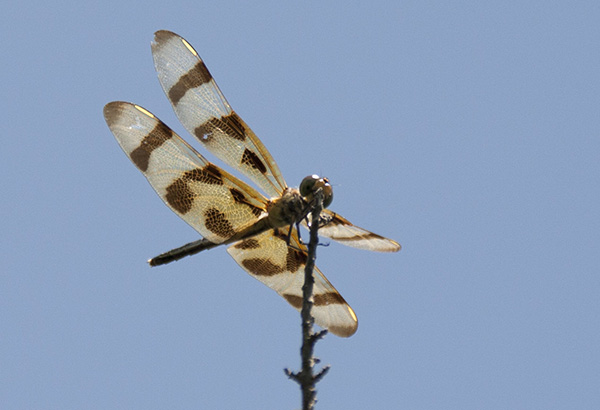
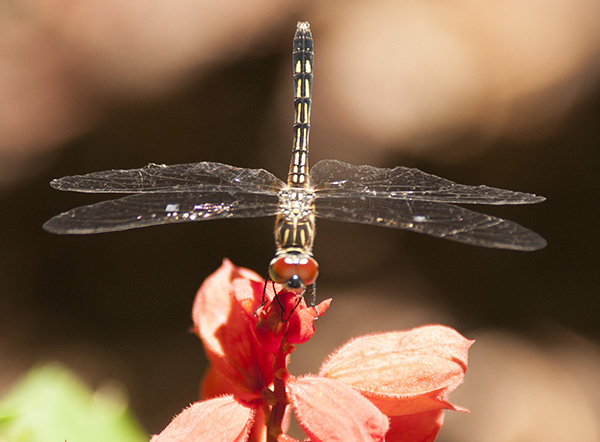
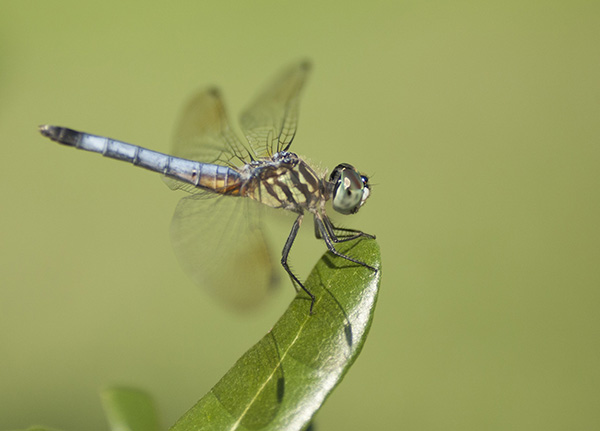
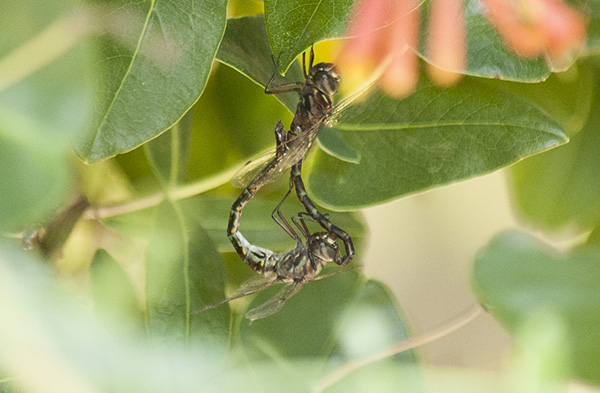
(Of course, they pause every so often to mate.)
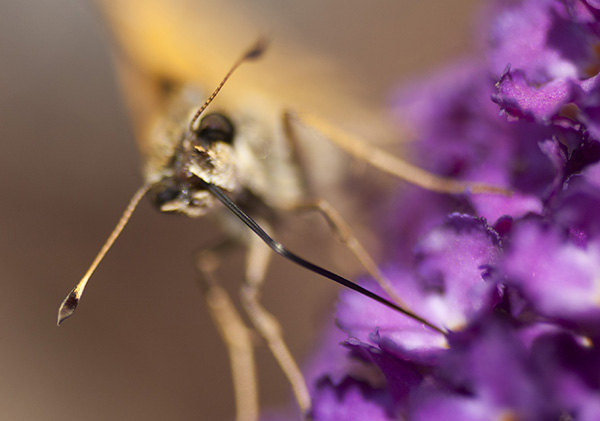
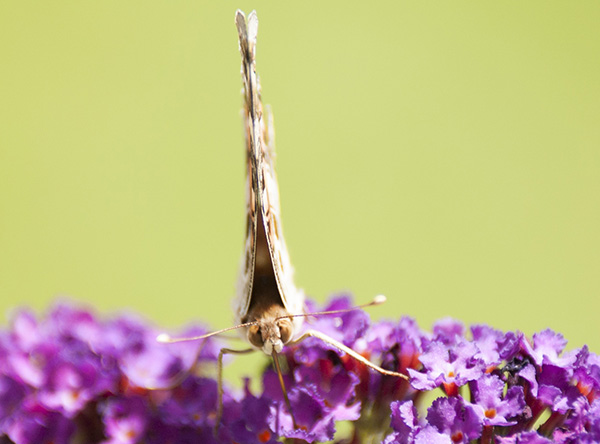
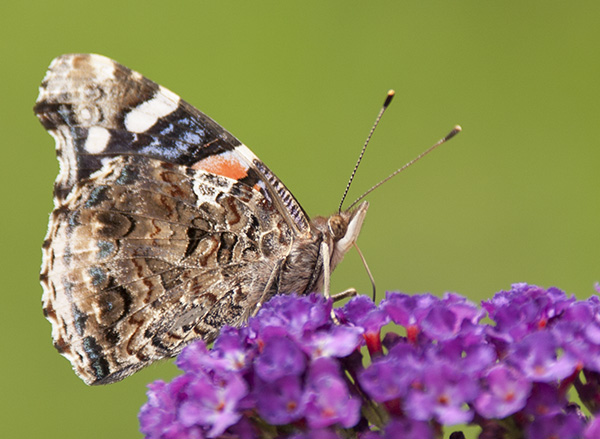
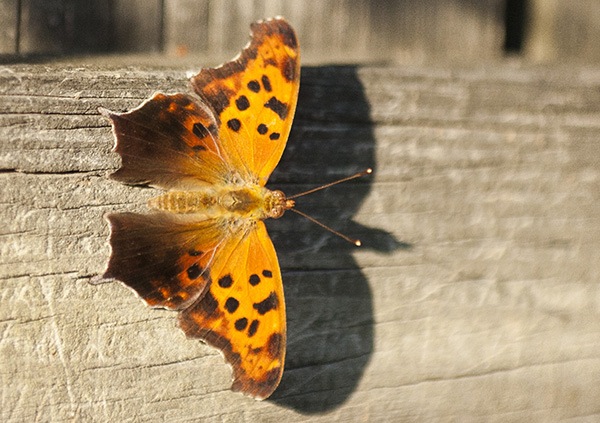
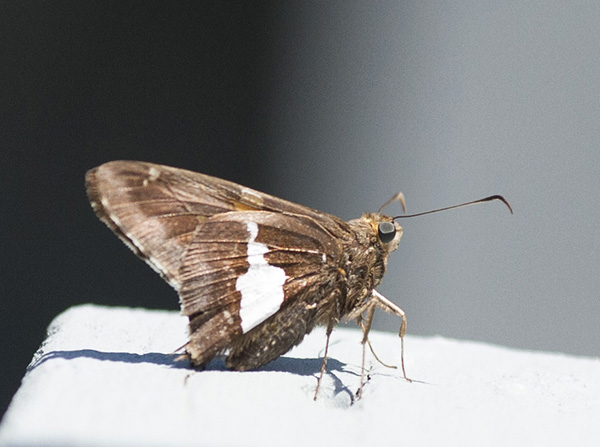
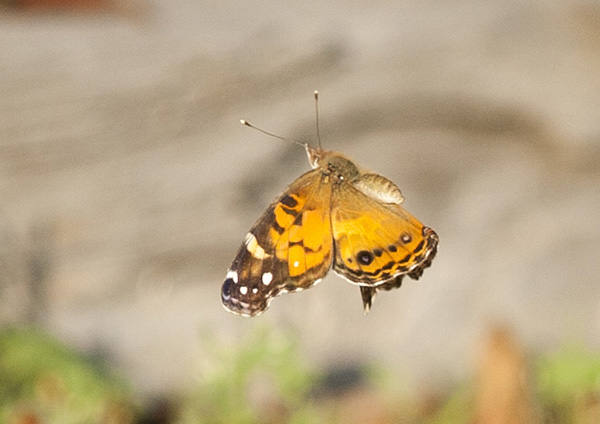
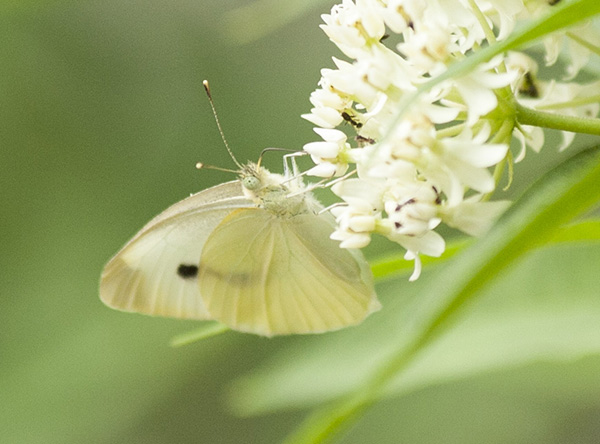
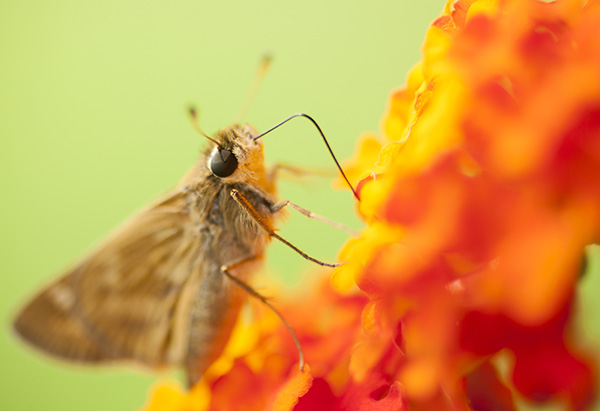
Butterflies aren’t as numerous as dragonflies, but the butterfly bush, milkweed, and lantana draw a surprising variety of species.
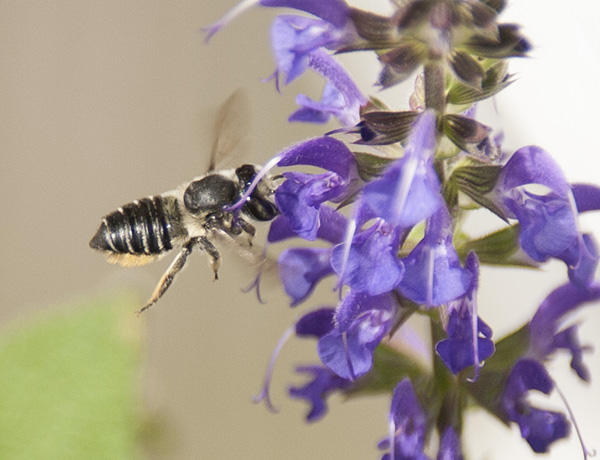
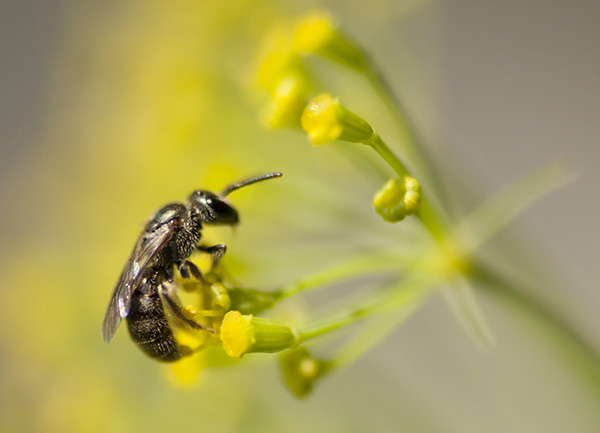
Bees are more interested in the salvia and dill.
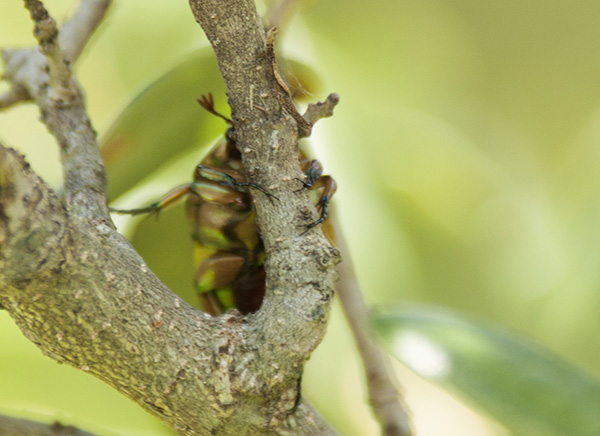
And the June bugs seem strangely attracted to Treebeard, our young live oak tree.
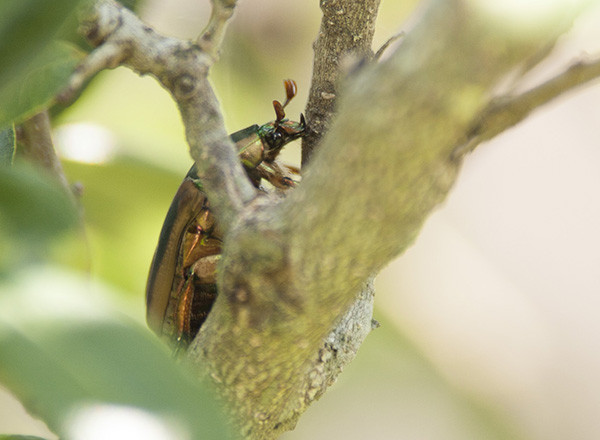
All in all, it’s been a good summer in the yard. So far. (Though if it gets much itchier, I may end up spending the rest of July and much of August hiding in the house.)
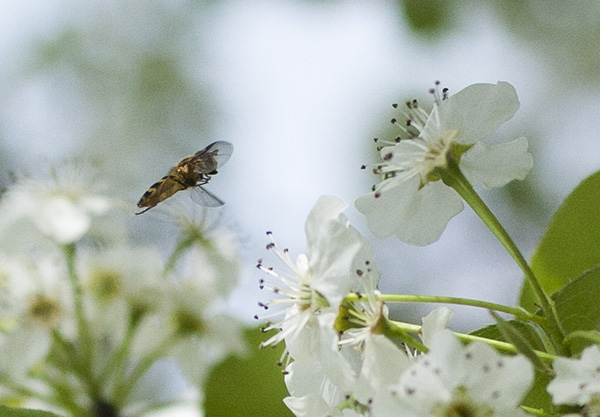
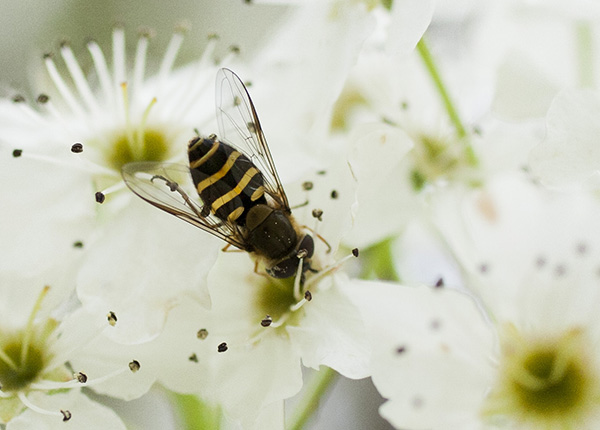
When the pear tree’s pollinators finally arrived, they arrived in encouraging numbers. Hoverflies were the first wave, pretending to be bees.

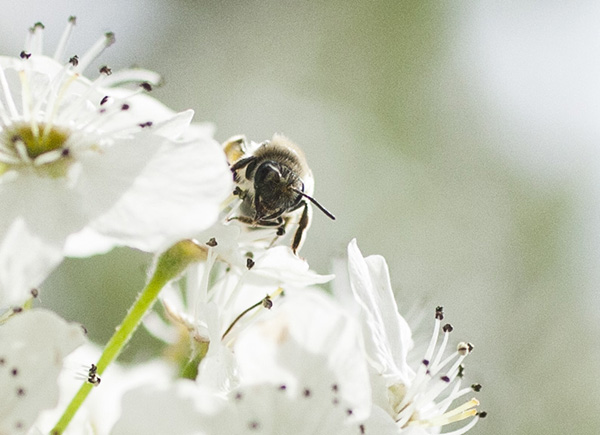
A wave of true bees followed.

Happily, a few Question Mark butterflies drifted in near the end.


While the pear blooms lasted, the yard’s winter flock of yellow-rumped warblers divided their time between sipping nectar, foraging for insects, and sampling the last block of winter suet.


(As an aside, I spotted the following warbler yesterday and was confused by its complete lack of yellow feathers. I believe it is a yellow-rumped warbler, but I’ve never seen one that didn’t have at least a blush of yellow under its wings. Please comment if you can correct or confirm my identification!)

As the pear tree dropped its petals, we readied the yard for summer. We replaced damaged boards on the aging deck, uncovered the ginger lilies, and swept leaves out of the cactus bed. (The carpenter bees ignored us and concentrated on chasing each other. They also chased warblers, chickadees, crane flies, hoverflies, beetles, bees, leaves, dandelion fluff, and pear petals.)

The garden stores aren’t fully stocked yet, but we found most of the plants on our list: dill, fennel, milkweed, columbine, annual lantana, snapdragons, salvia, and cosmos.

Yesterday, this American Painted Lady butterfly made me wish we had planted more cosmos. (The yard’s 2015 butterfly sightings, so far, are a major improvement over last year’s butterfly drought, but they don’t begin to equal 2012’s impressive migration.)

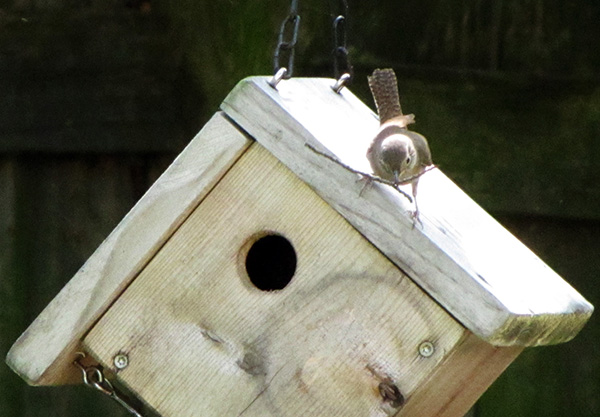
The yard’s birds have been getting ready for summer, too. This little house wren doesn’t have a mate yet, but he clearly has a favorite house.

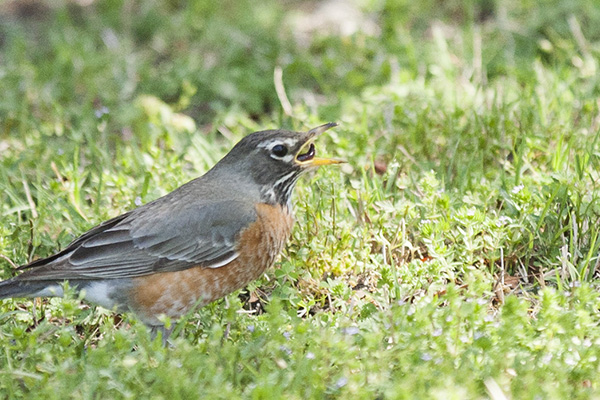
A pair of robins finished their nest last week and now spend most of their hours foraging.

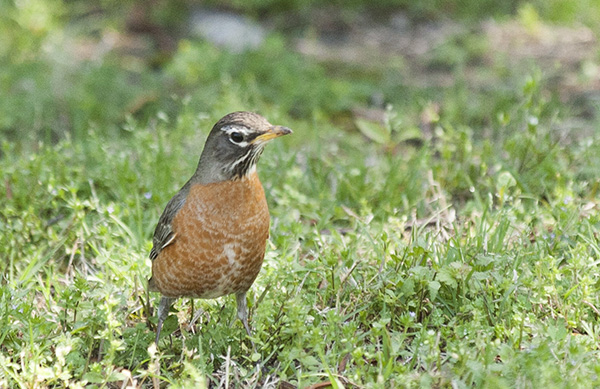
(I am amazed by how many worms they find and eat each day.)
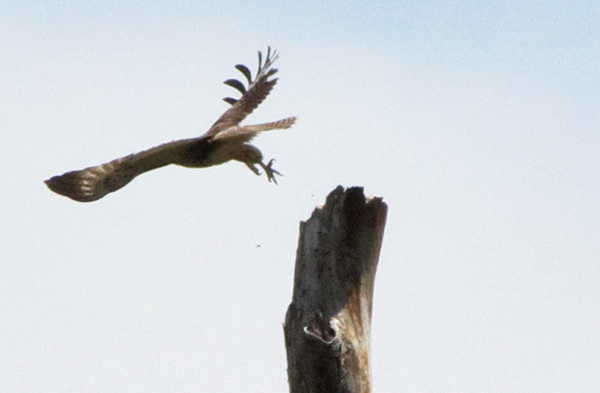
The robins aren’t the only efficient foragers in our area. A pair of osprey make regular passes over the yard, carrying fish. Yesterday I caught a few frames as one of the pair nearly dropped its lunch on the deck.

After a brief struggle, which lasted no more than two wingbeats, the osprey managed to subdue its lunch and flew on. What would happen if the fish managed to break free? Would the osprey land on my deck and reclaim its catch? (I’d probably drop my camera and break it, leaving me with no proof of why I dropped it…)
Over the years I’ve found many surprising things in the yard, but never a fish. Perhaps this summer?

Except, it’s not summer yet. Today the windows are closed against a surge of chill that moved in overnight and is forecasted to last through the next few days. Mother would have called it dogwood winter, expecting the dogwoods to bloom after the chill passed. Or blackberry winter, if the blackberries were due to bloom. I’m content to call it the end of winter.
Here’s another look at the yard’s first monarchs, this time in a video/time lapse shot by my husband…
 Rae Spencer