Watering the Robins

Robin May 26

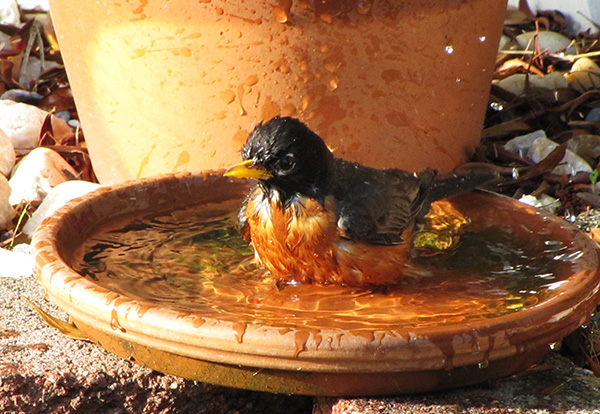
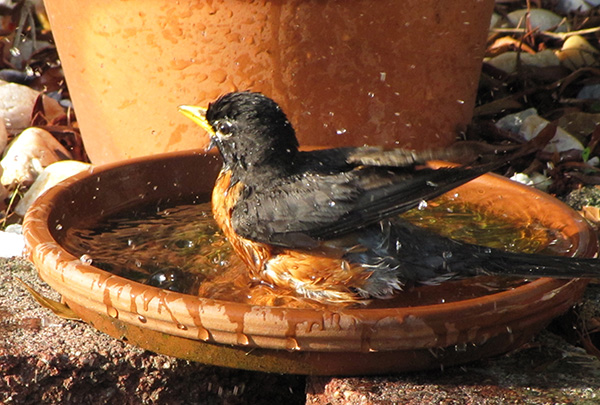
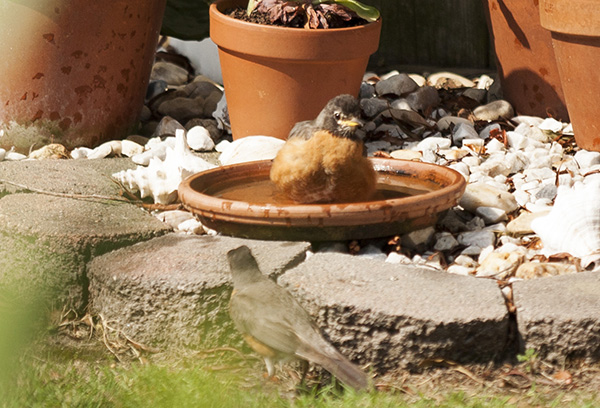
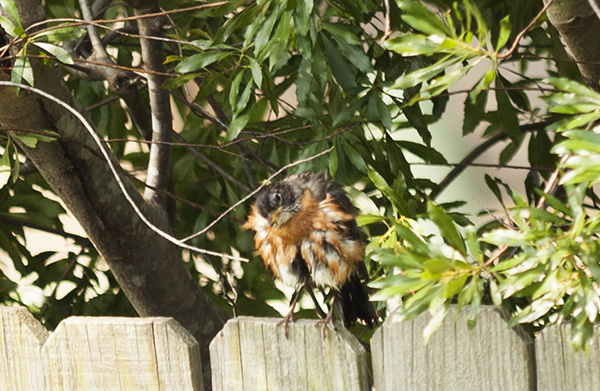
One of the features missing in our yard is a proper bird bath. I frequently pause in front of bird bath displays at home improvement and garden stores, but I always find an excuse to move on without buying. My most recent excuse has to do with our robins, who seem perfectly content to bathe in plant saucers.

Robin May 26

Robin May 26

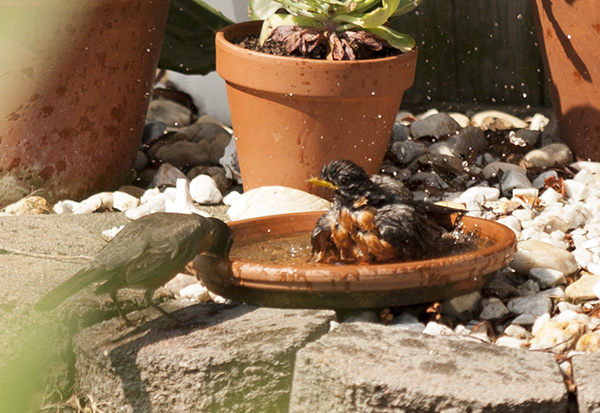
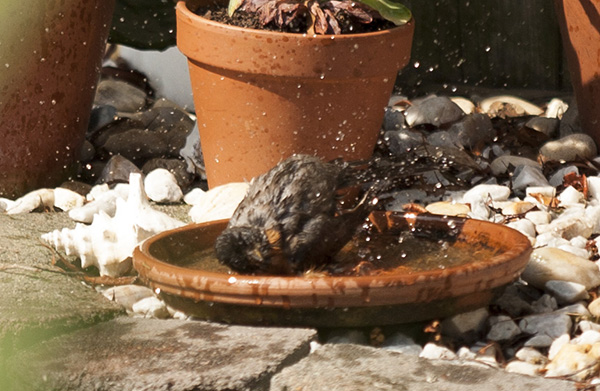
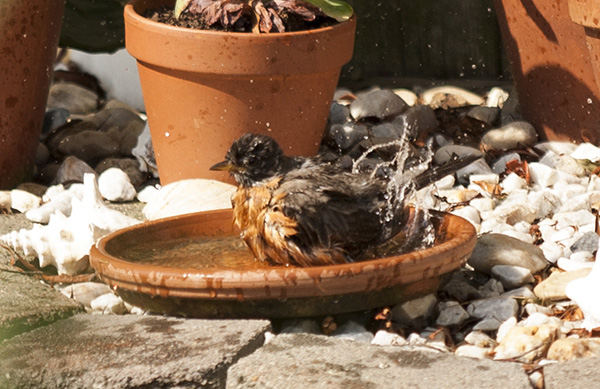
As the summer has gotten hotter, the robins have started following me around the yard while I water the flowers, waiting for me to fill their saucers. Then they line up and take turns splashing about, sometimes returning three or four times before the water level gets too low for splashing.

Robin July 8

The yard’s smaller birds, even the rabbits and squirrels, hang back and wait for the robins to leave before they approach. I’ve tried adding more saucers, but each new saucer only multiplies the number of robins that flock toward our yard when they hear me turn on the hose.

Robin July 8

Robin July 8

Robin July 8

It’s almost enough to make me want a swimming pool, so I could do some splashing of my own.

Robin July 8

Anaxyrus (formerly Bufo)*

Toad May 2

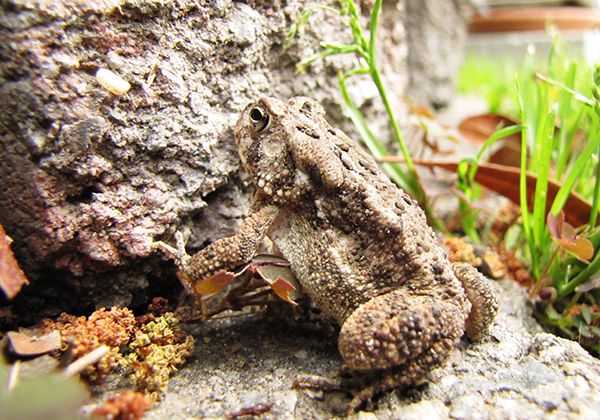
Early in May I found this little toad while I was mowing. After taking a few photos, I helped it into a flower bed and continued mowing, planning out a blog post as I made circuit after circuit around the yard.

I thought it would be a fun exercise to identify my toad. In the past, I’ve had good luck identifying reptiles and amphibians using the information provided on the Virginia Herpetological Society’s website, so I started there.

Have a look at this page from the website, which outlines the anatomy of a toad’s head, particularly the cranial crests, postorbital ridges, and parotid glands. The next page illustrates how these structures help identify three of the six species of toads found in Virginia.

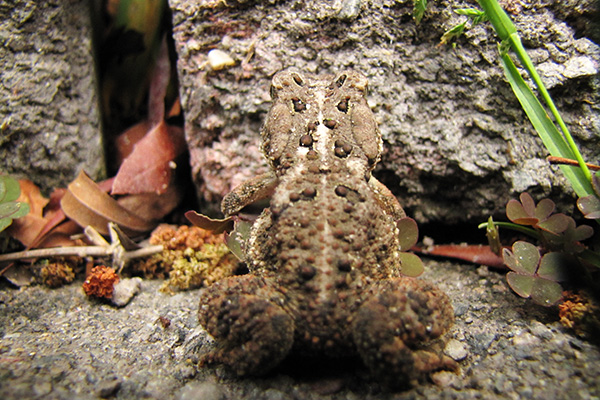
Based on a visible (but not prominent) cranial crest, I narrowed the list of possibilities to either an Eastern American Toad or a Fowler’s Toad. But the pertinent detail for separating these two species, whether or not the postorbital ridge contacts the parotid gland, was not discernible. Falling back on secondary characteristics, I spent some time counting the number of warts in each of the toad’s spots. One or two warts per spot indicates an Eastern American Toad, while Fowler’s Toads have three or more. My toad had one or two in most of its spots, but three in a few. Since the two species are known to hybridize, was this inconsistency enough to identify my toad as a hybrid?

Two of the other listed characteristics aren’t visible in my photos. I can’t say whether my toad had spots on its chest and abdomen, nor if it had any enlarged warts on its tibia. (No enlarged warts are visible in my photos, but the photos do not show the full length of both tibias.)

Having exhausted my vague knowledge of toad anatomy, but still without a definite identification, I was curious as to whether an expert might have better luck. I sent my photos to the Virginia Herpetological Society’s e-mail identification resource, and their prompt response said my toad was likely a Fowler’s Toad. But they added a note: “Toad ID can be a bit tricky…”

Toad May 2

* In the last decade, genetic findings have shaken up the world of toad nomenclature. One of the changes removed some North American toads from the genus Bufo and shifted them into a new group with an old name, Anaxyrus. This article provides a good overview. So, for most of my Virginia toads, Bufo has been reduced to a parenthetical:  Anaxyrus (formerly Bufo). I feel a bit bereft, as Bufo was one of the few genus names I had bothered to memorize, but I suppose Anaxyrus is easy enough to remember. Except, I’m not quite certain why I would ever need to remember the genus names of North American toads…

More and More Rabbits

Rabbit May 28

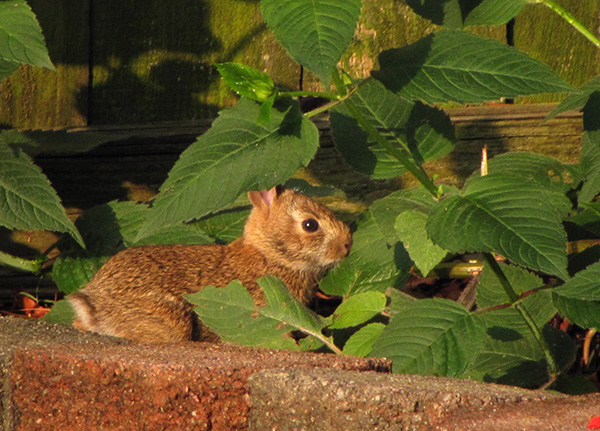
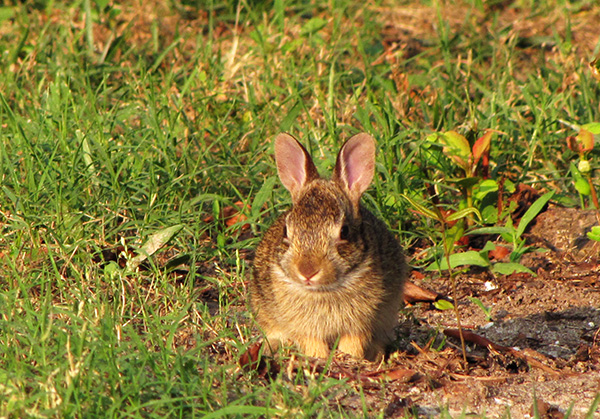
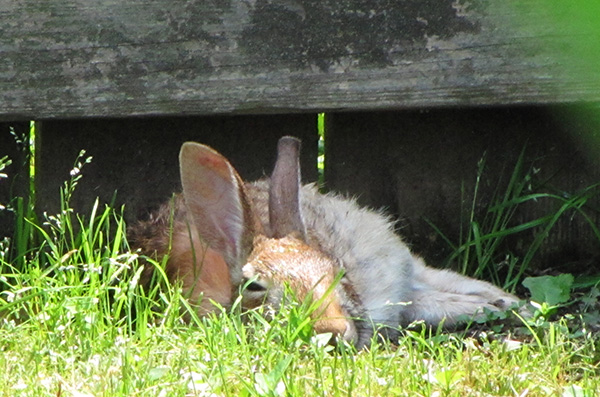
When the May litter of rabbits scattered, I lost track of all but two of the babies. One claimed the corner iris bed and another moved into the front yard. The mother rabbit visited both babies every day, but the one in the corner iris bed received the majority of her attention.

Rabbit May 22

It also received the attention of a new rabbit in the yard. The new rabbit was smaller and sleeker than the mother, and it seemed intensely curious about the baby.
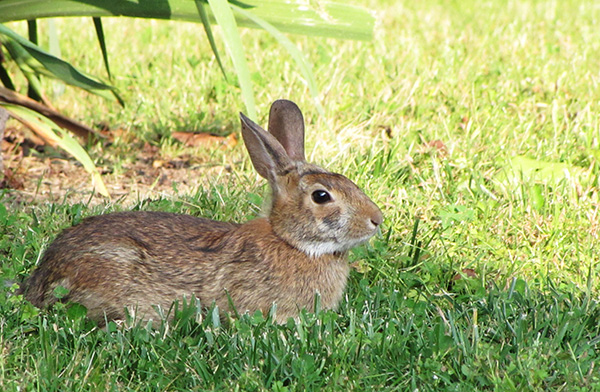
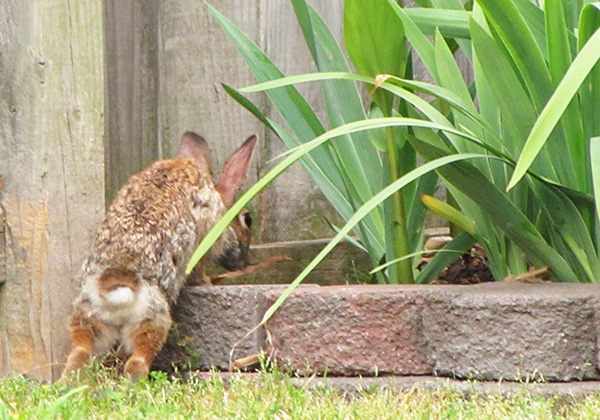
Rabbit May 27

Rabbit May 22

I was a bit surprised by the mother rabbit’s acceptance of the newcomer. She never exactly welcomed the smaller rabbit, but she never chased it away, either.
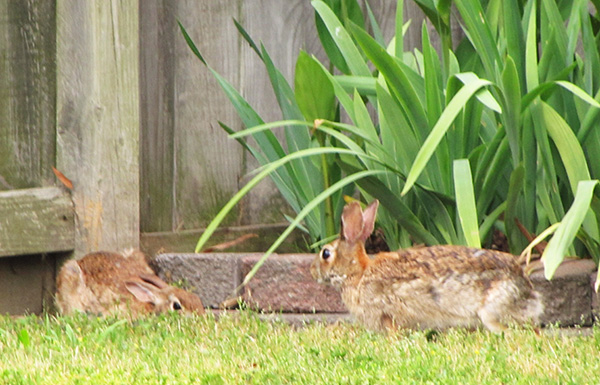
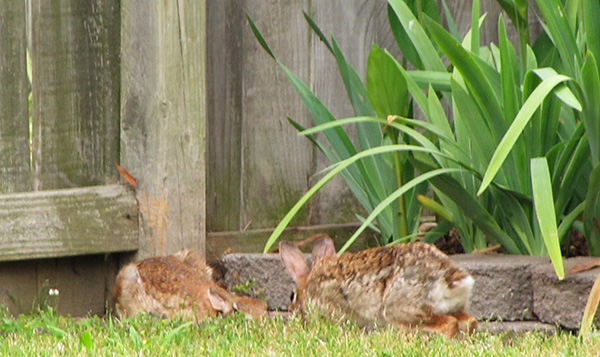
Rabbit May 22

Rabbit May 22

One evening the two grown rabbits and the lone baby hopped in and out of the irises for over an hour, as if all three were playing a strange, hesitant game of tag.
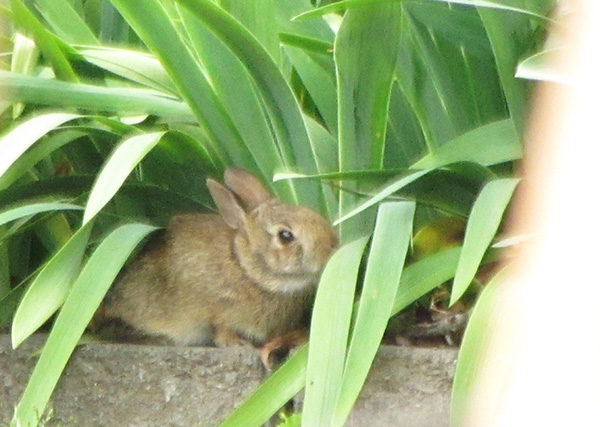
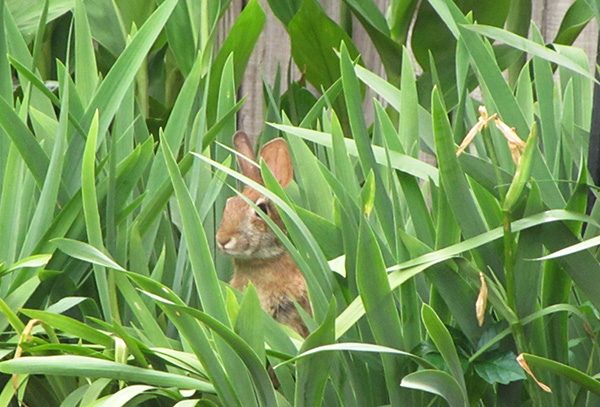
Rabbit May 22

Rabbit May 22

Sadly, the baby rabbit died a few days after I took these photos. I found its body beside the shed, but there were no obvious clues as to why it had died.

About a week later, the baby in the front yard disappeared. The following photo was taken the last time I saw it. (Our neighbor later told me he had found the remains of a predator’s meal in his yard.)
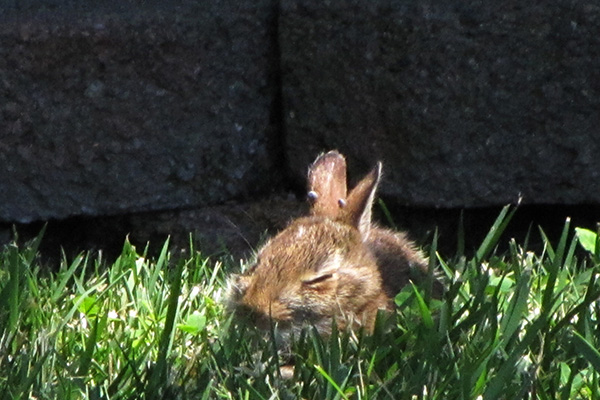
Rabbit June 3

The longer I look at this photo, the more I wonder about those ticks. Was the rabbit ill? It had been grazing most of the morning, and returned to grazing after it woke, but still I wonder.

After the first baby died, but before the second disappeared, both of the adult rabbits turned their attention to the irises under our pear tree.
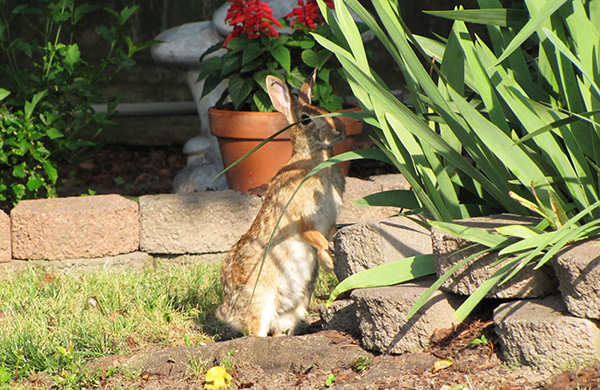
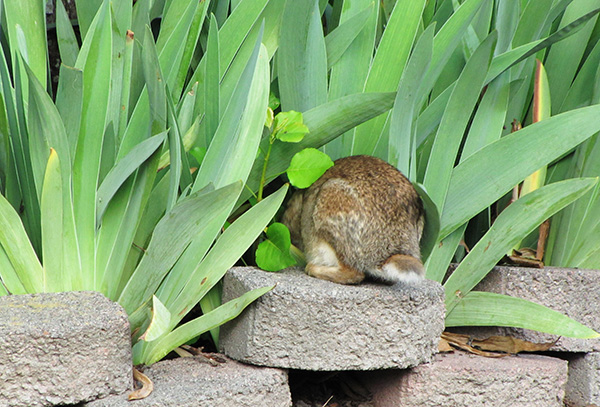
Rabbit May 27

Rabbit May 27

I assumed a third member of the litter had taken refuge in these irises. I didn’t want to disturb it with a close inspection, but, when the adults continued their obsession with the irises long after the second baby disappeared, curiosity won.
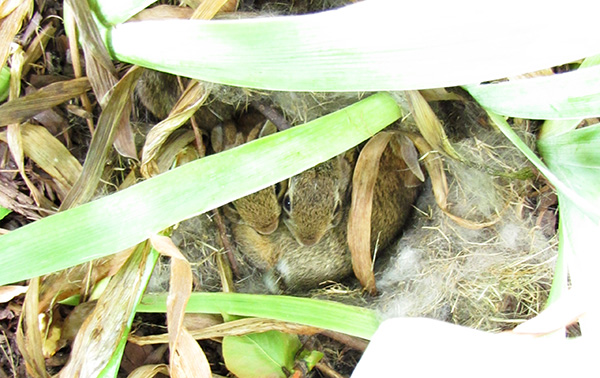
Rabbits June 13

Another nest! They were almost big enough to leave the nest when I found them, and a day or two later they moved as a group to the other side of the iris bed.
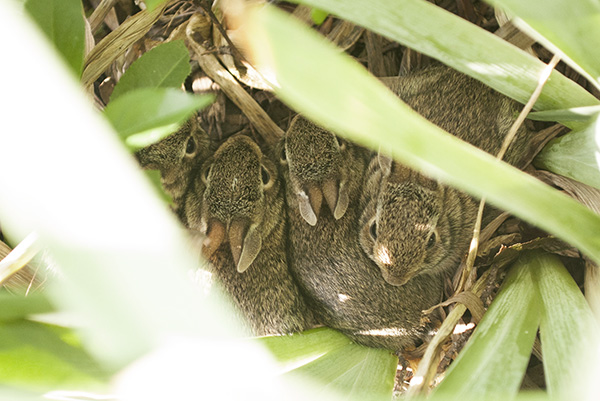
Rabbits June 14

Yesterday morning they were scattered, each into a separate hiding place. By evening they gathered again under the pear tree and waited for their mother. (I’m tempted to say “their mothers,” because both adult rabbits continue to visit the babies.) She arrived on schedule and fed them in the irises. When she left, the babies emerged one at a time. Two hopped under the deck, one retreated into the bee balm, and the fourth hid under the hydrangea.
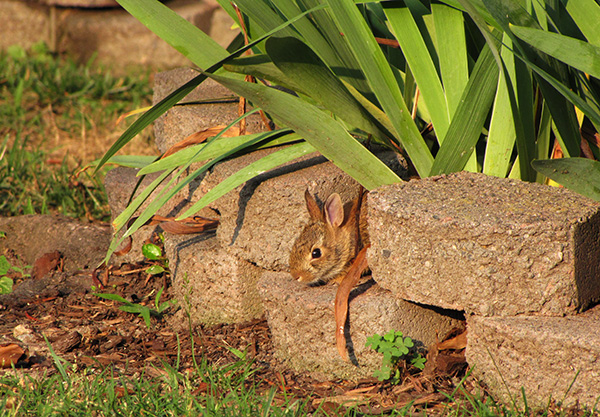
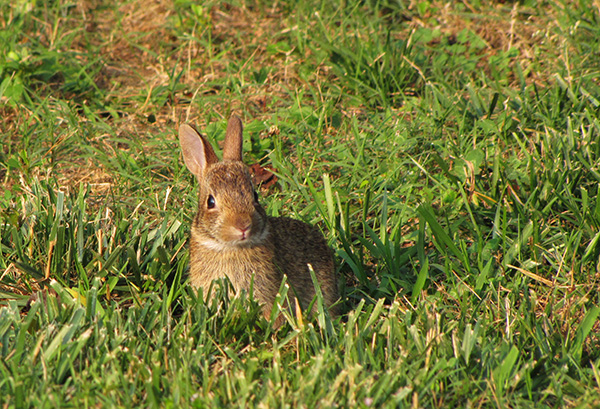
Rabbit June 16

Rabbit June 16

Rabbit June 16

Rabbit June 16

I would love to have a way to keep up with the babies, to know if any survive to adulthood and where they settle when it’s time to raise their own young. This urge to know is familiar, and constant. It’s part of why I enjoy writing. When the story is mine, I get to know everything! But it’s a perilous wish outside of fiction, as the rabbits keep reminding me.

Focus

Tulip May 2


Focus

Today’s page is a glass
Full of photos, light filtered
Through fixed apertures

Condensing the wordless
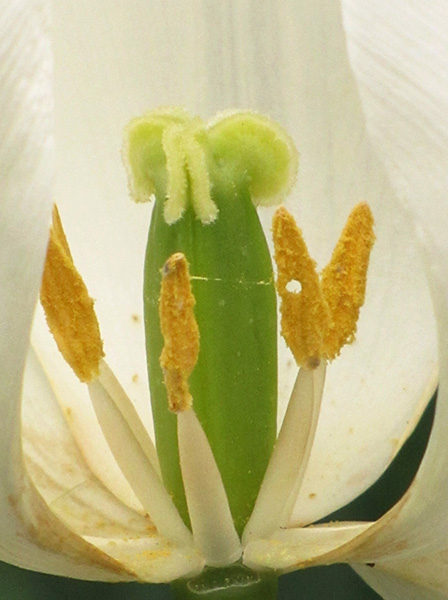
Wavelengths inside a tulip
The pollen-specked petals

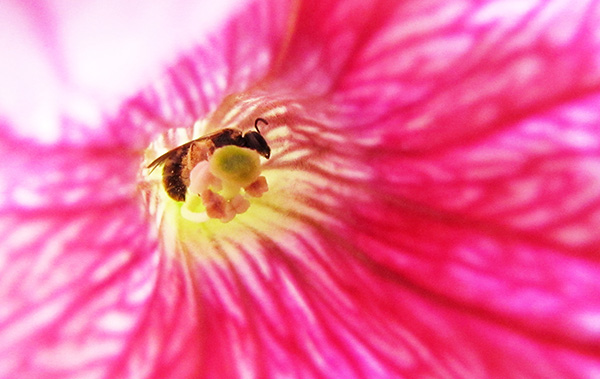
Of a petunia, each a whorl
Of absorption and reflection
Negative memory cropped

Into nostalgia, where time
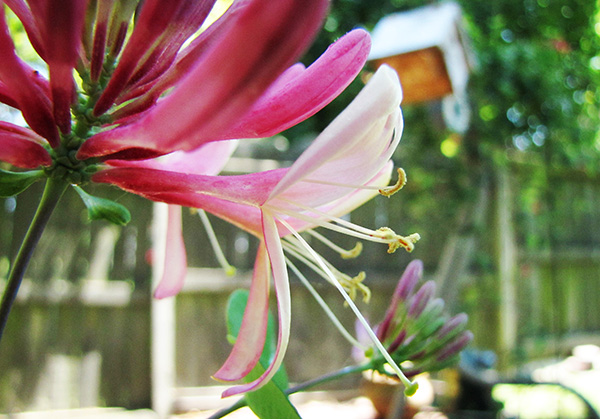
Hangs in air like warm honeysuckle
Calling and calling and calling

Hummingbirds, butterflies, and bees
Written mid-flight, wings stilled
Under clouds that never gather

Rain imprisoned in pixels
Zeroes and ones that never sum
A series of stopped moments

Stored in archives
Until decanted
As shared streams of code

A digital elixir
To ease the analog ache
Of incurable mortality

Bee May 20

Honeysuckle May 19

Revising My Rabbit Story

Rabbit May 1
May 1

I’ve told rabbit stories on this blog a number of times. In fact, my very first post featured a rabbit nest and a tragedy involving a young hawk. In 2012, I devoted several posts to a nest that eventually fell prey to a mysterious attack during the night. To follow the story, see these posts:

Over the last few weeks, I’ve been following a new rabbit nest in the yard, and I’m beginning to doubt the story I constructed in 2012.

Rabbit Nest May 8
May 8

When I first found the new nest, freshly dug during the first week of May, it was empty. But a few days later, tufts of hair led me to investigate again.

Rabbit Nest May 8
May 8

This time there were babies! Thinly haired, eyes-closed babies that couldn’t have been more than three or four days old. Resisting the temptation to run for my camera, I tucked the grassy cover back into place and vowed to avoid disturbing the rabbits again. But then I found the grass displaced, two days later, and feared another predator had visited. Since I was checking anyway…

Rabbits May 10
May 10

I didn’t want to wake them, so I didn’t get an accurate count. There were three bunnies at least. Maybe four. Maybe more? At any rate, apparently healthy baby rabbits sleeping comfortably in their hair-lined nest.

The mother rabbit visited every evening near sunset, to feed her offspring and clean the nest.

Rabbit Nest May 10
May 10
Rabbit Nest May 10
May 10

After each visit, she carefully re-covered the nest.

Rabbit Nest May 10
May 10

Day after day after day…

Rabbit Nest May 13
May 13
Rabbit Nest May 17
May 17
Rabbit Nest May 17
May 17

Until…

May 18
May 18

The scene was eerily similar to what happened in 2012. As before, I found one of the babies hiding on the other side of the yard but couldn’t find the rest.

Rabbits May 18
May 18

And, as before, when the mother rabbit showed up to feed her babies that night, more of the litter came out of hiding.

Rabbits May 18
May 18
Rabbits May 18
May 18
Rabbits May 18
May 18
Rabbits May 18
May 18
Rabbits May 18
May 18

The new arrivals raised the count of surviving babies to three. After they nursed, all three began exploring the yard. Two hopped in and out of the corner iris bed while the third ran back and forth along the fence. They popped in and out of sight so often that it became impossible to say exactly how many rabbits were playing in the yard. At least three, but quite possibly more.

Rabbits May 18
May 18
Rabbits May 18
May 18

The next night, the rabbits were in the irises and under the deck. They were getting increasingly adept at hiding, and they definitely spent less time nursing when their mother arrived.

Rabbits May 19
May 19
Rabbits May 19
May 19
May 20
May 20

All of this makes me reconsider my assumptions in 2012. What if there was no predator, then or now? What if the babies simply left their nest, scattering hair and dried grass as they emerged? Perhaps, instead of being driven out, this is the rabbit equivalent of fledging.

May 21
May 21