Wren Changes

The house wren spent weeks perfecting his nest. He added twigs until no more twigs would fit, then filled the spaces between twigs with bits of spider web and grass clippings. As he worked, he sang.

Wren June 19

Several female wrens visited during those weeks. They hopped around the yard, inspecting all of the nest boxes and gourds, scolding the male when he got too close. The male wren reacted to these visits with a barrage of high-pitched calls, fluttering from perch to perch as he tried to lead the females to “his” nest.

Finally, one of the females decided to stay. She finished the nest over a period of three or four days, spending longer and longer inside the nest box each day.

Then I woke one morning to a furious battle. A new wren had arrived, and all three birds were fighting. By mid-morning, the new wren had driven the nesting pair away and destroyed their eggs.

Egg July 20

Egg July 20

The new wren visited each of the gourds and nest boxes that day, adding twigs to all of them. More than once I saw him remove twigs from the old nest and carry them to one of his new nests. He seemed particularly fond of the gourds, which the other wren had largely ignored.

I suspect the first wren was a very young male. He put all of his efforts into one nest, while most sources indicate that male wrens typically build several nests at once. He also seemed thoroughly over-excited whenever a female appeared in the yard, smothering them with enthusiasm.

By comparison, the new wren is calm and sedate. His sings less, and his song is softer. He follows females, when they appear, but does not flutter and scold as they investigate his nests. This afternoon one of the females began adding material to the old nest, and he let her work in peace. He watched, singing occasionally, but stayed out of her way.

Wren July 30

I’m fascinated by the new wren’s behavior, which seems like a paradox to me. He arrived in a whirl of aggression, complete with egg destruction, but his activity since has been passive. What triggered his initial invasion? And will he be able to hold the nest he won?

Wren July 30

Hampton Roads Writers, 5th Annual Writers’ Conference

Dragonfly July 7

I have not been writing.

I think about writing all the time. I plan outlines and schedules, every week, then discard them in favor of errands and yard work. I compose poem fragments in my head as I fold laundry, then move on to my next task without pausing to write them down.

For most of the last two years, I have been a writer who does not write.

Dragonfly July 7

I can’t claim writer’s block, because the words are there. In fact, I’m somewhat surprised by the words’ persistence. I’ve been ignoring them for a very, very long time, and they continue to clamor for attention. It’s like being under siege.

Dragonfly July 7

Over this past month, the words began to win. I looked at the HRW conference website two or three times. I read through the schedule. I printed the registration form.

I decided to submit a short story and poem to the free contests and spent a few days revising my entries. Then I decided to submit the first ten pages of my stalled work-in-progress for the optional critique and spent a few more days revising. Before I knew it, I had fallen into a routine. I was writing again. Every day.

Dragonfly July 7

My registration packet is in the mail, and I’m still writing. Every day. I don’t know if my renewed focus will last, because I went through a similar surge last year after returning home from the conference. But, for now, the words have won. I am a writer who writes.

Dragonfly July 8

Unique

Squirrel July 7

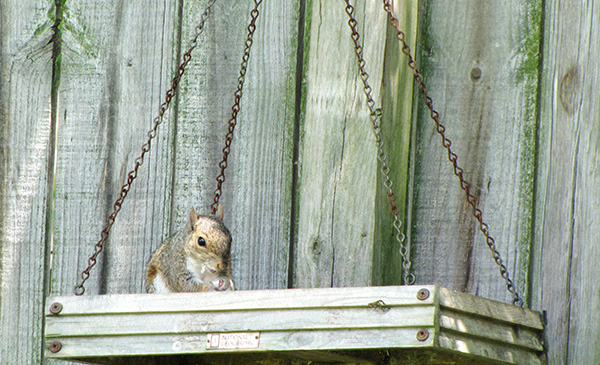
There’s nothing unique about this photo. Another squirrel in the bird feeder.

Except…

Squirrel July 7

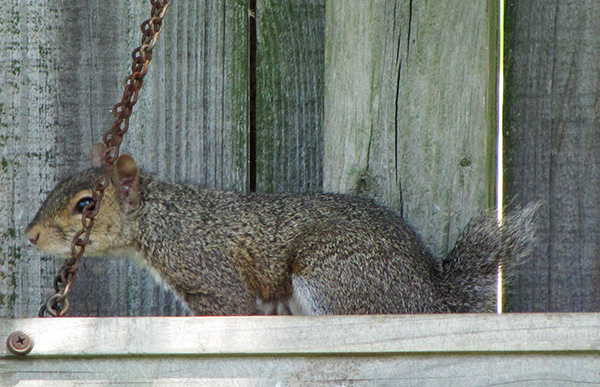
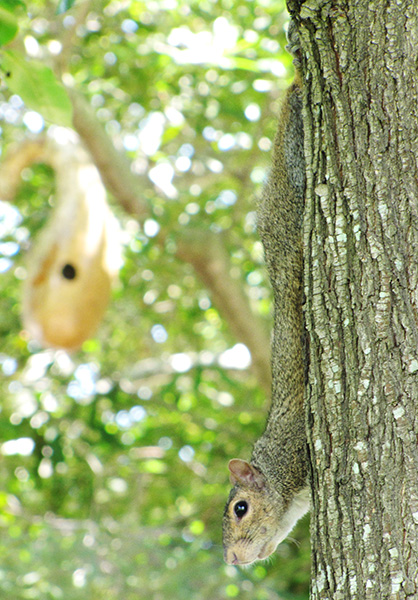
I usually can’t identify individual squirrels in the yard, but I suspect this one is unique. It’s smaller than many of the yard’s other squirrels, and much more cautious. Understandably so.

Squirrel July 7

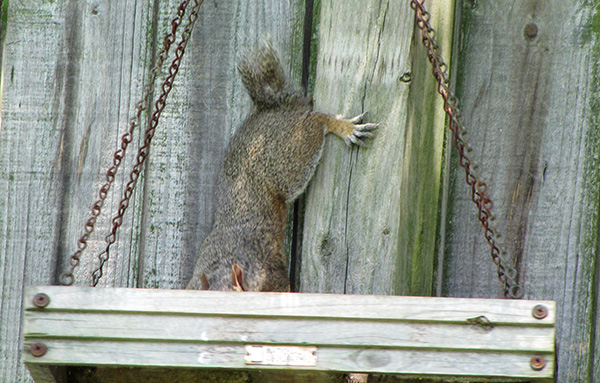
It seldom lingers in the feeder. Rather than settling in for a feast, it inches down the post, grabs a mouthful of seed, and retreats to the wax myrtle’s overhanging branches, where it can eat in relative safety.

Squirrel July 7

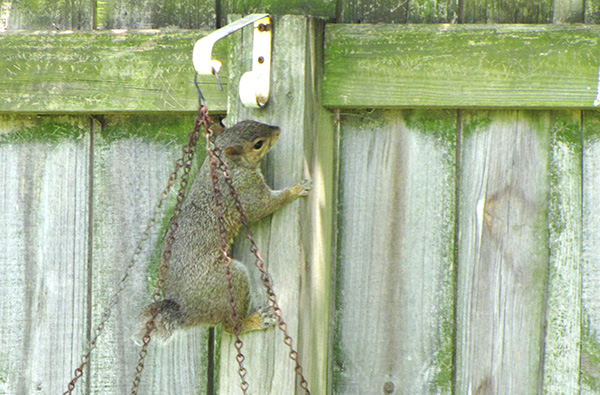
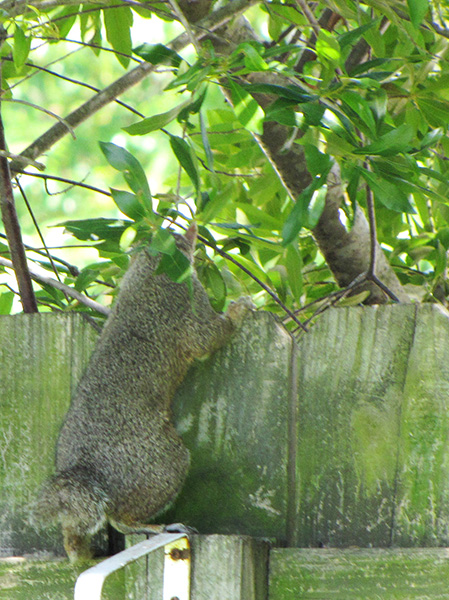
It also checks the far side of the fence much more frequently than our other squirrels.

Squirrel July 7

The first time I saw the tail-less squirrel bounding across our yard, I suffered a moment of intense confusion. It looked more like a very thin rabbit than a squirrel. A thin rabbit with short legs and even shorter ears. But then the strange rabbit scurried up a tree trunk, and my confusion transformed into amazement.

How does a squirrel with no tail survive in the wild? How does it balance as it races through the trees? How does it communicate, and what are its chances of reproducing?

Squirrel July 7

I’m tempted to ask other questions, as well, questions rooted in human perceptions of beauty and resilience. But such questions have no answers, and the world already has too many questions that can’t be answered.

The House Wren

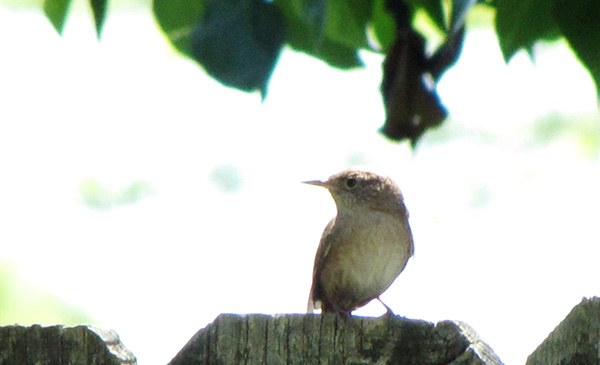
As the Blue Jay fledglings grow more and more independent, the House Wren spends a lot of time scolding them.

Wren June 19

He doesn’t seem to mind robins and doves, but recently a Tufted Titmouse roused him to near-panic. His frantic scolds and fluttering feints at the Tufted Titmouse prompted me into research mode regarding the relationships between House Wrens and other birds, which led me to this interesting article posted on the Audubon Society of Omaha’s website:  “The Great Wren Debate Revisited”. I had found references, before, to the House Wren’s aggressive tendency to destroy the nests of other birds (see here and here), but “The Great Wren Debate Revisited” presents a dire profile of the charismatic little bird that now spends his days singing in one corner of our yard.

Wren June 19

Will he really destroy the other nests in our yard? Pierce the eggs and kill the nestlings?

Wren June 22

Is our wren nest an endearing, heartwarming story in the making, or another manifestation of the strange, cruel realities of life?

Wren June 22

Wren June 19

Perhaps it is both. In the encyclopedia of nature, even in the small entry that makes up our yard, heartwarming and strange are often synonymous. Endearing and cruel overlap in disturbing, necessary ways. The only certainty is that I am not wise enough to judge whether the House Wren is good or bad, nor even to know if such judgments are possible.

Dragonfly Season

Blue Dasher Male June 27

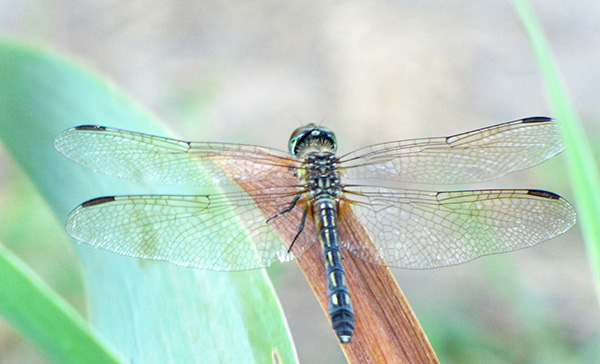
A wave of dragonflies arrived this week, washed into the yard by the rising tides of summer’s heat.

Blue Dasher June 28

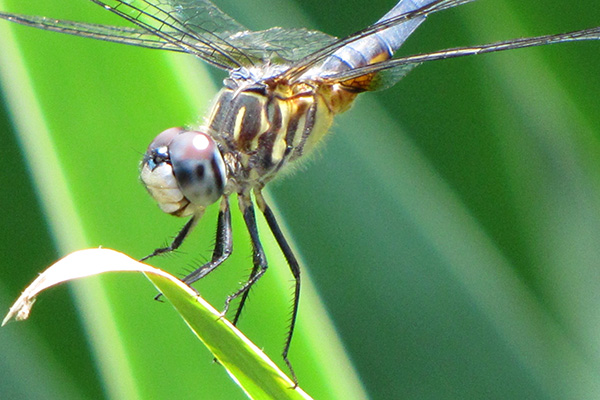
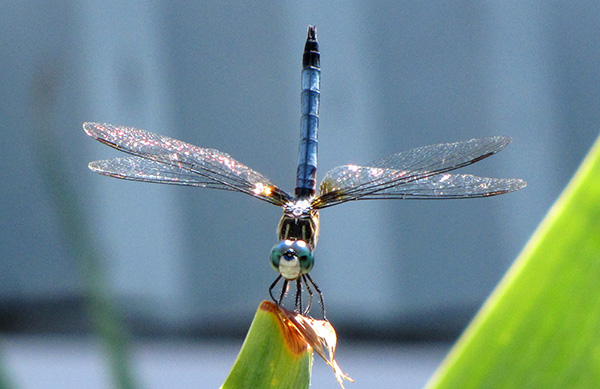
Blue Dashers are by far the most numerous, claiming spots near the ground in all of the iris beds.

Blue Dasher June 28

Blue Dasher June 29

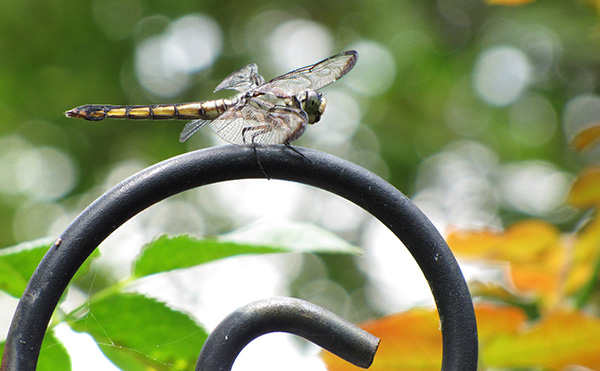
Great Blue Skimmers seem to prefer the slightly higher perches provided by our trellises.

Dragonfly June 27

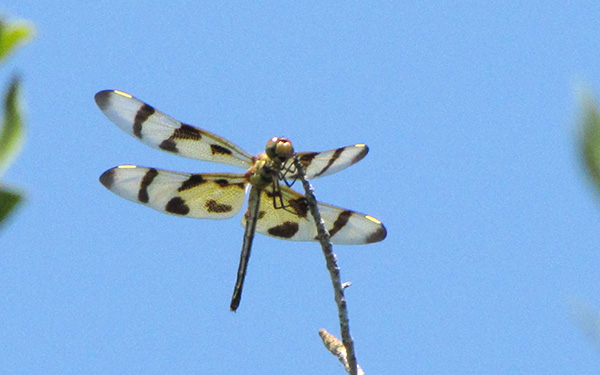
Higher yet, in the wax myrtle canopy, Halloween Pennants pivot in the wind like miniature weather vanes.

Halloween Pennant June 28

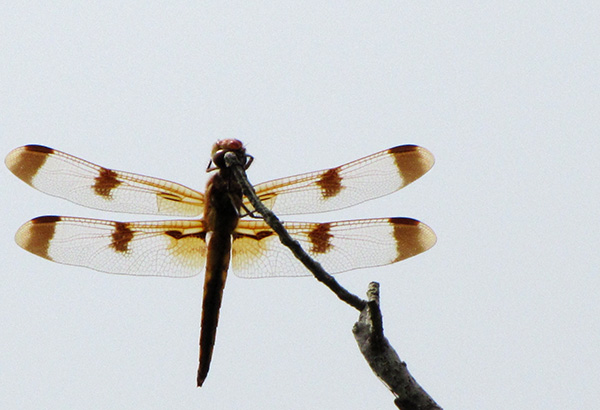
(At first glance, the next dragonfly seemed to be another Halloween Pennant, but the camera’s zoom function revealed inconsistent wing patterns. After consulting a few online resources, I believe this is either a female Common Whitetail or a Twelve-Spotted Skimmer. Please comment if you can correct or confirm my identifications!) [Update added June 30: Possibly a Painted Skimmer, see comment from Gillian.]

Dragonfly June 29

These new dragonflies join an already-established population of Eastern Pondhawks, which began arriving in late May.

Eastern Pondhawk June 29

Eastern Pondhawk June 29

Now, no matter where I look in the yard, I find dragonflies. Summer wouldn’t feel the same without them.