Dragons

Like most of my enduring interests, this one started with a book.

The Dragon's Handbook

I don’t remember exactly when The Dragon’s Handbook came to me, though I have vague memories of tugging on Mother’s purse in a used book store, begging for “this one.” Because of its odd shape, the book never fit comfortably on a shelf with my other books. So I propped it against my mirror and treated it more like a piece of art than a book, making it an integral part of my room’s decor.

While The Dragon’s Handbook held some of my favorite illustrations, my favorite stories featured horses and dogs. The Black Stallion series, 101 Dalmations, and Lad: a Dog. King of the Wind, Lassie Come Home, and Where the Red Fern Grows.

Then I found The White Dragon on a library shelf. Its cover featured a much fiercer dragon than Barbara Rinkoff’s Culhane, and I was suddenly ready for fiercer stories. I read Anne McCaffrey’s entire Pern series, and, from then on, I devoured any book with a dragon in its pages.

Books 1

The horses crowded closer together and shared their shelves with dragons. Today, dragons lurk in every corner of my office.

Dragon 3

Dragon 2

Dragon 1

I suppose this might explain why my favorite flowers are snapdragons.

Snapdragon April 1

Snapdragon April 1

And why I take so many pictures of dragonflies.

New Dragonfly 4s

Halloween Pennant

It certainly explains why my first complete manuscript is a literary fantasy. There’s a dragon, of course, but there are also hounds and horses. Because I couldn’t resist combining my two loves: my younger preference for stories about animals (especially stories that made me cry) and my teenage quest for adventure and magic and peril…

Dragon Oct 24

Botanical Garden Oct 24

A Slow Start to Spring

Pear Tree March 30

Today was finally warm enough to feel like spring. Add in an entire afternoon of bright sunshine, and it was a beautiful day in the yard.

Iris March 30

Speedwell March 30

Osprey March 30

Robins March 30

Rabbit March 30

As much as I enjoyed my afternoon in the yard, I couldn’t help comparing it to last year’s spring, which was both warmer and earlier than this year’s season. By the end of March last year, the pear tree was fully in bloom and the yard was full of bees. This year, the pear tree is only beginning to bloom and I haven’t seen a single bee.

Pear Tree March 30

Last year, all threats of frost were past. In fact, there were days that felt like summer. The tulips were blooming and spiderlings were hatching. This year I’m afraid to uncover the ginger lilies, because it seems likely we will see more frost, and the tulips are just getting started.

Tulip March 30

I wonder if our delayed spring will spill over into a delayed summer, or if summer will simply storm in right on the heels of winter.

Finding Spring

Hyacinths March 16

Today was so warm that I pulled the lawn mower out of the shed, checked my gloves for spiders, and spent several hours working outside. As I scraped away layers of leaves, twigs, and mud, I found traces of spring in every corner of the yard.

Dandelion March 16

Irises March 16

Hydrangea March 16

Wax Myrtle March 16

Pear Tree March 16

After finishing in the yard, I opened the windows, took off my shoes, and invited spring into the house.

Windows March 16

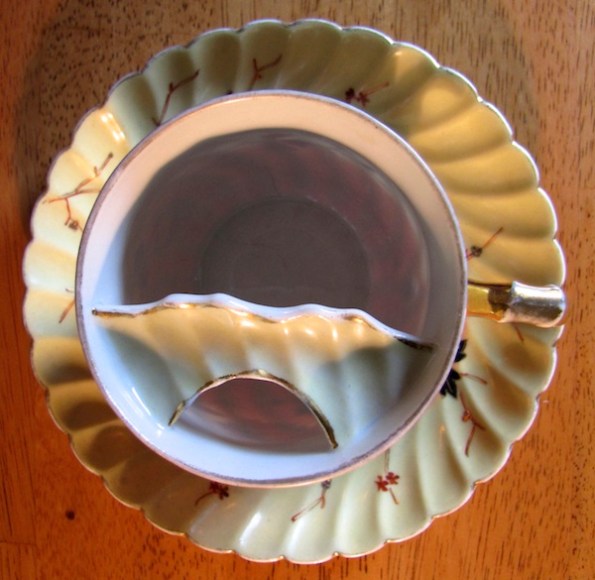
Treasures from Home, Part One (The Moustache Cup)

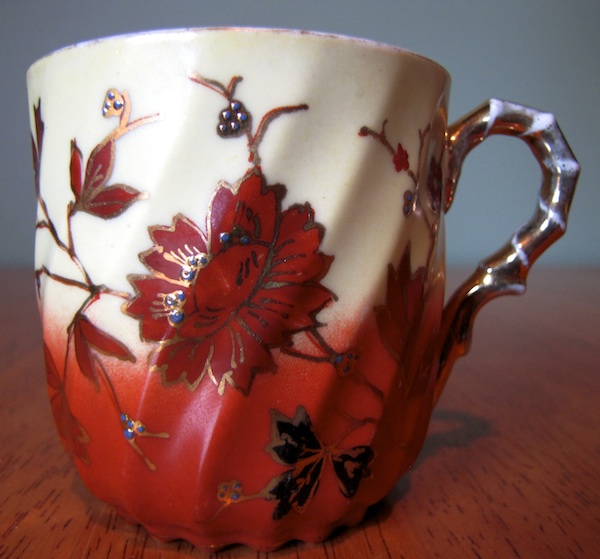
Cup Feb 2

My knowledge of antiques is limited to what I have absorbed while watching Antiques Roadshow, but I am trying to learn more. At least, I am trying to learn more about a handful of curious treasures that once belonged to my mother.

Saucer Feb 2

Cup Feb 2

I can’t say why I fell so blissfully in love with this little moustache cup, which I don’t remember seeing as a child. After Mother’s car accident in 2011, we found the cup in an unlabeled box in her house, so its history is largely unknown. We suspect it is one of the many pieces collected by a great aunt who had a fondness for porcelain.

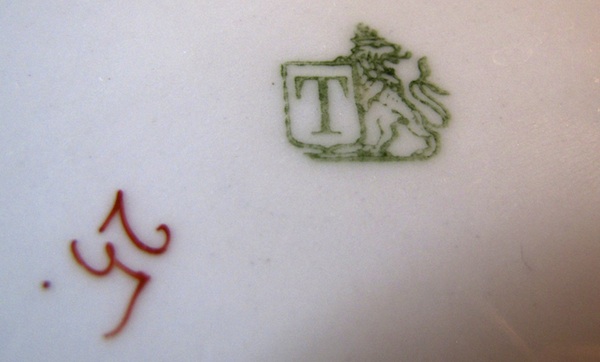
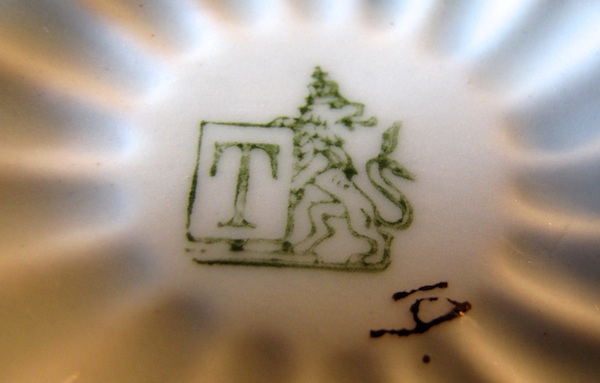
Saucer Feb 2

Cup Feb 2

Last month, I decided to research the porcelain marks, which are clearly visible on both cup and saucer. The mark was harder to trace online than I had expected, but I eventually found a website (Porcelain Marks and More) that identified the mark as Bavarian, used between 1885 and 1902. While the date seems clear, I’m confused about the company name. Some sources say Sontag and Maisel, others Sontag and Sons. Also Royal Bayreuth. Perhaps all are correct? Or none? (Please respond, if you can help. I would love to know more about the mark, and about the cup.)

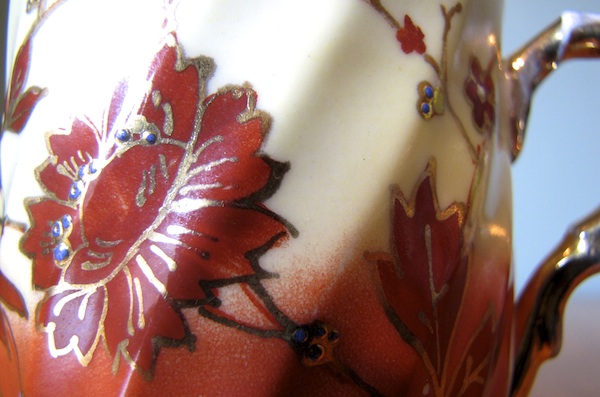
Teacup Feb 2

Now that I know something definite about them, I’m a bit overwhelmed by the cup and saucer. I’m terrified of breaking them, of being the final admirer of such lovely creations. I’ve considered finding a collector to protect and cherish them, to prevent their story ending with a crash and shatter on my worn kitchen floor. I’ve considered wrapping them as a gift for a friend, sending them to one of my more responsible sisters, or storing them in a box, where they would be more likely to survive their sojourn in my house.

Teacup Feb 2

But I’m having trouble making a decision. Like all of my treasures from home, the cup and saucer resonate with nostalgia and grief. There is nothing practical or useful about them, but some days I enjoy their glitter on my mantel. (Other days I hide them in a cabinet.)

And some days, like today, I marvel that such fragile, frivolous objects have endured so long and traveled so far, moving from hand to hand and home to home until arriving here. In my home. In my hand, where they mean so much and so little. Where they cannot possibly stay forever, because I cannot stay forever.

Teacup Feb 2

What will happen to them, after I am gone? What will happen to me?

Hooded Mergansers

I saw my first-ever hooded mergansers in January of this year:

Mergansers Jan 15

Since then, I’ve seen them everywhere. At the Virginia Beach Fishing Center, prior to boarding a whale watching boat:

Merganser Feb 3

At Back Bay National Wildlife Refuge:

Merganser Feb 6

And, most recently, at First Landing State Park:

Merganser Feb 22

(In the photo above, the male seemed to be keeping watch while his mate foraged. She is partly visible in the background, captured mid-dive.)

Reviewing these photos, it’s hard to explain how I missed these lovely birds in the past. Is it possible that they were rarer in previous years? Has some imperceptible fluctuation in our weather pattern drawn them here in larger numbers than usual? Or are they like an unfamiliar word, more likely to be noticed in the days and weeks following their first recognition?