Grackles, Crows, and Hawks

Crow and Grackle April 10

With so many birds building nests in the yard, conflicts are inevitable. The grackles have been particularly testy over the last few days, mobbing crows whenever the larger birds enter the yard’s airspace.

Crow and Grackle April 10

And the crows, who routinely retreat once the grackles have spotted them, will not tolerate the presence of a hawk. Sunday morning I managed to capture a few images as three crows chased a Cooper’s Hawk back and forth over the yard.

Hawk April 12

Hawk April 12

Hawk April 12

Hawk April 12

Hawk April 12

About ten minutes after the chase circled off to the north, I spotted another hawk in a tree two yards over. (Or maybe it was the same hawk, returning for another try at breakfast?) The grackles saw it, too, and began voicing their alarm. Soon a pair of blue jays arrived, also calling alarm. None of the commotion seemed to bother the hawk, until an approaching group of crows added their caws to the chorus. Then it gave up and moved off to try its luck in a quieter hunting spot.
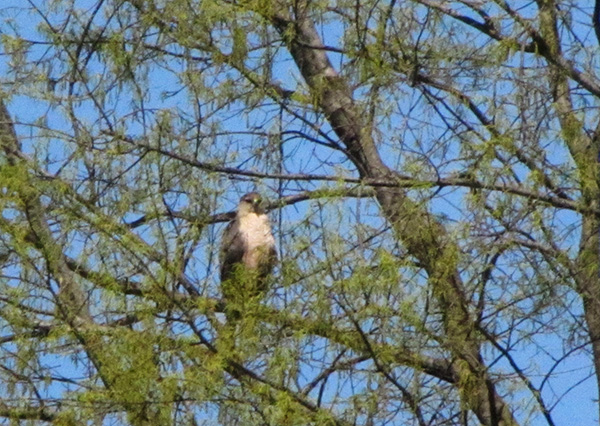
Hawk April 12

Which led me to ponder the relationships between larger and smaller birds. Why would a larger, stronger bird flee from smaller birds? I suspect it has something to do with energy conservation, it simply being easier to leave when you aren’t hungry enough to risk losing a few feathers, but I wonder what they are all thinking as they call and chase and flee.  And how will their reasoning change, when hungry nestlings enter the equation?

Photos of Spring and a Publication Note

Flowers April 6

The daffodils, all three of them, bloomed this week. As did the pear tree.

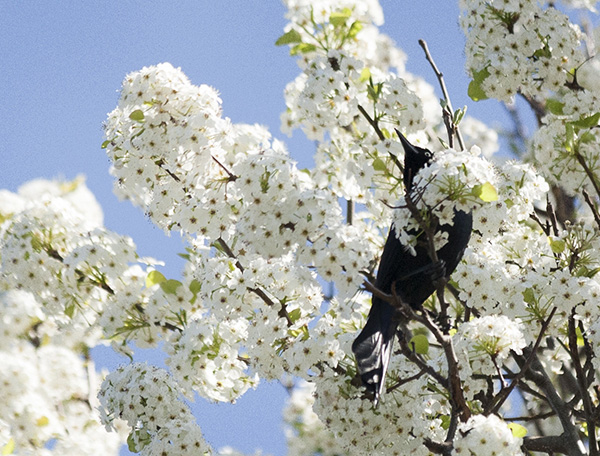
Grackle April 6

While it has plenty of bird visitors, the pear tree hasn’t seen its usual complement of pollinators.

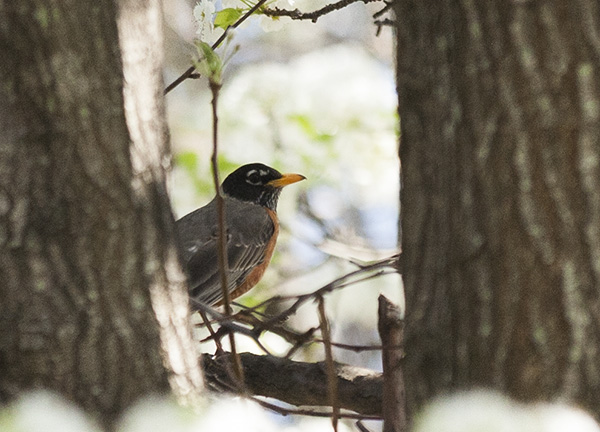
Robin April 6

The pear blooms usually draw bees and beetles by the hundreds, but many of the pollinators seem to be sleeping in this year. Yellow-rumped warblers are getting most of the nectar.

Warbler April 6

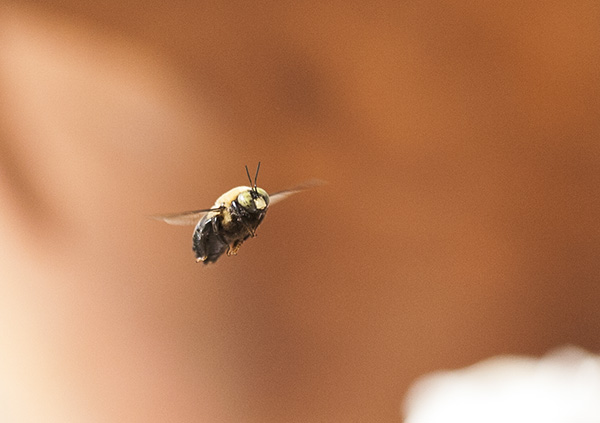
The pear tree’s pollinators may be sleeping in, but the carpenter bees are awake and active. Territorial males have claimed pockets of airspace near the house, fence, and deck. Their physiology must be wondrously efficient, because they patrol and defend their claims with seemingly endless vigor, never pausing to eat. They aren’t interested in nectar. They’re waiting for females to arrive.

Carpenter Bees April 6

My favorite news from the yard this week comes from the milkweed. It survived our long, cold winter, which means we might have more monarchs this year!

Milkweed April 6

My favorite other news involves a publication note. My short story “Numbers” is now posted at The Blue Hour Magazine. This is my first fiction publication!

“Numbers” is the first short story I ever attempted. For nearly ten years I returned to it periodically, each time applying what I had learned since its last revision. Finally, in 2013, the story seemed to defy further revision. By then the opening had been entirely restructured and the word count cut by more than half. That year “Numbers” won Honorable Mention in the Frank Lawlor Memorial Fiction Prize at the Hampton Roads Writers’ Conference.

I let “Numbers” drift to the bottom of my to-do pile after its award, but in January of this year I decided to give the story one final edit and begin submitting it for publication. Then I selected a new practice manuscript from the archive, because I am not through learning. My journey with “Numbers” has reached a happy and satisfying conclusion, but my journey with writing will never end.

Chickadees and Writing Events

Chickadee March 26

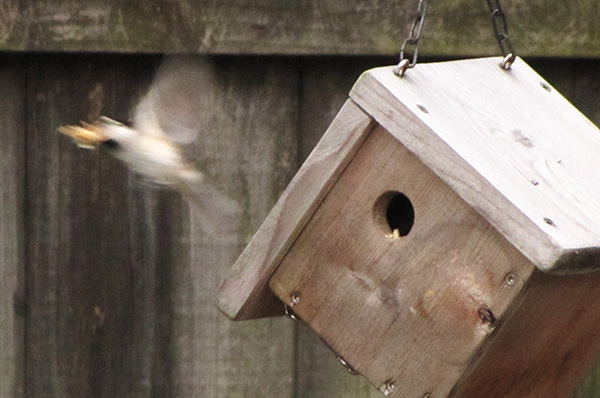
Thursday a lone chickadee decided to do a little spring cleaning in one of the wren houses.

Chickadee March 26

Thick clouds were moving in, ahead of a line of heavy rain, and the little bird seemed aware that there wasn’t much time for nest clearing.

Chickadee March 26

It made trip after trip into the house, sometimes tossing wood shavings straight out through the door, sometimes carrying them several feet away and scattering them in the honeysuckle.

Chickadee March 26

Chickadee March 26

When the rain arrived, the chickadee kept working a while longer, then it gave up and moved into the cover of the wax myrtles.

As Thursday’s rain cycled into a dreary, cold Friday, I kept watching for the chickadee to return. But there has been no sign of further interest in the nest box.

I suspect the little bird’s interest was never more than a passing fancy, mostly because it was working alone. In the past, the yard’s chickadee nests have been built by pairs of birds working together. (On the other hand, there haven’t been many chickadee nests in the yard, and all of them have failed. Maybe I shouldn’t use those nests for comparison?)

Chickadee March 26

On Saturday I left the yard’s mysteries to take care of themselves while I attended Coastal Crime Fest 2015. This single-day writing conference was sponsored by Mystery by the Sea, The Southeastern Virginia Chapter of Sisters in Crime. The day’s sessions included mystery authors talking about writing and publishing, tales of real-world experience from a retired FBI agent, and a presentation about situational awareness from a pair of self-defense instructors. I’m already looking forward to next year’s conference.

What’s more, Saturday’s conference was not my first writing event this month. Last weekend I attended one of the Hampton Roads Writers’ Traveling Pen Series, a morning-long workshop about paranormal and fantasy writing. The workshop included several very helpful writing exercises, and I was excited to learn that the guest speaker, Vanessa Barger, will be presenting more workshops at the Hampton Roads Writers’ 2015 Conference in September.

After both of my recent writing adventures I rushed home brimming with inspiration, eager to write something new. Or revise something old. Or maybe, most alluring of all, read something timeless. (Hopefully I will do all three while watching a chickadee nest…)

Chickadee March 26

Four Birds

Last fall we stopped buying bird seed when we took down the bird houses, and for the same reason. Just as the houses were no longer housing birds, the seed was no longer feeding birds.

Rats Sept 21

Rat May 17

I haven’t seen rats in the yard this winter, but I also haven’t seen many birds. Hopefully our winter flocks are finding plenty of alternate food sources.

Warbler Feb 3

Yesterday I watched through the kitchen window for nearly an hour and saw a total of four birds. The little yellow-rumped warbler in the above photo was foraging for insects along the fence, while a robin and a mockingbird basked in the pear tree, sleepily soaking up sunshine.

Robin Feb 3

Mockingbird Feb 3

The most interesting activity took place in the wax myrtles, where a young yellow-bellied sapsucker was tending its sap wells.

Woodpecker Feb 3

(I decided this was a juvenile sapsucker after consulting Cornell’s All About Birds website. Please comment if you can confirm or correct my identification!)

Woodpecker Feb 3

I couldn’t help wondering about the origin of the sapsucker’s behavior, which strikes me as fairly advanced problem solving. This young bird likely learned to make sap wells by observing its parents, but how did its earliest ancestors learn their craft? Did the behavior surface gradually, a slow convergence of experience and appetite? Or was the shift a more sudden spark? Is there a sap well gene?

Woodpecker Feb 3

Some part of me wants to argue against a purely genetic origin for the sapsucker’s wells. My objections are all based on wistful incredulity, on a deep-seated longing for connection beyond mere knowledge. My objections are, in other words, illogical. But they are also persistent. No matter how many books I read, no matter how much science I embrace, some part of me still wants life to mean more.

From the Summer Archive

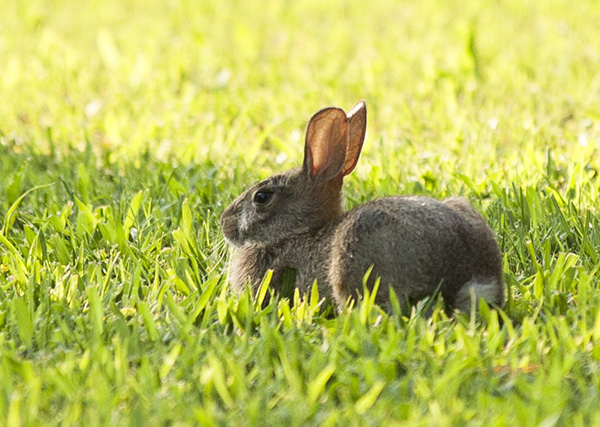
Rabbit July 29

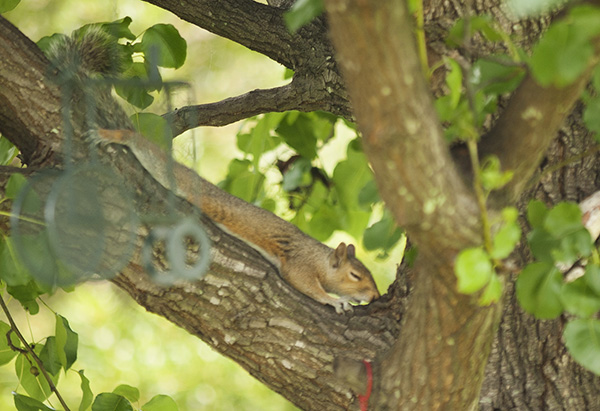
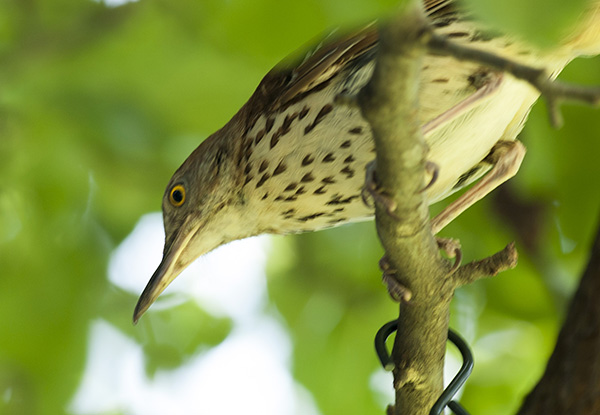
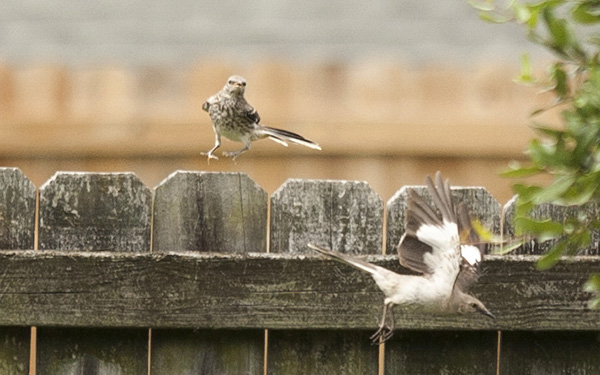
Today’s winter storm should bring nothing more than miserably cold rain and a few flurries to our area, but I decided to stay inside anyway. I dug out my digital to-do list, pulled on my favorite socks, and settled in for an afternoon of computer work. Mid-way through organizing my 2014 photo archive, I opened a forgotten folder and found a forgotten cache of summer.

Squirrel July 8

These images don’t make my house warmer, and they won’t melt snow or ice, but they reminded me that summer is only a few months away.

Brown Thrasher July 26

Mockingbird July 20

It won’t be too long before spring rustles in — waking the yard’s flowers, urging birds to nest, and breathing life into new generations of insects.

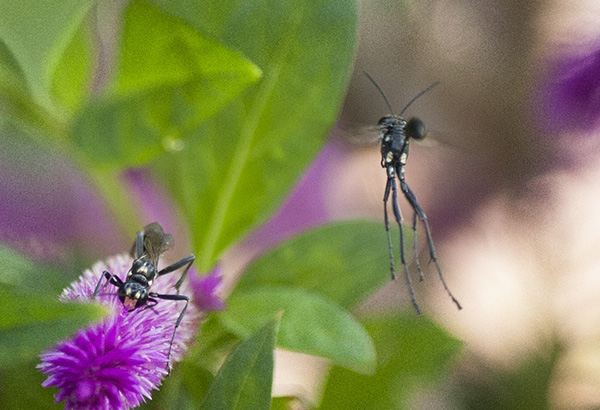
Wasp Aug 31

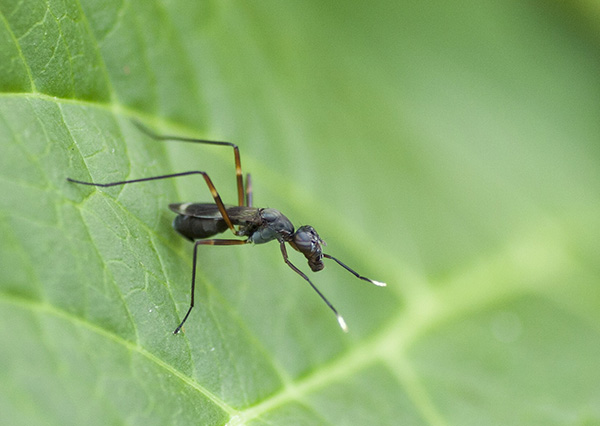
Unknown July 6

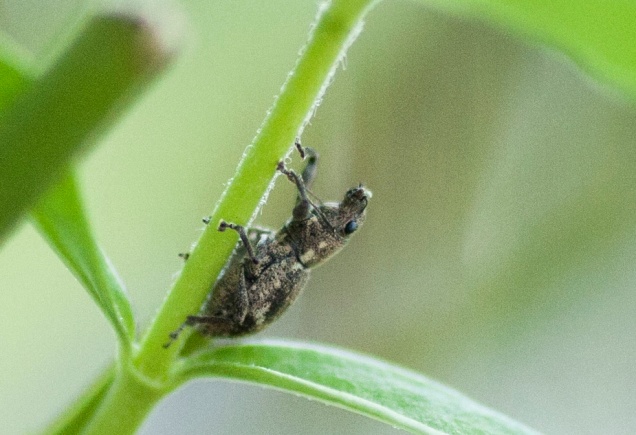
Unknown Beetle Oct 10

Soon, sooner than February ever lets me imagine, it will be time to put away my favorite socks, turn off the heat, and open all the windows.

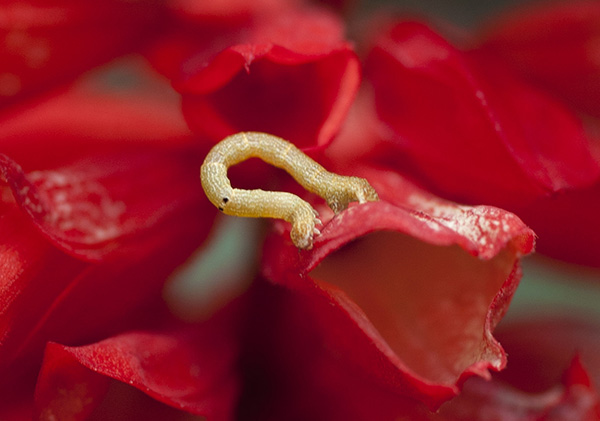
Caterpillar July 28

Soon…

Hydrangea June 27