Hummingbird Happenings

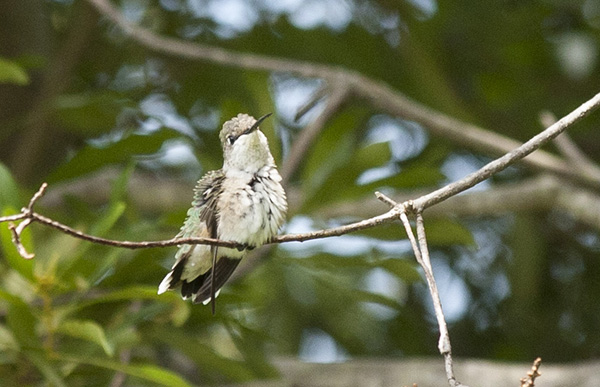
Hummingbird July 29

In May, the yard’s hummingbird hopes suffered a setback when a family of house finches plucked the honeysuckle’s early blooms.

Hummingbird July 27

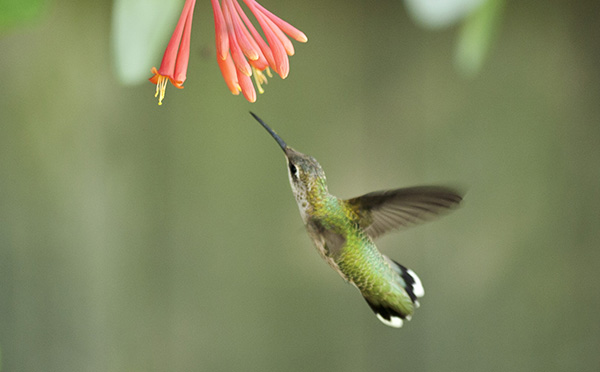
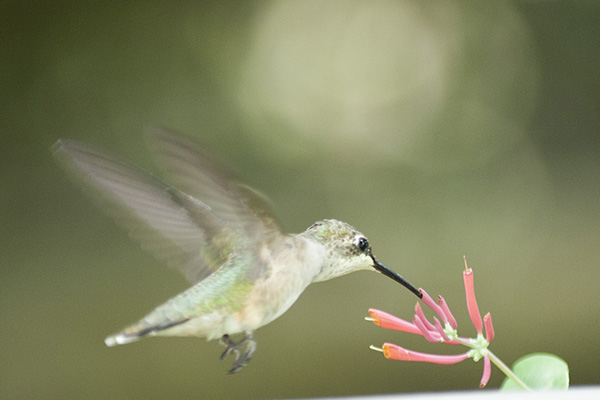
But the honeysuckle recovered quickly, and by the end of June there were enough blooms to attract renewed attention.

Hummingbird July 23

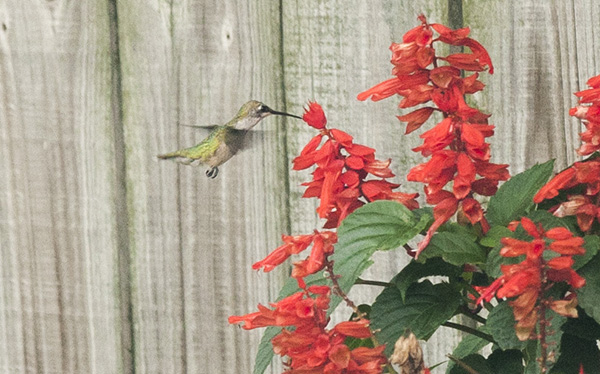
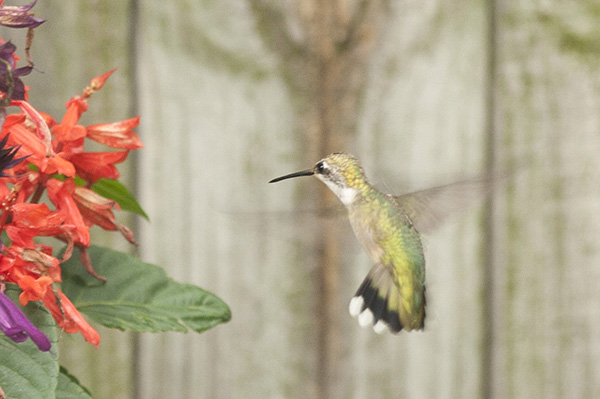
The salvia also bloomed steadily through June and July, adding a second source of nectar.

Hummingbird July 27

Hummingbird July 27

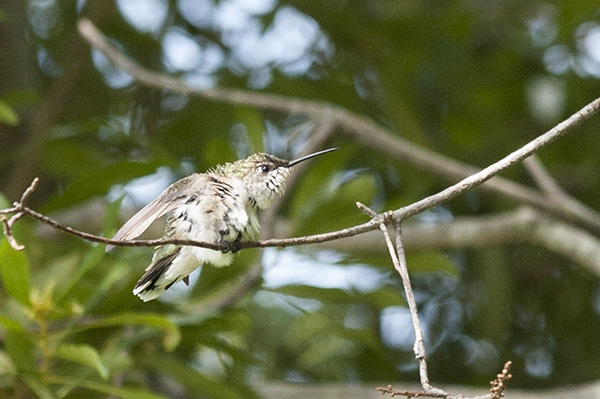
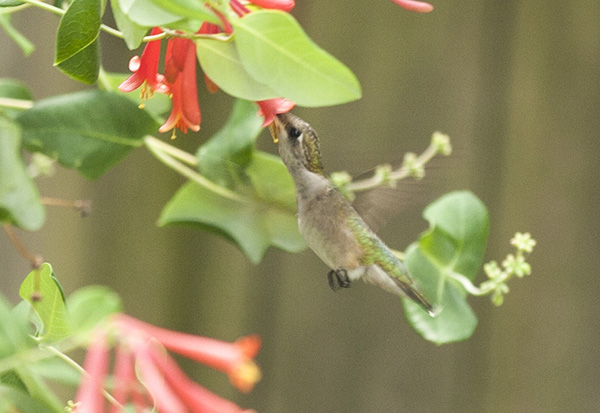
Now I see hummingbirds daily. They zip through the yard at reasonably predictable intervals, one or two an hour, and I occasionally find them resting high in the wax myrtle.

Hummingbird July 27

If I stretch the camera’s zoom to its limit, I am able to catch several frames before they become suspicious of my fixed attention and clicking shutter.

Hummingbird July 29

Hummingbird July 29

Hummingbird July 29

When two individuals cross paths, fierce and noisy bouts of aerial combat break out, with both birds squeaking rapidly as they dive and swerve. They are too fast for my camera during these skirmishes.

Hummingbird July 27

For that matter, they are too usually fast while feeding. These photos represent several hours of stalking. (I suspect most of my photos feature a single individual who has established a repetitive feeding pattern.)

Hummingbird July 23

Whether one bird or many, I hope the visits continue. I’m looking forward to a few more months of summer — a few more months of hot, humid afternoons in which to hone my hummingbird reflexes.

Hummingbird July 23


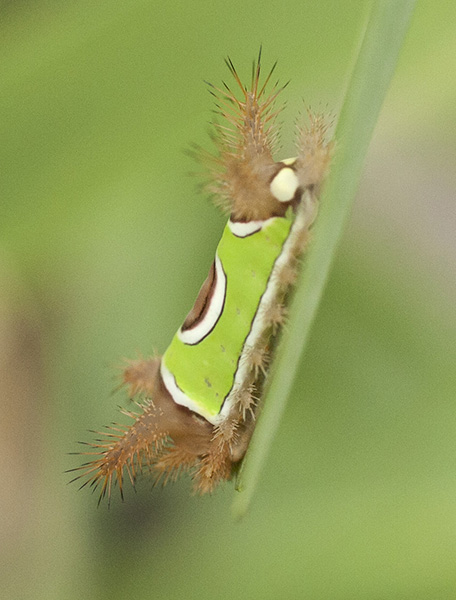
Saddleback Caterpillar

Saddleback Caterpillar July 31

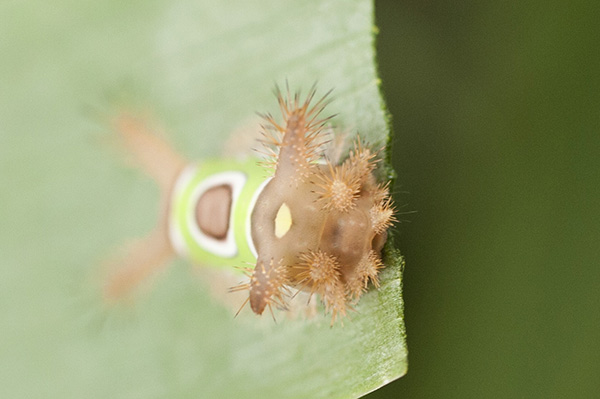
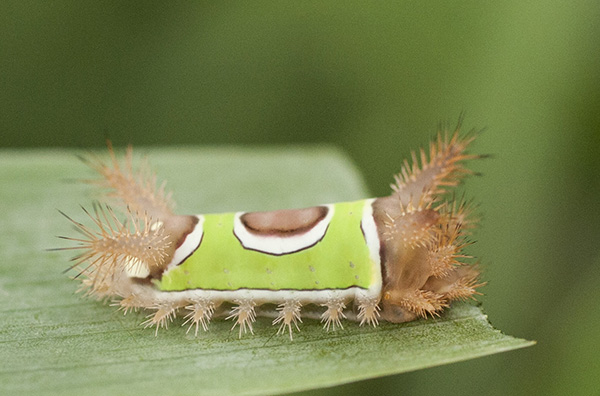
The saddleback caterpillar is one of North America’s stinging caterpillars. Each hollow spine is equipped with venom, and bright patterns on its back advertise the danger. Everything about it signals “Don’t touch!”

I found my first saddleback caterpillar in the yard yesterday, and I hope there aren’t many more. I’m not interested in finding out exactly how painful their stings can be.

Saddleback Caterpillar July 31

The University of Florida’s online reference says this: “The saddleback caterpillar is encountered most frequently as a medically significant pest, and has minor effects in landscaping and agriculture.” So, while my caterpillar was doing a very neat job of eating one of the iris leaves, its primary impact in the yard is being a “medically significant pest.” (Something about that phrase makes me want to write a poem.)

Saddleback Caterpillar July 31

The only North American caterpillar with a more venomous sting than the saddleback is the puss caterpillar, which I encountered in the yard a few years ago. Here’s a video I made at the time:


When I found the puss caterpillar in 2010, our newspaper’s wildlife columnist published one of my photos. She later published an article spotlighting readers’ stories of having been stung by both kinds of venomous caterpillars: Those cute little caterpillars can pack a big, painful wallop.

Yet another very good reason to wear gloves while working in the flower beds…

Saddleback Caterpillar July 31


Feeding the Rabbits

I never feed the rabbits on purpose. They are wild rabbits, not domestic.

Rabbit July 20

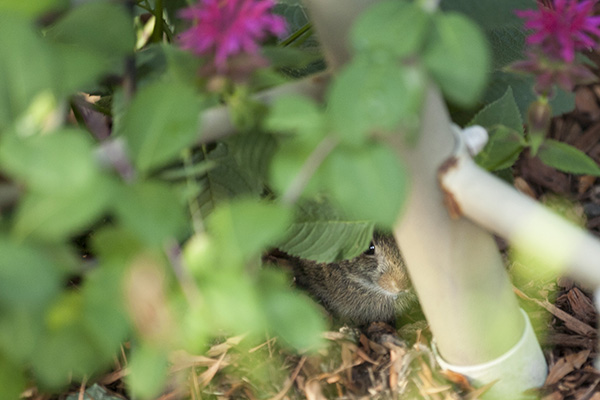
It’s a weak argument, at best, because I often put out bird seed. Birds are wild, as are the squirrels who steal the bird seed. Why feed them, but avoid feeding rabbits? Also, as a reader noted in commenting on a previous post, rabbits sometimes graze on flowers. Recent developments have made me consider this fact in new light. How can I claim to “never feed the rabbits” if I am planting flowers the rabbits will eat?
Marigold July 26

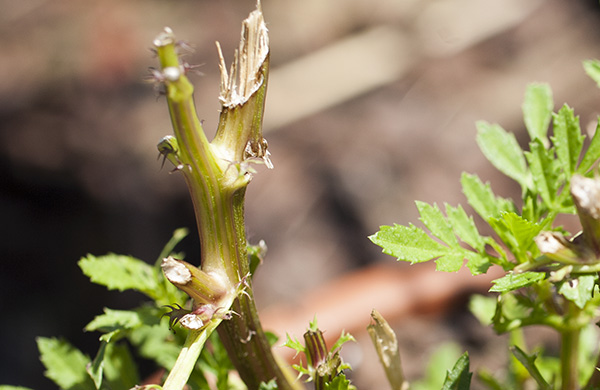
In past years the rabbits’ appetite for flowers has been low-impact, but this year’s toll is on the rise. By mid-July the victims included marigolds, rose of Sharon, succulents, a pair of ornamental sweet potato vines (which are in the process of recovering in a hanging basket), and coneflowers.

Succulents July 26

Potato Vine July 23

All of these losses were logged under “remember not to plant these again” and forgiven, until coneflowers entered the picture. Quite literally entered the picture, stoking my obsessive fascination with bees and bee photos.

Bee June 27

I bought the summer’s first coneflower on a whim, trying to ignore foggy memories of a previous coneflower failure. For over a week I enjoyed an increasing spectacle of bee activity.

Bee June 27

Then I woke one morning to a pitiful collection ruined coneflower parts. That afternoon, while a series of rabbits munched on the flower’s remains, I concocted a coneflowers-in-containers scheme. A short trip to the garden store later, I had a new bee-magnet planted out of the reach of rabbits. Or so I thought. Coneflowers, it seems, are irresistible rabbit treats. Containers that provided dependable rabbit-proofing in the past are no match for a motivated rabbit.

Deep in the grip of bee-mania, I returned to the garden store in search of a taller, better container. During that trip I bought two more coneflowers. I also bought tickseed and a hybrid black-eyed Susan, both labelled “deer resistant.”

Tickseed July 23

As I’m sure any true gardener would already know, “deer resistant” is not the same as “rabbit resistant.”

Rudbeckia July 23

As for my taller, better coneflower container…

Rabbit July 21

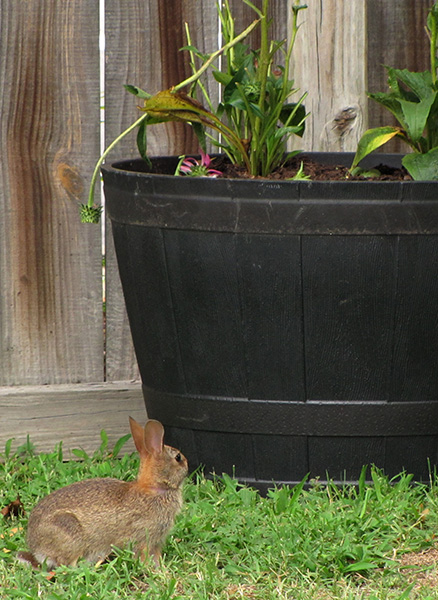
The big rabbits conquered it almost immediately, and the smaller rabbits soon followed.
Rabbit July 21

After eating its fill, this one spent some time mocking me…

Rabbit July 21

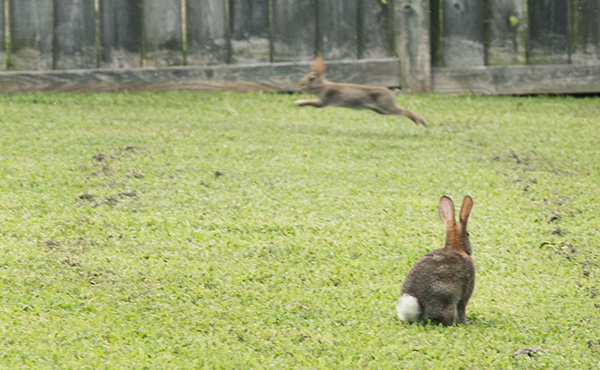
I knew the rabbits could jump that high. I just didn’t think they would. Especially as there was very little cover available in or around the coneflower container, and hawks often hunt in our neighborhood. Under normal circumstances, the rabbits avoid being so exposed.

Rabbit June 26

Rabbit June 26

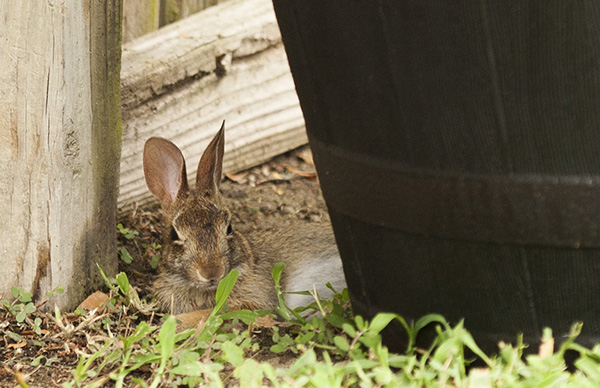
The following photo shows the same rabbit as earlier. I’m pretty sure it was still mocking me…
Rabbit July 20

I should have given up after the second failure. More reasonably, after the first. Because, in the end, all of my efforts added up to an embarrassing series of rabbit feasts. And, as much as I enjoy watching and photographing the rabbits, I didn’t mean to feed them.

I didn’t mean to feed them because I enjoy watching and photographing them.

Rabbit June 26

Rabbit June 26

Rabbit June 26

(The above photos were taken in late June. The babies are still growing, and a group of slightly older rabbits has joined them in the yard.)

Rabbit July 20
Rabbit July 20

The yard has never supported more than one or two rabbits over subsequent seasons, and five (or more) seems an invitation for overpopulation troubles. Ticks and tick-borne diseases are an obvious concern, as ticks are visible in many of my photos.

Rabbits July 5

Also, winter will certainly bring a shortage of food for the rabbits, along with other stressors. At this age, they should be learning how to find food. I fear that having it so easily delivered makes them less fit. It also encourages them to stay in a territory that cannot support such a dense population.

In trying to learn from my coneflower debacle, I’ve frozen my yard budget for the rest of the summer. No more new flowers. No more new containers. (I made one last purchase, before freezing the budget, which will appear in a future post.) The rabbits may take what they need from what the yard produces, and I will continue enjoying their antics, but they will remain wild. As wild as possible in their suburban habitat.

Watering the Robins

Robin May 26

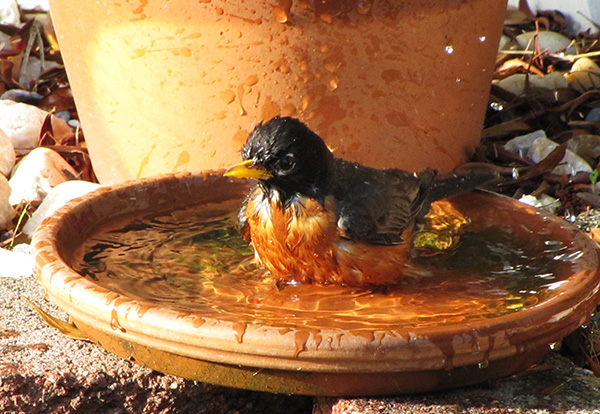
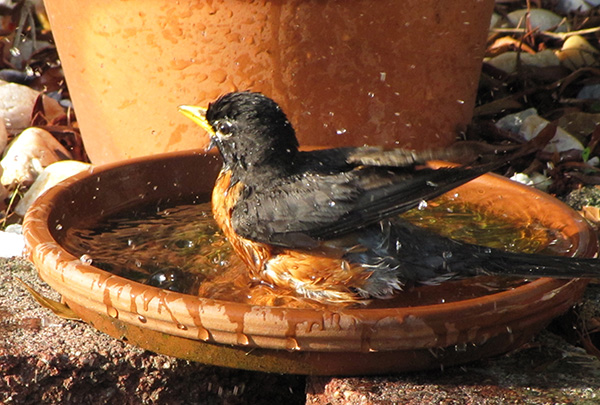
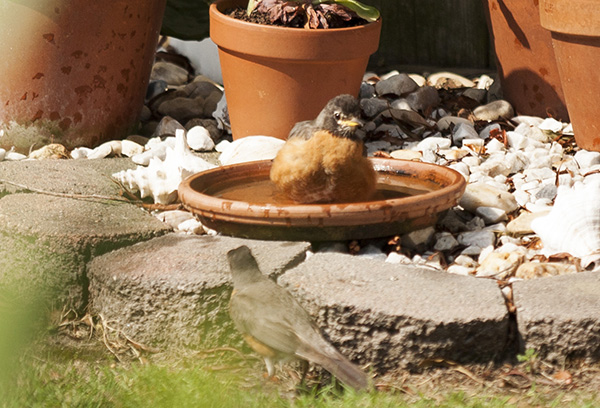
One of the features missing in our yard is a proper bird bath. I frequently pause in front of bird bath displays at home improvement and garden stores, but I always find an excuse to move on without buying. My most recent excuse has to do with our robins, who seem perfectly content to bathe in plant saucers.

Robin May 26

Robin May 26

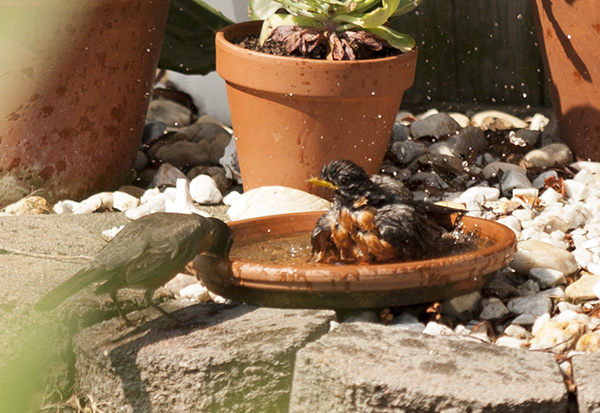
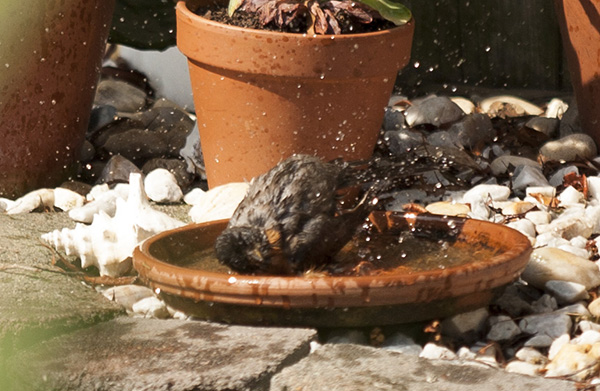
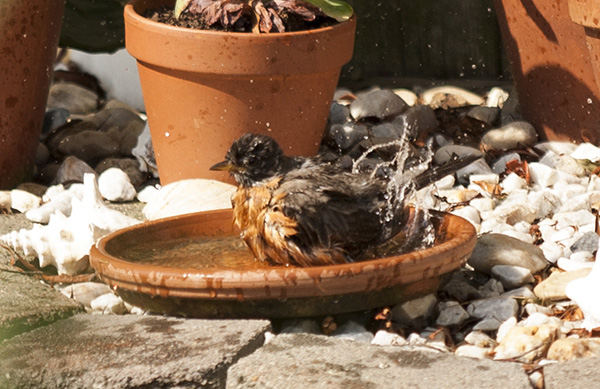
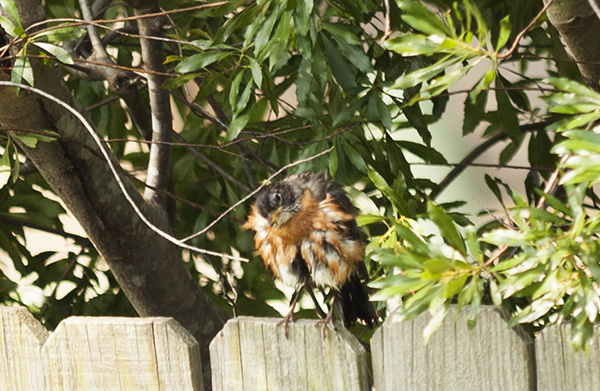
As the summer has gotten hotter, the robins have started following me around the yard while I water the flowers, waiting for me to fill their saucers. Then they line up and take turns splashing about, sometimes returning three or four times before the water level gets too low for splashing.

Robin July 8

The yard’s smaller birds, even the rabbits and squirrels, hang back and wait for the robins to leave before they approach. I’ve tried adding more saucers, but each new saucer only multiplies the number of robins that flock toward our yard when they hear me turn on the hose.

Robin July 8

Robin July 8

Robin July 8

It’s almost enough to make me want a swimming pool, so I could do some splashing of my own.

Robin July 8

Anaxyrus (formerly Bufo)*

Toad May 2

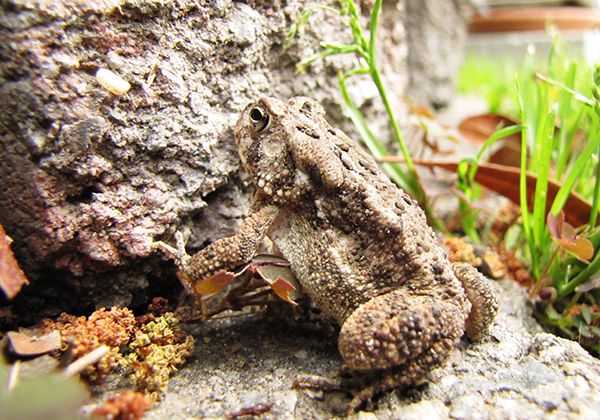
Early in May I found this little toad while I was mowing. After taking a few photos, I helped it into a flower bed and continued mowing, planning out a blog post as I made circuit after circuit around the yard.

I thought it would be a fun exercise to identify my toad. In the past, I’ve had good luck identifying reptiles and amphibians using the information provided on the Virginia Herpetological Society’s website, so I started there.

Have a look at this page from the website, which outlines the anatomy of a toad’s head, particularly the cranial crests, postorbital ridges, and parotid glands. The next page illustrates how these structures help identify three of the six species of toads found in Virginia.

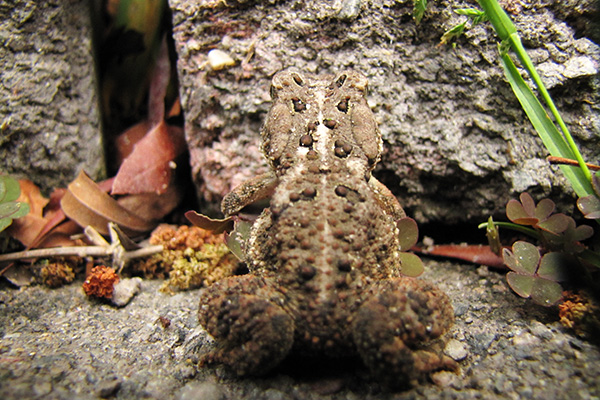
Based on a visible (but not prominent) cranial crest, I narrowed the list of possibilities to either an Eastern American Toad or a Fowler’s Toad. But the pertinent detail for separating these two species, whether or not the postorbital ridge contacts the parotid gland, was not discernible. Falling back on secondary characteristics, I spent some time counting the number of warts in each of the toad’s spots. One or two warts per spot indicates an Eastern American Toad, while Fowler’s Toads have three or more. My toad had one or two in most of its spots, but three in a few. Since the two species are known to hybridize, was this inconsistency enough to identify my toad as a hybrid?

Two of the other listed characteristics aren’t visible in my photos. I can’t say whether my toad had spots on its chest and abdomen, nor if it had any enlarged warts on its tibia. (No enlarged warts are visible in my photos, but the photos do not show the full length of both tibias.)

Having exhausted my vague knowledge of toad anatomy, but still without a definite identification, I was curious as to whether an expert might have better luck. I sent my photos to the Virginia Herpetological Society’s e-mail identification resource, and their prompt response said my toad was likely a Fowler’s Toad. But they added a note: “Toad ID can be a bit tricky…”

Toad May 2

* In the last decade, genetic findings have shaken up the world of toad nomenclature. One of the changes removed some North American toads from the genus Bufo and shifted them into a new group with an old name, Anaxyrus. This article provides a good overview. So, for most of my Virginia toads, Bufo has been reduced to a parenthetical:  Anaxyrus (formerly Bufo). I feel a bit bereft, as Bufo was one of the few genus names I had bothered to memorize, but I suppose Anaxyrus is easy enough to remember. Except, I’m not quite certain why I would ever need to remember the genus names of North American toads…