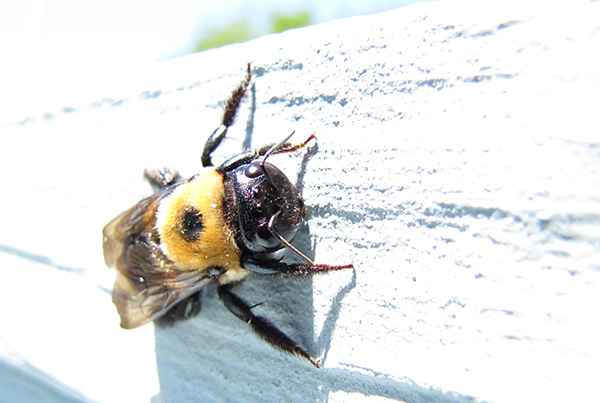
This summer’s butterfly shortage is not reflected in the yard’s bee activity. Early in May carpenter bees began arriving, followed quickly by mixed swarms of bumble bees, mason bees, mining bees, and sweat bees.
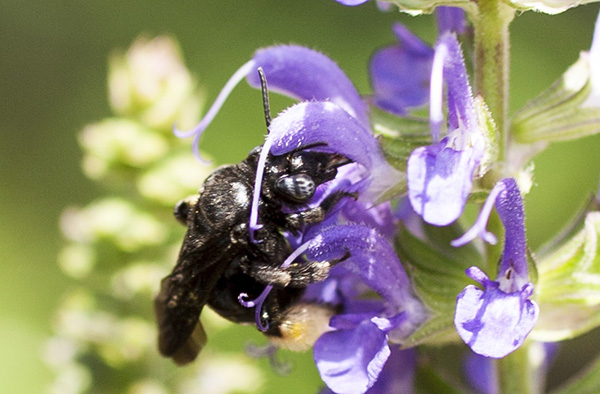
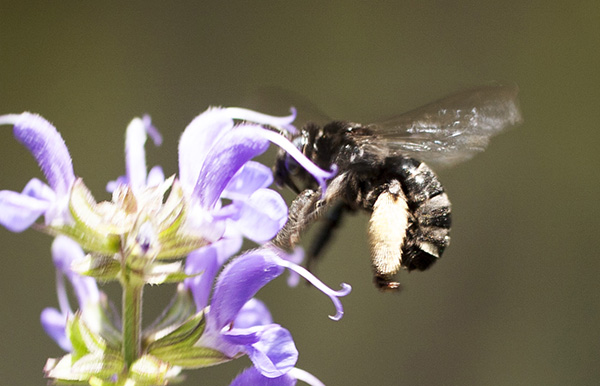
At first I tried to identify the bees in my photos, but my limited taxonomy skills were no match for the maze of overlapping body sizes, varying wing-vein patterns, and individual nesting strategies. (This article from National Geographic discusses, in part, the difficulties of bee identification.) Now I’m content to file all of my bee photos in a single “bee” folder, organized by date.
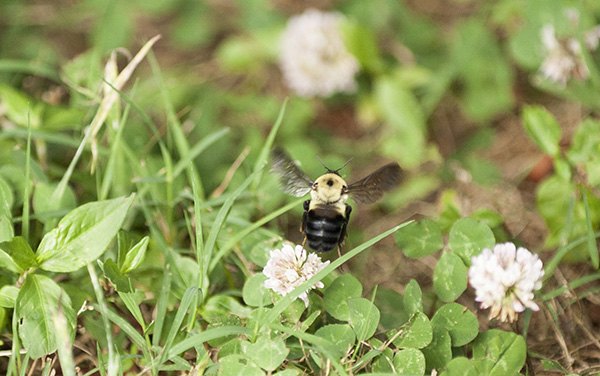
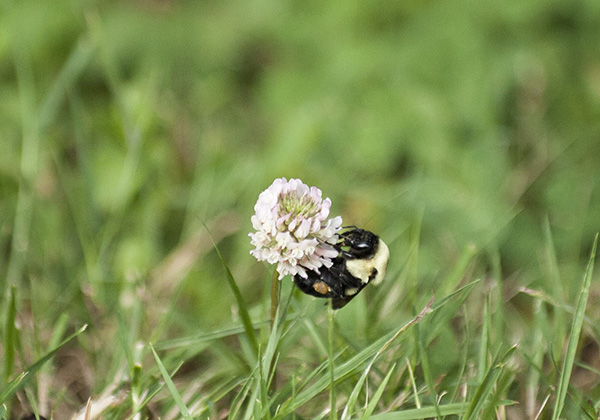
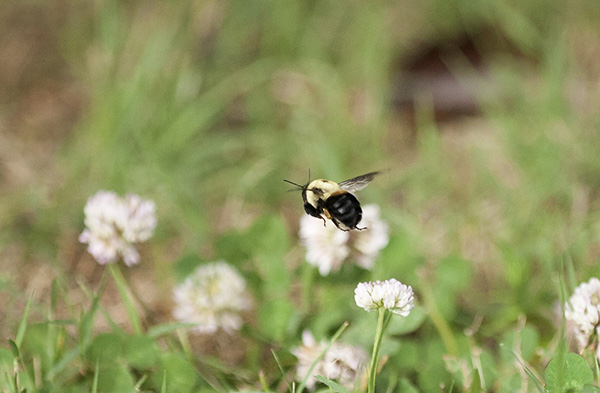
None of the yard’s bees seem to mind being photographed, even from very close range. I’ve spent hours, this summer, crawling through patches of clover and kneeling beside the flower beds.
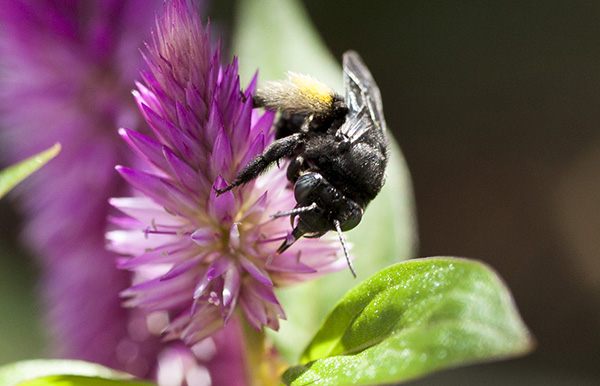
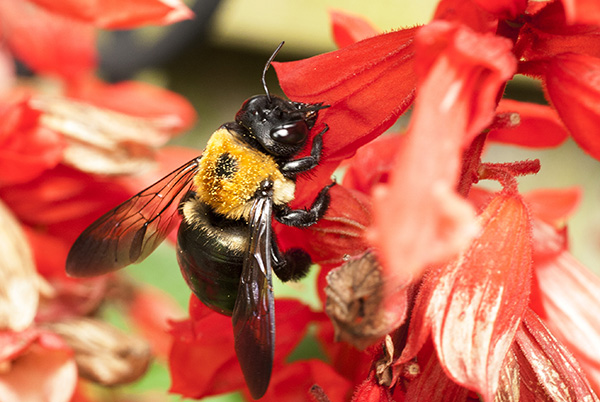
In all those hours I haven’t seen a single honeybee, which isn’t too surprising given the current crisis of Colony Collapse Disorder. Beekeepers have experienced devastating losses as their hives fail, and the dwindling honeybee population is a potential disaster for parts of the agricultural industry. Pollination is a key step between flower and fruit, between planting and harvesting. For some of our favorite fruits and vegetables, an orchard or field with active bee pollination produces increased quality (and quantity) at harvest. Take away the bees and the harvest suffers.
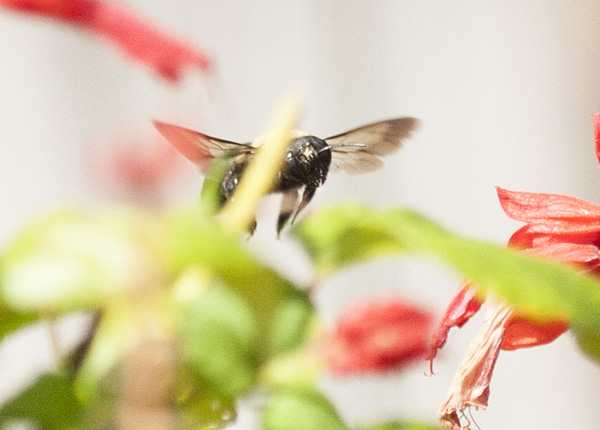
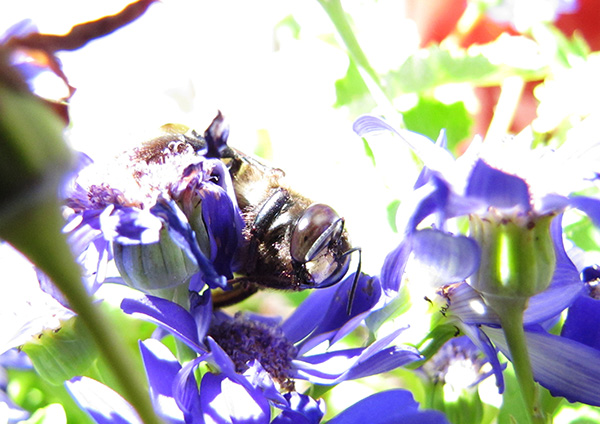
Fortunately, research indicates that solitary bees and bumble bees are excellent pollinators, especially when they share territories. (This blog post at Charismatic Minifauna offers a summary of research findings in blueberry crops. And a few miles from the yard, researchers are following strawberry crops pollinated by mason bees.)

In the past, I’ve been reluctant to add bee houses to the yard, fearing stings. This summer’s bee hours have quieted that fear, and I’m planning to add at least two bee houses over the winter. These will provide nesting spots for mason bees and leaf-cutter bees, either in pre-drilled blocks of wood or bundles of reeds. (Here’s an article with instructions for building bee houses: Native Bees, Solitary Bees, and Wild Bees: What are they? [PDF].)
Hopefully next summer I’ll spend even more hours crawling through the clover and kneeling beside the flower beds…
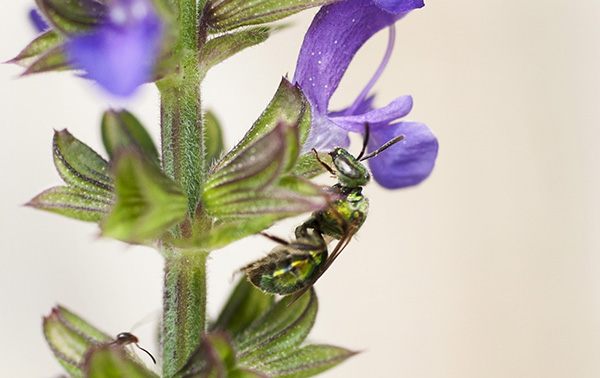
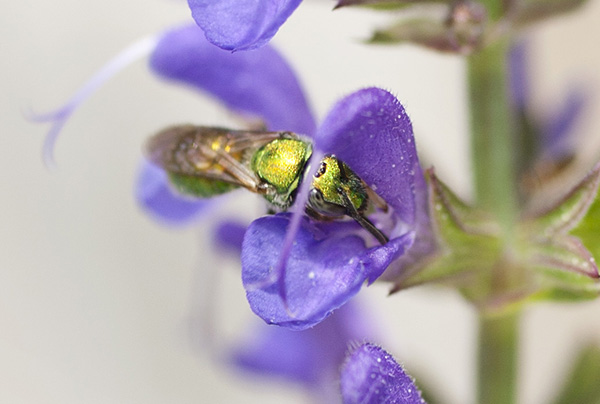









 Rae Spencer