Yard Surprises and Writing Surprises

When the wild rabbits ate multiple sets of coneflowers this summer, I allowed myself one final purchase before freezing the garden budget. I bought milkweed for the monarchs. More specifically, I bought swamp milkweed. Which the rabbits promptly ate.

Rabbit Aug 12

Milkweed is toxic, so I don’t know how the rabbits were able to eat it without getting sick. Far from getting sick, they ate until every last leaf was devoured. Fortunately, by the time the bare stalks recovered enough to put on new leaves, the rabbits had tired of milkweed.

I assumed (such a dangerous verb) that my milkweed’s season had passed, that it would see no monarch activity until next summer. I was wrong, as I discovered on Monday.

Monarch Caterpillar Sept 22

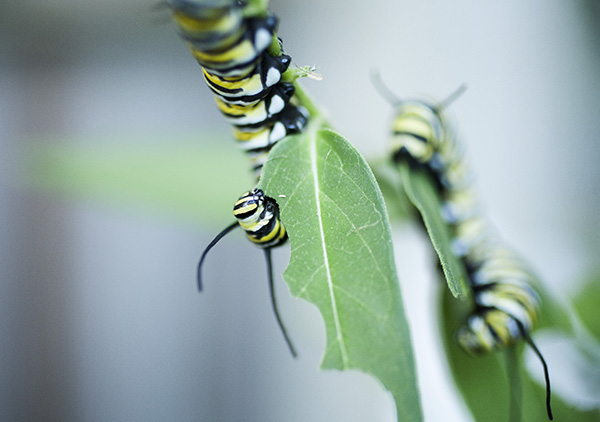
There were nine caterpillars when I found them. One disappeared by nightfall on the first day and another died during the night, but seven continued to gorge on the milkweed’s leaves.
Monarch Caterpillar Sept 22

Monarch Caterpillar Sept 22

On Tuesday, one caterpillar decided it was time for wings. It hung from its back legs all afternoon and evening, twitching every so often, swaying in a storm-front breeze. I waited and waited, hoping to see it molt into a chrysalis, but when night came it was still a caterpillar.
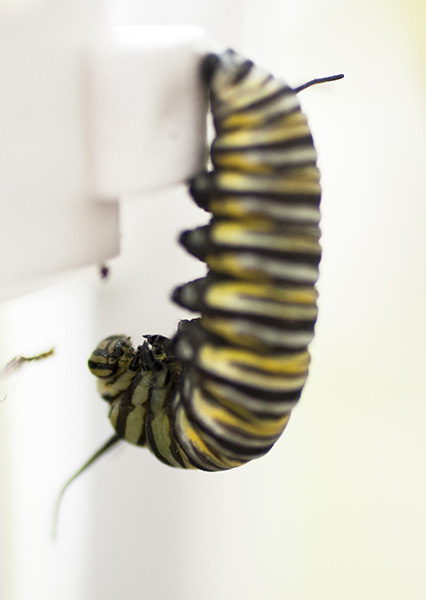
Monarch Caterpillar Sept 23

Prior to finding the monarchs, I spent Thursday evening, all day Friday, and most of Saturday at the 6th Annual Hampton Roads Writers Conference. This year I went to sessions about the mechanics of fiction and nonfiction, the world of independent publishing, and twitter. (Yes, twitter!) I made new friends and took reams of notes, and on Saturday my poem “The Tracking” won first place in the 2014 Barbara Dunn Hartin Memorial Poetry Prize!

Poetry 1st Place

Then my fantasy short story “The Silvershaper” won third place in the 2014 Frank Lawlor Memorial Fiction Prize!

Fiction 3rd Place

Best of all, the conference brought an epiphany regarding my unpublished fantasy manuscript. A trio of sessions about story openings, plot, and voice uncovered the root of a pacing problem in the first five chapters. It’s a problem I can fix, now that I can see it.

As exciting as awards and epiphanies are, they represent a small part of my writing experience. They’re like finding monarchs in the yard, flashy glimpses of wonder. Most of writing’s surprises are quieter discoveries. Accidental phrases open new perspectives; plots turn slippery and skid off in unexpected directions; sub-plots bloom into stories of their own.

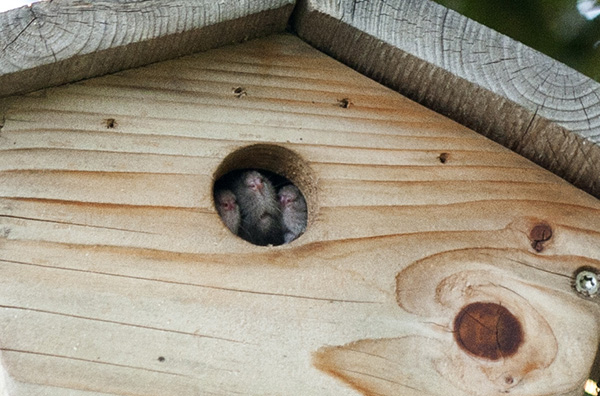
Those are the happy surprises. Unpleasant surprises happen, too. Failed poems, unresolvable stories, harsh critiques (which I’ve found are more common online than in person), lost submissions, and sudden doubts so ferocious that success seems impossible. These are like rodents moving into my wren house.
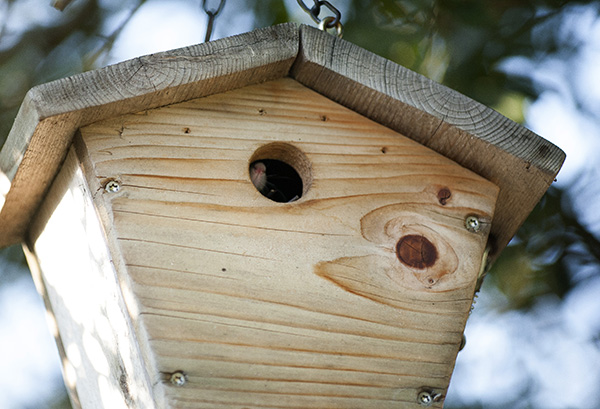
Rats Sept 21

(When I spotted movement in the wren house on Sunday, I hoped for a late-season nest. I should have been more specific and hoped for a bird nest. Luckily, the rodents didn’t stay.)

Rats Sept 21

Rats Sept 21

Rats Sept 21

Were I allowed to choose my yard and writing surprises, I would always opt for monarchs and awards. There would be no lost submissions, no anxious waves of doubt, and no unwelcome rodents*. So perhaps it’s best that I’m not allowed to choose. Because if yards were made only of monarchs and writing meant only awards, think of all the stories that would never be told.
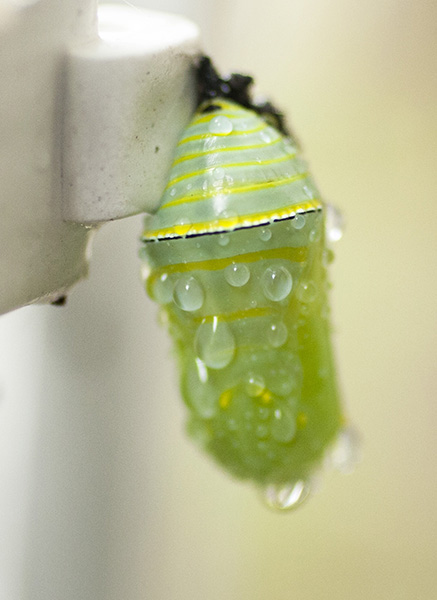
Monarch Caterpillar Sept 24


* I had a pet rat, when I was a teen, and a pair of pet mice during college. I find it hard to despise rodents, but in my alternate reality the rats and mice would all be free of diseases. And they would clean up after themselves. No more breaking into pantries for food, no more trails of droppings and urine, no more Hantavirus or listeria or plague, nor any of the other devastating illnesses mice and rats carry in the real world.

Fall Webworms

Pear Leaf Aug 2

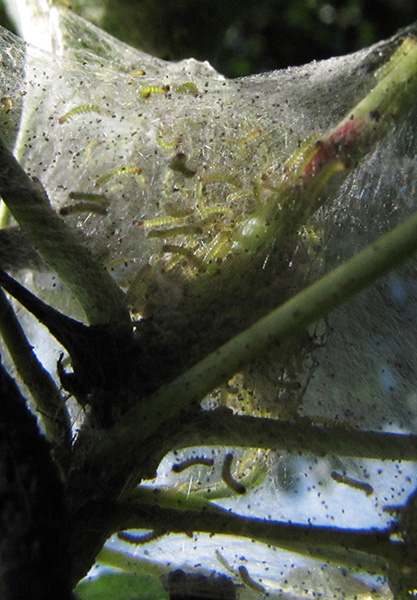
Earlier this month I noticed a few silk-encased leaves on the pear tree. I suspected the webs were the work of Eastern Tent Caterpillars, because I had found a few of these caterpillars under the pear tree last summer.

Last summer’s caterpillars never caused a problem in the tree, but this year the tree sprouted more and more webs.

Pear Leaves August

This afternoon I typed “tent caterpillar” into my web browser and within a few clicks discovered I was on the wrong track. It’s the wrong time of year, and our webs are located at the ends of branches rather than near the trunk. So these are not Eastern Tent Caterpillars. Instead, I believe they are Fall Webworms.

Caterpillars August

(My caterpillar identification process is not very scientific, consisting mostly of browsing the internet and trying find something that looks like my photos. Please comment if you can correct or confirm my identification!)

Caterpillars August

The caterpillars are not doing much damage. There are only six or seven webs, confined to the lowest branches on one side of the tree. The affected leaves are being eaten, but they represent a very small proportion of the tree’s total leaf count.

Caterpillars August

Caterpillars August

Even though our tree is not suffering, several nearby trees are completely shrouded in webs. As I’m reluctant to test the health of our pear tree, I’ve trimmed its most heavily webbed branches and opened the remaining webs as recommended.

Caterpillars August

I don’t know if the House Wrens will eat these caterpillars, or if they’ll leave them for other birds. But if they do eat the Fall Webworms, my work should make feeding their hungry nestlings a little easier.

Wrens August 22

Insects in The Yard (Arachnophobia Alert!)

These images were selected for various posts in September and October, but fell short somewhere along the way. Some posts changed course, mid-process, and the photos were no longer relevant. Sometimes the photos were redundant or too tangential, sometimes they simply didn’t “fit”.

Whatever their failings, they’ve been collecting in a “Miscellaneous Insects” folder on my desktop. Today seemed like a good day to post them, before I sentence them to the External Hard Drive Archive…

Thread-Waisted Wasp

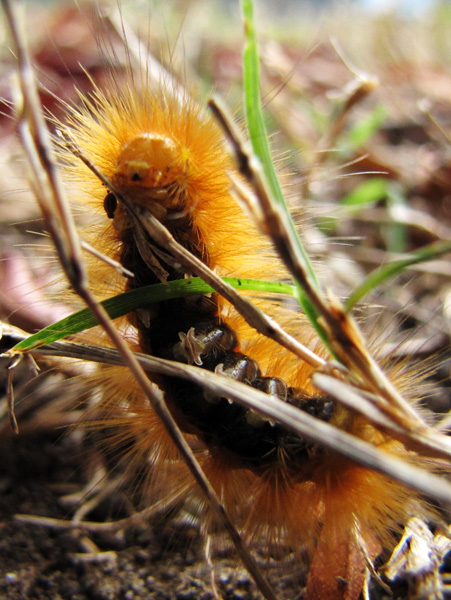
Some years ago, the tree beside our mailbox became infested with yellownecked caterpillars. (I believe the following moth is the adult form of these caterpillars. Please comment if you can confirm or correct my identifications!)

That first summer, the tree’s lower branches were stripped of leaves by fall. The next summer, thread-waisted wasps arrived in the yard.

Dozens of these wasps dug burrows in the loose soil under the tree. The following year, we saw very few caterpillars and even fewer wasps. The tree kept most of its leaves. Another year later, the caterpillars surged again. More wasps, as well.

They continue on in this pattern. Every other summer, we have caterpillars and wasps, with the between years bringing decreased populations of both.

The wasps are very efficient. A burrow takes only fifteen or twenty minutes to complete. They dig with their front legs and jaws, vibrating their wings as if to loosen the soil faster, and carry the excavated dirt several feet away. Each trip clears a pea-sized lump.

When the burrow is deep enough, they fly into the tree, sting a caterpillar, and let the stunned victim fall. They find the caterpillar on the ground, grasp it in their impressive jaws, and drag it into the burrow. A few minutes for egg laying, and the job is done. (I missed this part of today’s activity because my camera batteries died. 😦  Maybe I’ll get another chance tomorrow.) When finished, the female stuffs clumps of dirt and small stones into the burrow’s entrance. Then she moves to a different part of the yard and starts all over again.

The sandy parts of our yard, where grass grows poorly, are peppered with burrows right now. Next year, I expect the tree will keep its leaves all summer.

As a final note today, this might be the same mockingbird that I photographed yesterday. It certainly had the same sneeze…

Rainy Day Repost

Another rainy day and another video from the summer archives. (I blame the rain, but it’s not the rain’s fault. Even if it does make me so sleepy I can hardly think.)

This video has a little history. In the process of identifying the caterpillar, I contacted our local wildlife columnist. She included one of my pictures in her column and published a follow-up column after another reader reported being stung.