Focusing on Mallards Part VI: States claim the game

‘When you have killed all your own birds, Mr. Bingley,’ said her mother, ‘I beg you will come here, and shoot as many as you please on Mr. Bennet’s manor. I am sure he will be vastly happy to oblige you, and will save all the best of the covies for you.’ –from Pride and Prejudice by Jane Austen

Content Warning

This multi-part blog post contains references to hunting, agriculture, and research practices of killing birds. This particular installment references various methods and means of Mallard hunting, past and present. If you decide not to read on, I respect and admire your choice.
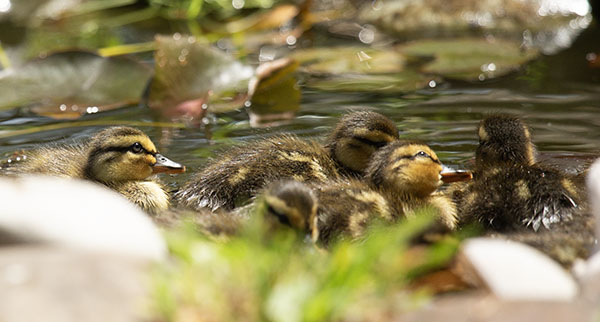
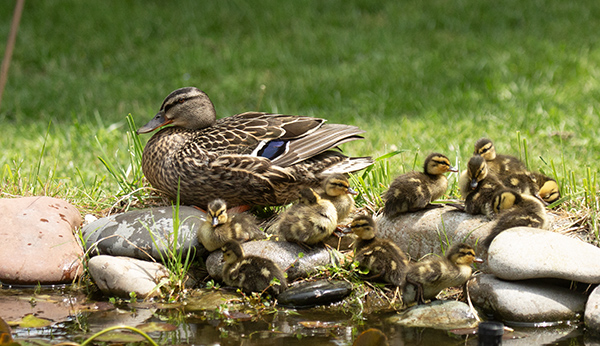
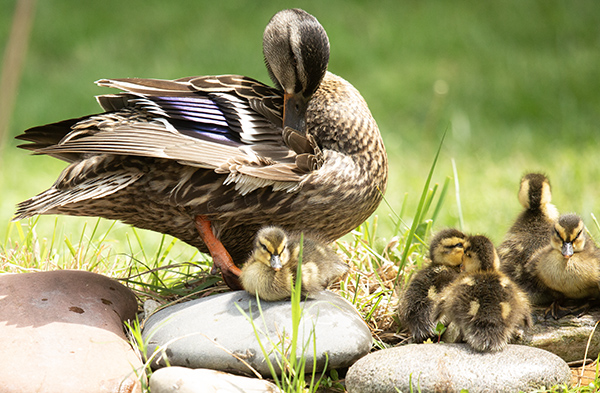
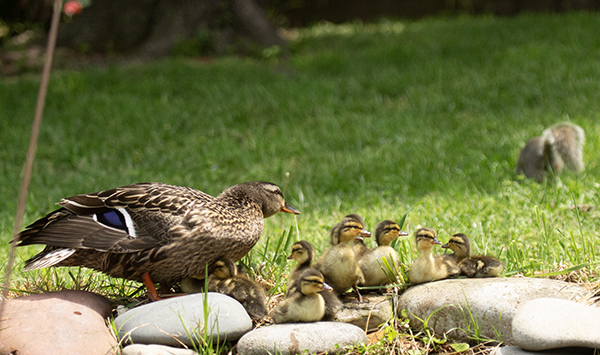
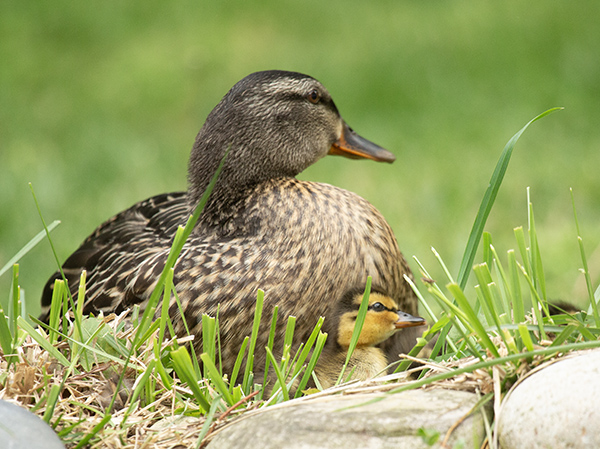
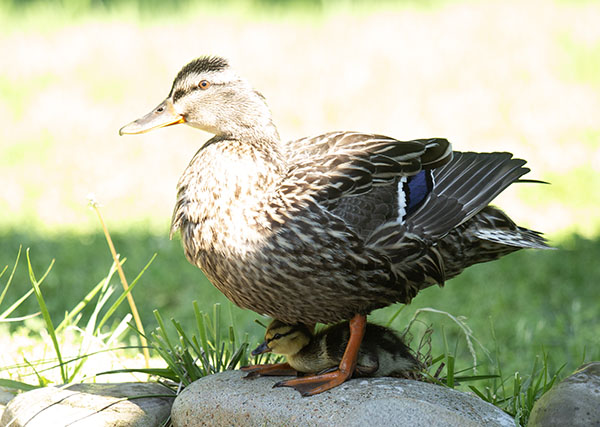
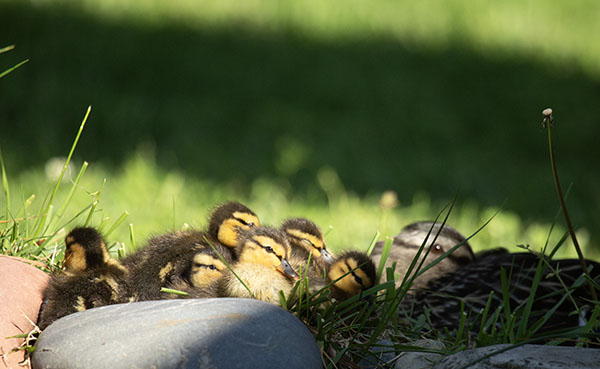
Photograph from a recent spring nesting in the yard. In this photo, a Mallard hen is leading her day-old ducklings from their nest in the irises bordering the dragonfly pond. The hen is balanced on a large rock, downy nest-fluff sticking to her feet. The ducklings are following in a huddled flock, clinging together for safety.
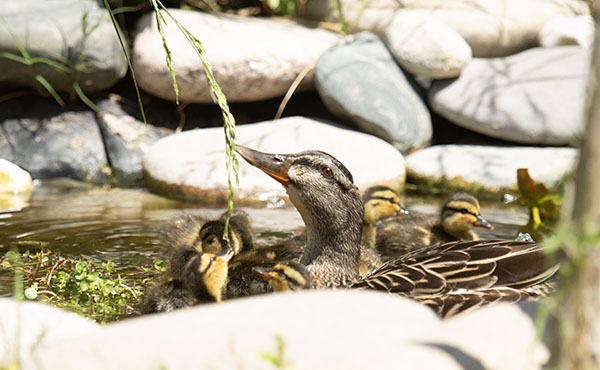
Photo from the Mallard archive. Here, a Mallard hen and her ducklings are leaving their nest for a family swim in the dragonfly pond.

Limiting (and limited) expectations

It was easy to position my own context for these posts (see Part IV). But all of my (deleted) attempts to contextualize Mallards in pre-1800s North America have been as flawed as my knowledge.

It’s a given that there are records outside of the Mallard archive, outside of the Mallard mine, that explain how and why North America’s waterfowl maintained flagrant abundance within and around the continent’s early nations. But I don’t have a discourse for these records.

In the end, after all of my reading, I am not equipped to know North America’s pre-colonial Mallards, much less describe them. They are, for me, a personal singularity. An infinite intangible that disturbs my erratic journey.

In other words, I’m only telling one facet of the Mallard story: the part written by and for Europe’s descendants.

Caveat lector.

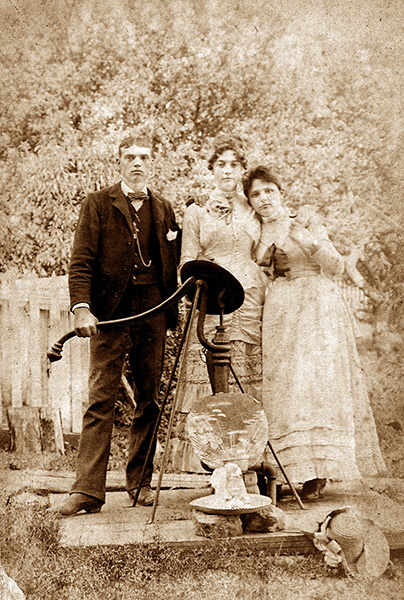
Sepia-toned photograph of three young adults posing beside a pump-handled well in what appears to be a fenced yard. All are wearing formal-appearing attire—two wearing layered and ruffled dresses and one wearing a suit with a prominent pocket-watch chain. A beribboned hat is on the ground in front of the well.
Photograph from the family archive, Iowa, 1881. The trio in this photo were younger than Iowa (granted statehood in 1846) but not a lifetime younger.

In medias res

When I last left the Mallards, in the opening decades of the 1900s, their populations were collapsing. For the moment, I’m leaving them suspended in free-fall.

This post circles back to the 1800s. Back to an era of unchecked habitat destruction and overhunting. Back to the transition years, when state lawmakers claimed title over wildlife and began to legislatively dismantle game markets.

“Wetland utilization in North America provides a classic case of conflict in resource management. The disadvantages of marshes and ponds for the individual farmer encourage their drainage and conversion to cropland. At the same time, these wetlands provide vital habitat for migratory waterfowl, a principle wildlife resource…” (Pospahala, Anderson, & Henney, 1974, pp. 5–6).

Sepia-toned postcard image of a wetland setting in South Dakota. A smallish body of seemingly stagnant water is bordered by dense brush and shrubs.
Photo postcard from the family archive, South Dakota, c. 1900.

“We, who cannot live without wild ducks, must first of all acknowledge two facts: 1. We are the minority; 2. The majority regards any land which is too wet to plow, but unsuitable for swimming or water boating, as useless” (Anderson, 1953, p. 122).

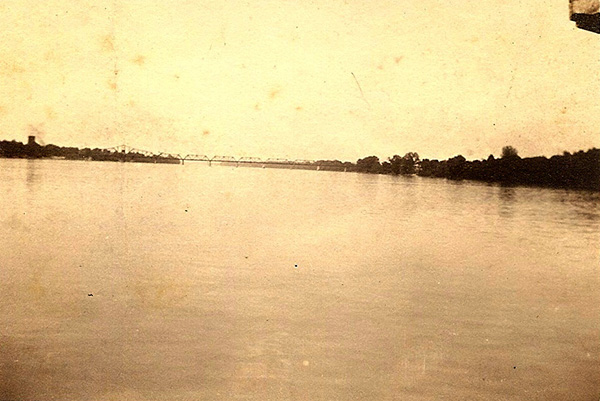
Sepia-toned image of a large body of water with a distant silhouette of truss bridge. The photo's horizon is slightly tilted, the bridge has six visible segments, and a jointed corner of wood is visible in the upper right corner of the frame.
Photo from the family archive, location unknown, c. 1900. A large body of water with a truss bridge in distant silhouette.

These were never the King’s ducks

After fleeing systems in which wildlife belonged to the aristocracy, the English and French colonists in North America drafted new rules. In the colonies, wildlife would belong to the citizens. To the People. (Not, however, to the People who already lived in North America. Only to those who staked their various flags along eastern coastlines and cascaded westward.1)

“The explorations of these settlers were driven by the incredible wealth of North America’s renewable natural resources—and by an unfettered opportunity to exploit it” (Organ, Mahoney, & Geist, 2010, p. 23).

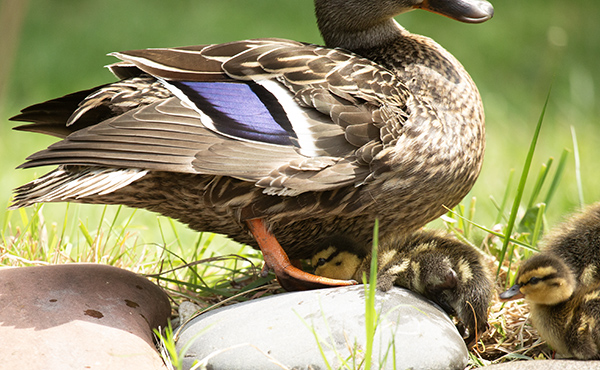
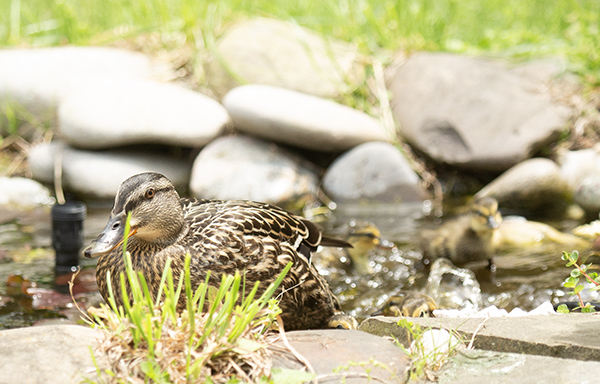
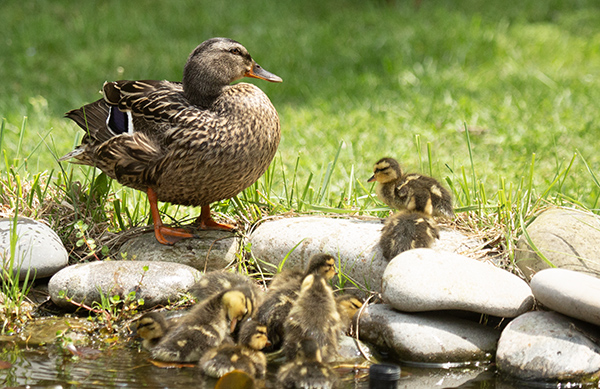
Photograph of a Mallard hen perched on a stone that is part of the border of our dragonfly pond. One of her days-old ducklings is scrambling up the stone's slope, trying to reach the safe and familiar comfort of her protection. Two other ducklings are in line, waiting to test their own climbing skills.
Photo from the Mallard archive, of a Mallard hen standing on one of the stones that border our dragonfly pond. Here, the hen was taking a break from teaching her ducklings to swim and forage.

Who killed (kills) the People’s birds?

During the glut years of the 1800s, US hunters took to the field in three different pursuits: subsistence hunting, sport hunting, and market hunting.

As subsistence hunters took (take) only what they need for survival, their impact on bird populations was (and still is) minimal. But sport hunters, in the 1800s, tended to binge. Each adventure piled up the carcasses:

“The geese were flying all day, thousands upon thousands of them. We killed 163 that day. We had a farm wagon with extra side boards for carrying eighty bushels of wheat. Our kill nearly filled that wagon box. I know that night when we drove back to Dawson, which I think was eight miles distant, we were cold and wet and we all stuck our legs down in the geese and the warmth of their bodies kept us comfortable” (Mershon, 1923, pp. 117–118).

Sepia-toned photo of a horse harnessed to a cart (carriage? buggy?) driven by a man in a suit and hat, complete with thick gloves that have a star emblem on the wide cuff. A cluster of two-story houses make up the background.
Photo from the family archive, location unknown, c. 1900. Not a wagon, I know, but still a reminder that personal transportation in the 1800s was single-digit horsepower.

After each binge, sport hunters returned to their families and their varied professions.

Unless the binge was their profession.

The Meat and Feathers Market

Between 1820 and 1860, America’s cities blossomed from a thin seeding of only 5% of the population to a significant 20% demographic. “Markets for wildlife arose to feed these urban masses and to festoon a new class of wealthy elites with feathers and fur” (Organ, Mahoney, & Geist, 2010, p. 23).

Market hunters earned a living harvesting the wildlife that lived in unclaimed (or claimed and unsupervised) wild places. The siren song of profit penetrated every field, marsh, and wooded acre, tempting hunters to abandon the traditional and self-imposed restraints that defined hunting as a sport.

“A momentary question goes through your mind. ‘Shall I give them the first barrel on the water?’ It is dismissed almost as soon, for early I have been taught it is not the way of the sportsman. Give the birds a chance is the rule. Yet I can not help hoping they will be well bunched and I can get more than one with the first barrel and hope for another with my second. Well, sometimes it works one way and sometimes another. Either way it’s the life worth living” (Mershon, 1923, p. 76).

Giving the birds a chance, for the market hunter, was a profit gamble.

Sepia-toned portrait of two young adults seated at a table. Both are posed with a hand of cards, as if playing poker. Both are wearing suits, though they have taken off their jackets. Both are wearing hats. One is smoking a pipe. The gambler on the right is showing an ace to the camera, held below the level of the table. Paper money, larger than today's bills, is hanging over the edge of the table.
Photo from the family archive, location unknown, c. 1900. Photographer’s stamp: “W. C. Bryant Artistic.”

It was highly likely that a hunter the next county over would happily shoot all the birds on all the waters, rules be damned.

The market wanted meat and feathers, so meat and feathers the market would have.

Sepia-toned portrait, c. 1900, of two young adults wearing hats decked out in feathers. Their coats have big fancy collars, one of thick fur and the other of feathers.
Photo from the family archive, location unknown, c. 1900. Time has taken their names, but their faces and feathers remain.

Any hunter willing to renounce the title of “sportsman” could cash in.

What would you have done?

Endless demand v. limited supply

Around cities and towns, market hunters drained the wildlife from marshes and woodlands and fields. And as nearby wildlife dwindled, sportsmen were forced further afield for their binges.

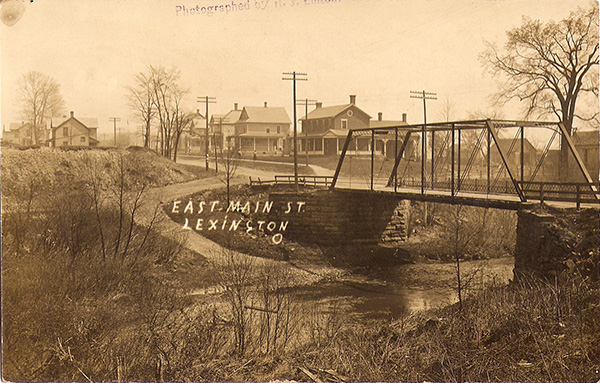
Postcard photograph stamped "Photographed by H. J. Linton" and hand-labelled "East Main St., Lexington, O". A small, single-section truss bridge crosses a brook, several two-story houses line the road beyond the bridge, and utility poles break the horizon.
Photo postcard from the family archive; East Main St., Lexington, Ohio; c. 1900. The photographer’s stamp, HJ Linton, suggests the image was snapped by a relative on some distant branch of a grandmother’s family tree.

“Conflict soon arose between market hunters, who gained fortune on dead wildlife, and the new breed of hunters who placed value on live wildlife and the sporting pursuit of it” (Organ, Mahoney, & Geist, 2010, p. 24).

By the late 1800s, some of the birds had been hunted to extinction.

“The first bird I ever killed on the wing was a wild pigeon. They frequented the Saginaw valley in thousands from early spring until after the harvest. I had been taken with my uncle and father pigeon shooting many times to pick up birds. It was no trick for them to get seventy-five or a hundred birds before breakfast, and soon after I was given my 16-gauge double barrel gun I was taken out to shoot pigeons. The flocks were dense, as I now recall, so it was not a difficult feat to bring one down, and at the very first discharge a pigeon from my shot came fluttering to the ground. I grabbed it and admired it and was satisfied for that morning to have it my entire bag, and proudly took it home to show my mother. It was not long before I was going pigeon shooting regularly every morning, for the flight began at daylight and was generally over by seven o’clock. Then I would get my breakfast and be off to school. My pigeon shooting continued every spring until about 1880, when it was gone forever” (Mershon, 1923, p. 3).

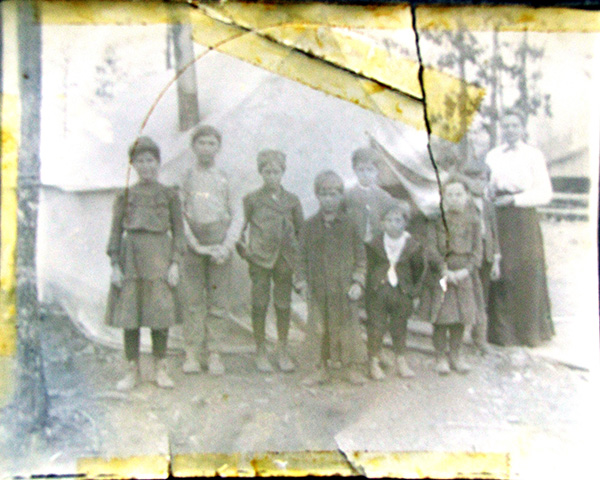
Sepia-toned photo of a group of twenty-seven children, teens, young adults, and adults—seemingly assembled for a school photo. All of the children in the front row are barefoot, most are wearing long-sleeved shirts and coveralls or long-sleeved dresses with large ruffled collars. Two children in the front row are holding hats on their lap, one has a hat hooked over one knee, while yet another hat has been tossed to the side and waits, upside down, to be reclaimed. Some of the younger children have neatly parted hair pulled back in (probably) a braid, others have very short hair that is either too short to style or barely long enough to support styling to one side or the other. The teens and young adults with long hair have puffy updos with a few prominent ribbons, while those with short hair have a suggestion of bangs swept to the side. A dog has joined the first row of students.
Photo from the family archive, location unknown, c. 1890(?). I wonder if the author of the previous passage went to school barefoot, with his hound to keep him company?

“No ordinary destruction”

In the sport v. market skirmishes, sport hunters always had the upper hand. Reputation and tradition amplified their voices.

“Furthermore I will prove by sundry reasons in this little prologue, that the life of no man that useth gentle game and disport be less displeasable unto God than the life of a perfect and skillful hunter, or from which more good cometh. …he shall go and drink and lie in his bed in fair fresh clothes, and shall sleep well and steadfastly all the night without any evil thought of any sins, wherefore I say that hunters go into Paradise when they die, and live in this world more joyfully than any other men” (Edward, Second Duke of York, 1406–1413/1909, pp. 4, 11).

“It is stated that in their migrations northward, the waterfowl often reach the lake in the spring, while it is still covered with ice, and that while huddled in great numbers in the mouths of streams and other open places, they are slaughtered indiscriminately, and that while too poor and unfit for eating. It is also represented that they are killed and wounded in great numbers by the swivel or punt gun, which is a small cannon fixed to a boat, and that by these practices they are driven from their usual feeding grounds and places of resort. It is the well known habit of waterfowl to follow the same line and stop at the same points in their migrations, and such a serious disturbance at this great half-way station, may eventually result in their seeking other quarters. To prevent this it is asked that the killing of waterfowl in the spring be prohibited altogether in certain counties, and that the use of the punt gun be absolutely forbidden. The petitions upon this subject have been so numerous, and the petitioners so respectable, that there evidently must exist good cause for complaint, and their request should be granted. The use of the punt gun along the sea board has been made illegal for like reason, and if it is necessary there, it is still more so here” (Collins, 1860, p. 388).

“The ‘game hog’ is an animal on two legs that is disappearing. May he soon become extinct! The ‘game hog’ formerly had himself photographed surrounded by the fruits of a day’s ‘sport,’ and regarded the photograph as imperfect unless he had a hundred dead ducks, grouse, or geese around him. To-day a true sportsman would be ashamed to be pictured in connection with a larger number of fowls than a decent share for an American gunner, having due regard to the preservation of game for the future” (Lacey, 1900, pp. 4871–4872).

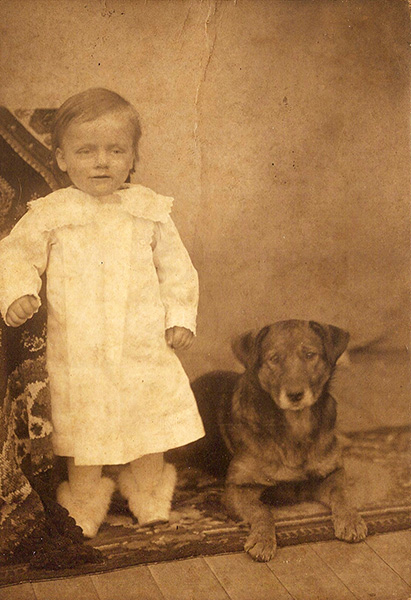
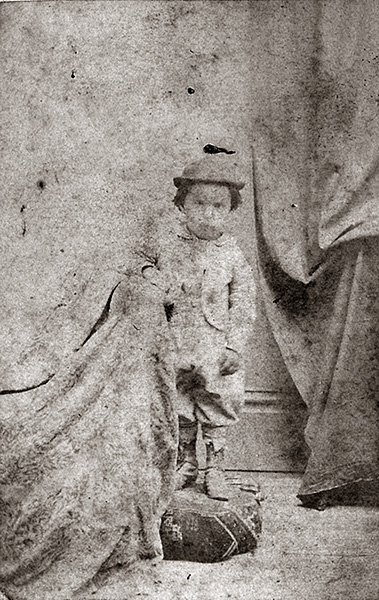
Grainy and faded grayscale portrait of a toddler. The child is standing on an upholstered footrest and is wearing knee breeches, a short jacket with long sleeves, a rounded hat with a small rolled brim, and rumpled boots. One arm rests on a curtain-draped prop. Another heavy drape hangs in the background. Time has robbed the image of most facial features, leaving only the child's dark eyes staring into the lens.
Photo from the family archive; unnamed child (likely surname Linton); Elmore, Ohio; c. 1890. In my internal filing system, this image lives in the “haunted children” file.

Haunted by pigeons

A single piece of market-favorable legislation murmurs from the archival cacophony: an 1848 Massachusetts statute that prohibited anyone from frightening passenger pigeons out of netting-beds, under threat of a $10 fine and compensation for damages (General Court of Massachusetts, 1848, p. 650).

It should be no surprise that this particular law is audible to search engines. After all, passenger pigeon extinction is a holotype cautionary tale that should linger.

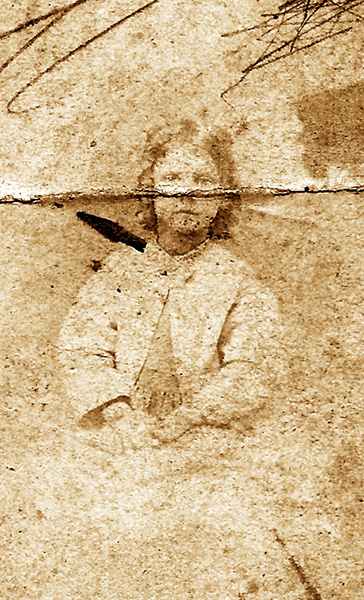
A faded, folded, and foxed photo from February 1, 1887. The child's image has almost completely faded. Loose curly hair, a long-sleeved jacket buttoned at the neck, and what might be a pleated waistline for a dress. Hands folded in lap. Serious eyes peer out over the photo's broken fold.
Photo from the family archive; unnamed child (likely surname Craig); Columbia, TN; February 1, 1887. Another haunted child.

Ohio bids farewell to their big game, but assumes the pigeons will never die

In 1857, as the Ohio legislature sought to revise their “Act to Prevent the killing of Birds and other Game” (Ohio General Assembly, 1857, pp. 107–108), legislators requested assistance from the state’s Board of Agriculture.

The resulting work, published as a select committee report in 1860, wrote off Ohio’s big game as a lost cause: “Ohio has no waste land. It is all useful for agricultural purposes—if not for tillage, at least for pasturage. It has no sterile wastes, marshes, or mountain ranges where the larger game can find permanent security. The deer, the bear, the wolf, and such like animals will soon be gone, and laws that relate to them a dead letter” (Collins, p. 382).

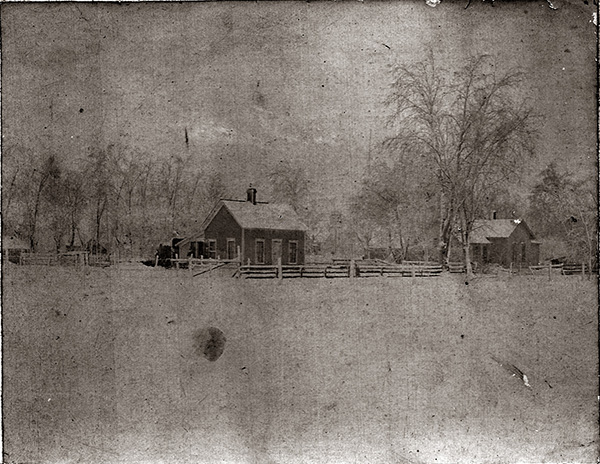
Sepia-toned photo of taken from inside a fenced field that looks recently cut to stubble. In the background three massive, multi-story, wood buildings with steeply framed roofs are surrounded by a field so flat and uniform that it looks like water. A very distant treeline marks the horizon.
Photo from the family archive; The Steele Farm; Cedar Rapids, Iowa; c. 1900.

Wild turkeys, prairie hens, and pheasants were in the same sunken boat. Excepting a few isolated flocks in isolated localities, no protections could save them. Even so, sportsmen wanted the legislature to regulate hunting, so hunting should be regulated. Ohio’s lingering populations of deer, turkey, prairie hens, and pheasants should be granted undisturbed breeding seasons (Collins, 1860, p. 384).

Seasonal protections were recommended for game birds that could adapt to progress—quail, meadow-larks2, kill-deer, doves, flickers, woodcock, and wood ducks (Collins, 1860, pp. 385-387)—as well as for waterfowl around Sandusky Bay (Collins, 1860, p. 389).

The multitudes of warblers, finches, and flycatchers were safe without protection. At least, being small, shy, and drab, they were safe enough. The food-and-feathers market didn’t covet such birds. Besides, providing bird-by-bird protections would require parsing dozens of common and scientific names (Collins, 1860, pp. 383-384).

Sepia-toned portrait, c. 1900, of a young man wearing what looks to me like a scratchy wool suit. His dark hat is garnished with a stiff sail of white primary feathers.
Photo from the family archive, location unknown, c. 1900. The photo was in my great aunt’s album, but was addressed to my grandmother.

Woodpeckers, blue jays, and blackbirds, the kind of birds that damaged agriculture when they ate crops but protected agriculture when they ate insects, could be left to the chances and whims of circumstance (Collins, 1860, p. 384).

The report singled out two game species as immune from overhunting (in Ohio) and in need of no protection: the snipe and the passenger pigeon.

Snipe were mere passers-through, fleeting visitors so well-camouflaged and difficult to flush from wet spring landscapes that only “practiced” sportsmen could hope for success (Collins, 1860, p. 387). During brief April sojourns, snipe were “good sport and a choice morsel for the table”, but “yearly numbers cannot be materially lessened by the gun” (Collins, 1860, p. 387).

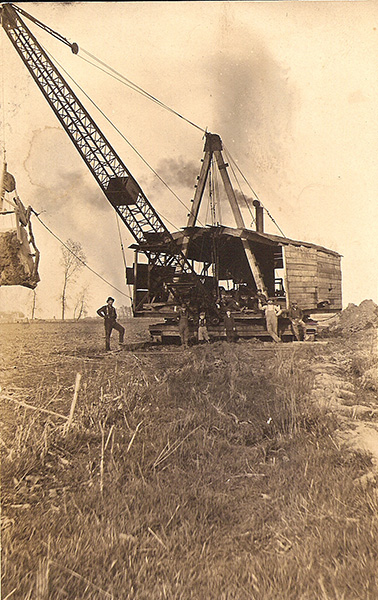
Sepia-toned photograph of a steam crane and six workers in a field in Iowa, c. 1900. The field has been cut to stubble. The steam crane is belching smoke, and the crane's body looks like a wooden building on a massive wood platform. Mounds of bare dirt are visible in the background. The workers are lined up in front of the crane, posing for the photo. A few bare trees are on the horizon, suggesting a winter setting.
Photo from the family archive, Iowa, c. 1900. I don’t know what kind of progress was underway, with this steam crane, but I doubt it involved wetland restoration.

And passenger pigeons?

“The passenger pigeon needs no protection. Wonderfully prolific, having the vast forests of the North as its breeding grounds, traveling hundreds of miles in search of food, it is here to-day and elsewhere to-morrow, and no ordinary destruction can lessen them, or be missed from the myriads that are yearly produced” (Collins, 1860, p. 387).

Forty years later, passenger pigeons were extinct in Ohio3 and functionally extinct everywhere else. It was, indeed, no ordinary destruction.

“Property of the State”

“Section I. That all the game and fish, except fish in private ponds, found in the limits of this State, be and the same is hereby declared to be the property of the State, and the hunting, killing, and catching of same is declared to be a privilege” (Arkansas General Assembly, 1889, p. 173).

Photograph of a female Mallard threatening a squirrel that had ventured too close to her brood of days-old ducklings. The hen is standing over her brood, all gathered on the stone border of our dragonfly pond. The hen's stance is tense, head low and neck coiled, ready to strike at the squirrel should it venture closer. The squirrel's back is turned to the ducks, seemingly unaware that it has disturbed the scene.
Photo from the Mallard archive, of a female Mallard threatening a squirrel that had ventured too close to her brood of days-old ducklings. Mallard hens usually ignore the antics of squirrels in the yard, but new mothers are a different story.

“Section 4650, Wisconsin statutes of 1898 is hereby amended to read as follows: The ownership of and the title to all fish and game in the State of Wisconsin is hereby declared to be in the state, and no fish or game shall be caught, taken or killed in any manner or at any time, or had in possession except the person so catching, taking, killing, or having in possession shall consent that the title to said fish and game shall be and remain in the State of Wisconsin for the purpose of regulating and controlling the use and disposition of the same after such catching, taking or killing. The catching, taking, killing or having in possession of fish or game at any time, or in any manner, or by any person, shall be deemed a consent of said person that the title of the state shall be and remain in the state for said purpose of regulating the use and disposition of the same, and said possession shall be consent to such title in the state whether said fish or game were taken within or without this state” (Wisconsin General Assembly, 1899, pp. 576–577).

Sepia-toned photo of a young woman wearing a pale dress with a fur collar. Her dark hat is tipped to a jaunty angle and is decorated with (maybe?) feathers, flowers, or ribbon. (The decoration fades into the background, so it is difficult to say exactly what has been attached to the hat.) The woman's head is slightly tipped, she is looking off to the side, and her lips are not quite smiling.
Photo from the family archive, location unknown, c. 1900. Her expression captures my bemusement, on trying to follow Wisconsin’s the “shall be and remain” syntax.

Such legislative grabs by Arkansas and Wisconsin, asserted during the closing years of the 1800s, didn’t materialize out of thin air.

State legislatures had been controlling the game within their borders since the 1820s, and courts had upheld a variety of statutes.

Let the alewives migrate

One of the earliest challenges to game laws came in Maine, after members of a town’s fish committee destroyed a dam on private property. On May 3, 1839, the fish committee took action on behalf of alewives, a type of herring.

Charles Peables had maintained a dam on his portion of Alewive Brook, in Cape Elizabeth, for some 12 previous years, diverting the water to power his mill. In May of 1839, local Fish Committee members Hannaford and Davis demanded that Peables open his dam and let the alewives pass.

When Peables declined, the Fish Committee disabled the dam in question. Litigation followed, and the Supreme Judicial Court of Maine eventually ruled for Peables, citing a technicality: Hannaford and Davis had acted early.

As the statute required the brook to be open May 5–June 5, Peables should have been able to run his mill straight up to the stroke of midnight on May 5. As long as the alewives could migrate upstream on May 6, Peables was not in violation of the statute (Peables v. Hannaford, 1841, 106).

Had Hannaford and Davis waited until May 6, they could have destroyed the dam at their leisure, and Peables could not have stopped them.

Peables v. Hannaford set a precedent, at state levels, for the states’ authority (embodied in local officers) to regulate game on private property.

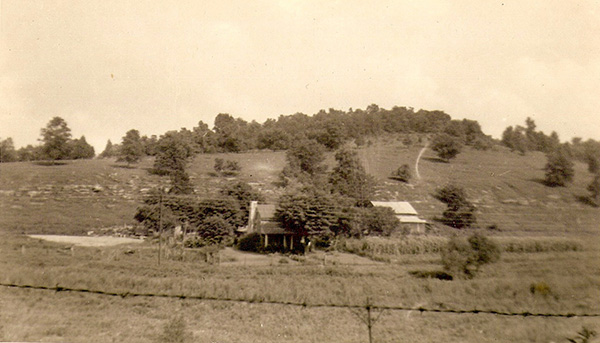
Sepia-toned photo of a house and barn at the foot of a hill, surrounded by a large empty field. The house is set within a cluster of trees, while the field has been cleared for (probably) pasture usage. A line of large rocks and boulders runs along the hill's lower slope, and a thick tree line obscures the top of the hill. A utility pole and utility lines run through the field in front of the house, and a single strand of barbed wire stretches between the camera and the farm.
Photo from the family archive, unknown location, c. 1920(?). The barbed wire running across the foreground would be a distinct “no trespassing” indicator, in the rural area of my childhood.

“We see nothing unconstitutional in the Act”

On July 8, 1874, David S. Randolph served two dressed and cooked prairie chickens to diners in his St. Louis restaurant. According to a Missouri statute, these were the wrong birds in the wrong season.

Even though Randolph could prove that he had purchased the birds in Kansas, where July hunting was legal, he was cited and fined $9. Which would be about $250, today. Randolph appealed, but the Missouri Court of Appeals upheld the fines:

“We see nothing unconstitutional in the act. The game law would be nugatory if, during the prohibited season, game could be imported from the neighboring States. It would be impossible to show, in most instances, where the game was caught. The State of Missouri has as much right to preserve its game as it has to preserve the health of its citizens, and may prohibit the exhibition for sale, within the State, of provisions out of season, without any violation of the Constitution of the United States. So far as we know, this right has never been disputed, and its exercise by the absolute prohibition of the having in possession, or sale, of game within the State limits, during certain period of the year, is no more an illegal attempt to regulate commerce between the States than would be a city ordinance against selling oysters in July” (Missouri v. Randolph, 1876, p. 15).

Did you catch it?

Sepia-toned postcard photo of my great-aunt Birdie as a toddler. She is standing up, one hand balanced on a blanket-draped prop. Her ankle-length dress is a dark material with heavy-looking gathers at the collar and a bright band of (probably embroidered) zig-zags around the hem and cuff. Her eyes are very wide as she looks at a spot just to one side of the lens. Under her image, print on the card reads "The Park Gallery, Chas. Eberhardt, Artist, 20th Street, Rock Island, Ill." Handwritten on the back of the card was "To GrandMa from Birdie Dec 7 1894".
Photo from the family archive; my great-aunt Birdie; Rock Island, Illinois; December 7, 1894.

In knotting up the import loophole, Missouri had stepped ever so softly on the interstate commerce boundary. And the appeals court didn’t mind.

Sepia-toned photo taken inside a hat store, probably in the 1920s. The long narrow room has shelving, tables, and glass-front cupboards that were probably display cases. A table in the middle of the frame is stocked with a variety of hats, decorated mostly with ribbons. A group of adults are posed together, two wearing formal-appearing suits, one wearing a dark ankle-length skirt and white long-sleeved shirt, one wearing a dark ankle-length dress, and one wearing a calf-length skirt, pale shirt, a long coat, and calf-high (at least) boots. I suspect, but am far from certain, that the one wearing the daringly short skirt (calf-length) is my great aunt Birdie. In the background, a shopper wearing a pale calf-length dress is browsing.
Photo from the family archive; location unknown, c. 1920(?). Great-aunt Birdie worked in millinery. I suspect (though I am far from certain) that Birdie is on the far left, in this photo.

‘…the congress shall have power to regulate commerce among the several states…’

When a somewhat related case landed before the Kansas judiciary, in 1877, the commerce question heated up.

On November 8, 1876, an agent for the carrier Adams Express Company received a package for transport—a shipment of four prairie chickens that had recently been killed. The agent, C. A. Saunders, delivered the birds to Chicago, and received a $10 fine (plus court costs) for his efforts.

Kansas had recently adopted the kind of boilerplate “no possession, no import, no export” law that was popular at the time. In Kansas, the wording had been adjusted to prohibit all import and export of game or birds, independent of season.

During open season in Kansas, in 1876, it was legal to possess prairie chickens that had been legally killed, as long as they had been killed within the state. During closed season, it was illegal to possess them at all. And it was illegal to import or export them, ever.

No matter the season, no one could move prairie chickens across the state lines.

Legislatively, this act seemed loophole-free. During open season, prairie chickens were fair game. Hunt them, eat them, sell them anywhere within the state of Kansas. All perfectly legal. But don’t ship them out of state. Don’t buy them out of state and bring them into Kansas. And during closed seasons, prairie chickens were entirely off-limits. Don’t kill them or have them anywhere in your possession.

The single exception written into this law involved shipments of prairie chickens that happened to pass through Kansas on their way to and from other states. Carriers handling such shipments were safe during their journey through the state.

Sepia-toned photo of a wooden train depot. Stairs in the background lead up to a platform protected by an elaborately-braced awning. A set of windows (rather like a bay window) protrude from the building near the foot of the stairs. The five people in the image are wearing suits and dresses. Two are inside, leaning out through the station windows, and three are outside, leaning against the building. The woman on the far left is one of my great grandmothers, Dora. My great grandfather was an engineer on the line that ran through Elora, TN.
Photo from the family archive; L to R (per my mother’s notes) Dora Craig, Edd Strong (Elora Agent), Wilburn Craig, Mrs. Strong, Vint Hamilton; Columbia side depot, Elora, TN; c. 1901. Dora was one of my great grandmothers.

The appellate judges for Saunders’s case glided straight past a series of technicalities regarding the title and wording of the act. They didn’t need to rule on those matters, because a larger issue took precedence:

“Section 8 of article 1 of the federal constitution provides among other things that, ‘the congress shall have power * * * [sic] to regulate commerce with foreign nations, among the several states, and with the Indian tribes.’ Ever since the adoption of this provision, the judges of the supreme court of the United States seem to have been groping their way cautiously, but darkly, in endeavoring to ascertain its exact meaning, and the full scope of its operation. They have many times construed it, but as yet have hardly fixed its boundaries, or its limitations. They have no doubt generally construed it correctly, but some of their decisions with reference thereto seem to be conflicting and contradictory, and scarcely one of such decisions has been made without a dissenting opinion from one or more of the judges. We think however that amidst all their conflicts and wanderings they have finally settled, among other things, that no state can pass a law (whether congress has already acted upon the subject or not,) which will directly interfere with the free transportation, from one state to another, or through a state, of anything which is or may be a subject of inter-state commerce. …For instance, a law which prohibits the catching and killing of prairie chickens, may be valid, although it may indirectly prevent the transportation of such chickens from the state to any other state; but a law which allows prairie chickens to be caught and killed, and thereby to become the subject of traffic and commerce, and at the same time directly [emphasis in original] prohibits their transportation from the state to any other state, is unconstitutional and void” (Kansas v. Saunders, 1877, pp. 129–130).

This means game is commerce, right? And that the Kansas legislature had stepped a little too far over the interstate commerce boundary. Right?

It meant, at any rate, that Saunders didn’t have to pay his fine.

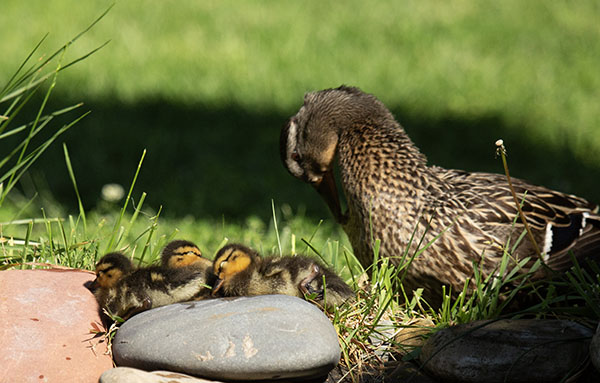
Photo of a Mallard hen trying to get a short rest behind the grass-and-stone border of the dragonfly pond. The hen's eye is wide and her expression is tense, despite her pre-sleep posture of tucked head and neck. They aren't visible at all in the photo, but all eleven of her ducklings were gathered beneath her, as if back in the nest. The ducklings were safe from the hungry eyes of predators, but they weren't comfortable enough to sleep soundly. Their constant fretting and shifting was keeping the hen awake.
Photo from the Mallard archive. Here, the hen has gathered her ducklings beneath her for a nap. The ducklings were squirming and fidgeting, so the hen was having trouble getting comfortable.

Preview of Part VII: More court cases, more decisions, and federal lawmakers patch the interstate commerce bug

The next post dives into game smuggling and game police. If you are starting to wonder if I’ve gotten game laws mixed up with prohibition laws, I haven’t, though there are certainly familiar elements.

Hold on to your feathered hats.

Sepia-toned photo of a young woman wearing a pale, short-sleeved blouse and a dark skirt. (The short sleeves, alone, are remarkable, as long sleeves are far more common in the archive.) She is holding a small bouquet of flowers, and her hat is elaborately decorated with feathers and what looks like a large tiara. She's wearing at least one necklace of beads or gemstones and several rings. Her expression, for me, is a difficult combination of stern eyes with a hint of smile.
Photo from the family archive; location unknown, c. 1890(?). There’s a lot going on with that hat, but, for me, her eyes are the real story. I can’t read that expression, and somehow she makes me feel like I should stop trying to.

Also in the next installment, the courts decide that birds and game aren’t commerce, after all.


A note about previous previews: The schedule has changed, so the previews aren’t accurate

Even the most casual readers will have noted, by now, that this project is constantly expanding. Previews included in previous posts have been preempted and put off, as my reading has taken unexpected turns (I do love a good tangent).

My notes sprawl through four full composition books.

I will likely get to all of the topics introduced in previous previews, but not in order. I’ve given myself permission to keep exploring the Mallard mine, as long as my interest holds, and to keep chasing the tangents. My challenge, now, is to convince readers to keep exploring, as well.

Image of a Mallard hen and her eleven ducklings (which are difficult to count, in this photo) swimming the in a small backyard pond. The pond is bordered by large worn river rocks, with grass and weeds behind and between the rocks. The spout of a pond filter/fountain is visible, and a few reddish-orange water lily leaves float on the surface. (The water lily leaves only turn green after emerging into sunshine.) The ducklings are fluffy with down and have brown and yellow markings. The hen's feathers range from light tan to dark brown with light edging. She is staring into the lens, keeping an eye on me in case I venture too close.
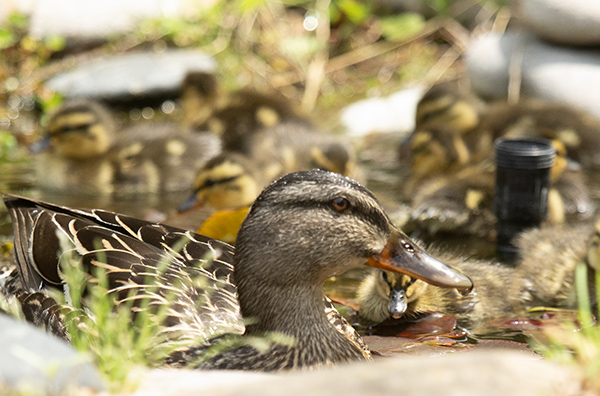
Photo from the Mallard archive. Here, a Mallard hen keeps watch as her ducklings explore the dragonfly pond.

If you’re still with me, Thank You!


Footnotes

1. This particular piece of the Mallard story, part of the pre-1800s history of North America’s colonization, is beyond both my tangent-tolerance (for these blog posts) and my philosophy/history horizon. Even so, an excerpt from a book assigned in a technical writing course resonates:

“Among the many arguments that Locke made in the Two Treatises is one that justifies appropriating lands from indigenous peoples where they are living in a state of nature. According to this argument, settlers who cultivate and improve the land—thereby rendering the ‘greatest conveniences’ from it—will have rights to the property:

“‘God gave the world to man in common; but since he gave it them for their benefit and the greatest conveniences of life they were capable to draw from it, it cannot be supposed he meant it should always remain common and uncultivated. He gave it to the use of the industrious and rational—and labour was to be his title to it (Second Treatise 137).’

“…British settlers under Locke’s rationale could claim property rights because they took resources from the land. These resources could be used to create a favorable balance of trade for England, where Board of Trade member Locke saw excessive imports as a source of unstable coinage practices” (Longo, 2000, pp. 51–52).

Mallards were one of the resources that colonists took and took and took. (Click here to return to your regularly scheduled paragraph.)

2. In 1885, while collecting in Canada, Robert Miller Christy wrote a love-note to Meadowlarks:

“I have often thought what a capital thing it would be to introduce the Meadow Lark in to England. So far as plumage and song are concerned, it would rank among our brightest-coloured and most admired songsters; while its hardy nature would allow of its remaining with us the whole year round, as indeed it often does in Ontario and other districts farther south than Manitoba. Perfectly harmless and accustomed to grassy countries, it would quickly become naturalised in our meadows, where it would find an abundance of insect-food, and would doubtless soon increase sufficiently in numbers to serve, if need be, as a game- and food-bird, as it largely does in the United States. No other songster that I ever heard equals this bird in the sweetness and mellowness of its notes” (p. 125). (Click here to return to your regularly scheduled paragraph.)

3. Ironically, Ohio’s deer rebounded. After being sentenced to local extinction, in 1860, deer found ways to survive in Ohio. And then conservation efforts across the 1900s helped deer to flourish. In the 2024–2025 hunting season, Ohio hunters bagged 238,137 white-tailed deer (Ohio Department of Natural Resources, 2025, para. 1). (Click here to return to your regularly scheduled paragraph.)


References

Anderson, J. M. (1953). Duck clubs furnish living space. In J. B. Trefethen (Ed.), Transactions of the eighteenth North American wildlife conference (pp. 122–129). Wildlife Management Institute. https://wildlifemanagement.institute/conference/transactions/1953

Arkansas General Assembly (1889). Acts and resolutions of the General Assembly of the State of Arkansas: passed at the session held at the capital, which began on Monday, January 13th, and adjourned on Wednesday, April 3rd, 1889. Press Printing Co. https://babel.hathitrust.org/cgi/pt?id=nyp.33433009076492&seq=193

Christy, R. M. (1885). Notes on the birds of Manitoba. In J.E. Harting (Ed.), The Zoologist, 3rd series, Vol. IX. No. 100 (pp. 121-133). John van Voorst, Paternoster Row. https://ia801303.us.archive.org/27/items/Zoologist85lond/zoologist85lond.pdf

Collins, W. O. (1860). Report of Senate Select Committee, upon Senate Bill No. 12, ‘For the protection of birds and game.’ In Fifteenth annual report of the Ohio State Board of Agriculture with an abstract of the proceedings of the county Agricultural Societies to the General Assembly of Ohio for the year 1860 (pp. 381-390). Richard Nevins, State Printer. https://babel.hathitrust.org/cgi/pt?id=mdp.39015038792258&seq=549

Edward, Second Duke of York (1909). The master of game: The oldest English book on hunting. (W. A. Baillie-Grohman & F. Baillie-Grohman, Eds.). Duffield and Company. https://archive.org/details/TheMasterOfGame/page/n7/mode/2up (Original work published 1406–1413).

General Court of Massachusetts (1848). Acts and resolves passed by the General Court of Massachusetts in the years 1846, 1847, 1848; Together with the rolls and messages. Dutton & Wentworth, Printers to the Commonwealth. https://archive.org/details/actsresolvespass184648mass/page/n5/mode/2up

Kansas v. Saunders, 19 Kan. 127 (1877). https://www.courtlistener.com/opinion/7934084/state-v-saunders/pdf/

Lacey, J. (1900). Enlarging the powers of the Department of Agriculture. In Congressional Record, House of Representatives, Monday, April 30, 1900 (pp. 4858–4980). The Government Printing Office. https://www.congress.gov/bound-congressional-record/1900/04/30/33/house-section/article/4858–4980

Longo, B. (2000). Spurious coin: A history of science, management, and technical writing. State University of New York Press. https://www.jstor.org/stable/jj.18254358

Mershon, W. B. (1923). Recollections of My Fifty-years Hunting and Fishing. The Stratford Co., Boston. https://archive.org/details/recollectionsofm00mers_0

Missouri v. Randolph, 1 Mo. App. 15 (1876). https://www.plainsite.org/opinions/279xdv9rm/state-v-randolph/
Ohio Department of Natural Resources (February 4, 2025). Ohio’s final 2024–25 deer harvest report. Ohio Department of Natural Resources. https://ohiodnr.gov/discover-and-learn/safety-conservation/about-ODNR/news/ohios-final-2024-25-deer-harvest-report

Ohio General Assembly (1857). Acts of a general nature and local laws and joint resolutions passed by the Fifty-second General Assembly of the State of Ohio: At its second session begun and held in the city of Columbus, January 5, 1857 and in the fifty-fifth year of said state: Volume LIV. Richard Nevins, State Printer. https://books.google.com/books?id=S1lOAQAAIAAJ&pg=PA107#v=onepage&q&f=false

Organ, J. F., Mahoney, S. P., & Geist, V. (2010). Born in the hands of hunters: The North American model of wildlife conservation. The Wildlife Professional, 4(3), 22–27. https://www.researchgate.net/publication/267749137_Born_in_the_hands_of_hunters_the_North_American_Model_of_Wildlife_Conservation

Peables v. Hannaford, 18 Me. 106 (1841). https://www.courtlistener.com/opinion/5108727/peables-v-hannaford.pdf

Pospahala, R. S., Anderson, D. R., & Henney, C. J. (1974). Resource Publication 115: Population ecology of the Mallard II. Breeding habitat conditions, size of the breeding populations, and production indices. U. S. Department of the Interior, Fish and Wildlife Service, Bureau of Sport Fisheries and Wildlife. https://nwrc.contentdm.oclc.org/digital/collection/p16473coll29/id/10213/rec/1

Wisconsin General Assembly (1899). The laws of Wisconsin, joint resolutions and memorials passed at the biennial session of the Legislature, 1899. Democratic Printing Co., State Printer. https://babel.hathitrust.org/cgi/pt?id=wu.89096040076&seq=7

Focusing on Mallards Part V: Hunting by the Numbers

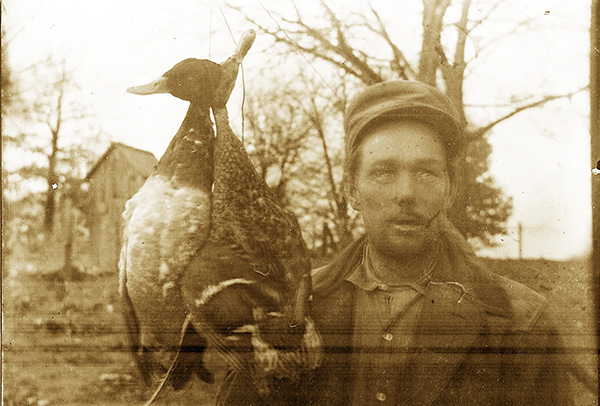
Content Warning: This multi-part blog post contains references to hunting, agriculture, and research practices of killing birds. This installment contains a photograph of a duck hunter with his kills—a pair of dead Mallards. If you choose not to read on, I respect and admire your choice.

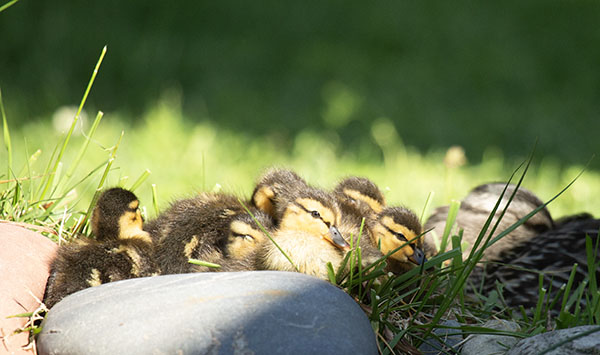
Photograph of a brood of Mallard ducklings huddled for a nap in the sunshine. The downy ducklings are yellow and brown with prominent eye stripes. Their mother is sleeping behind them, beak tucked under her wing feathers. Her feathers are shades of tan and gray, and she also has a prominent eye stripe. All are gathered on the stone border surrounding our dragonfly pond.
Photograph of a huddle of Mallard ducklings resting in the sunshine on the stone border of our dragonfly pond. Their mother is just behind them (right of frame).

Like most of my blog journeys, this long perseveration on Mallards started with questions about a visitor in the yard: What happens to a Mallard hen’s flight muscles while she is nesting? If she spends a flightless month on the nest, then two more flightless months escorting her flightless ducklings, how does she keep her muscles in flying condition?

A Mallard hen stretches her wings after a splashy bath in a small backyard dragonfly pond. She is standing tall in the water, facing the camera, wings extended behind her. Her feathers are mostly speckled and striped shades of brown with bright white coloration on the underside of her wing feathers. A round, floating solar-powered fountain is spending up a small spray of water (left). An array of water plants are growing in the pond, including water lilies. Tall irises and grasses grow around the pond's river-stone border, filling the background with greenery.
Photo of the Mallard hen who inspired this blog series. In this photo, she is standing tall in the dragonfly pond, facing the camera as she flaps vigorously after a splashy bath.

A prolonged literature search produced partial answers. And raised more questions.

In the end, a research paper out of North Dakota (Krapu, 1981) confirmed that wild Mallard hens lose significant body weight during nesting, including most of their fat reserves. But the researchers did not measure or comment on flight muscles.

Beyond that 1981 anchor point, my flight muscle question lies abandoned, waiting for another researcher or reader to pick it up. Until then, I’m content with Part III‘s conclusion: Only the Mallards know.

Photo of a Mallard hen standing in a shallow spot in the dragonfly pond. Her brood of ducklings are gathered beside her. The hen's feathers are shiny and sleek, speckled brown and tan. The ducklings are downy with brown and yellow markings. Both hen and ducklings have the prominent dark eye stripe common to Mallards. In the background, large smooth river stones are stacked loosely around the pond's border. A pair of conch shells are visible, incorporated into the border.
Photo of a different Mallard hen, one who visited in the spring of this year (2025), resting in the dragonfly pond with her ducklings. She was wary of me and my camera and taught her ducklings to be wary as well. This is how wild Mallard ducklings learn to be wild Mallards. Usually. Later in this series I will introduce some exceptions.

Caught in tangles of tangents

I can’t resist tangents. They are how my world expands. And how my mind works, OCD and all. So here I am, more than a year later, still exploring this labyrinthine idea web of Mallards and Mallard literature.

But this particular perseveration, my Mallard fixation, runs deeper than most of my blog ideas. In fact, it runs straight into a mire of social and psychological issues that I am poorly equipped to navigate. So here I remain. Grappling for words and wisdom in the Mallard archives. Because much of what motivates me to care about this world, much of what motivates me to read and write, is also in the Mallard archives.

Sharp black-and-white image scanned from a slide. The image dates to the 1970s, and shows me as a pre-adolescent. I am squatting behind a smallish round wire cage, which has a leather carrying strap. I am holding onto the wires of the cage and peering into the distance. My body language and facial expression suggest that I am misbehaving and trying not to get caught. Inside the cage, a speckled white and gray duck is panting or vocalizing, beak open. The duck is too large for the cramped cage.
Photograph of me in some awkward childhood era, caught coveting a duck at some fair or other event. I was attempting to stay small and inconspicuous behind the big fancy duck, so that Mother wouldn’t catch me coveting.

In all of the decades between the anxious moment captured, above, and my present seat at the blog table, I’ve lived in the tensions between mine and not-mine. Between the coop and the wetlands. Between the self-protective urge to stay small and inconspicuous and the inescapable longing for expansive connections.

I expect most readers live in the same tensions. It’s part of being human. It is, perhaps, part of being Mallard, as well.

Photo of five Mallard ducklings climbing onto the border of the dragonfly pond while their mother watches from the water. Four of the ducklings are immediately visible, center frame, but the fifth is partially hidden behind a clump of short grass. The ducklings are downy with yellow and brown markings. One has tiny water droplets clinging to its head and neck.
Photo of five ducklings climbing out of the dragonfly pond while their mother keeps watch from her position in the water. The fifth duckling is small and inconspicuous, hidden behind a tuft of grass on the right.

Out of my comfort zone

These Mallard posts have turned into foundation work for a policy argument.

(Spoiler alert: I am not crafting an argument against hunting.)

Policy arguments are not my norm and most definitely are not my creative strength. But I’m wading in.

I’m wading in without a map or floatation device, hoping for the kind of synergy that sometimes makes words more wise than their author. Hoping for fewer small and inconspicuous silences.

Photo of a Mallard duckling peering over the stone border of the dragonfly pond. This photo was taken at ground level, so the duckling's head is only partially visible over the stones, concentrating focus on the duckling's eye. A second duckling's rounded back, fluffy with down, appears to the far right of the frame.
Photo of a duckling peeking over the border of the dragonfly pond. The duckling has downy markings of yellow and brown and has the exaggerated forehead and eye proportions of infant cuteness.

I grew up around poultry, both wild and domestic. I also grew up around guns and hunting. Through all my many long years, I have accepted, unquestioning, most of the arguments in favor of hunting as both a sport and a science-backed approach to wildlife management and conservation.

I still accept some of these arguments. But I’m developing deep resistance to others. Resistance based on all of this reading about the history and practices of Mallard hunting and conservation.

(Let me repeat that spoiler: I am not crafting an argument against hunting.)

Blurry sepia-toned photo of a man standing beside two dead Mallards, which are hanging from a string or wire so that they are at head-height. The man is wearing a brimmed hat, a buttoned-up shirt with a rumpled collar, and a padded coat that appears to be made of canvas or similar material. The Mallards are male and female, judging by their plumage, and one of the female's wings hangs in way that suggests the wing was broken when she was shot. The outdoor scene shows trees that have lost their leaves for winter and a very small wooden outbuilding with a tin roof. The outbuilding looks to me like an outhouse or smoke shed.
Photo of an unknown man posing with two dead Mallards. One of the Mallards is in male plumage, the other in female plumage. I found this photo, which likely dates from the 1920s or 30s, in an album belonging to a great aunt. Based on labelling of a companion photo, the man’s name was Harry Kenyon. I don’t know how or why he ended up in Aunt Birdie’s album.

I’m not comfortable arguing policy, which means there will be throat clearing and wandering off-topic. I am, after all, a blogger. Not a lobbyist. A poet, not a lawmaker. I seldom demand rhetorical precision of myself, in my creative work. Which is part of why I enjoy blogging. Rhetorical precision is for the classroom and office, not the blog.

But there are upsides to making this argument in blog form. There’s freedom from structure and stricture. My hybrid interweaving of literature review and memoir is choice, not style guide. More importantly, there’s no peer review. I am my own editor and publisher, so I’m allowed to make overt appeals to emotion. Including photos and videos of ducklings.

These photo and videos are my unsubtle attempt to convince readers that ducks are stakeholders in policy discussions about waterfowl hunting.

Photo of a Mallard hen leading her ducklings out of the dragonfly pond. All are standing on a section of flagstone set level into the yard. In the background are a coiled green hose and an orange, plastic, five-gallon bucket stamped with white lettering reading "Let's do this" in all-caps. The Mallard hen is maybe a foot tall and has mostly brown feathers edged with tan, except for a patch of blue edged with black and white on her wing. The ducklings are maybe three or four inches tall and have downy feathers with yellow and brown markings. There are seven ducklings readily visible, though they are difficult to count due to how they are crowded together. (In all, this hen had eleven ducklings.)
Photo of a Mallard hen and her ducklings exiting the dragonfly pond in spring, 2025. In the background, a bright orange bucket is stamped with the big-box slogan “Let’s do this”.

Sport hunting is a profitable mine, and Mallards are a form of ore

Unlike many of my blog topics, Mallard hunting isn’t a rabbit hole. It’s a multi-level, vastly profitable mine regulated by international treaties and cooperative relationships between state and federal agencies.

Everything in the Mallard mine is complicated by tradition and money and land.

This isn’t about the flight muscles

I introduced a few ideas about the capitalism behind the science curtain in Part II. And where Mallards are concerned, science isn’t the only interested party. Mallard hunting (and farming) is not an independent storefront on the town square. This is big business and big money, so big policy questions come into play.

Who owns wildlife, on public and private lands? Who gets to decide how wildlife is exploited, on public and private lands? When is wildlife no longer wild? (Keep inserting “on public and private lands”, as the questions roll on…) What are the roles and aims of conservation work? Who gets to own and discharge firearms? Why and how are tradition and research guiding individual and community decision making, when it comes to hunting?

This isn’t about flight muscles.

Except, isn’t it?

Mallards are poultry. And once Mallards are defined as poultry, once flight muscles are defined as breast meat, Mallard hunting is only about the flight muscles. Wild Mallards are protein harvested by shotgun.

Photo of a Mallard hen grazing through a helping of wild bird seed that I scattered into the grass (and weeds) just beside the dragonfly pond. Her eleven ducklings are either watching her eat or beginning to wander back toward the pond. 
They sampled the seed but didn't eat much.
Photo of a Mallard hen eating bird seed. She is surrounded by her eleven ducklings. The ducklings sampled the seed but were unimpressed.

Just how big is this business?

A 2006 survey from the US Fish & Wildlife Service (USFWS) found that “…waterfowl hunters represented 10 percent of all hunters, 7 percent of all hunting-related expenditures, and 6 percent of all hunting equipment expenditures” (Carver, 2008, pg. 3).

Here’s the waterfowl hunting numbers for 2006 (derived from Carver, 2008, Table 1, p. 4):

Number of US hunters (ducks)1,147,000
Number of US hunters (geese)700,000
Number of US hunters (all waterfowl)1,306,000
Reported US trip expenditures (waterfowl)$493,987,000
Reported US equipment expenditures (waterfowl)$406,298,000
Total US spending (waterfowl)$900,285,000

Those zeros are not a typo. That’s over nine hundred million dollars spent, in 2006, on hunting ducks, geese, and other waterfowl. While more than half of those dollars went to the travel industry, some four hundred million dollars were non-travel purchases, including “rifles, shotguns, other firearms, ammunition, telescopic sights, decoys, hunting dogs and associated costs. Also included are auxiliary equipment such as camping equipments, binoculars, special hunting clothing, processing and taxidermy costs. Due to small sample sizes, special equipment purchases such as boats, campers, trucks, and cabins are excluded…” (Carver, 2008, Table 1, pg. 4).

The author of this report adjusted the economic impact of waterfowl hunting through input–output modeling, to estimate how this spending radiates through the economy: “The trip expenditures of $494 million by waterfowl hunters generated $1.2 billion in total output while equipment expenditures of $406 million generated $1.1 billion in total output in the United States” (Carver, 2008, pg. 10).

So it’s fair to say that waterfowl hunting is a multi-billion dollar industry, in the US. That’s multi-billion per year. And Mallard hunting is a massive chunk of that industry. “Hunter reports indicate that mallards made up about 43% (5.5 million annually) of the ducks taken before 1960, when mallard regulations were less restrictive; the Duck Wing Survey indicates that mallards have made up 33% of the harvest (3.6 million annually) since 1960″ (Martin & Carney, 1977, p. IX).

Photo of a Mallard hen settling for a rest beside the dragonfly pond. In this phot0, most of her ducklings were hidden beneath her, tucked into the feathers of her chest and abdomen. One duckling has not settled, yet, and is standing just under her neck, looking around. Another duckling is barely visible to the right of frame, mostly hidden by a tuft of short, cut grass.
Photo of a Mallard hen settling for a nap with her ducklings beside the dragonfly pond in spring, 2025. Tucked beneath her chest, one duckling has raised its head to look around.

Given the money spent on hunting ducks, geese, and other waterfowl, it’s not a surprise that “…waterfowl hunting is positively correlated with income. That is, as household income increases, the percentage of waterfowl hunters for each group also increases. Income is also positively correlated with the participation rate of all hunters. However, all hunters do not tend to be as affluent as waterfowl hunters” (Carver, 2008, pg. 6).

This is not subsistence hunting. For the majority of duck hunters in the US, suspension of duck season would not equate to food insecurity. Yes, many hunters eat the ducks they kill. But they would still be able to eat, even if they killed no ducks.

How many Mallards are there, anyway?

Efforts to count the continent’s ducks began as early as the 1940s, when researchers tramped out into the marshes for hand counts. Then pilots joined the work, providing population estimates (and species distributions) for flocks spotted during aerial flyovers. Hunter surveys, requesting that hunters report how many and what kinds of ducks have been killed in the season, add a final dimension of data. At the confluence of these ongoing data streams, USFWS calculates Mallard “abundance”, which isn’t exactly a population count but is close enough for my purposes.

As of 1974, “The estimated size of the continental mallard population in May has ranged from a high of 14.4 million in 1958 to a low of 7.1 million in 1965. Generally, the mallard population began to decline after the 1958 peak until 1962, and remained below 10 million birds until 1970. The decline and consequent low level of the mallard population between 1959 and 1969 generally coincides with a period of poor habitat conditions on the major breeding grounds” (Pospahala, Anderson, & Henney, p. 49).

Over more recent decades (from 1992–2024) the “mid-continent” stock of US Mallards has ranged between 6.2 million and 11.9 million (USFWS, 2024, p. 12). (There are management purposes at work, in this focus on “mid-continent” Mallards, which I will get to later.)

Photo of a Mallard hen standing in a shallow place in the dragonfly pond. Her ducklings are gathered in the water, beside her. Her head is tipped slightly to her left, right eye angled toward the sky in search of aerial predators. Anthropomorphized, her head angle and expression look questioning.
Photo of a Mallard hen and her ducklings in the dragonfly pond, taking a brief break from their wanderings in the spring of 2025.

In 2024, Mallard abundance in the US registered some 6.6 million. In 2023, about 6.1 million (USFWS, 2024, p. iii).

With recent numbers hovering near the low end of the 1992–2024 Mallard abundance range, and below the lowest 1960s numbers, it seems that the Mallard glass is currently half-empty. But if accounts from the late 1800s and early 1900s are accurate, the North American Mallard glass has been half-empty for over a century. (Drop a pin in this claim. There will be evidence later.)

Where do North American Mallards come from, and where do they go?

Continental Mallard production can vary wildly over a very short span of years. For example, 1957 produced a count of 22.1 million Mallard “young”, but 1961 saw only 5.9 million (Anderson, 1975, p. 33). Granted, it’s difficult to count Mallard young, but there was undoubtedly a major decline between 1957 and 1961.

By the 1970s, it was clear that Mallard production was related to the number of ponds in Mallards’ breeding grounds. (Here is where that focus on mid-continent Mallards starts to become important, as the largest and most productive breeding grounds are in the north and central portions of North America, in “prairie pothole” country.) And, prior to 1960, the number of ponds steadily declined everywhere. But habitat was never the only factor.

Nesting season and shooting season

The existence of a “long-term average” population number for Mallards, of around 7.9 million (USFWS, 2024, p. iii), flattens into stasis a seasonally dynamic population. Spring and summer are boom and winnow seasons. Some 75% of Mallard mortality occurs in first-year ducks, either in the nest or during the weeks immediately after hatching, before young birds learn to fly (Anderson, 1975, p. IX). Then fall and winter bring the hunter’s guns.

“…it may be predicted that about 60 out of every 100 mallards flying south along the Mississippi Flyway will be hit by shot” (Bellrose, 1953, p. 358-359).

Photo of a Mallard hen just stepping up onto the stone border of the dragonfly pond. In the background, splashes and sprays of water fill the air, churned up by her recent splashy bath and the excited actions of her ducklings.
Photo of a Mallard hen getting ready to climb out of the dragonfly pond. Behind her, ducklings are splashing and playing in the water.

After Mallards survive their first summer, death by shotgun accounts for a significant percentage of overall Mallard mortality. Of the adult males that die each year, about 50% die by shotgun (Anderson, 1975, p. 24). The percentages are slightly lower for females (40%) and first-year Mallards (45%) (Anderson, 1975, p. 24).

Given all these shotguns, and all of the other Mallard hazards out there, the majority of Mallards that survive their first summer do not live more than two adult winters (Anderson, 1975, p. IX). That doesn’t mean that a three-year-old Mallard is an old Mallard, only that it is a lucky Mallard. Even luckier Mallards have lived as long as 13 years in the wild (a few female Mallards), and one particularly charmed male Mallard survived 18 years (Anderson, 1975, p. 26).

Harvest by shotgun

In the US, prior to 1960 hunters bagged some 5.5 million Mallards every year (Martin & Carney, 1977, p. IX). It’s worth repeating that number: 5.5 million Mallards. Every year.

After hunting regulations were tightened in 1960, the Mallard kill dropped to about 3.6 million per year (Martin & Carney, 1977, p. IX). Such numbers fluctuate, of course, and have dropped somewhat further since the 1970s. But hunting still claims millions of Mallards, each year. USFWS estimated a Mallard harvest of 2,042,668 birds, in 2022 (USFWS, 2023, Table 1E, p. 25).

Up through the 1970s, close to a quarter of the entire North American Mallard population was killed by hunters, every year (Anderson & Burnham, 1976, p. 40).

Based on the numbers previously cited for 2022 (2,042,668 Mallards killed by hunters) and 2023 (estimated population of 6.1 million), it seems that perhaps one-third of the US Mallard population continues to die by shotgun every year.

Overkill?

Only a few paragraphs ago, the USFWS estimated a 2024 Mallard population of 6.6 million. In 2024, a pre-1960 harvest (during years when harvests averaged 5.5 million ducks per year) would have obliterated the US population of Mallards.

In fact, the pre-1960s binges, on top of widespread habitat destruction, dealt multiple near-obliteration blows to North American Mallards. Starting early in the 1900s, hunters and researchers agreed that something needed to be done to save the Mallards. At least, they agreed that something needed to be done to save Mallard hunting.

The first (documented) North American Mallard bottleneck, circa 1920

Prior to the 1900s, hunters spoke of North America’s duck populations in awe-tinged phrases.

“It is about the finest country you could imagine in the wildest flights of fancy; Ducks getting up under your feet at every yard; Hawks, Goatsuckers, Prairie Chickens, and small birds in all directions… I shot a Teal and a splendid Shoveller drake for the pot. I can fancy I hear you exclaiming against the barbarism of eating such a bird; but I am getting daily accustomed to birds which are considered rare in England, and regard them now from a more utilitarian point of view” (Wood, 1885, p. 225).

“During this autumnal movement the number of ducks frequenting the lakes and ponds throughout Manitoba is prodigious. I shall not soon forget the hundreds I saw on the innumerable ponds between Rapid City and the Oak River, whilst on an excursion towards Fort Ellice, in the middle of October, 1883. Yet those I saw must have been as nothing compared with the abundance to be seen in some other places. A friend who had several days’ shooting at Totogon, near the south end of Lake Manitoba, about the end of September, describes the ducks as being so numerous that only the terms ‘acres’ and ‘millions’ could adequately express their abundance. The majority were Mallards, Anas boscas…” (Christy, 1885, p. 133).

By the 1920s, Mallards populations had declined to a notable low:

“The duck marshes on the Saginaw River no longer teem with water fowl. In early September and before the first frost the cackle of the Carolina rail is on every hand. These little birds—the Sora, seem as plentiful as ever, so I have not given up the marshes of the Saginaw entirely, but once or twice in the early part of September I get out the old canoe and with Alphonse to paddle or push, I take the trip through several miles of the Cheboyganning rice beds and usually get what the law allows of rail shooting, but in making all of this distance through acres and acres of rice, one or two ducks is all I see in place of the thousands of old” (Mershon, 1923, p. 73).

And this is where I leave the Mallards, for now. A poor remnant of a once thriving species, scarce and growing scarcer into the 1920s. In the next post, help arrives.

Photo of a Mallard hen and her ducklings in the dragonfly pond. Taken along ground level, the photo shows the hen's head and neck and back, with a blurred foreground of stone blocking the rest of her. Framed under the arch of her neck and chin, one of her ducklings is in sharp focus, facing the camera.
Photo of a Mallard hen and her ducklings exploring the dragonfly pond in spring, 2025. Here the hen is in the foreground and one of her ducklings is framed by her silhouette.

A housekeeping note (or, rather, a territory-keeping note)

Throughout this post, I’ve switched back and forth between talking about North American Mallards and US Mallards without much fanfare. Doesn’t it sound presumptuous? It’s almost as if I have forgotten that there are other countries on the continent. (Doesn’t it sound familiar?)

But from here on out, I’ll need to take more care. Because, starting in the early 1900s, lawmakers and researchers divvied up North America’s Mallards. There were, and still are, jurisdictions and flyways. More importantly, genetic work has identified two discreet and rarely-intermixing populations of Mallards, an eastern gene group and a western gene group (Lavretsky, Janzen, & McCracken, 2019). And my particular policy argument involves eastern Mallards, alone.

Preview of Part VI: The US judicial branch decides who owns the Mallards that visit US lands, and funding arrives for conservation

As long as there were plenty of Mallards, everywhere, distinctions between North American and US Mallards were moot. But as Mallard populations dwindled, hunters came into conflict over who got to shoot the Mallards that remained. And with increasing scarcity came increasing value, along with politicians to squabble over resource ownership.

The problem was (and still is, to a certain extent) that Mallards have always migrated according to their own maps, which existed long before humans decided that land could be owned. Given that the North American Mallard mine spans three (or more) countries, including most of the states in each country, and that Mallards are valuable ore, who owns the profit? Who gets to harvest this particular protein, and how should they be allowed to market it?

North American Mallards as a species have continued breeding and migrating, and US Mallards as a resource have continued falling into hunters’ bags, but the species and resource exist on two seemingly separate planes.

Oliver Wendell Holmes summed it up succinctly, in a landmark case that upheld the 1918 Migratory Bird Treaty: “The whole foundation of the State’s rights is the presence within their jurisdiction of birds that yesterday had not arrived, tomorrow may be in another State and in a week a thousand miles away” (Missouri v. Holland, 1920, para. 6).

Photo of a Mallard hen drifting off to sleep while still standing. She is perched on the sunlit, stony border of our dragonfly pond. Her brood of ducklings are scattered under and in front of her, most in different sleep poses. One duckling is still awake, though visibly drowsy with half-closed eyes. Another duckling is barely balanced on the edge of a rounded, smooth stone, and appears on the verge of falling off backwards. Yet another duckling has nodded off with its neck bent and the tip of its beak just touching the sun-warmed rock.
Photo of a Mallard hen resting (asleep while standing up) on the stone border of the dragonfly pond in spring, 2025. Her ducklings are napping in a loose cuddle-heap, sprawled from just under her chest to almost a foot away. Some of the ducklings are slumped awkwardly in sleep, exhausted from their first hours off the nest, while others are fidgeting for a more comfortable position.

References

Anderson, D.R. (1975). Population ecology of the Mallard: V. Temporal and geographic estimates of survival, recovery, and harvest rates. Resource Publication 125. U.S. Department of the Interior, Fish and Wildlife Service. https://nwrc.contentdm.oclc.org/digital/collection/p16473coll29/id/4786

Anderson, D. R., & Burnham, K. P. (1976). Population ecology of the Mallard. VI: The effect of exploitation on survival. Resource Publication 128. U. S. Department of Interior, Fish and Wildlife Service. https://nwrc.contentdm.oclc.org/digital/collection/p16473coll29/id/4899

Bellrose, F. C. (1953). A preliminary evaluation of cripple losses in waterfowl. In James B. Trefethen (Ed.) Transactions of the Eighteenth North American Wildlife and Natural Resources Conference (pp. 337-360). The Wildlife Management Institute. https://wildlifemanagement.institute/conference/transactions/1953

Carver, E. (2008). Economic impact of waterfowl hunting in the United States: Addendum to the 2006 national survey of fishing, hunting, and wildlife-associated recreation. U. S. Fish and Wildlife Services. https://www.fws.gov/sites/default/files/documents/2024-04/1153.pdf

Christy, R. M. (1885). Notes on the birds of Manitoba. The Zoologist: A Monthly Journal of Natural History, 3rd Series, IX(100). https://ia801303.us.archive.org/27/items/zoologist85lond/zoologist85lond.pdf

Gillham, C. E. (1947). Wildfowling can be saved. In Ethel M. Quee (Ed.), Transactions of the Twelfth North American Wildlife and Natural Resources Conference (pp. 47-52). The Wildlife Management Institute. https://wildlifemanagement.institute/conference/transactions/1947

Krapu, G. L. (1981) The role of nutrient reserves in Mallard reproduction. The Auk 98, 29-38. doi: 10.1093/auk/98.1.29

Lavretsky, P., Janzen, T., & McCracken, K. G. (2019). Identifying hybrids and the genomics of hybridization: Mallards and American Black Ducks of Eastern North America. Ecology and Evolution (9), 3470–3490. DOI: 10.1002/ece3.4981 https://onlinelibrary.wiley.com/doi/full/10.1002/ece3.4981

Martin, E.M., & Carney, S.M. (1977). Population ecology of the Mallard: IV. A review of duck hunting regulations, activity, and success with special reference to the Mallard. Resource Publication 130. U.S. Fish and Wildlife Service. https://pubs.usgs.gov/unnumbered/5230112/report.pdf

Mershon, W. B. (1923). Recollections of My Fifty Years Hunting and Fishing. The Stratford Company. https://archive.org/details/recollectionsofm00mers_0

Missouri v. Holland, 252 U.S. 416. (1920). https://www.law.cornell.edu/supremecourt/text/252/416

Organ, J. F., Mahoney, S. P., & Geist, V. (2010). Born in the hands of hunters: The North American model of wildlife conservation. The Wildlife Professional 4(3), 22-27. https://www.researchgate.net/publication/267749137_Born_in_the_hands_of_hunters_the_North_American_Model_of_Wildlife_Conservation

Pospahala, R. S., Anderson, D. R., & Henney, C. J. (1974). Population ecology of the mallard. II: Breeding and habitat conditions, size of the breeding populations, and production indices. Resource Publication 115. U.S. Department of Interior, Fish and Wildlife Service, Bureau of Sport Fisheries and Wildlife. https://nwrc.contentdm.oclc.org/digital/collection/p16473coll29/id/10213/rec/1

USFWS (2023). Migratory Bird Hunting Activity and Harvest during the 2021–2022 and 2022–2023 Hunting Seasons. USFWS. https://www.fws.gov/sites/default/files/documents/migratory-bird-hunting-activity-and-harvest-report-2021-to-2022-and-2022-to-2023.pdf

USFWS (2024). Waterfowl Population Status, 2024. US Department of the Interior. https://www.fws.gov/sites/default/files/documents/2024-08/waterfowl-population-status-report-2024.pdf

Wood, T. B. (1885). Notes on the zoology of Manitoba. The Zoologist: A Monthly Journal of Natural History, 3rd Series, IX(100). https://ia801303.us.archive.org/27/items/zoologist85lond/zoologist85lond.pdf

Focusing on Mallards Part IV: Positioning My Perspective(s)

Content warning

This multi-part blog post contains references to the hunting, agriculture, and research practices of killing birds. This particular installment contains references to hunting other prey and killing chickens from a backyard flock. If you decide not to read on, I respect and admire your choice.

Photograph of five Mallard ducklings resting on the stone border of our dragonfly pond after a tiring swim. Four of the ducklings are settled in and nodding off, while the fifth is still standing and fidgeting. The ducklings are fluffy with down (immature feathers), have yellow and brown markings, and each still has a visible remnant of egg tooth at the beak tip. They were less than 24 hours old when this photo was taken.
Photograph of five Mallard ducklings resting on the stone border of our dragonfly pond. Four of the ducklings are settled in and nodding off, while the fifth is still standing and fidgeting.

Livestock are living stock. And sometimes pets.

Until they are not.

Growing up in rural Tennessee, I had daily exposure to food chain realities. Our freezers (we had two) were stocked with meat from assorted livestock we raised. Livestock we loved. Chickens and cows, during my memory years, with vague early memories of pigs.

A 1970s-era photo, scanned from our family archive, of four fancy chickens roaming free in our yard. Two of the chickens have dark feathers with reddish highlights, one with additional iridescent green highlights on its wing feathers. A third chicken has almost all light reddish-brown feathers. The fourth's feathers are black over its head and neck, reddish tan across its chest, and gray over its wings, back, abdomen, and tail. The gray feathers on its back and abdomen are fluffier and downier than regular feathers. All four chickens have topknots of varying fluffiness and fanciness. All four are notably dainty.
A 1970s-era photo of four “banties” (bantams), dainty chickens with variously fancy topknots, roaming free in our yard.
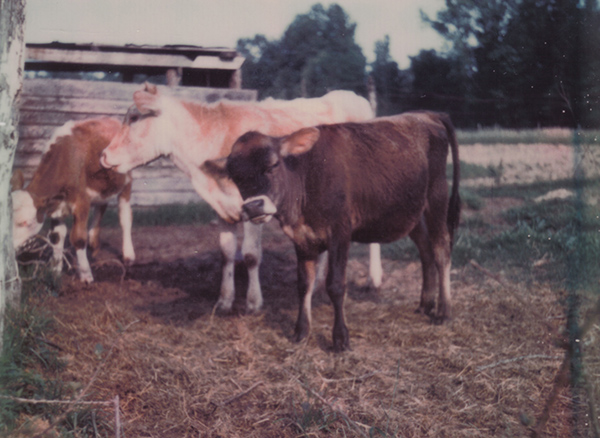
A 1970s-era photograph scanned from our family archive. Three young cows are standing near a fence line, pasture and woods in most of the background, with one wall of a weathered wooden shed visible. The cows are browsing through a scatter of trampled hay. The cows' coat colors indicate their mixed heritage. The cow closest to the camera strongly favors a Brown Swiss milk cow: its body is mostly dark brown with lighter shading on its legs and ears and a very pale muzzle with a dark nose. The middle cow likely has some Charolais beef breeding: its coloration is a patchy mix of pale tans and white. The cow furthest from the lens has markings typical of Hereford beef cattle: primarily reddish coloration with white legs, a white stripe down its back, and a white face.
A 1970s-era photograph of three young cows standing near a fence line with pasture and woods in the background.
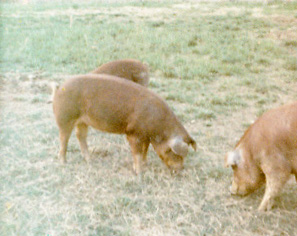
Another 1970s-era photo, scanned from the family archive. In this photo, three red pigs are grazing in a dry, clean patch of short pasture grass. The pigs are likely of Duroc descent, given their red coloration and the widespread popularity of the Duroc breed.
A 1970s-era photo of three red pigs grazing a patch of short pasture grass.

Our chickens and cows and pigs had individual names and individual personalities. We raised them and cared for them and loved them. But food chain reality means that livestock exists to be eaten. No matter how cherished. No matter how tame.

In this 1970s-era photograph, a red-and-white Hereford cow stands over her very young and very sleepy calf. The calf is red and white, like its mother, and its coat is thick and curly and damp in places. Just behind this cow and calf, a small cluster of black cows have gathered. These background cows would be of Angus breeding. All of the cows are standing in a patch of scattered straw and hay. The ground under the straw and hay would probably have been a trampled mire of mud. The bare-limbs tree line, just visible, indicates a winter setting.
Yet another 1970s-era photograph from the family archive. Here, a red-and-white Hereford cow stands over her very young calf. The calf is curled up on the ground, sleepy eyes and ears drooping.

Off to slaughter

Our cows and pigs were slaughtered and processed by local-ish butchers, but Mother slaughtered our chickens with a hatchet. Then she cleaned and portioned their carcasses while I collected and bagged bloody feathers.

In this 1970s-era photograph, Mother is feeding a flock of some 15 chickens, along with 3 white ducks, from a repurposed coffee can filled with whatever mix of feed and corn was on the day's menu. The chickens are mostly gray-and-white speckled Dominiques (we called them "domineckers"), with a single white leghorn rooster and a few Rhode Island red hens. In the background, our white station wagon is parked under a pole shed, along with several bicycles. The photo is poorly focused with faded colors.
In this 1970s-era photograph, Mother is feeding our small flock of chickens and ducks. At the moment this photo was snapped, Mother was bent over, using her free hand to enforce order. If photos came with sound, you would hear her scolding the greedy birds and coaxing the shy ones.1

In reviewing family archives for this post, I was struck by how similar the above scene is to a photo from the early 1900s, found in our maternal grandmother’s album. There was clearly something generational going on at our table.

Scanned image of an early 1900s photograph from my grandmother's photo album. The sepia-toned black-and-white image shows a flock of large chickens foraging in a tight bunch, probably having just been given feed. Some of the chickens have dark feathers and some have light feathers. The background is bare-limbed trees (winter), a large flat field, a post-and-wire fence with a closer fence having its lower section blocked off by tin. There is also a small outbuilding with an open door, with what appears to be a tractor parked in front.
Early 1900s-era photograph of some twenty chickens foraging in a bare yard with farm equipment, fences, and an outbuilding in the background.

Wildlife can also be living stock, to a hunter

Small and sundry prey

In addition to eating chicken, beef, and pork raised on our property, we sometimes ate squirrels and rabbits shot by my father and brothers. It’s possible that our beagles sometimes helped on these hunts. (It’s more likely that our beagles hindered these hunts.)

A small square photograph of three beagles, motion-blurred, play-fighting on top of a wooden doghouse. Shadows of fencing are visible on the doghouse. I believe these three beagles are Daisy, Fella, and Little Bit, though we also had a fourth beagle named Dan.
A 1970s-era photo of three naughty beagles play-fighting on top of a doghouse.

I helped skin and clean the squirrels and rabbits, and I remember being fascinated by their soft fur. I also remember Mother muttering and tsking while she cooked squirrel and rabbit meals. She breaded and fried the meat, and served barely edible, extremely tough portions with open disdain.

I developed a lasting case of meat snobbery, rooted in Mother’s disdain. Squirrels and rabbits were in the lowest edibility tier. Nothing lower was served. No frog legs. No snake, turtle, or alligator meat. No opossums.

Something generational was going on at our table there, too, but in the opposite sense of backyard flocks. Mother preserved her family’s tradition of raising chickens for slaughter, but put a permanent end to the family tradition of opossum hunting. (Scroll quickly if you don’t care to see a sepia-toned group of early 1900s ancestors showing off a bunch of dead, dying, or faking-death opossums, along with the dogs that facilitated the hunt.)

Scanned image of a photograph from my grandmother's photo album. In the album, the hand-printed caption read "The morning after our great Opposum hunt. 'We won't forget.'" This deep-sepia-toned black-and-white photo, circa early 1900s, shows five people standing in a row with a fourth person kneeling in front. Posing outdoors in a yard, the people are holding at least three opossums. The opossums are either dead, dying, or faking death. The woman to the far left is holding a smallish black-and-white dog, while the man kneeling in front is restraining two hounds. Probable (possible?) identifications include standing L to R: Sarah Harrison, Georgia Linton, Charlie Linton, Bill Linton, and an unknown girl; kneeling in front: Buck Linton.
In my grandmother’s album, this photo is labelled “The morning after our great Opposum hunt. ‘We won’t forget’.”

That’s my grandmother, second from the left, one hand behind her back and the other hand dangling an opossum for the camera. This particular hunt (it wasn’t the only time the family hunted and ate opossums) was special because one of the cousins (Sarah Harrison, standing on the far left) had come to visit.

Scanned image of a sepia-toned black-and-white photograph in my great aunt's photo album. In the album, the hand-printed caption reads "Sarah Harrison / Popman's cousin / 'the Possum hunt'". The outdoor photo shows a woman wearing a plaid dress with intricately pieced trim and pockets, white stockings, and white shoes. The woman is holding two dead, dying, or faking-death opossums, one opossum in each hand. The woman's dark hair is pinned up, and she is looking at the camera but not smiling. Beside her is a smallish black-and-white dog with a bobbed tail and half-pricked ears. The dog is looking up, attention fixed on the woman and opossums.
This photo was in a great aunt’s album. The photo is labelled: “Sarah Harrison / Popman’s cousin / ‘the Possum hunt’ “2

I should add that Mother’s disdain was not coherently taxonomic. Reptiles, amphibians, and insects were off the menu, but so were ducks, geese, and goats. Which meant some of our livestock were exempt from slaughter. What’s more, “dairy” came from cows and cows exclusively. There’s no logic here, only family and cultural tradition.

Cue any stand-up comic mocking a southern drawl. For that matter, cue any bully standing in their own tradition, mocking other traditions.

Photograph from 2021 of a white-tailed deer trotting beside a paved path at Back Bay Wildlife Refuge in Virginia Beach, VA. The background and foreground are winter-toned in oranges and browns of dormant shrubs and grasses, with occasional greens of live oaks and wax myrtles typical of coastal Virginia. The deer's head and tail are up, ears angled to listen behind her, in a body language that suggests alertness verging on alarm but not panic. Moments after I snapped this photo, the deer vanished into the tall seagrass.
Photograph of a white-tailed deer trotting beside a paved path at Back Bay National Wildlife Refuge. In my southern-Tennessee lexicon, “venison” very specifically refers to deer meat. I only learned in my middle-age that the word “venison” has different and wider definitions in different cultures.

In my late teen and early adult years, my oldest sister’s boyfriend often gifted us venison. I was particularly fond of what I called “Bambi roast” and “Bambi spaghetti”. Bambi, it seems, ranked high in my edible-mammal hierarchy. A bit below pet chickens and cows, but certainly above squirrels and rabbits. Which were at least on the list. Unlike opossums.

Here in my middle years, my childhood memories of skinning squirrels and rabbits seem dreamlike. As if those skinny arms and small hands weren’t my own. After all, any brief stroll through my blog history will find some tender post about squirrel and rabbit nests. I cringe, extra, thinking about any of the yard’s visitors heading into a hunter’s sights, then into a frying pan or stew pot.

Photograph from the spring of 2024. Five Mallard ducklings, less than two days old, are floating in a cluster in our dragonfly pond. Two of the ducklings have their heads cocked, one eye looking skyward. They are responding to an alarm call from their mother, who had spotted a hawk wheeling overhead.
Yes, Mallard babies. I’m talking about you. I’m aching to protect you.

But I didn’t always equate animals, my own pets and livestock in particular, with the meat on my table.

Further aside… so many eggs

Gathering the eggs

On mornings when my oldest sister was too tired or busy or sick to tend the chickens, I was roused and sent in her place. I remember egg gathering as sleepy, smelly, spidery work. Early morning work. (I’ve never been an early morning kind of girl.)

Egg gathering meant wrestling the chicken pen latch, which grew tighter each year as the posts and gate warped. Then I had to put down my bucket—to unclip the rusty chicken house latch and heave the rickety door over hills of weeds, dirt, and dung—and usually had two or three hens perched in my hair and on my shoulders by the time I bent to retrieve the bucket. Finally, I would stumble over the plank sill into the warm, dimly lit interior.

(Yes, I always stumbled. My severe astigmatism couldn’t navigate the sudden change from light to dark, and the hens dashed in and out through the door in frenzied delight.)

Our chicken house was closer in size to a closet than a house. I don’t have any chicken pen/chicken house photos to share, but almost any wire pen around almost any vine-covered tin-roof-and-plank outbuilding would be an accurate visual.

Veils of cobweb hung from the low rafters. Snakes, flies, wasps, spiders, and light entered and exited through gaps in the walls and roof. A short row of nest boxes lined one wall. The floor was dirt, feathers, dung, and broken shells. The chicken house smelled strongly of chickens and dust, but also of cat urine (from our army of yard cats) and dog feces (from the adjoining dog pen) and, every so often, of predators.3

Shooing hens from their nests, or reaching beneath those who refused to be shooed, I gathered eggs by touch more than sight. (It’s not as easy as it sounds. Our hens didn’t give up their eggs willingly, especially to the tentative little sister of their usual egg-gatherer. Wing slaps left bruises, and claws and beaks drew blood.)

The warm, sticky, tough-shelled eggs that I gathered didn’t feel like they held nascent chicks and ducklings. 

A 1980s-era photograph of a red hen and her brood of variously yellow, tan, or striped chicks, all safely enclosed in one of our wood-and-chicken-wire coops. The stocky hen shows strong Rhode Island Red characteristics, but the chicks' mixed genetics were more typical of our flock.
A 1980s-era photograph of a red hen and her brood of eleven(ish) striped chicks, all safely enclosed in one of our wood-and-chicken-wire coops.

Breaking the eggs

Our father began leaving during my pre-teen years. He sold the cows, let the fences lay where they fell, and stopped shoring up the barn and sheds. After he finished leaving, neglect cascaded into decay. Vines pulled down the chicken house and the gate fell off the pen.

Both pre- and post-chicken house era, egg gathering mistakes were inevitable. In the chaos of the crowded, rickety henhouse, broody laying hens stole eggs from the adjacent nests of setting hens. Predators and predator alarms rolled and bounced eggs between nest boxes. An egg laid by a setter a week or more ago, carefully incubated since, might end up alone in a layer’s nest. An egg laid by a layer last night might end up in a two-weeks-along setter’s nest.

After our flocks were entirely free-roaming, they hid their nests so well that eggs were often days old before being found. Eventually, increasing incidences of “bad eggs”, coupled with decreasing egg demand as siblings moved out, halted all egg collecting.

Late 1980s-era photograph of five large white eggs in a rough nest on the ground. The flat nest is made only of trampled grass and dry, dead weeds. The nest is positioned beneath an unused steel livestock gate that is leaning against the wall of a post-and-panel shed.
Photograph of five eggs, probably duck eggs, in a nest on the ground. This nest was tucked between an unused livestock gate and the outer corner of a shed.

The term “bad eggs” most obviously referred to rotting or rotten eggs. The kind that burst on their own or floated in water. But “bad eggs” also encompassed fertilized eggs that were mistakenly collected mid-incubation.

When an incomplete carcass, some mid-development stage of a chick or duckling, spilled from an egg I had cracked, I writhed with regret. It happened often enough, in my early years, that I still crack eggs into a separate bowl when cooking.

After our egg-collecting years ended, our increasingly feral flock was left to hatch and raise what young they could in whatever nests they chose.

Late 1980s-era photograph of a gray-and-tan feathered game hen with black tail feathers. The hen is setting on a nest that she made in a deep pile of straw left in the bottom of a large wooden box that once held bales of straw. The colors in this photograph are over-bright due to using a flashbulb on the camera, and the image is somewhat blurry.
A late 1980s photo of a game hen (conveniently named “Game Hen”) sitting a nest of eggs in a straw-lined box.
Late 1980s-era photograph of the inside of an ancient out-of-service livestock trailer that served as a shed for storing straw, hay, and feed. The trailer's flooring is wooden planks laid between steel bars. A massive, open-topped wooden crate/box is positioned in the middle of the trailer, an overturned tin can is on the floor in front of the box, and a large weathered 50-gallon oil drum is to the right. Game Hen is perched at the entryway, looking out. A reddish hen is perched on the edge of the large box, and another hen (mostly in shadow) is perched on the oil drum's closed lid. In the far background, shadows and reflections show equipment, bottles, and boxes stored (and long forgotten) on a shelf. The massive box once held bales of straw, but by this time held only a deep bed of leftover straw which was used by the cats and chickens for warm bedding. The oil drum held bags of feed. We kept the trailer doors closed, most of the time, but there were plenty of holes through the sides and bottom that the chickens, cats, rats, and opossums used for entry- and exit-ways.
A late 1980s view inside the “trailer” (a dilapidated, out-of-service livestock trailer that we treated as a bonus shed for feed storage). The massive wooden open-topped box/crate (center frame) once held bales of straw, so it was lined with broken bales. Inside this box, in the right back corner, was Game Hen’s nest.
Late 1980s-era photograph of 11 white eggs and 7 brown eggs in a nest made of straw. This was Game Hen's nest to sit, though the eggs were likely provided by multiple hens. The nest was in the far back-right corner of a massive open-topped wooden crate/box the sat in the middle of the ancient out-of-service livestock trailer we used for straw, hay, and feed storage.
The same late 1980s nest, photographed after bribing Game Hen with feed. Heaped in the nest are 11 white eggs and 7 brown eggs. The hens literally shared prime nesting spots.
Late 1980s-era photograph of a golden-eyed black-and-white cat (Mischief) nursing a newborn litter of kittens. All are settled in a deep, warm nest of straw, loosely lined with an old blue shirt. There are five kittens, three tortoiseshell and two solid white (destined to develop silver-and-gray "points" typical of siamese, but with the much longer hair typical of ragdoll cats). This litter of kittens was delivered and nursed in the massive wooden open-topped crate/box that we used to store straw in the ancient out-of-service livestock trailer that served as our feed shed.
Another late 1980s-era photograph, taken in the exact same spot in the trailer’s box of straw as the above nest photos. This is my cat Mischief nursing a newborn litter of five beautiful kittens. Two of these kittens will reappear later in this post, in a photo taken after they were grown.

Growing up in rural Tennessee, eating the animals and dissociating

While my egg-mistake memories are mostly visual, wetly curled bodies in a puddle of albumin, my memories of chicken, squirrel, and rabbit carcasses are sticky with remorse and smell like blood, grease, and guilt left out in the sun.

But expressing regret, remorse, or guilt at the table was forbidden. So was refusing to eat what was served. I don’t remember being told these rules, nor do I remember hearing these rules explained to my siblings. For that matter, I don’t remember learning these rules.

It is this lack of learning, this full memory cache with no record of creation, that warrants using the word “dissociated”. As a girl growing up in rural Tennessee, I dissociated from the eggs and meat on our table.

I coped with my forbidden regret, remorse, and guilt by inventing a private delusion, by defining eggs and meat as a different form of matter than living animals.

Mid-to-late-1980s-era photograph of our back yard, taken in late winter/early spring (indicated by the budding saplings in the background). Our small mixed flock of chickens, ranging in color from red-and-black to solid white, are resting, foraging, and roaming around the trunks and roots of a massive maple tree. An ancient out-of-service aluminum-sided livestock trailer is parked to the left, our wire-and-chain-link dog pen is in the left background, and a weathered old doghouse is in the middle background (used by cats, chickens, and yard dogs for warmth).
Mid-1980s photograph of our mostly free-roaming flock. We wouldn’t have eaten many of their eggs, in their later years, and their tough old carcasses would have been among the last added to the freezer. The trailer is visible to the left, with the dog pen behind it. The derelict chicken pen is hidden in the far center background, behind the row of saplings and shrub-like weeds.

Depression on top of dissociation

The photo immediately below is more metaphor than image. The worn paint and sagging shingles on our house and concrete-block wellhouse, the decaying barn-remnants to the far right, the unkempt pasture and yard, and the overgrowth marking downed fences. All of these illustrate the state of our dysfunctional household during my teen and young adult years.

A late-1980s or early-1990s-era photograph of our back yard. The edge of the house is just in view to the left, with worn paint on the wooden siding and facia boards. The concrete-block wellhouse, with its wide concrete stoop, sits just behind the house. Here, the wellhouse's roof is in bad disrepair, sagging with rot. Two cats and a hen are perched on the wellhouse, waiting to be fed. The yard is patchy, with some areas of dead grass and some areas of overgrown grass. The crumbled and rotting remains of a sloped loading chute and our barn are visible to the far right, and a heap of discarded debris (the remains of a fallen pole shed roof, the old pig pen fence, the old pig shed, and one wall of the barn) is thinly hidden behind a tall (>6 foot) curtain of dead brush. The woods in the far background are winter-bare.
A late 1980s- or early 1990s-era photo taken in the back yard. Perched atop our concrete block wellhouse, two cats and a red hen are waiting to be fed. The cats, Annie (right, tortoiseshell colored) and Gizmo (left, ragdoll marked) grew up out of the exact trailer-straw litter pictured above. The hen, whose name I’ve lost to time, was one of Game Hen’s daughters.

The hungry cats and hen on the wellhouse roof, waiting for a meal of table scraps and cheap kibble, are confusion, sorrow, and loneliness. This was the era of boyfriend venison and day-old bread. Of freezers stocked from clearance ads. Of oldest sister tending the garden in the dark of too-early mornings and too-late evenings because she was working three jobs while going to college.

We no longer ate the livestock we raised and loved, but clearance-case chicken and ground beef added a new facet to my dissociation. Grocery eggs and meat were always cold and bloodless, had never been embodied in the yard. And I had learned what it meant to be hungry.

Re-associating, for health reasons

Or, “Thanks for the genes, Dad”

My father died of heart disease at the age of 52. I was mid-teens, and he seemed so old. But he wasn’t old. I am, currently, older than 52.

I don’t feel so old.

I like being me, and I would like to continue being me for some good long number of years past 52.

Perseverating on 52

One of the ways I’ve packaged and carried grief is a fixation on 52nd birthdays. As each of my four older siblings passed 52, I breathed a bit easier. Long before I reached 52, I began researching and planning. Partly because of the grief fixation, but also because my cholesterol levels have been alarming physicians since I was a teen.

Note to father: Next time, maybe try leaving us money, instead.

Statins and exercise are no match for my father’s genes. My last resort for living past 52 was a complete overhaul of my diet. (I should have started there, but I’m a silly human with silly human habits.)

Call it plant based. Call it vegetarian. Call it desperation.

An unexpected side-effect of my diet overhaul has been re-associating with animal protein. My health ambitions were easier to realize when I reminded myself that pork is slaughtered pigs. That beef is slaughtered cows. That chicken is slaughtered chickens. That grocery eggs come from hens housed in industry conditions, not back yards.

Without my dad’s cholesterol, I would probably still perceive meat and living stock as unrelated forms of matter.

Enter the Mallards

Timing is everything, and my various perspectives and journeys are not random. If you are still reading, you might be starting to see a signal. Or not.

What looks like signal to me likely looks like noise to others.

Perhaps in a later post I’ll explain how a literature search through the history of prion testing catalyzed an ongoing reaction between a brood of suburban ducklings, a fetish-level case of nostalgia, a dysfunctional family history, and a stubborn set of lipid genes, resulting in this multi-part Mallard post.

Photo from the spring of 2024, of a Mallard hen and her brood of ducklings swimming in the dragonfly pond. Here the hen is reaching up, tugging seeds from a long grass seedhead that had sagged over the pond's edge. One of her ducklings is reaching up, sampling the grassy seeds, while the others are milling around, watching.
In this photo from the spring of 2024, a female Mallard duck shows her brood how to eat grass seeds from a seedhead dangling over the dragonfly pond.

For the present, I’m a recovering carnivore lured to herbivory by a longing to live past 52. I grew up in a rural environment where the animal protein on our table came from our own yard, pasture, and woods. And I’ve known what it is to be hungry.

These perspectives matter, though it’s not entirely up to me to decide how they matter.

In the next episode…

Mallard hunting is big business.

Image scanned from my great aunt's photo album. This black-and-white photo, vaguely sepia-toned, shows a man in thick winter garb—newsboy(?) hat, hunting jacket (lots of pockets), bulky pants, and worn boots—holding a long gun and two dead Mallard ducks. In the album, a hand-printed caption on an adjoining photo identified this man as Harry Kenyon.
Early 1900s photograph of a duck hunter holding a gun and two dead Mallards. This photograph was scanned from a great aunt’s photo album. The hunter’s name was Harry Kenyon. I do not know who he was or how his image landed in my great aunt’s photo album.

2. While I’m perfectly awful at recognizing genetic and cultural heritages based on peoples’ features and clothes, I recognize that this distant cousin doesn’t look or dress like my grandmother’s family. I would love to know more about her. (Click here to return to your regularly scheduled photo caption.)

3. My parents believed weasels were the chickens’ craftiest predators, blaming almost all egg, chick, and hen losses on an invisible and trackless family of mustelid carnivores, traceable only by scent. Years later, I realized that the scent I was taught to identify as “weasel” covered everything from the musk of a water snake to fox scat to mouse urine. (Click here to return to your regularly scheduled paragraph.)

Focusing on Mallards, Part III: Annual Changes in Flight Muscles

Content warning: This blog post contains references to the hunting, agriculture, and research practices of killing birds. If you choose not to read on, I respect and admire your choice.

This multi-part series of blog posts was inspired by a Mallard hen that nested in our neighbor’s yard this spring. After her eggs hatched, the next-yard hen brought her nine ducklings to the dragonfly pond, where we all spent two lovely mornings basking in the relative safety of our tame little yard.

Photo of the next-yard hen and three of her ducklings. The ducklings are sleeping on the stone border of the dragonfly pond after a tiring swim, and the hen is standing in the grass behind them, preening her chest feathers.

As I watched the hen rest and bathe and forage with her ducklings, I developed an obsession with Mallard physiology. This hen had incubated her eggs for almost the entire prior month, weeks and weeks of inactivity broken only intermittently to forage in nearby yards.

What happened in her body during that month? Especially in her flight muscles? After all, if I spent a month in bed, my muscles would deteriorate. And with the hen facing another dangerous stretch of weeks and months shepherding her flightless brood (ducklings don’t fly until they’re about two months old), what else was going to happen in her flight muscles? After three months mostly grounded, how could she fly at all?

Given my penchant for literature searches, I started looking for answers. A half-hour later my keyword nets were empty. Either I was choosing the wrong keywords, or the search engine ocean was empty, as well. But the search engine ocean is not the only source of information out there. Some answers are older than the internet. (Literature search side-quest unlocked!)

Giving up on keyword nets, I defaulted to my personal version of a bootstrapped search. I read through related papers, cherry-picked references that seemed pertinent, found the non-paywalled references, read more, picked more, and continued on repeat. Uncounted iterations later, I’ve devoted more hours to the search than can be explained by interest, alone. My OCD has clearly joined the hunt. (Obsession upgrade unlocked!)

Setting aside mysteries of my own neural wiring and firing, I’ve learned a lot about waterfowl. And about waterfowl physiology. So much so that I’m tempted to call myself a physiology hobbyist. And, like any good hobbyist, my current passions manifest in my blog.

Photo of two Mallard ducklings napping in bright sunshine beside a small yard-art statue. Some intangible and irresistible brew of nostalgia, biophilia, protectiveness, and obsessiveness caught and kept my interest during and after my encounter with this brood of Mallards.

Recap of Parts I and II

In Part I of this post, I described the anatomy of a bird’s flight muscles and shared a bit of personal history that helps explain why I am so fascinated.

In Part II, I defined what I mean by “knowledge”, reflected on the capitalism behind the curtain, sketched out some practicalities about Mallards and other waterfowl, introduced the literature’s euphemisms for “kill” (and also explained my choice to use the word “slaughter”), dipped into background about research numbers and repurposed data, and presented some findings from the literature about variations in the relative masses/sizes of flight muscles.

Here, I’ve harvested from the literature a few articles about annual changes in flight muscle mass in captive Barnacle Geese, wild Great Crested Grebes, wild Red Knots, and wild Mallards.

Photograph of the next-yard Mallard hen standing on the rock border of our dragonfly pond. One of her ducklings is crouched beneath her, safely hidden from aerial predators.

Flight muscles and annual cycles

All research is a tangled path, but wildlife research is a centuries long, thicket-strewn snarl of overzealous collection work, Larmarkian and Darwinian scuffles, rogue variables, and funding biases. Most of the research I’m citing here looked at flight muscle changes associated with molt cycles.

In all of the geese, grebes, and knots that embodied the data reported in these articles, the masses of their flight muscles decreased as their flight feathers molted and increased again as the birds regained feathers and flight. For most of the researchers who interpreted this data, these cycles of atrophy (muscle loss) and hypertrophy (muscle gain) were evidence supporting or refuting (for the species in question) a pair of proposed hypotheses.

The use/disuse hypothesis

One simple and obvious (hypothesized) mechanism for muscle gain and loss is use/disuse. When birds fly, they exercise their flight muscles and gain (or maintain) flight muscle through the known benefits of exercise. When waterbirds molt and replace all their flight feathers in a single weeks-long event, they lose muscle during molt because they quit flying. When they begin flying again, muscle returns.

Because simple and obvious tends to prove out (if you’re waiting for the obligatory Occam’s razor reference, here it is), I quickly became a fan of this hypothesis.

The “endogenous trigger” hypothesis

The more complex and less obvious (hypothesized) mechanism is an “endogenous trigger”. Perhaps somewhere in a bird’s body, some tissue or organ follows time (or seasons). Perhaps when the time/season is right, this tissue or organ sends a molt signal to the flight muscles, and the flight muscles begin breaking down. Maybe all that protein is needed for feather production (feathers are, for the most part, protein). Maybe birds with less muscle and therefore lighter body weights will regain flight sooner. Maybe some complex combination of diet, exercise, and behavior before and during molt causes muscle change as a side-effect, not as a benefit.

As complex and less obvious tends to make good storytelling (especially the kind of serendipitous discovery and cautionary tale stories that science loves), I quickly became a fan of this hypothesis, too.

In this photo, the next-yard hen has just settled after a vigorous, splashy bath in the dragonfly pond. Her feathers are ruffled and beaded with water, the feathers of her face and head are soaked, and a single drenched duckling is half-submerged in the last wave churned up by her luxurious bath.

Barnacle geese in molt

In the 2000s, researchers from the United Kingdom followed a flock of captive geese before, during, and after molt (or moult, because the UK).

Portugal et al. (2009) started with 40 adult Barnacle geese that had been bred and raised in captivity. These birds never flew. Their flight feathers were trimmed to keep them grounded in their aviary. Starting in July and continuing through November, the researchers slaughtered (anesthetized, euthanized, and later dissected) four birds from the flock every two weeks, with more frequent slaughter of birds during peak molt.

In this flock of flightless geese, flight muscle mass decreased by more than 35% in the weeks before molt and during the first stages of molt. After the mid-molt minimum, flight muscles started recovering, increasing back to the pre-molt maximum as the geese shed their old flight feathers and grew new feathers.

The researchers achieved this “35%” measurement by comparing the combined and averaged flight muscle masses of the slaughtered birds, four birds at a time. So the first four birds (the earliest data) had a combined and averaged flight muscle mass that was 35% heavier than the dissected and weighed, combined and averaged flight muscles of the four birds slaughtered mid-molt.1

Setting aside (for the moment) the steady depopulation of this flock, there was a timing mismatch between the muscle and feather changes. Instead of flight muscle loss following feather loss (as a “use it or lose it” consequence of flightlessness), the flight muscle loss preceded feather loss.

But why was there muscle loss at all? These geese didn’t fly, so their grounded condition during molt was their default lifetime condition. How could use/disuse factor in, when there had never been use in the first place?

Behavior changed, too

These same Barnacle geese had been observed through the previous year’s molt. “Despite having constant access to food, the captive barnacle geese lost approximately 25% of their body mass during the wing moult in both years of the study” (Portugal et al., 2007, “Discussion”, para. 1). This is a substantial change in body weight for geese with unlimited access to food and water.

“Anticipatory, rather than responsive.”

So these 40 captive Barnacle geese experienced flight muscle loss prior to onset of feather loss, before their behaviors and metabolisms changed. And their flight muscles began recovering prior to feather regrowth, before the geese resumed normal behavior.

“Therefore, these muscle changes give potential for increased or decreased performance but do so in an anticipatory, rather than a responsive fashion” (Portugal et al., 2009, p. 2409).

That’s an unexpected conclusion. These geese were not experiencing a simple and obvious use/disuse effect. This was a complex and less obvious process. A science story waiting to be told. And uncovering evidence of the complexity cost (only?) 40 captive geese.2

What is the value of a few flocks of captive geese?

Returning to my Part II theme of capital, what is the most valuable capital in the paragraphs above? Portugal et al.’s data, which has racked up some 200 citations? The 2007 and 2009 publications, which have been viewed online some 5000 times?

Is the story I’ve borrowed for this post more valuable than the geese? After all, these were fully realized, fully alive adult geese. Portugal et al. noted that 31% of the flock were paired or attempting to breed (2009, p. 2407). They did not note if they slaughtered the pairs together. Would such a consideration soothe my empathy?

And, speaking of empathy…

At what point, if ever, did the behavior and stress-metabolism of the flock—so accustomed to safety, steady population density, and shared companionship—change in response to their sudden prey status and declining numbers?

In this photo, the female Mallard stands watch as two of her ducklings practice hopping in and out of the dragonfly pond. Both ducklings have their stubby wings partially extended. During their two mornings in the yard, the ducklings stretched their wings often, as if practicing flapping, but they also used their wings as tiny counterweights while they balanced on the tricky terrain of seashells and stones around the pond.

Other waterfowl in molt

Between 1978 and 1986, a researcher in the Netherlands (Theunis Piersma) collected the carcasses of 112 adult Great Crested Grebes that drowned in gill nets during the birds’ August–October molt (or moult, because the UK version of English) on Lake IJsselmeer in the Netherlands. Pairing data with observations of the birds’ activity levels before, during, and after molt, Piersma interpreted his findings as use/disuse. As a cycle in Great Crested Grebes in which forced flightlessness triggered disuse atrophy during molt, and return of wing function triggered muscle hypertrophy after molt. (Piersma, 1988) 3

In separate work involving captive Red Knots, reported in 1999 (Dietz et al.) and more in keeping with Portugal et al.’s geese, Piersma (as a co-author with Dietz et al.) concluded a different mechanism was at work. In this instance, the authors concluded that an “endogenous circannual process” (p. 2836) regulated flight muscle changes in Red Knots during molt.4

All of this is good and useful information for researchers interested in captive geese, wild grebes, and captive and wild knots. It is even good and useful information for someone like me, who is dabbling through waterfowl research in search of a simple answer to a complex question about Mallards. It shows different physiological processes at work in different species.

In other words, my Mallard answers can’t be intuited from goose, grebe, and knot research.

Photograph of the next-yard Mallard hen and her brood settling down for a sunlit nap beside the dragonfly pond. The hen (in the background) has tucked her bill under her wing feathers in a resting pose, but she still has one watchful eye on her ducklings. The ducklings are huddled together, some still awake, some already asleep, and some just in the process of nodding off.

So…the next-yard Mallard hen’s flight muscles?

Simple answers to complex questions are vanishingly rare in any field, but perhaps a complex answer can by synthesized? Have the simple and complex threads of other, related questions about Mallards crossed often enough to create a pattern? (Unnecessary spoiler alert: No such pattern is discerned here. Only more questions.)

And, is molting at all the same as nesting? (No. Obvs.)

I found a significant body of literature regarding flight muscle changes in Mallards during molt, but only a single flight muscle dataset for nesting Mallards in the wild. I expect ethical concerns explain much of the data imbalance. At least, I hope ethical concerns are a factor.

I prefer a world in which nesting and post-nesting hens, along with their eggs and ducklings and awkward teen-ducks, are safe from the traps and slaughter and scales of researchers. Their world is already dangerous enough.

Besides, even if everyone agreed on a single, simple mechanism for molt-related muscle loss and gain in Mallards, it’s unlikely that the consensus mechanism would also regulate muscle physiology during nesting. After all, molt and nesting share few behavioral, metabolic, or seasonal similarities. For the birds themselves, flightlessness may be the only common factor. And nesting flightlessness is, at least during the onset, choice—nesting hens can fly, they simply don’t fly often. Molt flightlessness is forced.

Mallards in molt

Venturing first into Poland, a 1990 article (Panek & Majewski) looked at Mallards in molt on the floodplain where the River Warta meets the Odra River in western Poland. During the time of the study, some 25,000 male Mallards gathered for molt, a population “many times greater than the number of local breeders” (p. 255). Molting Mallards (3,788 males; 341 females) were herded into net enclosures, weighed, examined, and banded, and then released. After periods of 3–9 days, more herding resulted in recapture of 337 male and 13 female birds, which were again weighed, examined, and released.

These efforts allowed the researchers to determine that both the male and female Mallards lost 12% of their body weights during molt. What’s more, whenever new feathers (even just a few new feathers) were damaged enough to require immediate re-replacement, the prolonged flightless period resulted in continued weight loss. In those cases, the continued weight loss couldn’t be blamed on the metabolic demands of massive feather regrowth because only a few feathers were being replaced. (Panek & Majewski, 1990, p. 258)

“In our opinion, limited foraging and the use of body reserves during flightlessness are responses to high predation on dabbling ducks that forage in shallow waters. Secretive behavior and short forays out of shelter minimize exposure to predation” (Panek & Majewski, 1990, p. 258).

But a hemisphere away in Klamath Basin, California, avian botulism has sometimes been a larger hazard for molting Mallards than predation. In some of the basin wetlands between 2001 and 2006, avian botulism claimed as many as 64% of radio-monitored Mallards during molt (Fleskes et al., 2010, p. 214).5 However, after molt, “Hunting was the main cause of mortality for post-molt Mallards both within (16 of 37 deaths) and outside Klamath Basin (six of nine deaths)” (p. 214).

“Increased daily mortality rates of light-weight birds that were captured late in the season during this study suggest some aspect of the molting marsh (e.g., food, water quality, sites safe from predators, predator density) deteriorated as the season progressed causing female Mallards in poor condition to be more susceptible to predation and disease” (Fleskes et al., 2010, p. 217).

Finally, in the Mingo Basin of Missouri, a researcher from the University of Missouri slaughtered a total of 267 female Mallards over the course of three successive winter seasons (1981–1983) (Heitmeyer, 1988). He found that molt timing varied according to age and weather. Adult females molted earlier than immature females, and all of the birds molted earlier in wet winters.

After processing the carcasses, Heitmeyer noted that the birds he slaughtered either before or after molt were heavy, with lipid reserves making up a high percentage of their body weights (1988, p. 673). In other words, the birds Heitmeyer slaughtered prior to molt were healthy and fit and well-prepared for the metabolic demands of molt, and the birds he slaughtered after molt were also healthy and fit and well-prepared for the metabolic demands of migrations to their nesting grounds.

But mid-molt? The Mallards he slaughtered mid-molt were 6% lighter in weight than pre- and post-molt birds. Most of this overall weight loss was due to a 35% decrease in lipid mass (compared to pre-molt birds). So used-up lipid reserves explained 83% of the weight difference between Mallard hens slaughtered prior to molt and Mallard hens slaughtered during the middle of their molt. The hens were losing mostly lipid reserves, not muscle. (Heitmeyer, 1988, p. 673 & “Table 3”, p. 672)

Do these three researches tell a common story?

Not really.

It’s tempting to weave these three researches into an intuitive story about Mallards that reads something along these lines: Mallards lose weight during molt because they hide from predators more and forage less, and their used-up lipid reserves (not atrophied flight muscles) represent most of the lost weight.

But science doesn’t work that way. Nothing does, really. I can’t take the 12% weight loss (Poland), explain it as 83% due to used-up lipid reserves (Missouri), and superimpose an estimate of up to 64% of molting Mallards dying due to disease (California). None of these numbers, variables, or Mallard populations are connected in any rigorous or meaningful way. The only commonalities are the English-language phrase “Mallards in molt” and this sprawling series of blog posts.

Even so, there are tempting threads. Perhaps Mallards in Poland, Missouri, California, and everywhere else actually do lose weight during molt because they hide from predators more and forage less, and perhaps their used-up lipid reserves (not atrophied flight muscles) actually do represent most of the lost weight.

Perhaps Mallards need a third hypothesis, something neither use/disuse atrophy nor annual endogenous trigger. Perhaps if I keep pulling this molting Mallards thread long enough, keep following it deeper into the rabbit hole that I already know doesn’t hold the answer I’m seeking, I’ll find other researchers pulling the same thread. Perhaps we’ll all agree that Mallards need a purely behavioral “hide and fast” hypothesis.

Except it’s time to follow this particular thread back out of the rabbit hole. Whatever mechanisms are at work in a molting Mallard’s physiology, they are (probably) irrelevant to a nesting Mallard’s physiology. (But, as I leave, I’m rolling up the thread metaphor and carrying it with me to the next rabbit hole.)

In this photo, the Mallard hen and her ducklings are perched again on the rocks surrounding the dragonfly pond. Most of the ducklings have gathered under the hen, in the enlarged patch of shade that she has made by spreading her tail feathers and slightly opening her wings so that her primary and secondary flight feathers catch a bit more of the sun. Two of the ducklings are several inches beyond the hen's shade, enjoying the sun-warmed rocks.
In this photo, the Mallard hen and her ducklings are perched again on the rocks surrounding the dragonfly pond. Most of the ducklings have gathered under the hen, in the enlarged patch of shade that she has made by spreading her tail feathers and slightly opening her wings so that her primary and secondary flight feathers catch a bit more of the sun. Two of the ducklings are several inches beyond the hen’s shade, enjoying the sun-warmed rocks.

I like the thread metaphor because I like the idea of reality as a giant tangle of skeins. Step up to the skein, find a loose end, and start pulling. This is how some hypotheses unravel and how some hypotheses knot tighter.

But don’t forget that each thread has a price tag. Like a county fair booth where you pay 40 captive geese to pull the first thread. Or a boat full of drowned grebes to pull the next thread. Or, as in the next research, 51 Mallard hens to pull the specific thread I’ve been searching for all along.

Flight muscle changes in nesting Mallards

“By late incubation, females are highly emaciated; 11 live-trapped females weighed during the last 5 days of incubation averaged 900.3 g ± 30.1 g (mean ± SD)6, or 25% less than during prelaying” (Krapu, 1981, p. 31). (For readers accustomed to weights in pounds and ounces, 900.3 grams = 1.98 pounds and 30.1 grams = 0.066 pounds.)

While 11 ducks is a very small sample size, the data suggest that female Mallards lose up to a quarter of their body weight over the course of nesting. But do they lose flight muscles or lipid reserves? Or both?

Along with these 11 hens weighed alive, this study involved capturing and slaughtering 51 other Mallard hens who were at various stages of their nesting cycles: 19 pre-laying hens, 11 laying hens, and 3 hens that had completed the laying process and begun incubating their eggs. Plus 11 hens that were making their first nest and 7 hens that had lost their first nests and begun laying a new clutch.7

Here’s those numbers again, with a bit more context

If you read the previous two paragraphs and experienced a brief or extended period of dissonance, I’m with you. That’s a lot of numbers in just a few sentences. The important numbers, for my purposes, are the 25% weight loss, the 11 weighed hens, and the 51 slaughtered hens. Here’s a list of hens, broken down by how their data were sorted:

  1. Eleven hens were trapped, weighed, and (hopefully) released back to their nests. These 11 hens were nesting within the study area, and each had a nest with eggs due to hatch within five days. All of these hens were in poor body condition (“emaciated”) compared to hens that had been weighed prior to laying.
  2. Thirty-three hens were slaughtered after migrating into the study/nesting area. As the researchers dissected the 33 carcasses, the slaughtered hens were divided into groups based on their ovarian cycles:
    • Nineteen hens had not yet ovulated. These 19 hens were labelled as “pre-laying”.
    • Eleven hens had ovulated and begun laying eggs, but had not yet laid their last egg. These 11 hens were labelled as “laying”.
    • Three hens had laid all of their eggs (had no more eggs developing in their ovaries or oviducts) and had begun incubating their nests, but they were no more than 6 days into their incubation phase. These 3 hens were labelled as “incubating.”
  3. Eighteen hens were slaughtered as their ovaries and oviducts began preparing for egg production, but before their first egg ovulated. (It’s unclear if these hens were counted among the hens sorted by ovarian cycle, above, so I’m counting them separately.)
    • Eleven of these hens were making their first nest. These 11 hens were labelled as “initial nest attempts”.
    • Seven hens of these hens had a “brood patch” (a bald/featherless patch on their chest or abdomen), which was considered to be evidence that they had already completed one nest and begun incubating (brooding). But something had gone wrong with the first nest, prompting the hens to restart their ovarian cycle and attempt a second (or third?) nest. These 7 hens were labelled as “renesting”.

(Did you spot the moment(s) when my OCD winced? There ended up being three different groups that numbered 11 hens. This kind of number coincidence is not exactly common in science, but also not exactly uncommon. My OCD does not like coincidences. It’s safe to say that, in general, science doesn’t either.)

Back to North Dakota in springtime

When Krapu compared the weights of various tissues and organs in his slaughtered hens, the laying hens (layers) had actually gained weight, compared to the pre-laying hens (pre-layers), while the incubating hens (incubators) had lost a significant amount of weight compared to both the pre-layers and the layers.

The idea that Mallard hens might gain weight in the early stage of egg laying makes intuitive sense. Think about birds and eggs and ovaries and oviducts. All of those eggs started as follicles in an ovary. Think about eggs in a nest. They’re certainly bigger than ovarian follicles. After all, each egg has to be fortified with enough proteins and lipids and sugars to build an entire duckling from scratch. So producing a nest full of eggs, ovary to nest, means a female Mallard’s reproductive tract gets huge.

As Mallard hens lay (on average) an egg a day during nesting, their ovaries and oviducts during this time often contain several eggs in various stages of growth from follicle to in-the-shell. Krapu’s data support this intuitive explanation. The layers had massively higher ovarian and oviduct weights than the pre-layers and the incubators. (I’m going to call this their pregnancy weight.)

In comparing hens slaughtered at these three stages—pre-layers, layers, and incubators—three trends of interest (to me) emerged:

  1. The incubators had lost their pregnancy weight, and then some. Their ovaries and oviducts were not only lighter than the ovaries and oviducts of the pregnancy-heavy layers, but were also significantly lighter than the ovaries and oviducts of the pre-laying hens. (Have mercy. Statistical significance is its own hefty topic.)
  2. The incubators’ lipid reserves were nearing depletion. The pre-layers’ total lipids made up some 10% of their overall body weight. For the layers, their total lipids made up about 6% of their body weight. But the incubators, by day 6 of incubation (and with some 3 weeks left to go), were whittled down to the point that their total lipids constituted only about 2% of their body weight.
  3. The incubators’ flight muscles were lighter than the pre-layers’ and layers’ flight muscles, though the difference was not statistically significant.

And what about later in incubation? What about weeks 2–4? With lipid reserves already nearing depletion, muscle would be next on the menu. Thankfully, this research didn’t persist in slaughtering nesting Mallards. There are no numbers for weeks 2–4. But there are numbers for those seven hens that lost their first nests and tried to start over.

The seven renesting hens had already gained and lost their pregnancy weights once, and their body weights reflected the toll. They were about 12% lighter than hens at the same stage of laying a first nest (though they were slightly heavier than the incubator hens). Their lipid masses were only about 3% of their body weights, as they had used up much of their lipid reserves during their first nesting attempts.

And their flight muscles? In all the hens, no matter their nesting count or stage, their flight muscles made up 5–6% of their body weights.

Pre-layersLayersIncubatorsInitial NestersRenesters
Body weight1199.8 ± 781300.6 ± 114.6967.3 ± 44.51217 ± 79.4 1065 ± 54.6
Flight muscle weight65.1 ± 5.665.1 ± 5.558.3 ± 1.965.3 ± 5.660.0 ± 1.9
Flight muscle as rough % of body weight5.4%5%6%5.3%5.6%
Lipid mass109.6 ± 33.779.6 ± 37.217.1 ± 14.7116.4 ± 18.9 29.9 ± 17.4
Lipid mass as rough % of body weight9.1%6%1.8%9.6%2.8%
All weights are in grams. Body weights, flight muscle weights, and lipid masses are quoted directly from Krapu, 1988, Tables 1 & 3, pp. 31 & 35. Flight muscle as rough % of body weight and lipid mass as rough % of body weight were calculated by dividing flight muscle weights and lipid masses by the respective body weights, then multiplying by 100. Should there be any statisticians among my readers, I offer my deepest apologies for ignoring those standard deviations. I was only looking for rough numbers, after all.

Question answered? (No.)

Maybe nesting female Mallards don’t lose significant flight muscle. Maybe used-up lipid reserves and back-to-normal reproductive tracts explain all of that lost body weight, up to 1/4 of their pre-nesting weight. Maybe a nesting Mallard’s flight muscles only atrophy a little? (Unlike Western Grebes in Manitoba, Canada, which lose up to 41% of their flight muscle during nesting—males and females alike (Piersma, 1998, pp. 101–102 & Table 4).)

Maybe. But not likely. After all, the incubators had only been on their nests for up to 6 days. The renesters were still preparing to lay new clutches of eggs, still carrying new rounds of pregnancy weight, and hadn’t started incubating at all. The incubators averaged a weight of 967.3 grams (about 2.1 pounds) and the renesters 1065 grams (about 2.3 pounds).

Somewhere between renesting or early incubation and about 5 days prior to their eggs hatching (3 weeks or so), both incubators and renesters would have been expected to lose more weight. Perhaps even down to the weights recorded for those 11 captured-and-weighed (and hopefully released back to their nests) hens—about 900.3 grams (1.98 pounds).

If statistics mean anything, and if the 11 hens captured and weighed alive were at all representative of North Dakota’s nesting Mallard hens in the spring of 1981, all of the slaughtered hens’ weights would have fallen to about 900.3 grams (1.98 pounds) before their eggs hatched. Another expected weight loss equalling roughly another 7% of the incubators’ and renesters’ body weights. With lipid reserves already diminished, some notable proportion of that 7% would have been muscle.

But, which muscles?

Only the Mallards know.

And I’m content with that answer.

Photograph of the Mallard hen and one of her ducklings floating in the dragonfly pond. Both are keeping one eye on me and my camera. The duckling's down is beaded with tiny water droplets, and the hen's feathers are ruffled and damp from her bathing. Their futures are unknown, as is mine.
Photograph of the Mallard hen and one of her ducklings floating in the dragonfly pond. Both are keeping one eye on me and my camera. The duckling’s down is beaded with tiny water droplets, and the hen’s feathers are ruffled and damp from her bathing. Their futures are unknown, as is mine.

Happily, others are content with that answer, too:

“Wild Mallards breeding under natural conditions are poor subjects on which to accumulate statistically sound population parameters. The species is particularly sensitive to human interference, especially during the brood period. Statements such as ‘unstudied Mallard populations easily maintain themselves’ might be viewed as a general truism. Field workers concerned with duck population dynamics should periodically remind themselves of the Heisenberg Uncertainty Principle (TIME, Canadian Edition 04/15/63, p. 51), ‘the very act of observing or probing a phenomenon changes the phenomenon'” (Dzubin & Gollop, 1971, p. 49).

So, is this the end of these Mallard posts?

Of course not. I have OCD, and I’m perseverating on Mallards. But this is the end of my riff about flight muscle physiology.

The rest of my Mallard series will pull some Mallard hunting threads and some Mallard farming threads, which intersect at ongoing policy controversies surrounding releases of farmed Mallards into the wild.

Photograph of the next-yard Mallard's ducklings learning to dabble in the dragonfly pond. All are fluffy and downy and beaded with water droplets. All nine ducklings have little Mallard eye stripes that serve as excellent camouflage in the wild. The eye stripes also provide a touch of exaggeration, in a camera lens, mimicking grumpiness from some angles and endearing curiosity from other angles.
Photograph of the next-yard Mallard’s ducklings learning to dabble in the dragonfly pond. All are fluffy and downy and beaded with water droplets. All nine ducklings have little Mallard eye stripes that serve as excellent camouflage in the wild. The eye stripes also provide a touch of exaggeration, in a camera lens, mimicking grumpiness from some angles and endearing curiosity from other angles.

Notes

1. I spy an uncontrolled variable! Because each two-week data set involved slaughtering four birds, in order to dissect and weigh their flight muscles, each two-week data set is an end point. Those four individual birds couldn’t be followed any further. So comparisons of the data sets, comparing the data recorded for the first four birds against the data recorded for any other four birds, requires an assumption that these birds had no significant individual differences. While this is a well-accepted research method, and while individual differences are unlikely to perturb or confound the conclusions, I’m putting a pin in this “individual variation” variable. (Click here to return to your regularly scheduled paragraph.)

2. Okay, yes, I agree. The geese weren’t the only cost. There is a lot of human labor behind this (and all) research. For the researches reported here, and because I’ve brought it up, it’s worth quoting the authors’ acknowledgments (BBSRC=Biotechnology and Biological Sciences Research Council, UK):

  • “We are grateful to Alan Gardner, Phil Archer, Ben Heanue and Pete Jones, for looking after the geese. We are very grateful to Craig White for practical help with the birds and logistics, and Jon Codd and Peter Tickle for supplying us with anatomy guides. Thanks also to Graham Martin, Theunis Piersma, Caroline Chadwick, Robert Ker and McNeil Alexander for useful discussions, and two anonymous referees for their comments. S.J.P. and J.P.M. were funded by the BBSRC” (Portugal et al., 2009, p. 2409).
  • “We would like to thank Craig White for his assistance with the respirometry equipment and set-up, and for statistical advice. We are also grateful to Alan Gardner, Phil Archer, Ben Heanue and Pete Jones for looking after the geese and helping with the weighing sessions. Thanks also to Peter Frappell for help with software, and Michael Romero, Graham Martin, Jim Reynolds and Lewis Halsey for useful discussions. This work was supported by the BBSRC” (Portugal et al., 2007, p. 1396).
  • Click here to return to your regularly scheduled paragraph.

3. Halfway through wing molt, fewer grebes drowned in gill nets. The author notes that the half-molted grebes must either dive less often to forage or dive less deeply (p. 99). Grebes that drowned during wing molt weighed some 9–15% less than grebes that drowned midwinter, but this decrease in body mass involved mostly a loss of fat mass, which was 53–60% decreased during molt as compared to midwinter fat reserves. Despite the fact that most of the weight loss could be explained by loss of fat reserves, flight muscle masses were 28–30% lower in grebes that drowned during molt. So somewhere in the grebes bodies, some organ or tissue increased during molt, offsetting the muscle loss. The author suggested possible liver enlargement, as the liver processes proteins and feather replacement requires a significant investment of protein. (Piersma, 1988, p. 97) Click here to return to your regularly scheduled paragraph.

4. The authors looked at two subspecies of Red Knot that gather on the Dutch Wadden Sea in August. One subspecies, Calidris canutus islandica, undergoes wing molt in August and overwinters in western Europe and the Mediterranean before migrating to arctic regions in Canada, Greenland, and Svalbard for breeding and nesting (Baker et al., 2020, “Subspecies” para. 3, Dietz et al., 1999). The other subspecies, Calidris canutus canutus, stops on the Wadden Sea in August to build reserves in preparation for a 4500km (about 3000 mile) migration to western and southern Africa, where the birds overwinter (or oversummer, for the birds that cross into the Southern hemisphere) and finish their wing molt in March or April before flying back to Russia for breeding and nesting (Baker et al., 2020, “Subspecies” para. 2; Dietz et al., 1999).

In a rare (in my reading for this post) work that did not rely entirely on dissection to measure flight muscles, the researchers captured four individuals of each subspecies of Red Knot and transferred them into a climate-controlled aviary. Over the next eight months, all eight birds stayed in sync with their wild and free-living counterparts despite their controlled living conditions and forced flightlessness. The four C. c. islandica molted and lost muscle mass in August, in sync with their free-living counterparts (Dietz et al., 1999, Figure 1b,f). The four C. c. canutus gained weight and flight muscle mass in August, in preparation for an extraordinary migration they wouldn’t undergo, then lost weight and flight muscle mass as they molted in January–April, in sync with their own free-living, migrating counterparts (Dietz et al., 1999, Figure 1a,e). (Click here to return to your regularly scheduled paragraph.)

5. Note that “radio-monitored birds” always implies a small study set. Radio and GPS monitoring is expensive, labor intensive, and introduces a rogue variable in that many birds change their behaviors after being harnessed or otherwise burdened with devices. Fleskes et al. started with 181 radio-tagged female Mallards (p. 208). (Click here to return to your regularly scheduled paragraph, already in progress.)

6. Just an aside about those body weights: 900.3 g ± 30.1 g (mean ± SD). It’s math. Read aloud, the notation says “…a mean weight of 900.3 grams plus or minus a standard deviation of 30.1 grams…”. It essentially means that:

  1. The average weight of these 11 ducks was 900.3 g (1.98 pounds).
  2. But the “…plus or minus a standard deviation of…” part of the notation indicates that anyone who wants to use this number to predict how much any other 11 Mallard hens (captured in the same location, at the same time of year, and in the same nesting stage) might weigh, on average, should expect the prediction to be off by as much as 30.1 g (0.066 pounds).
  3. So, if I want to open a county fair booth and guess the average weight of 11 Mallard hens (in North Dakota, in spring, who are incubating a nest of eggs that should hatch within 5 days), I should note in my fine print that as long as I am within 0.066 pounds of the correct number, I win. Then, as long as I always guess 1.98 pounds, I should win more often than I lose.
  4. BUT, given that this number was derived from only one group of 11 hens in 1981, and given that hundreds and thousands of Mallard hens might simultaneously be incubating a nest of eggs that are within 5 days of hatching, in spring in North Dakota in 2025…? I think I’ll keep plugging away trying to earn a living as a writer and editor, because my I Can Guess the Weight of Your Mallards county fair booth is on shaky statistical ground.
  5. If I jump ahead to Table 1 (p. 31), which reports an average ovarian weight for prelayers of 6.3 ± 8.7, I’m in a different statistical bind. That’s a worrying standard deviation number, because if I take the “plus or minus 8.7” at face value, my Guess the Pre-laying Mallard Hen’s Ovarian Weight county fair booth is going to be a hot mess. In this case, my fine print is going to state that I win if I guess within 8.7 grams of the actual weight. Every time I win after guessing a negative number, an interrobang will randomly manifest in a doctoral thesis from the 1940s (!?). (I can’t speak to what, exactly, produced a standard deviation so large that county fair booths and negative ovarian weights intersected in this footnote. Should any readers have ideas, please comment.)
  6. Click here to return to your regularly scheduled paragraph, already in progress.

7. The Materials and Methods section of this paper is disappointing, as it doesn’t clarify where and how the comparison data were selected. The seven renesting hens were compared to a subset of 10–11 “initial nest” hens (Krapu, 1988, Table 3, p. 35), with no indication of whether these comparison hens were also included in the earlier analyses of hens at various laying stages. A close reading finds the Table 3 initial nest hens defined as hens in “rapid follicular development…pre-ovulating females with ovary weights ≧ 3.0 g” (p. 30), but this status should have applied also to some of the hens labelled as “pre-laying” in the analyses for laying stages. The author notes that 71 female Mallards were slaughtered over the course of this study, but the math doesn’t work. At most, even if I’m counting some of the prelayers twice, I get 19 prelayers + 11 layers + 3 incubators + 11 initial nesters + 7 renesters = 51 hens. Where are the other 20 hens? And why are there three (3!?) data sets of 11 hens here? (11 layers, 11 initial nesters, 11 late-nesting hens weighed and, hopefully, released…). My OCD doth protest. (Click here to return to your regularly scheduled paragraph.)

References

Baker, A., Gonzalez, P., Morrison, R. I. G., & Harrington, B. A. (2020). Red Knot (Calidris canutus). Birds of the World (CornellLab). https://birdsoftheworld.org/bow/species/redkno/cur/systematics

Dietz, M. W., Piersma, T., & Dekinga, A. (1999). Body-building without power training: endogenously regulated pectoral muscle hypertrophy in confined shorebirds. Journal of Experimental Biology 202(20), 2831-2837. doi: 10.1242/jeb.202.20.2831

Dzubin, A. & Gollop, J. B. (1971). Aspects of Mallard breeding ecology in Canadian parkland and grassland. Canadian Wildlife Services. https://publications.gc.ca/collections/collection_2024/eccc/cw66/CW66-1042-1971-eng.pdf

Heitmeyer, M. E. (1988). Body composition of female Mallards in winter in relation to annual cycle events. The Condor 90(3), 669-680. doi: 10.2307/1368357

Fleskes, J. P., Mauser, D. M., Yee, J. L., Blehert, D. S., & Yarris, G. S. (2010). Flightless and post-molt survival and movements of female Mallards molting in Klamath Basin. Waterbirds 33(2), 208-220. doi: 10.1675/063.033.0209

Krapu, G. L. (1981) The role of nutrient reserves in Mallard reproduction. The Auk 98, 29-38. doi: 10.1093/auk/98.1.29

Panek, M. & Majewski, P. (1990). Remex growth and body mass of Mallards during wing moult. The Auk 107, 255-259. doi: 10.2307/4087607

Piersma, T. (1988). Breast muscle atrophy and constraints on foraging during the flightless period of wing moulting Great Crested Grebes. Ardea 76, 96-106.

Portugal, S. J., Green, J. A., & Butler, P. J. (2007). Annual changes in body mass and resting metabolism in captive barnacle geese (Branta leucopsis): the importance of wing moult. Journal of Experimental Biology 210(8), 1391-1397. doi: 10.1241/jeb.004598

Portugal, S. J., Thorpe, S. K. S., Green, J. A., Myatt, J. P., & Butler, P. J. (2009). Testing the use/disuse hypothesis: pectoral and leg muscle changes in captive barnacle geese Branta leucopsis during wing molt. Journal of Experimental Biology 212, 2403-2410. doi: 10.1242/jeb.021774

Focusing on Mallards. Part I: The Flight Muscles

While the yard didn’t have its very own Mallard nest, this year, we had regular visits from a hen who nested in the neighbor’s yard. Throughout April, the hen stopped in to graze and have a bath in the dragonfly pond. Then, on the morning of April 30, she brought along her brood of nine.

Photo of a Mallard hen standing beside our dragonfly pond. Almost hidden in her shadow are nine ducklings, huddled for a nap after a busy excursion in the pond.
A Mallard hen (far right) swims with her nine ducklings in our dragonfly pond on April 30, 2024. The hen is mostly in shadow, her head in silhouette as she forages with her brood.

Where I started this multi-part post, and why

Spring often brings Mallards to our yard. March after March, April after April, May after May, pairs of Mallards wander in for a nap or a drink or a meal. Last spring, one pair stayed to nest. This year, there was the next-door nest.

Photo of three downy, day-old Mallards swimming in our dragonfly pond. One duckling faces the camera lens, a drop of water hanging under its bill. The light pink remnant of its egg tooth is visible.

Watching the next-door hen sit her nest day after day, watching her amble into our yard to bathe and eat, I wondered about her flight muscles. All told, with about a month on the nest and maybe two months more until her ducklings can fly, she’s grounded for three months. That’s a quarter of her year. What happens to her vital flight muscles during that time? Are stretching and flap-bathing enough to keep a Mallard’s muscles in flight condition?

As I’ve noted before, I can’t resist a bit of research…

Photo of the Mallard hen enjoying a vigorous bath in our dragonfly pond on April 30, 2024. Here, her head, chest, and wings are lifted out of the water as she flaps furiously against the surface, churning the water into sprays. One of her ducklings (far right) is just visible through the splashes.
Photo of the Mallard hen, still indulging in her vigorous bath. She has moved to the other end of the small pond as she continues to splash with her wings. A duckling watches from the foreground (lower left), safely anchored on the surrounding rocks.
Another photo of the Mallard hen, still bathing. Here she is leaning into her bath, wings clapping against the water hard enough to throw spray under her feathers.
Yet another photo of the Mallard hen, here nearing the end of her bath. She is standing tall in the water facing the camera, wings extended behind her, showing the white feathers on the underside of her wings.
Photo of the Mallard hen stretching her wings after enjoying a splashy bath. She is standing tall in the water, facing away from the camera, both wings at full extension. The tops of her wings are visible, complete with patches of deep blue feathers on each wing.

I haven’t found any research into the changes (or lack of changes) in the flight muscles of nesting Mallard hens. That doesn’t mean this research isn’t out there. I simply haven’t found it. (I’m still searching.) But I did find a lot about flight muscles, and an article about flight muscle changes in molting, captive barnacle geese. (I’ll get to the geese in a later post.)

I’ll start with anatomy, because that always seems a reasonable place to start.

Unless you’re a duckling, then maybe start with the duck version of situational awareness. The world is a dangerous place for Mallards.

Photo of the Mallard hen teaching her ducklings to look overhead for danger. Whenever a crow or hawk flew over, she tilted one eye toward the sky (as seen in this photo) and gave a sharp quack. The ducklings froze in place, when they heard that quack, and they soon began to mimic her skywatching behavior.
Photo of the Mallard hen teaching her ducklings to look overhead for danger. Here, one of the babies is copying its mother's tilt of head, one eye turned to the sky.
Photo of the Mallard hen teaching her ducklings to look overhead for danger. Here, one of the babies is copying its mother’s tilt of head, one eye turned to the sky.
Photo taken the next day, May 1, 2024, after the Mallard hen and her brood returned from spending their first night on the big water. They basked and bathed in our little water for one last calm day, but were not completely free of danger. Here, the hen has flattened herself in the grass at the pond's edge, her wide and wary eye skyward, while a Bald Eagle passed high overhead. This was her most extreme reaction, while I was watching, but it was the ducklings' least attentive response. A few of them glanced upward, but they didn't freeze in place. Instead they continued to fidget and stretch in preparation for a nap. I wondered if they couldn't see the eagle, as it was too high for my camera to find with autofocus.
Photo taken the next day, May 1, 2024, after the Mallard hen and her brood returned from spending their first night on the big water. They basked and bathed in our little water for one last calm day, but were not completely free of danger. Here, the hen has flattened herself in the grass at the pond’s edge, her wide and wary eye skyward, while a Bald Eagle passed high overhead. This was her most extreme reaction, while I was watching, but it was the ducklings’ least attentive response. A few of them glanced upward, but they didn’t freeze in place. Instead they continued to fidget and stretch in preparation for a nap. I wondered if they couldn’t see the eagle, as it was too high for my camera to find with autofocus.

Flight muscles in birds

Bird flight is powered by chest muscles. Each wing needs one muscle to raise the wing and another muscle to lower the wing. Two wings, two muscles per wing, four muscles in total. All in the chest.

Pretend your arms are wings. Now try mimicking flight. Can you feel your chest and back muscles moving? Now imagine you are a bird. All that flying, with only chest muscles at work.

Huh?

Birds have one upstroke muscle per wing…

Photo of the Mallard hen stretching her wings. In this photo, both wings are raised, meaning the upstroke muscles for each wing are contracting (shortening) while the downstroke muscles are relaxing (lengthening).
Photo of the Mallard hen stretching her wings. In this photo, both wings are raised, meaning the upstroke muscles are contracting (shortening) while the downstroke muscles are relaxing (lengthening).

…and one downstroke muscle per wing…

Photo of the Mallard hen, stretching her wings. Here she is shifting from a completed downstroke into an upstroke. The downstroke muscles are beginning to relax and lengthen, while the upstroke muscles are beginning to contract and shorten. Her wings and flight feathers are positioned to minimize air resistance on the upstroke.

…groups of smaller muscles coordinate fine movements of flight feathers and joint angles, but power for flight lies in the muscles of the chest. The downstroke and upstroke muscles stretch, one on top of the other, between the sternum (the breastbone) and the humerus (the first and largest wing bone). One downstroke muscle and one upstroke muscle on the left side of the chest, for the left wing. One downstroke muscle and one upstroke muscle on the right side of the chest, for the right wing. If you eat poultry, these muscles are the breast meat.

Photo of the Mallard hen watching over her brood as they settle for a nap after an excursion in our dragonfly pond. I'm not here to preach against meat-eating, or against hunting. Both are part of the world, and both have been part of my world. But baby duck cuteness is part of why I am happier, here in my middle years, as a herbivore.
Photo of the Mallard hen watching over her brood as they settle for a nap after an excursion in our dragonfly pond. I’m not here to preach against meat-eating, or against hunting. Both are part of the world, and both have been part of my world. But baby duck cuteness is part of why I am happier, here in my middle years, as a herbivore.

Birds’ outermost chest muscles, the ones closest under the skin, are the downstroke muscles. They’re called the right and left pectoralis. They connect the sternum to the humerus on each side. When contracted, or shortened, these muscles pull the wings down. This anatomy is as straightforward as muscular anatomy gets. Sternum to humerus. When the muscles contract, they pull each humerus toward the sternum and the wings go down. A simple mechanism for a simple downstroke.

Flight anatomy gets its magic in the other flight muscles, the upstroke muscles. They’re called the right and left supracoracoideus. These muscles, nestled beneath the right and left pectoralis, also connect the sternum to humerus. But each upstroke muscle condenses into a tendon, as it nears its associated shoulder, and threads through a triosseal canal. A “three bone canal”. This canal lets each tendon emerge behind and over its associated shoulder, essentially passing from chest to back, before attaching to the top of the humerus.

This anatomical upstroke slight-of-hand, accomplished via the shoulder’s “three bone canal”, allows a pair of chest muscles to function like a pair of back muscles. When the upstroke muscles contract, or shorten, they pull the humerus away from the sternum so the wing goes up. An elegant mechanism for a simple upstroke.

Photo, from May 1, 2024, of the Mallard hen taking another vigorous bath in the dragonfly pond. Her ducklings (right foreground) bob on rough water and scatter to avoid being swamped as she churns up waves and spray with her strong wings. All of her wing power rests in her chest muscles.

If you think of a mechanical pulley system, the upstroke tendon would be the rope that runs over the wheel, while shoulder bones would be the wheel. Contracting, or shortening, the upstroke muscle is like pulling down on your end of the rope. The tendon slides over the bones, like the rope sliding over the wheel, and the wing (or the load you are lifting) rises up.

Presto.

The following video makes it much clearer (animation of the supracoracoideus and pectoralis starts at 3:59 and ends at 4:36).

Embedded YouTube video from medical illustrator Kelly Kage. A thesis video about the mechanics of bird flight, the video begins by describing skeletal anatomy, then moves into an animation of flight muscles at about three minutes and fifty seconds. Animation of the supracoracoideus and pectoralis begins at about 3:59 and ends about a minute later, at around 4:36. The entire video is nine-and-a-half minutes long. (I recommend the entire video, when you have time. The animations and narration are excellent.)

Bird flight isn’t exactly magic, but it’s mighty magical.

Why am I so fascinated?

An earlier version of myself, somewhere in my early twenties, taught a single semester of Introductory Zoology lab to undergraduates. (I was technically a graduate student at the time, but only because I needed two graduate courses to complete my prerequisites for veterinary school. I had no intention of finishing a Master’s degree.)

My most vivid memory, from my (thankfully) brief stint as a lab instructor, is the supracoracoideus exercise. I remember the uncanny slip of knowledge and knowing gliding across each other. The cognitive dissonance of trying to imagine a pair of flight muscles on my own chest.

Flex a chest muscle, and the wing goes down. Flex a different chest muscle, and the wing goes up.

Wing down. Wing up.

Chest. Chest.

Photo of a two-day old mallard duckling exercising its wing muscles. Here, with wings raised, the upstroke muscles in its chest are contracting while the downstroke muscles in its chest are relaxed. Photo taken May 1, 2024.
Photo of a two-day-old Mallard duckling exercising its wing muscles. In this frame, the wings are early in the downstroke phase, meaning the little bird's downstroke muscles are beginning to contract while the upstroke muscles are beginning to relax.
Photo of a two-day-old Mallard duckling exercising its wing muscles. In this frame, the wings are early in the downstroke phase, meaning the little bird’s downstroke muscles are beginning to contract while the upstroke muscles are beginning to relax.

[Full disclosure: I was a bad teacher. I was both stupid and ignorant. I feared my human empathy, so I had conditioned myself to ignore the body language, verbal cues, and emotions of people around me. And I never thought to apply imagination to the teaching guide. I never thought to have my students move their own arms and feel their own muscles, then try to imagine the upstroke as a chest muscle, instead of a back muscle. As a tension through the shoulder while a tendon slides. If this post ever reaches any of my unfortunate students, I want to thank them for their patience and attention. They showed up, week after week. They showed up and they tried to learn what they needed, despite being burdened with an incompetent lab instructor. I know an apology is not enough. Even so, I’m sorry.]

Photo of a two-day-old Mallard duckling swimming in our dragonfly pond. The duckling is gazing at the camera lens from behind a rock. The facial markings of a Mallard duckling, with dark eye stripes over yellow down, make the babies look grumpy from this angle. I imagine my students felt grumpy, and likely overwhelmed, after each of my class sessions. I would have felt angry and betrayed, had I been my own student.

The muscular choreography of bird flight is nothing like what I had imagined and mimicked, as a child. Not pushing my arms down with chest muscles and pulling them up with back muscles. Not a rowing cycle, over and over. Every time I pretended my arms were wings, my chest and back muscles cooperated. But for birds, it’s all chest. Chest muscles down and chest muscles up.

Photo of the Mallard hen with her brood scattered about her. In this photo, some of the ducklings are sleeping, some are fidgeting, and some are practicing preening. The hen is watching me and my camera with her head turned to one side, one eye focused directly on me. I can't help but imagine an internal monologue for her. "What is wrong with this human? Why is she so nosy? Should I be afraid?"
Photo of the Mallard hen with her brood scattered about her. In this photo, some of the ducklings are sleeping, some are fidgeting, and some are practicing preening. The hen is watching me and my camera with her head turned to one side, one eye focused directly on me. I can’t help but imagine an internal monologue for her. “What is wrong with this human? Why is she so nosy? Should I be afraid?”

Even today, despite my long familiarity with bird anatomy, I struggle to imagine how flight must feel. When I read about science fiction and fantasy creatures with wings, especially dragons, I usually forget to wonder about the musculature that powers fictional flight. But, in moments when I do pause to wonder, my imagination becomes richer.

A preview of Part II: More about Mallards and their flight muscles

So here is a duckling, with its clever wings and wing muscles, destined for flight. How it proceeds, how it uses those wings and wing muscles, determines how bulky the wing muscles must be. Or, do I have it backward? Do the wing muscles, with their relative bulks, determine how the duckling must use its wings? As with much, when it comes to physiology, the answer is a loop. The relative bulk of wing muscles influences how a duck might use its wings, and the ways a duck uses its wings influences the relative bulk of its muscles. Part II will have more about flight muscles, more about Mallards, and more photos of these ridiculously cute ducklings.

Photo of sleepy Mallard ducklings, one with a webbed foot stretched into the sunlight. If you are still reading, thank you.

The following links lead to articles and posts that are more important and more interesting that my Mallard musings:

Alien life is no joke by Adam Frank at Aeon

No one buys books by Elle Griffin at The Elysian

Scalzi on film: The Godzilla Beeper by John Scalzi at Uncanny

Back in 2015, I knowingly blew up my life by Pamela Gray at Star Strider (hat tip to Science for Everyone)

What is it like to be a crab? by Kristin Andrews at Aeon

Moving beyond ontological (worldview) supremacy: Indigenous insights and a recovery guide for settler-colonial scientists by Coen Hird, Dominique M. David-Chavez, Shanny Spang Gion, and Vincent van Uitregt at Journal of Experimental Biology

Necrosecurity, Immunosupremacy, and Survivorship in the Political Imagination of COVID-19 by Martha Lincoln at Open Anthropological Research

In a New England pond, toxic algae is disrupting tribal heritage by Eve Zuckoff at CAI