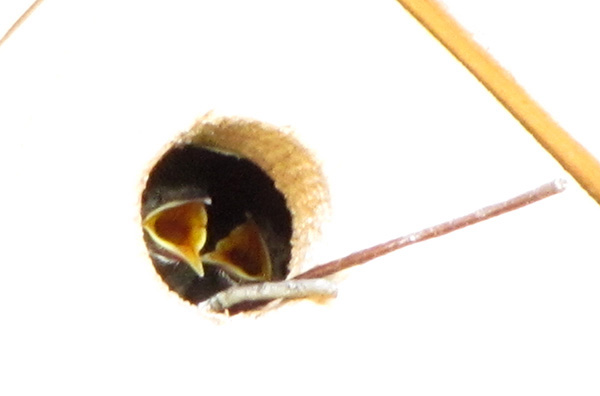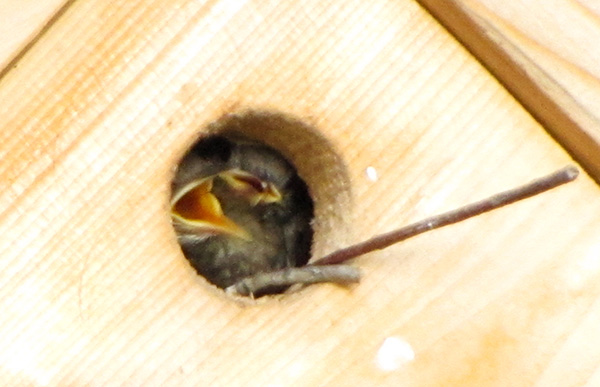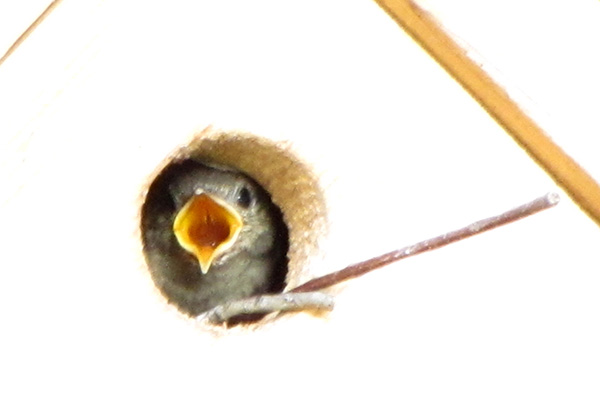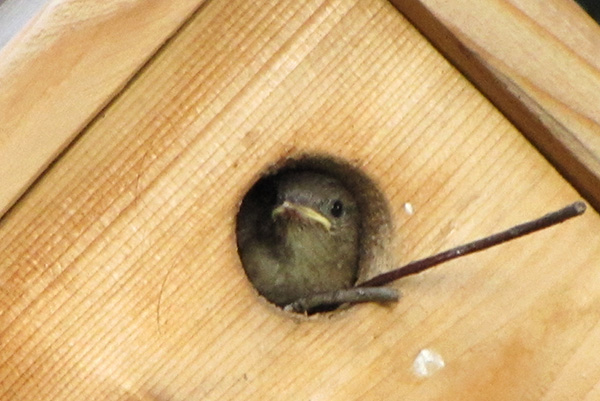
The Nestlings

Wren May 4

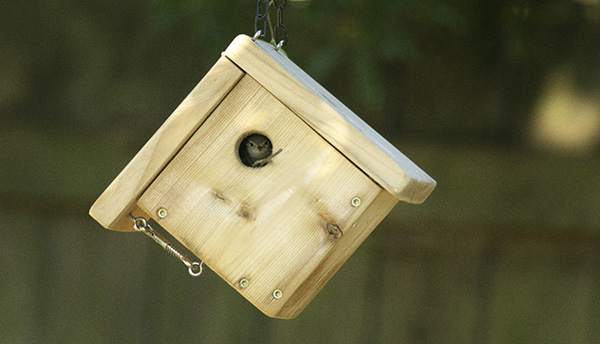
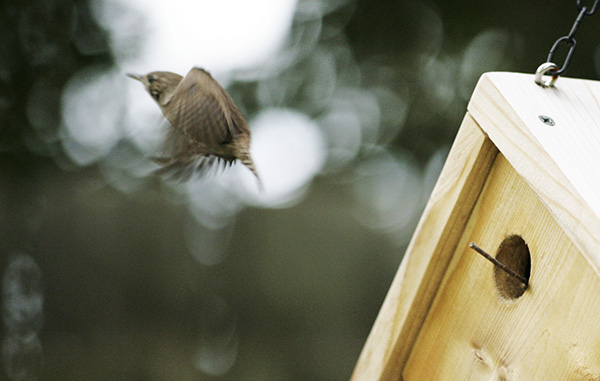
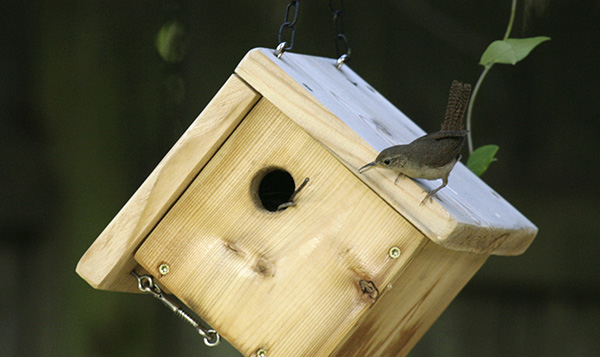
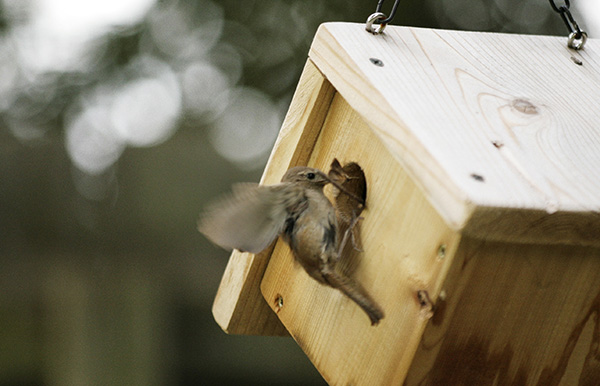
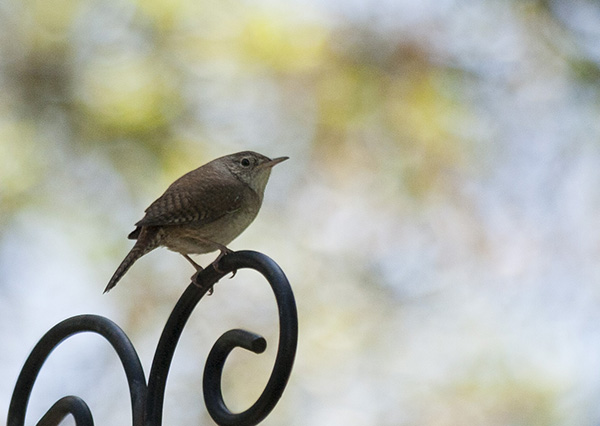
A house wren began claiming the yard’s nest boxes in late April. He spent days on end carrying twigs, working on nests in each of the boxes.
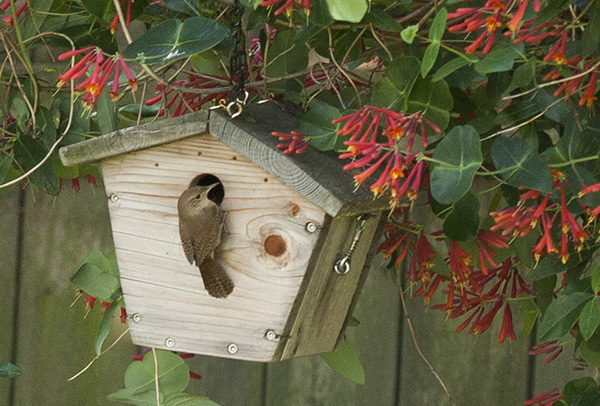
Wren May 4

House Wren April 29

He clearly preferred one of the smaller boxes, and built his most elaborate nest in it. When females showed up to inspect the nests, he led them over and over again to his favorite, as if arguing its attributes.

House Wren April 29

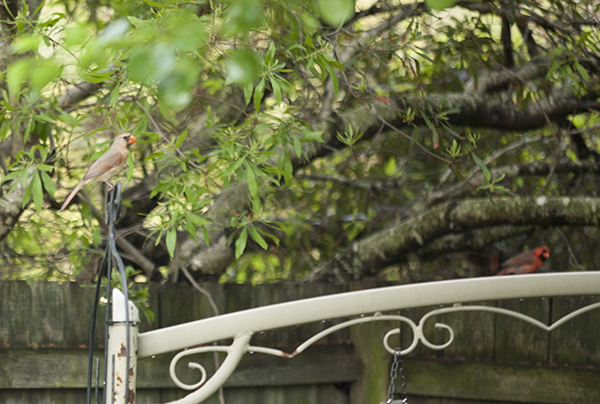
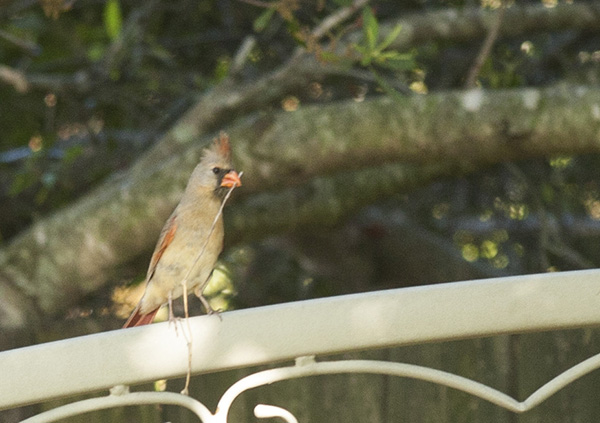
The activity around the wren boxes was so entertaining that I almost missed a developing cardinal nest in the overhanging honeysuckle.
Cardinal May 11

Cardinal May 9

Cardinal May 11

The wren watched the cardinals’ progress with obvious interest, but didn’t seem to object.

Cardinal May 11

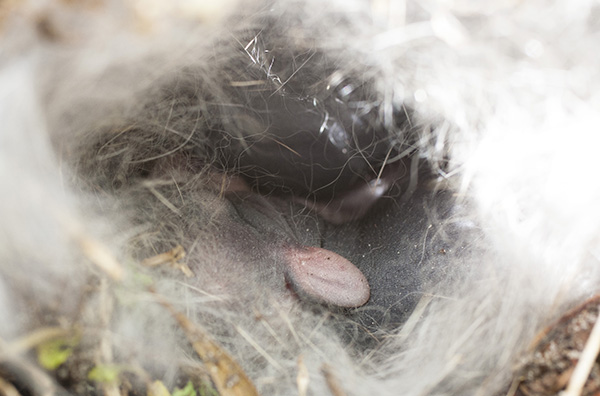
The cardinals quickly completed their nest, and soon there were eggs.

Cardinal May 19

May 19

Cardinal May 25

May 25

And then…

Nestling June 1

June 1

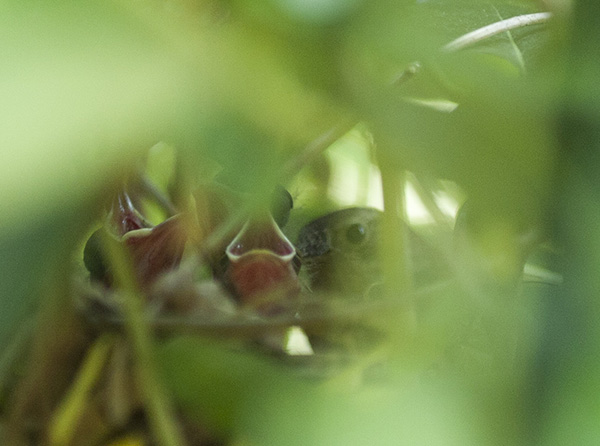
When the eggs hatched, the house wren’s interest in the honeysuckle nest increased alarmingly. (More than one source reports that house wrens sometimes destroy nearby nests, pecking holes in eggs and even killing nestlings.)
Nestling May 31

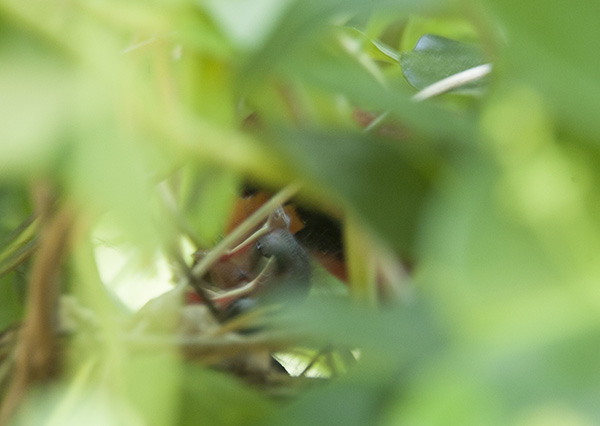
But a closer look revealed that the wren wasn’t planning to harm the nest.

Nestling May 30

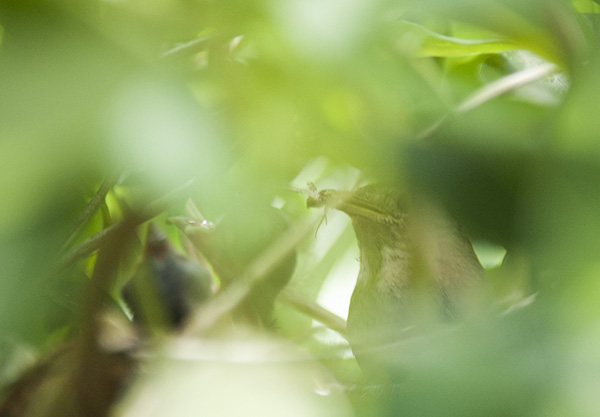
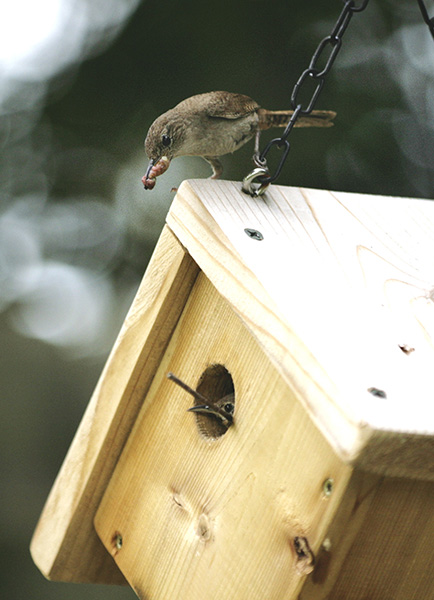
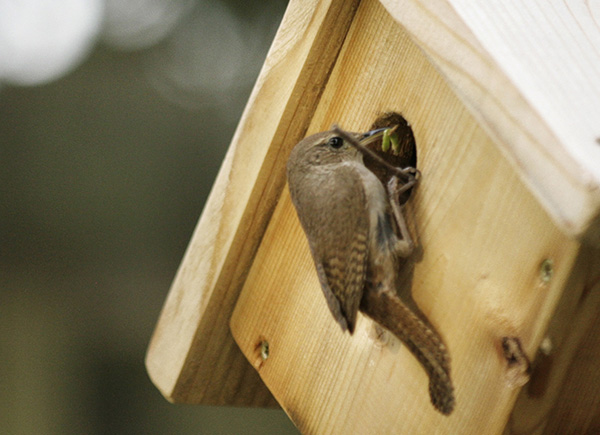
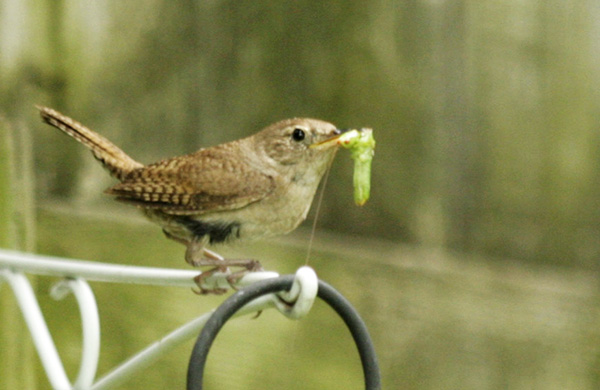
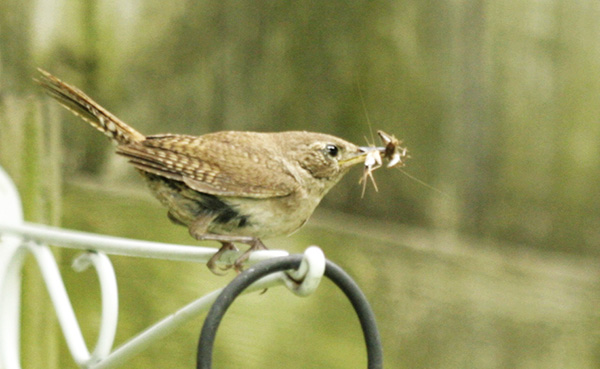
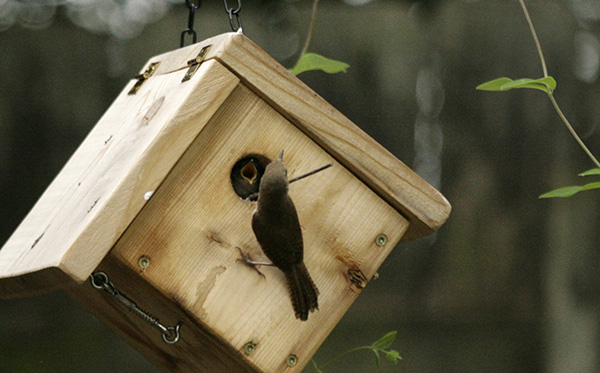
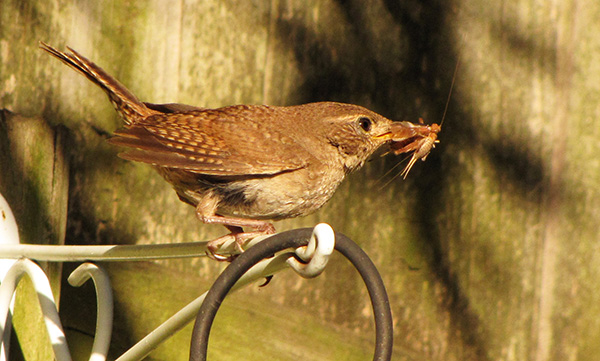
He was feeding the brood.

Nestling June 1

And so were the cardinals.

Nestling May 31

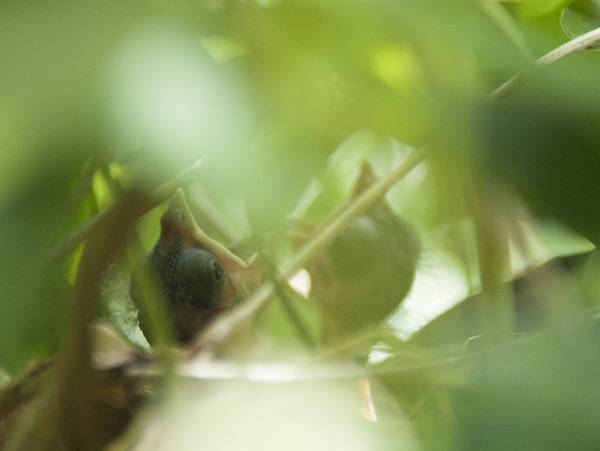
I’m confused, but the cardinals, the wren, and the nestlings seem content.

Nestling June 1

Nestling May 31

The cardinals bring seeds, while the wren scours the yard for insects.

Wren May 30

And the nestlings greet either meal with enthusiasm.

Nestling May 31

I wonder if this kind of behavior is common. Have the yard’s birds been feeding each other all along?

Wrens May 3

I suppose “wonder” is the key word here, as it usually is in the yard.
Nestling June 1

Rabbit Watching

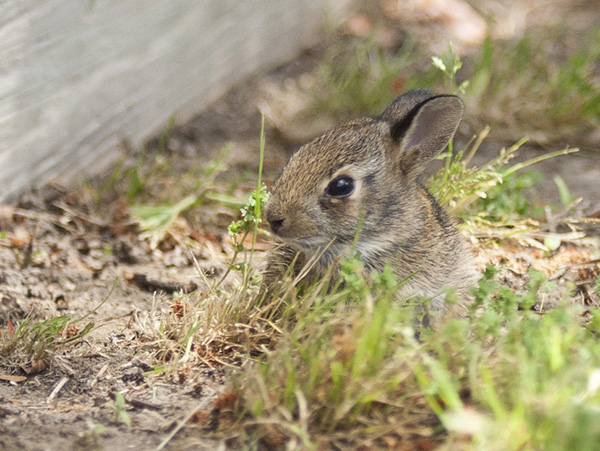
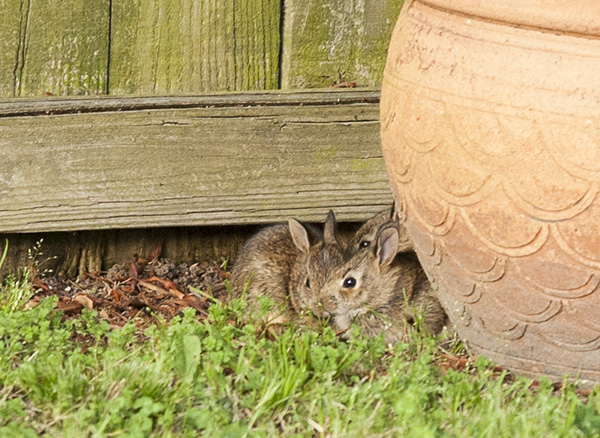
The milkweed was meant to be the yard’s monarch nursery, but in April it became a rabbit nursery.

Rabbits April 28

Rabbits are the yard’s charismatic megafauna, and watching rabbit nests is one of my favorite obsessions.

May 4

Rabbits May 4

For the first week or so the babies never leave the nest. During that time I mostly watch their mothers.

Rabbits May 9

Rabbits May 9

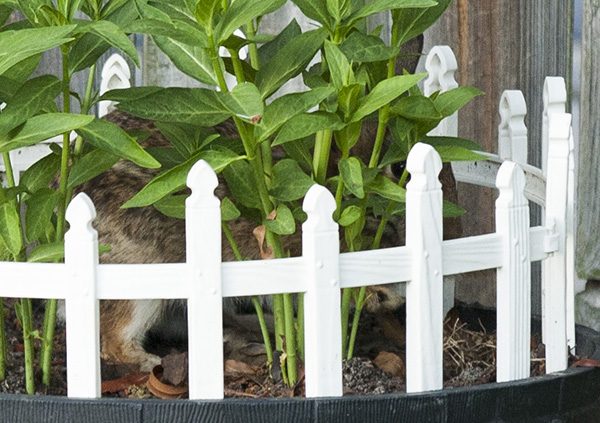
Because this nest was in a tall planter, the babies could not return once they began exploring.

Rabbits May 9

May 10

Rabbits May 10

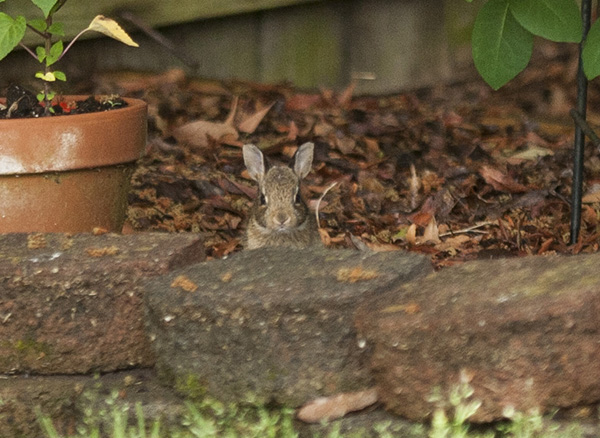
For the first few days, they crossed every open area at a run, dashing from shelter to shelter.

Rabbits May 11

When you are running faster than you think you are, and you can’t jump as high or far as you think you can, you end up tangled in the hose…

Rabbits May 11

And then your brothers and sisters laugh at you.

Rabbits May 11

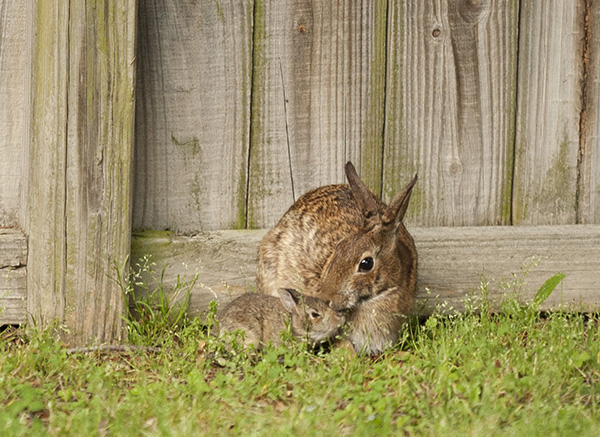
The babies were on their own most of the time, but their mother visited twice a day to let them nurse. I had fun imagining the stories they told her each evening.

May 11

May 12

(After they finished nursing, of course.)

Rabbits May 12

Each day the babies explored a bit further, memorizing the best hiding places and learning how to graze.

Rabbits May 12

Rabbits May 12

Rabbits May 12

But they still gathered each night near the milkweed, waiting for their mother.

Rabbits May 12

(Squirrels do not appreciate being approached by hungry baby rabbits. The next night they were much more cautious.)

Rabbits May 13

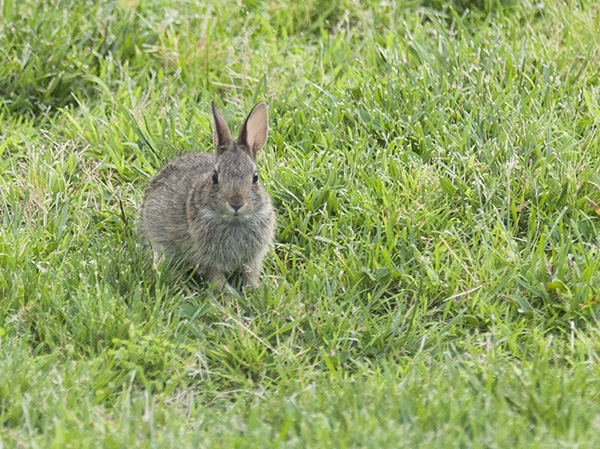
Over the last week they have become completely independent, grazing on grass, clover, and dandelions, venturing further and further from shelter as they grow more confident.

Rabbits May 26

They are beginning to look more like rabbits than bunnies.

Rabbits May 26

Rabbits May 26

But as they become rabbits, more bunnies have arrived. There’s a new nest in the front iris bed, and I’m feeling a strong urge to read Watership Down again.

To be continued…

Revising My Rabbit Story

Rabbit May 1
May 1

I’ve told rabbit stories on this blog a number of times. In fact, my very first post featured a rabbit nest and a tragedy involving a young hawk. In 2012, I devoted several posts to a nest that eventually fell prey to a mysterious attack during the night. To follow the story, see these posts:

Over the last few weeks, I’ve been following a new rabbit nest in the yard, and I’m beginning to doubt the story I constructed in 2012.

Rabbit Nest May 8
May 8

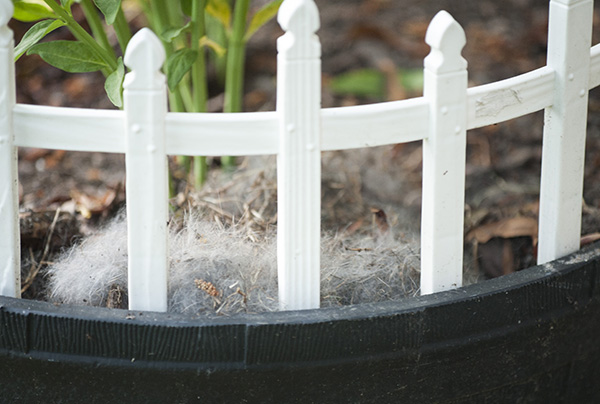
When I first found the new nest, freshly dug during the first week of May, it was empty. But a few days later, tufts of hair led me to investigate again.

Rabbit Nest May 8
May 8

This time there were babies! Thinly haired, eyes-closed babies that couldn’t have been more than three or four days old. Resisting the temptation to run for my camera, I tucked the grassy cover back into place and vowed to avoid disturbing the rabbits again. But then I found the grass displaced, two days later, and feared another predator had visited. Since I was checking anyway…

Rabbits May 10
May 10

I didn’t want to wake them, so I didn’t get an accurate count. There were three bunnies at least. Maybe four. Maybe more? At any rate, apparently healthy baby rabbits sleeping comfortably in their hair-lined nest.

The mother rabbit visited every evening near sunset, to feed her offspring and clean the nest.

Rabbit Nest May 10
May 10
Rabbit Nest May 10
May 10

After each visit, she carefully re-covered the nest.

Rabbit Nest May 10
May 10

Day after day after day…

Rabbit Nest May 13
May 13
Rabbit Nest May 17
May 17
Rabbit Nest May 17
May 17

Until…

May 18
May 18

The scene was eerily similar to what happened in 2012. As before, I found one of the babies hiding on the other side of the yard but couldn’t find the rest.

Rabbits May 18
May 18

And, as before, when the mother rabbit showed up to feed her babies that night, more of the litter came out of hiding.

Rabbits May 18
May 18
Rabbits May 18
May 18
Rabbits May 18
May 18
Rabbits May 18
May 18
Rabbits May 18
May 18

The new arrivals raised the count of surviving babies to three. After they nursed, all three began exploring the yard. Two hopped in and out of the corner iris bed while the third ran back and forth along the fence. They popped in and out of sight so often that it became impossible to say exactly how many rabbits were playing in the yard. At least three, but quite possibly more.

Rabbits May 18
May 18
Rabbits May 18
May 18

The next night, the rabbits were in the irises and under the deck. They were getting increasingly adept at hiding, and they definitely spent less time nursing when their mother arrived.

Rabbits May 19
May 19
Rabbits May 19
May 19
May 20
May 20

All of this makes me reconsider my assumptions in 2012. What if there was no predator, then or now? What if the babies simply left their nest, scattering hair and dried grass as they emerged? Perhaps, instead of being driven out, this is the rabbit equivalent of fledging.

May 21
May 21


The Empty Nest

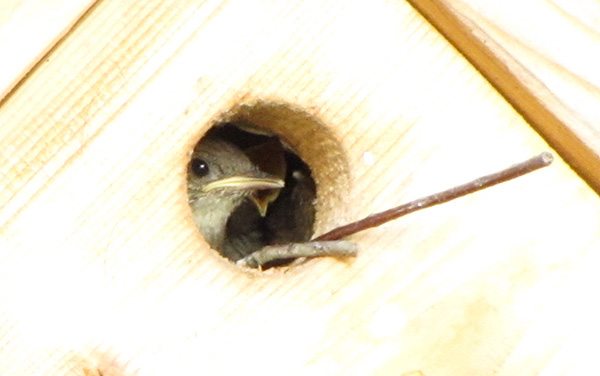
The house wrens’ nestlings fledged this week. They fledged while I was busy doing other things, and I regret missing the moment of their departure. (For more about the house wrens, see herehere, and here.)

Wren August 4

During the last two months, our little family of birds have been a constant source of amusement and amazement. At first the male worked alone, a tiny bustle of feather and song. Then his mate arrived, bristling with scolds. Together they transformed the nest box into a vessel seemingly immune to the laws of physics. They stuffed it with so many twigs that it should have burst at the seams or collapsed into a singularity. Instead it rocked gently in the wind as eggs were laid, as the first male lost control of the box and his eggs were destroyed, and as he reclaimed the box and eggs were laid again.

Wren August 14

In early August, the eggs hatched.

Wren August 15

Wren August 14

As the nestlings’ voices grew more and more insistent, the wrens again defied physics. They expended so much energy, feeding their young, that both birds should have grown weak and thin.

Wren August 14

Wren August 14

Among the insects I recognized, there were caterpillars, moths, katydids, and crickets.

Wren August 23

Wren August 23

The yard should have run out of insects, but it didn’t.

Wren August 23

Wren August 24

I don’t know how many nestlings they were feeding. More than the box should have been able to hold, wedged in with all of those twigs.

Wrens August 22

Wrens August 22

Wrens August 22

Wrens August 22

Wrens August 22

Then, around mid-morning on August 26th, I found the box abandoned.

I want to believe that I’ve heard the fledglings, in the days since, begging from deep within the wax myrtle, or from the neighbors’ yards, or across the street. I want to believe I would recognize them if they returned to the yard, which seems unnaturally quiet now.

Perhaps they will return next year, all grown up and beyond recognition. Perhaps they will fill the yard, once more, with songs and scolds. Fill the nest box with twigs and eggs, and, in the process, fill me with more delight than I should be able to hold.

Fall Webworms

Pear Leaf Aug 2

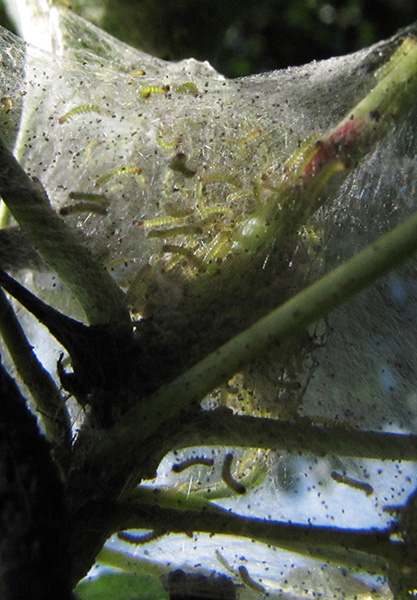
Earlier this month I noticed a few silk-encased leaves on the pear tree. I suspected the webs were the work of Eastern Tent Caterpillars, because I had found a few of these caterpillars under the pear tree last summer.

Last summer’s caterpillars never caused a problem in the tree, but this year the tree sprouted more and more webs.

Pear Leaves August

This afternoon I typed “tent caterpillar” into my web browser and within a few clicks discovered I was on the wrong track. It’s the wrong time of year, and our webs are located at the ends of branches rather than near the trunk. So these are not Eastern Tent Caterpillars. Instead, I believe they are Fall Webworms.

Caterpillars August

(My caterpillar identification process is not very scientific, consisting mostly of browsing the internet and trying find something that looks like my photos. Please comment if you can correct or confirm my identification!)

Caterpillars August

The caterpillars are not doing much damage. There are only six or seven webs, confined to the lowest branches on one side of the tree. The affected leaves are being eaten, but they represent a very small proportion of the tree’s total leaf count.

Caterpillars August

Caterpillars August

Even though our tree is not suffering, several nearby trees are completely shrouded in webs. As I’m reluctant to test the health of our pear tree, I’ve trimmed its most heavily webbed branches and opened the remaining webs as recommended.

Caterpillars August

I don’t know if the House Wrens will eat these caterpillars, or if they’ll leave them for other birds. But if they do eat the Fall Webworms, my work should make feeding their hungry nestlings a little easier.

Wrens August 22