Verb Choice in Fiction

I recently ran across an article titled “Falsifying memories” at The Guardian’s Neurophilosophy blog. I read the article in my usual half-distracted manner until a sentence caught my full attention and prompted me to start over. The second time through, I read much more carefully. Here’s the sentence:

[Elizabeth] Loftus started her career investigating semantic memory – how word meanings are stored in the brain – and somewhat ironically, it is the meaning of words that seems to lie at the heart of the matter. (1)

For me, this sentence hinted at fascinating possibilities. The article doesn’t expand on the semantic memory work, so I started clicking links to find out more. One of the links led me to a longer profile by the same author, published in Nature. There I found this marvelous set of paragraphs:

…Loftus won funding in 1974 for a proposal to study witness accounts of accidents, and she soon published the first of several influential studies revealing the limitations of eyewitness testimony1. She showed people film clips of car accidents and asked them to estimate the speed of the cars. The wording of the questions, she found, had a profound effect on the estimates. People who were asked, “How fast were the cars going when they smashed into each other?” gave higher estimates on average than those with whom the verb ‘hit’ was used. And those who were told that the cars had ‘contacted’ each other gave the lowest estimates.

Those asked about cars smashing into one another were more than twice as likely as others to report seeing broken glass when asked about the accident a week later, even though there was none in the video. “I realized that these questions were conveying information,” says Loftus. “I began to think of it as a process of memory contamination, and we eventually called it the misinformation effect.” (2)

[Citation within the text of the first paragraph:  1. Loftus, E. F. & Palmer, J. C. J. Verb. Learn. Verb. Behav. 13, 585–589 (1974).]

It seems frivolous to lift the findings of such important research out of their context and apply them to fiction writing, but I couldn’t help drawing a connection. Consider the varying responses to the words smashed, hit, and contacted, and imagine writing about a car accident. Detailed descriptions of speed and broken glass become redundant if the car is smashed.

Every self-help writing book and article talks about verb choice, and it seems there is more to the recommendation than I previously understood. Perhaps tendrils of memory contamination are key elements of fiction. After all, my favorite fictional worlds are so vibrant that I almost remember being in them. And as a writer, I want my work to be memorable.

At the time I found these articles, I was re-reading The Hobbit. Few books live in my memory as vividly as The Hobbit. The words, as much as the story, create its charm.

Here’s a paragraph from the first chapter:

If you have ever seen a dragon in a pinch, you will realize that this was only poetical exaggeration applied to any hobbit, even to Old Took’s great-granduncle Bullroarer, who was so huge (for a hobbit) that he could ride a horse. He charged the ranks of the goblins of Mount Gram in the Battle of the Green Fields, and knocked their king Golfimbul’s head clean off with a wooden club. It sailed a hundred yards through the air and went down a rabbit hole, and in this way the battle was won and the game of Golf invented at the same moment. (3)

In this paragraph, “charged,” “knocked,” and “sailed” carry the scene for me. The peak phrases are evocative, but they are also interesting rhythmically.  In particular, note how the string of airy vowels in “It sailed a hundred yards through the air” stops hard against the consonants of “went down.” It’s poetry, as much as verb choice, which is a digression from my topic. I’ll save my raptures about poetic prose for a later post.

The Hobbit is a trove of effective verb choice, in part because its unique and interesting verbs are used in moderation. They stand out because they are relatively infrequent. They would be less interesting, and less effective, if every verb in every sentence was just as interesting. The other verbs in the above paragraph–have seen, will realize, applied, was, etc.–are elegant in their simplicity.

When I edit my writing, I dedicate an entire revision run-though to verb selection. I scrutinize every verb in every sentence, and try to improve them all. But perhaps my focus has been too tight. I lacked moderation, so my writing lacked rhythm. In the future I want to choose my moments. Concentrate more on the structure of my stories, and how sentences reinforce that structure, and less on the structure of individual sentences. Because I want my stories to be memorable, not my sentences.

References

1. Costandi, Mo. “Falsifying memories.” @Neurophilosophy. The Guardian. 16 August 2013. Web. 24 August 2013.

2. Costandi, Moheb. “Evidence-based justice: Corrupted memory” Nature Vol. 500, Issue 7462. (15 August 2013) 268-270. Web. 24 August 2013.

3. Tolkien, J.R.R. The Hobbit. Rev. ed. New York: Ballantine Books, 1977. 30. Print.

Blue Moon August 20

Blue Moon, August 20, 2013

I mention writing in many of my posts, but I seldom discuss the mechanics of writing that are important to me. So this post is a departure from my theme. I hope to make more departures, in the future, and write more about writing. 
The Empty Nest

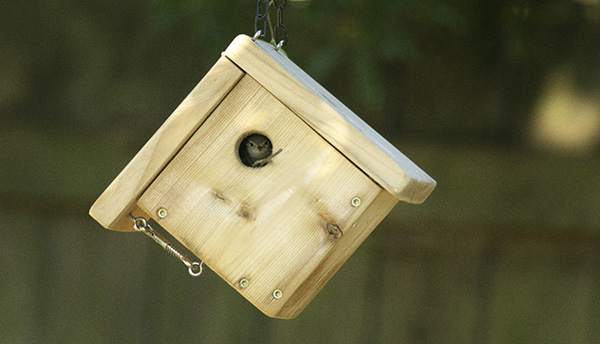
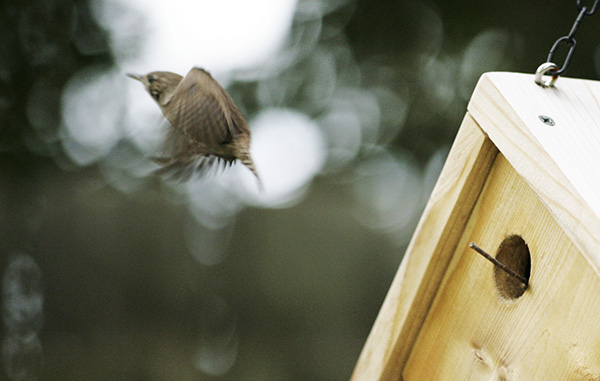
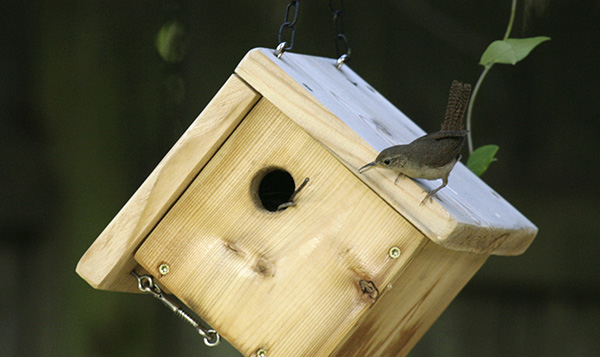
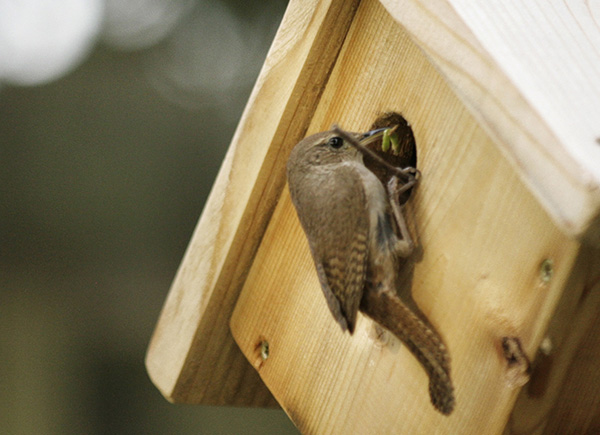
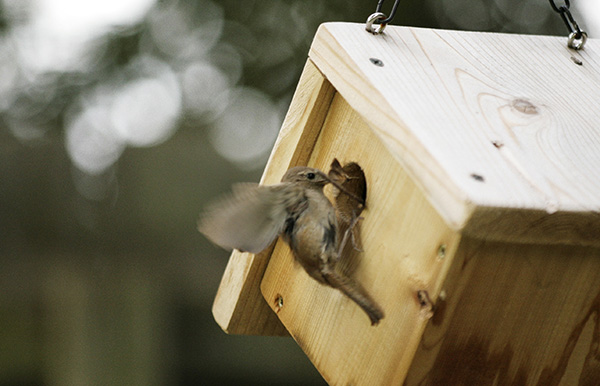
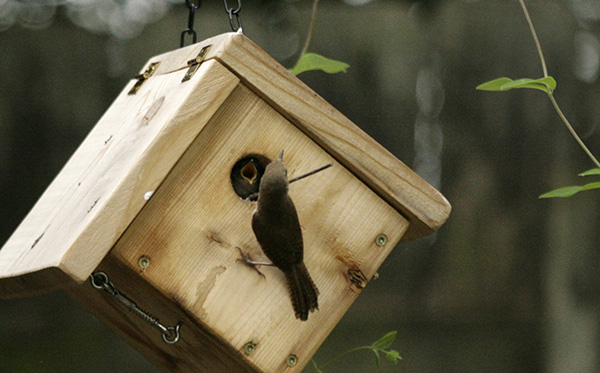
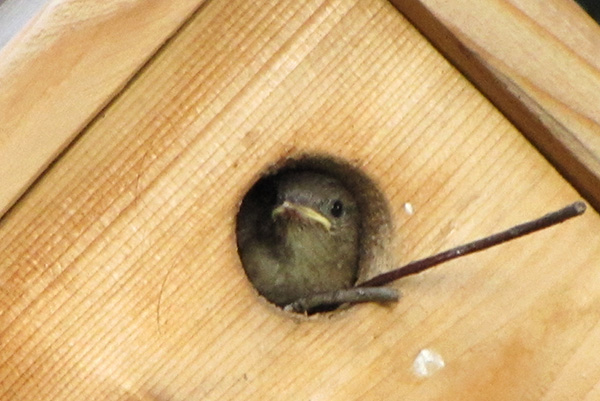
The house wrens’ nestlings fledged this week. They fledged while I was busy doing other things, and I regret missing the moment of their departure. (For more about the house wrens, see herehere, and here.)

Wren August 4

During the last two months, our little family of birds have been a constant source of amusement and amazement. At first the male worked alone, a tiny bustle of feather and song. Then his mate arrived, bristling with scolds. Together they transformed the nest box into a vessel seemingly immune to the laws of physics. They stuffed it with so many twigs that it should have burst at the seams or collapsed into a singularity. Instead it rocked gently in the wind as eggs were laid, as the first male lost control of the box and his eggs were destroyed, and as he reclaimed the box and eggs were laid again.

Wren August 14

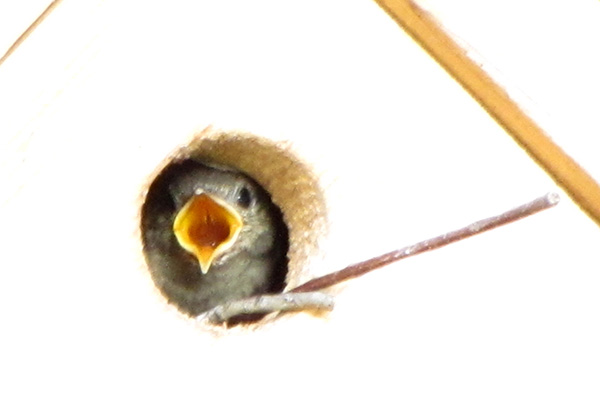
In early August, the eggs hatched.

Wren August 15

Wren August 14

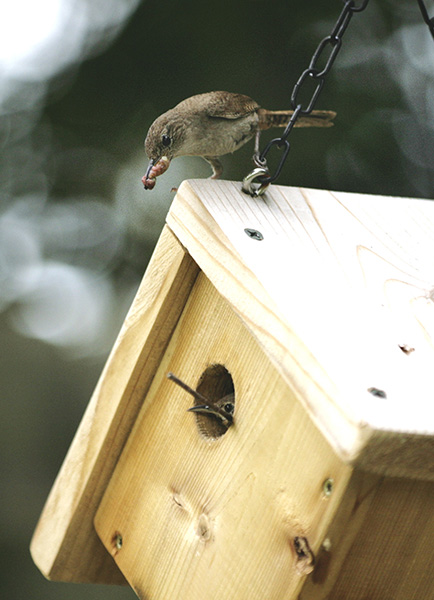
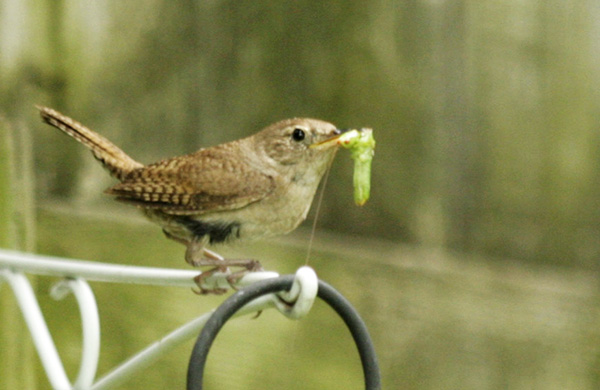
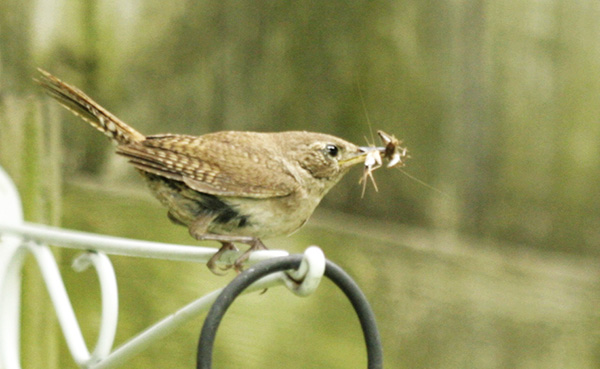
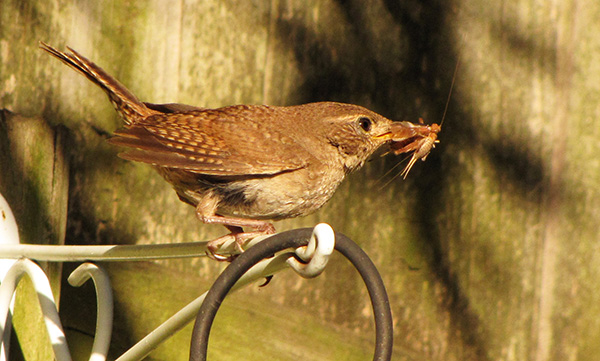
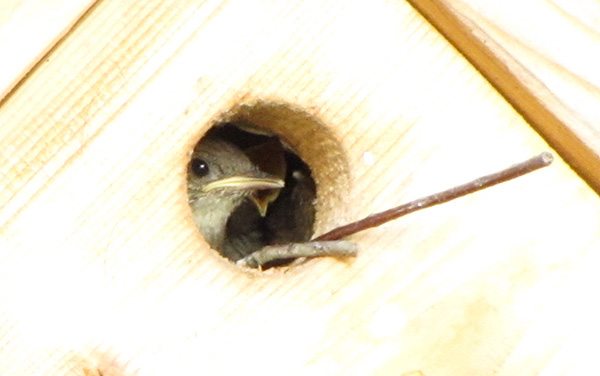
As the nestlings’ voices grew more and more insistent, the wrens again defied physics. They expended so much energy, feeding their young, that both birds should have grown weak and thin.

Wren August 14

Wren August 14

Among the insects I recognized, there were caterpillars, moths, katydids, and crickets.

Wren August 23

Wren August 23

The yard should have run out of insects, but it didn’t.

Wren August 23

Wren August 24

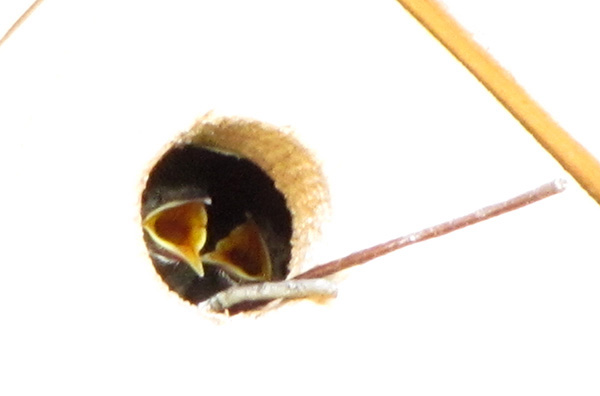
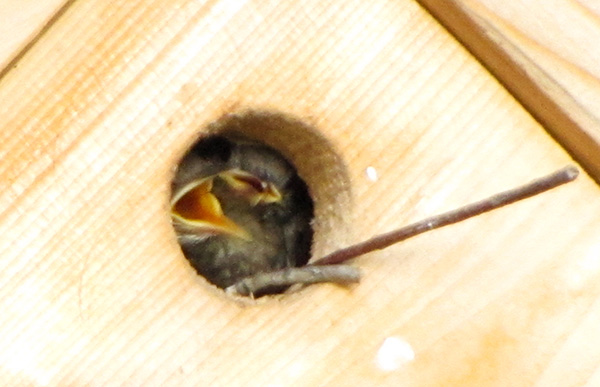
I don’t know how many nestlings they were feeding. More than the box should have been able to hold, wedged in with all of those twigs.

Wrens August 22

Wrens August 22

Wrens August 22

Wrens August 22

Wrens August 22

Then, around mid-morning on August 26th, I found the box abandoned.

I want to believe that I’ve heard the fledglings, in the days since, begging from deep within the wax myrtle, or from the neighbors’ yards, or across the street. I want to believe I would recognize them if they returned to the yard, which seems unnaturally quiet now.

Perhaps they will return next year, all grown up and beyond recognition. Perhaps they will fill the yard, once more, with songs and scolds. Fill the nest box with twigs and eggs, and, in the process, fill me with more delight than I should be able to hold.

Fall Webworms

Pear Leaf Aug 2

Earlier this month I noticed a few silk-encased leaves on the pear tree. I suspected the webs were the work of Eastern Tent Caterpillars, because I had found a few of these caterpillars under the pear tree last summer.

Last summer’s caterpillars never caused a problem in the tree, but this year the tree sprouted more and more webs.

Pear Leaves August

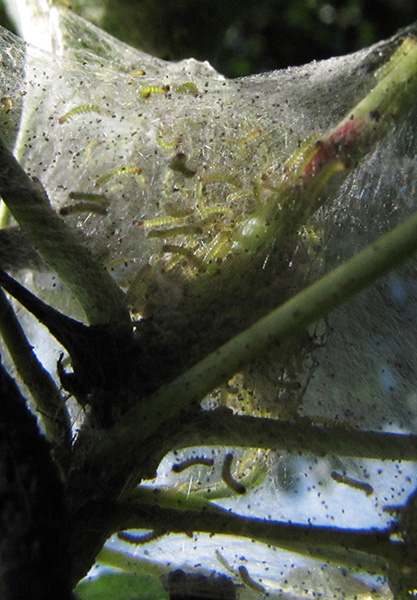
This afternoon I typed “tent caterpillar” into my web browser and within a few clicks discovered I was on the wrong track. It’s the wrong time of year, and our webs are located at the ends of branches rather than near the trunk. So these are not Eastern Tent Caterpillars. Instead, I believe they are Fall Webworms.

Caterpillars August

(My caterpillar identification process is not very scientific, consisting mostly of browsing the internet and trying find something that looks like my photos. Please comment if you can correct or confirm my identification!)

Caterpillars August

The caterpillars are not doing much damage. There are only six or seven webs, confined to the lowest branches on one side of the tree. The affected leaves are being eaten, but they represent a very small proportion of the tree’s total leaf count.

Caterpillars August

Caterpillars August

Even though our tree is not suffering, several nearby trees are completely shrouded in webs. As I’m reluctant to test the health of our pear tree, I’ve trimmed its most heavily webbed branches and opened the remaining webs as recommended.

Caterpillars August

I don’t know if the House Wrens will eat these caterpillars, or if they’ll leave them for other birds. But if they do eat the Fall Webworms, my work should make feeding their hungry nestlings a little easier.

Wrens August 22

Flecked with Gold

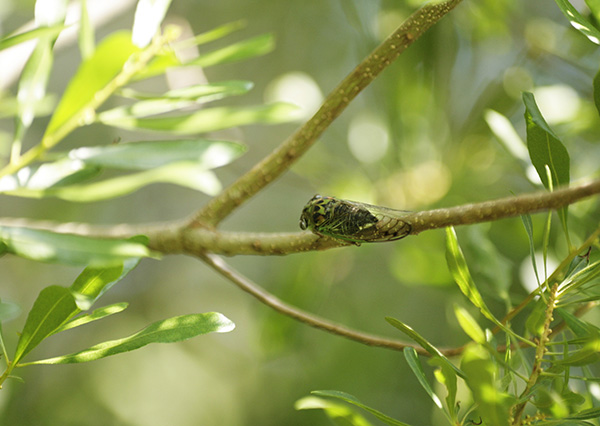
Cicada Wing

A cold front swept through the yard this week, carrying a hint of fall. My mood turned slightly melancholy as I rooted in my closet for sleeves and jeans, as flashes of orange and yellow caught my attention.

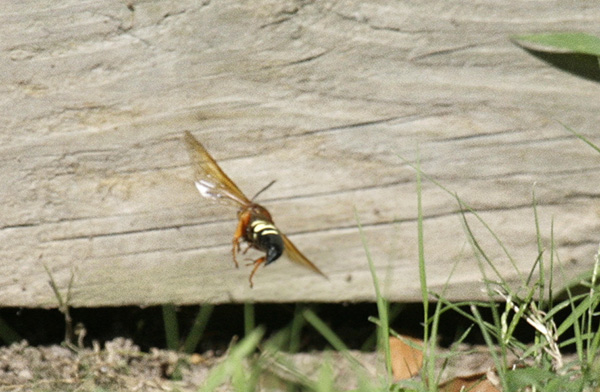
Wasp August 15

Butterfly August 4

Butterfly August 15

Butterfly August 15

Bumblebee August 16

Goldfinch August 16

I’m certain that summer will return next week, as hot and humid as ever. But it’s green cloak is wearing thin, and it’s remaining months will be flecked with gold.

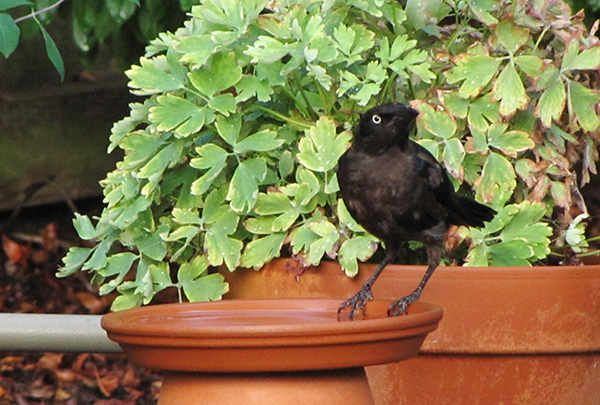
Grackle July 31

Wasp August 15

Green Tree Frog Aug 12

Venom in the Yard (Arachnophobia Alert!)

Black Widow Aug 14

Last summer brought dozens of black widow spiders to the yard. (For more about our encounters last summer, see here, here, and here.) I suppose the spiders had been in the yard all along, without our noticing them, but I felt a sense of responsibility once I knew they were there. We killed the ones we found (and destroyed their eggs) and began eliminating the spiders’ hiding places.

Black Widow Aug 14

We’ve found far fewer black widow spiders this year. Did our efforts last summer make a difference? Did the longer, colder winter help?

Black Widow Aug 14

Perhaps the population isn’t smaller at all this summer, only better hidden. Much better hidden, if that is the case, because I am diligent about looking for their webs as I work in the yard.

Black Widow Aug 14

I always feel a twinge of regret when I kill the spiders, because I don’t like killing anything. But I would feel even worse if I left them to multiply and spread into our neighbors’ yards. What do you think? Would you kill them, if they were in your yard? Is there a better solution?